

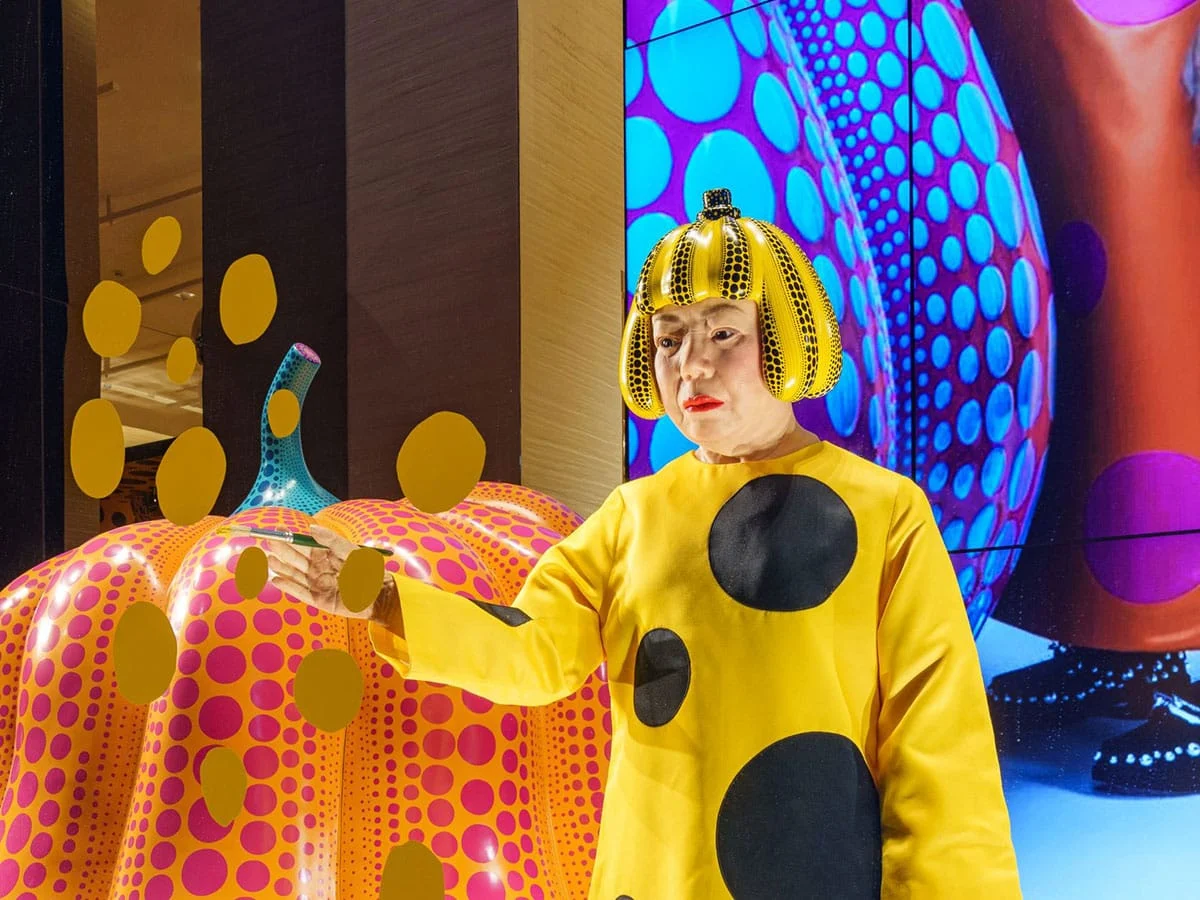
In the heart of Tokyo’s fashion-forward Shibuya Ward, the Louis Vuitton flagship store in Omotesando has transformed into a living canvas of avant-garde expression. This architectural landmark is currently hosting a guest that blurs the lines between reality, artifice, and high-fashion commerce: a hyper-realistic humanoid robot modeled after the world-renowned Japanese artist Yayoi Kusama.
Marking the tenth anniversary of their inaugural collaboration, Louis Vuitton and Kusama have reunited to launch a sprawling, global collection that permeates the brand’s retail spaces with the artist’s iconic, obsessive motifs. While the collection itself—spanning leather goods, ready-to-wear, and accessories—is a testament to the enduring appeal of Kusama’s aesthetic, it is the mechanical iteration of the artist that has captured the global imagination, serving as a bridge between the physical and digital realms of luxury retail.
Chronology: A Decade of Iconic Collaboration
To understand the weight of this current display, one must look back to 2012, when Louis Vuitton—then under the creative direction of Marc Jacobs—first invited Yayoi Kusama to apply her distinct visual language to the brand’s storied silhouettes. That initial partnership was a watershed moment in the "art-meets-fashion" genre, introducing a generation of luxury consumers to Kusama’s signature polka dots, which she has described as a means of effacing the self into the infinite.
The 2012 collection was a runaway success, effectively cementing Kusama’s status as a global pop-culture icon beyond the confines of the fine art world. Following the success of the first collaboration, the brand took a decade-long hiatus before returning to the artist’s prolific body of work in early 2023.
The current campaign, titled "Creating Infinity," is far more ambitious than its predecessor. It began with a series of high-profile "takeovers" in major global capitals. The humanoid robot, designed with startling precision, debuted in the window displays of Louis Vuitton’s most prestigious locations: the Place Vendôme in Paris, Fifth Avenue in New York City, and New Bond Street in London. The viral nature of the robot’s appearance in these Western hubs created a narrative of global ubiquity, setting the stage for its eventual "triumphant return" to Tokyo, the artist’s home country and the epicenter of her creative journey.
The Engineering of the Uncanny: Technical Specifications
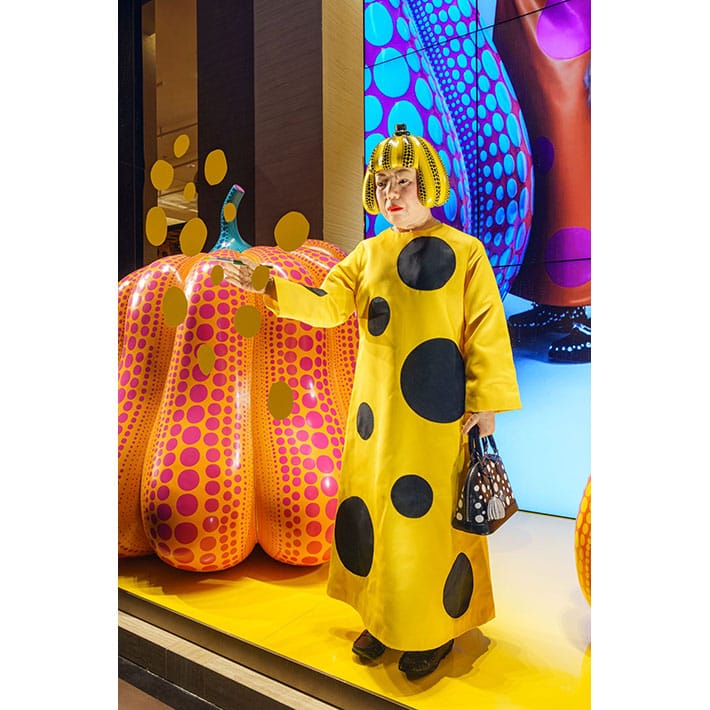
The robot standing in the Omotesando window is not merely a static mannequin; it is a complex piece of animatronic engineering that sits squarely in the "uncanny valley"—a psychological phenomenon where a near-human appearance triggers feelings of unease or intrigue. Standing over six feet tall, the robot is programmed with a series of fluid, repetitive motions that mimic the artist’s own painting process.
Equipped with sophisticated sensors, the robot detects the presence of pedestrians on the busy Omotesando sidewalk. As a viewer approaches the glass, the robot engages, shifting its gaze to meet the observer’s eyes. Its lips move with subtle facial expressions, and it occasionally offers a gentle, enigmatic smile. In its right hand, the robot holds a paintbrush, methodically applying Kusama’s signature dots onto the glass of the window, creating a layered, immersive experience that suggests the artist is continuously re-creating her world in real-time.
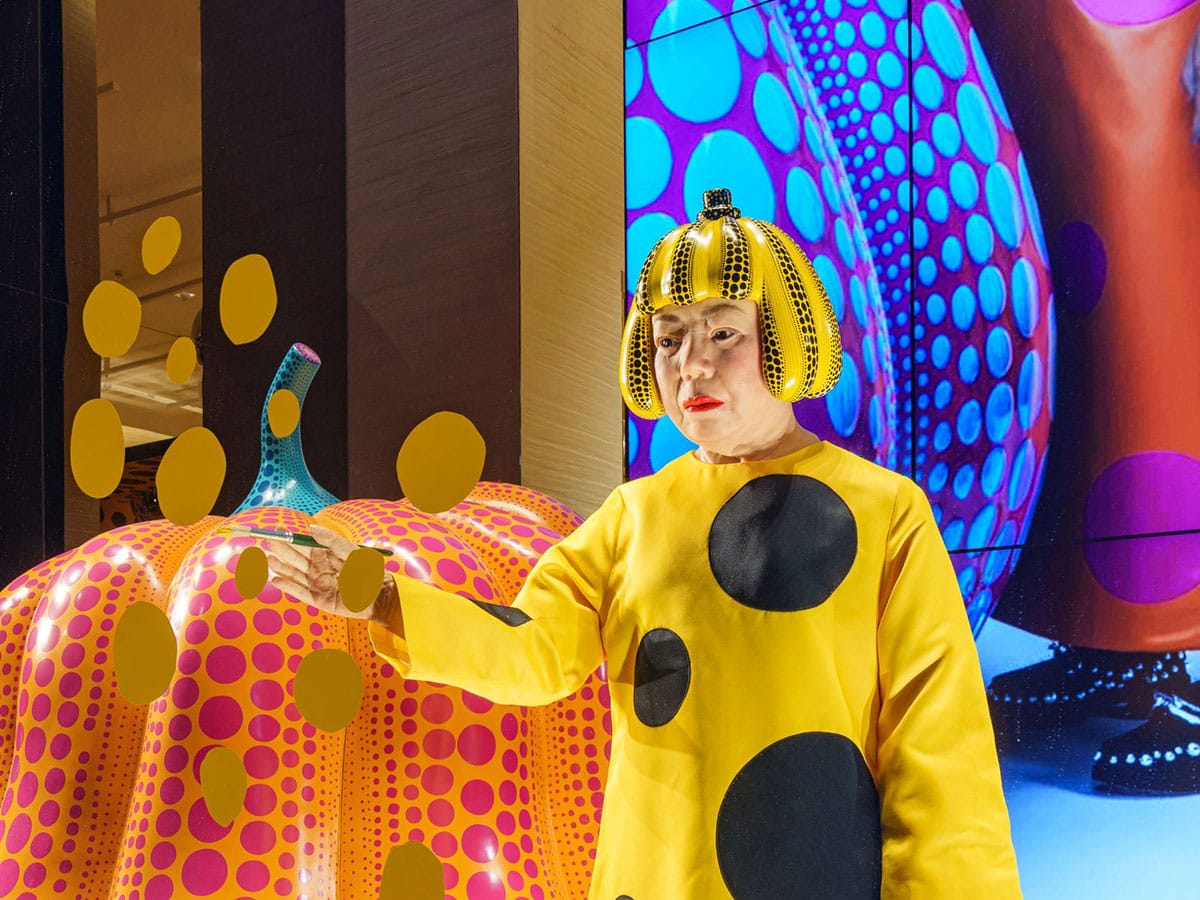
The technical fidelity is astonishing. The skin texture, the deliberate movement of the fingers, and the rhythmic swaying of the torso are designed to evoke the presence of the artist, despite the obvious artifice. It serves as a physical manifestation of Kusama’s concept of "Infinity Nets"—the idea that the artist’s work is an endless, self-replicating expansion. By placing a robotic double in the window, Louis Vuitton is suggesting that the artist’s creative output is, in fact, an infinite, automated process.
Supporting Data: The Impact of Experiential Retail
The choice to utilize a robotic figure is not merely a creative flourish; it is a calculated retail strategy. In an era where e-commerce dominates the luxury sector, physical flagship stores are increasingly tasked with providing "experiential" value. According to recent industry reports on luxury retail, flagship stores are moving away from traditional inventory-heavy displays toward "gallery-style" retail, where the primary objective is foot traffic, social media engagement, and brand storytelling.
The "Louis Vuitton x Yayoi Kusama" campaign has successfully utilized this strategy. Social media analytics from platforms such as Instagram and TikTok indicate that the robot has become one of the most photographed retail displays of the last year. By turning a store window into a performance art piece, Louis Vuitton has effectively transformed their Shibuya storefront into a tourist destination, thereby bypassing the traditional barriers to entry for luxury shopping. Even for those who do not purchase a $3,000 handbag, the experience of viewing the "robotic Kusama" acts as a touchpoint for the brand, reinforcing its relevance to a younger, digitally native demographic.
Official Perspectives and Brand Philosophy
Louis Vuitton’s collaboration with Kusama reflects a broader brand commitment to the fine arts. Delphine Arnault, a key executive within the LVMH group, has previously noted that these collaborations are not merely about product placement but about a shared dialogue between the brand’s heritage of craftsmanship and the artist’s conceptual depth.
From the artist’s perspective, the collaboration has always been about accessibility. While Kusama is famously reclusive, living and working within the confines of a psychiatric facility in Tokyo, her work has always sought to reach the masses. By partnering with a brand of Louis Vuitton’s scale, she effectively democratizes her art, moving her polka dots from the walls of the Tate Modern or the MoMA onto the streets of Tokyo, New York, and Paris.
The brand has stated that the Omotesando display is a "tribute to the artist’s resilience and the enduring power of her vision." By bringing the robot back to Tokyo, Louis Vuitton acknowledges the specific cultural context of her work, grounding the global campaign in the reality of the artist’s origin.
Implications: The Future of Luxury and Technology
The presence of the Kusama robot at the Omotesando store raises significant questions about the future of luxury retail. As artificial intelligence and robotics continue to advance, we are likely to see more "living" installations in retail environments. This shift has several implications:
1. The Humanization of the Digital
Luxury brands are increasingly looking for ways to humanize their digital presence. By using a robot to represent a legendary artist, Louis Vuitton is creating a bridge between the physical product and the artist’s personality, a strategy that is far more effective at building emotional connection than traditional advertising.
2. The Evolution of the "Storefront"
The window display is undergoing a metamorphosis. Once a simple showcase for seasonal products, it is now an interactive media platform. The Kusama robot acts as a "performative gatekeeper," compelling passersby to stop, film, and share their experience, thereby providing the brand with organic, user-generated content that money cannot buy.
3. The Ethical and Aesthetic Frontier
The use of a robot to represent a living artist invites a debate regarding the ethics of digital mimicry. While the collaboration is clearly sanctioned, the "uncanny valley" effect—the discomfort felt by some viewers—remains a challenge. Does the robot honor the artist, or does it reduce a complex creative mind to a mere aesthetic object? The consensus among critics appears to be that, in the context of Kusama’s work, which often deals with themes of identity, self-effacement, and repetition, the use of a robotic double is both conceptually consistent and stylistically bold.
Conclusion: A Must-See Destination
For those currently in Tokyo, the Omotesando window display is a quintessential example of how contemporary luxury blends art, engineering, and commerce. Beyond the spectacle of the robot, the interior of the store offers a comprehensive look at the "Louis Vuitton x Yayoi Kusama" collection. From the metallic spheres that mirror the surroundings to the meticulously crafted leather goods featuring the artist’s hand-painted motifs, the store is a total environment.
Whether one views the robotic Kusama as a marvel of modern technology or a haunting piece of performance art, its presence at the Omotesando flagship is an undeniable success. It captures the spirit of an artist who has spent decades painting her way to infinity, and in doing so, it proves that even after ten years, the partnership between Louis Vuitton and Yayoi Kusama remains one of the most vital, and most watched, collaborations in the history of global fashion.
Visitors are encouraged to witness the display while it remains in place, as it represents a fleeting moment where the boundary between the artist’s internal world and the external commercial landscape completely dissolves.












No comments yet. Be the first to join the conversation!