

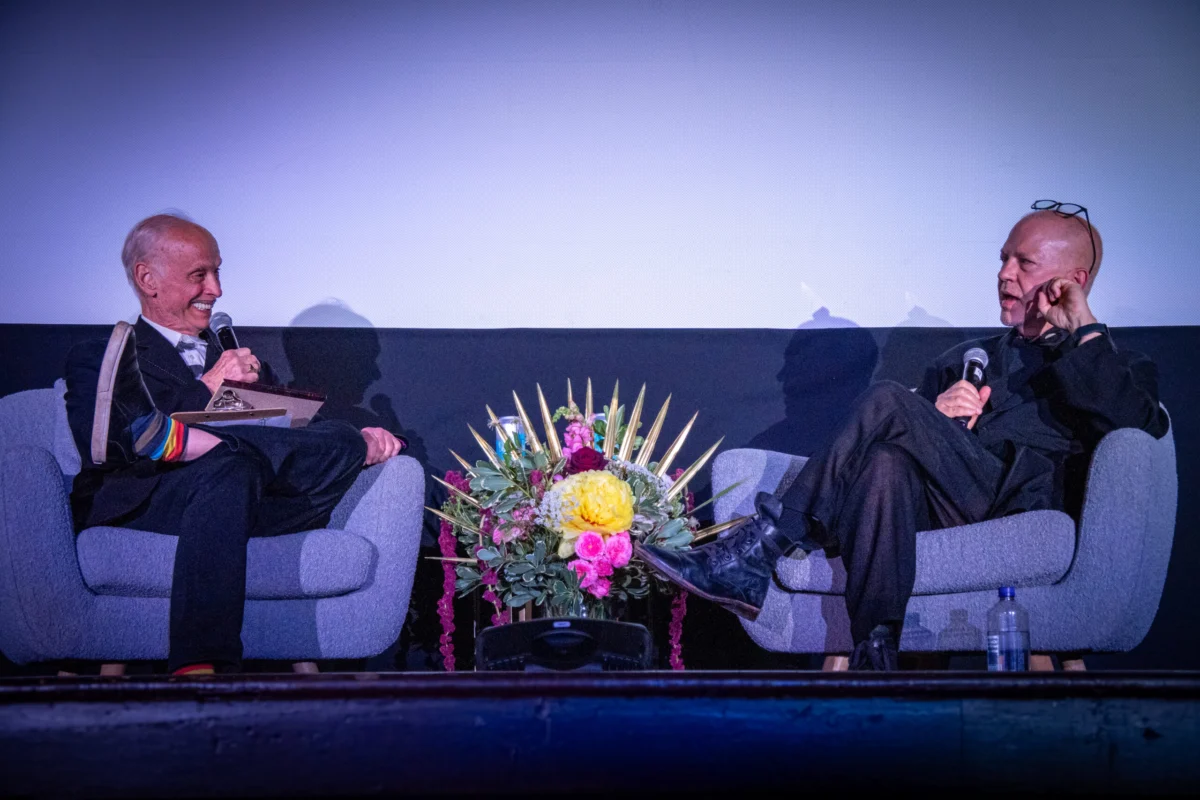
In the world of high-concept, polarizing, and undeniably addictive television, few names carry the weight of Ryan Murphy. Conversely, in the world of transgressive, low-budget, and counter-cultural cinema, John Waters stands as the undisputed "Pope of Trash." In a rare and captivating convergence of these two creative titans, the Provincetown International Film Festival hosted a “Filmmaker on the Edge” conversation this June that peeled back the curtain on the mechanics of fame, the evolution of critical reception, and the enduring power of “camp” in an increasingly serious media landscape.
The discussion, held against the backdrop of the seaside town that has served as a sanctuary for artists for over six decades, served as a masterclass on how television has shifted from the “prestige” era defined by stoic anti-heroes to a vibrant, maximalist aesthetic that audiences crave, even when critics recoil.
A Legacy of Provocation and Success
Ryan Murphy’s current trajectory is a testament to his relentless work ethic. As he gears up for the late-summer debut of his Bret Easton Ellis adaptation, The Shards on FX, and continues to navigate the buzz surrounding his recent Emmy-contending projects—most notably Love Story: John F. Kennedy Jr. and Carolyn Bessette—the prolific mogul shows no signs of slowing down.
For John Waters, the festival was a homecoming of sorts. A fixture in Provincetown for over 60 years, the director used the opportunity to debut a fresh restoration of his 1977 cult classic Desperate Living. The intersection of their careers was highlighted by the presence of director Adam Shankman, whose remake of the Waters-penned Hairspray served as a bridge between the two generations of provocateurs.
Chronology: From "Too Gay" to Television Mogul
During the conversation, Murphy reflected on the arduous path he traveled to become the architect of modern cable television. His early efforts, such as the cult-favorite Popular and the cultural juggernaut Glee, were met with significant resistance. Murphy noted that these projects were frequently dismissed or criticized for being "too gay"—a label that served as a shorthand for critics who were uncomfortable with the flamboyant, emotional, and unapologetic nature of his storytelling.
“I think there was a time I was coming up where all the critics wore Dockers and only wanted to watch antihero shows,” Murphy recalled. “They loved David Chase. They loved The Sopranos. They did not like women-centric things. They did not like anything that people would call camp because they didn’t understand it and they felt threatened by it.”
This historical friction has fueled Murphy’s defiance. By tracing his own career—from the sharp, stylized horror of American Horror Story to the historical weight of The People vs. O.J. Simpson—Murphy argued that the very elements critics once labeled as weaknesses (heightened drama, camp, and queer sensibilities) were, in fact, the keys to his longevity.

The "All’s Fair" Paradox: Bad Reviews, Massive Numbers
The most spirited portion of the conversation centered on Murphy’s recent collaboration with Kim Kardashian, All’s Fair. The show serves as a case study in the disconnect between traditional critical gatekeepers and the modern streaming audience.
“That got the worst reviews of all and the biggest numbers of all,” Waters noted with characteristic wit. “That must have made you feel so… what?”
Murphy’s response was one of seasoned indifference. He challenged the integrity of modern episodic criticism, noting that reviewers often pass judgment on an entire season after viewing a single episode. “I don’t care anymore,” Murphy admitted. “If you look at my career historically, the things that the critics like are somewhat more earnest things. But All’s Fair wasn’t made to win awards or be taken seriously. It was an homage to the shows I loved as a kid—Dynasty, Falcon Crest. Those didn’t get good reviews, but they are still classics.”
Murphy pointed to the resilience of Kim Kardashian in the face of this critical onslaught. “She was never hurt by it,” Murphy shared. “She was like, ‘What? OK, great.’ She went on her Instagram and said, ‘Have you seen the critically beloved show?’”
Waters, ever the provocateur, offered his own endorsement of the Kardashian phenomenon, praising her for her real-world political activism, specifically her work in prison reform and securing clemency for non-violent drug offenders.
The Intersection of Camp and Prestige
The conversation took an intimate turn when the pair discussed their unexpected professional history. Though they had never crossed paths as peers, Waters revealed he had actually met the legendary actress Jessica Lange during his brief stint as the filmmaker William Castle in Murphy’s Feud.
“I met Jessica Lange dressed as Joan Crawford, and I told her, ‘I was scared of you from Frances!’” Waters recounted. This anecdote served to illustrate the ecosystem Murphy has built: a space where icons of the silver screen are invited to inhabit roles that demand camp, tragedy, and everything in between.

Waters offered high praise for The Assassination of Gianni Versace: American Crime Story, singling out Darren Criss’s performance as Andrew Cunanan as a pinnacle of television acting. It was a rare moment of alignment between the two: a recognition that the most effective storytelling often occurs when the creator ignores the "prestige" trap and leans into the visceral, the soapy, and the bold.
Implications for the Future of Television
The dialogue between Murphy and Waters signals a broader cultural shift. For decades, the "prestige TV" label was reserved for grim, male-dominated dramas. However, the success of Murphy’s recent projects suggests that the audience has evolved. Viewers are increasingly drawn to "heightened" television—shows that do not shy away from the melodramatic or the campy, provided they are executed with the technical mastery and commitment that Murphy brings to his sets.
As Murphy prepares to adapt The Shards, he is moving into a space that requires both the psychological depth of his best work and the stylistic audacity that made him a lightning rod for criticism. By ignoring the “Dockers-wearing critics” and focusing on the audience’s appetite for high-stakes, high-emotion storytelling, Murphy has not only survived the industry’s shift—he has dictated it.
The Provincetown conversation ultimately served as a reminder that the best art often resides in the margins, and that what the elite dismiss as “trash” or “soapy” is often the most vital, resonant work being produced today. Whether he is directing a gritty true-crime saga or a glossy, high-fashion homage to 80s soaps, Murphy’s philosophy remains unchanged: make what you love, make it loud, and never apologize for the numbers.
As Waters concluded, with a nod to the enduring power of a "bad" review: “A bad review doesn’t hurt. It never did!” In an era where engagement is the only metric that truly matters, Ryan Murphy and John Waters remain two of the most influential architects of the modern cultural landscape, proving that being "too much" is exactly what the audience wants.










