As we progress through the summer of 2026, the global landscape of science fiction and fantasy—both in literature and the broader cultural sphere—is undergoing significant shifts. From the emergence of new cross-cultural literary initiatives to seismic corporate restructuring within the comic book industry and breakthroughs in space-health research, the genre continues to evolve as a mirror to our rapidly changing world. This report consolidates the most pressing developments from the past week.
I. Global Literary Exchange: The Launch of Crux Dragon
In a notable development for international speculative fiction, a new Sino-Australian magazine titled Crux Dragon has officially launched its inaugural issue, Singularity. This project aims to bridge the literary gap between two nations with rich, distinct traditions of speculative thought.
Bridging Cultures through Speculative Fiction
Crux Dragon distinguishes itself by functioning as a dual-language platform, publishing content in both English and Traditional Chinese. The magazine’s stated mission is to foster cross-cultural exchange, featuring a blend of original fiction, essays, and scholarly analysis. The first issue is ambitiously themed, covering topics ranging from the existential risks of artificial intelligence and cyberpunk aesthetics to re-imaginings of mythology and post-apocalyptic survival.
By including contributions from notable figures such as Hugo finalists RiverFlow, Arthur Liu, and Ren Qing, the magazine establishes immediate credibility within the global SFF community. Readers can currently access the English and Chinese editions via Amazon, with a paperback run also confirmed. The Chinese edition is additionally available for browser-based reading via the publisher’s website, signaling a modern, accessible approach to digital distribution.
II. The Canon of American Culture: A Subjective Top 25
The Washington Post recently published a provocative list titled "The 25 most influential works of American culture," sparking widespread debate regarding the metrics of "influence." The article posits that while the United States is a young nation, its rapid acceleration in technology, art, and medicine has produced works that define the global experience.
The Problem of Definition
The list, which selects one influential work per decade, has naturally drawn criticism from genre enthusiasts. The inclusion of Michael Jackson’s Thriller as a benchmark of cultural dominance—particularly in years where genre-defining cinematic milestones like Star Wars emerged—has highlighted the ongoing tension between "high art," pop culture, and speculative phenomena. The controversy surrounding these selections serves as a reminder that the canon is not a static list, but a fluid, contested space that reflects our current biases and priorities.

III. Censorship and the Academic Front: The Utah Book Ban
The landscape of educational freedom continues to face challenges, as evidenced by the recent decision in Utah to ban Stephen King’s 1982 novella collection, Different Seasons, from public schools.
Legislative Overreach?
The ban, which went into effect on July 6, follows a coordinated effort across four school districts—Davis, Jordan, Tooele, and Washington. Under current Utah law, the threshold for a statewide ban is reached when three school districts (or two districts and five charter schools) determine a book contains "objective sensitive material."
Different Seasons is a foundational text in modern literature, containing the source material for cinematic staples such as The Shawshank Redemption and Stand by Me. The removal of such a collection from grades seven through 12 marks a significant escalation in the ongoing debate regarding school board authority and the accessibility of classic literature.
IV. The Trojan Horse: History, Myth, or Metaphor?
In a shift toward historical inquiry, Mental Floss has revisited one of the oldest tropes in Western literature: the Trojan Horse. While often dismissed as pure fantasy, modern archaeological findings in Turkey suggest that the city of Troy was a tangible reality.
Scientific and Poetic Re-evaluation
Historians are increasingly looking at the Trojan Horse not as a literal wooden construct, but as a poetic metaphor for a ship—a theory supported by Homer’s own references to ships as "horses of the deep." This analysis, championed by scholars like Julia Kindt, emphasizes the necessity of reading ancient texts through the lens of both literal history and symbolic language. The ongoing study of battle-scarred ruins in modern-day Turkey continues to provide the scaffolding for our understanding of how myth is built upon the bones of history.
V. Digital Linguistics: Detecting Dementia in Pratchett’s Discworld
In a fascinating intersection of neurology and literary studies, researchers have utilized the vast corpus of Terry Pratchett’s Discworld novels to identify linguistic biomarkers for dementia.

Quantifying Artistic Decline
By applying digital linguistic tools to 33 novels, researchers tracked shifts in vocabulary range, sentence structure, and part-of-speech balance. The study identified a statistically significant "adjective narrowing"—a steady decline in the variety of descriptive words used—well before the author’s clinical diagnosis. This research suggests that literature can act as a "neurological case study," and that subtle shifts in a writer’s prose may serve as early indicators of cognitive health decline. It is a sobering look at how even the most imaginative minds are subject to the physical limitations of the brain.
VI. Sleep, Science, and Speculative Narratives
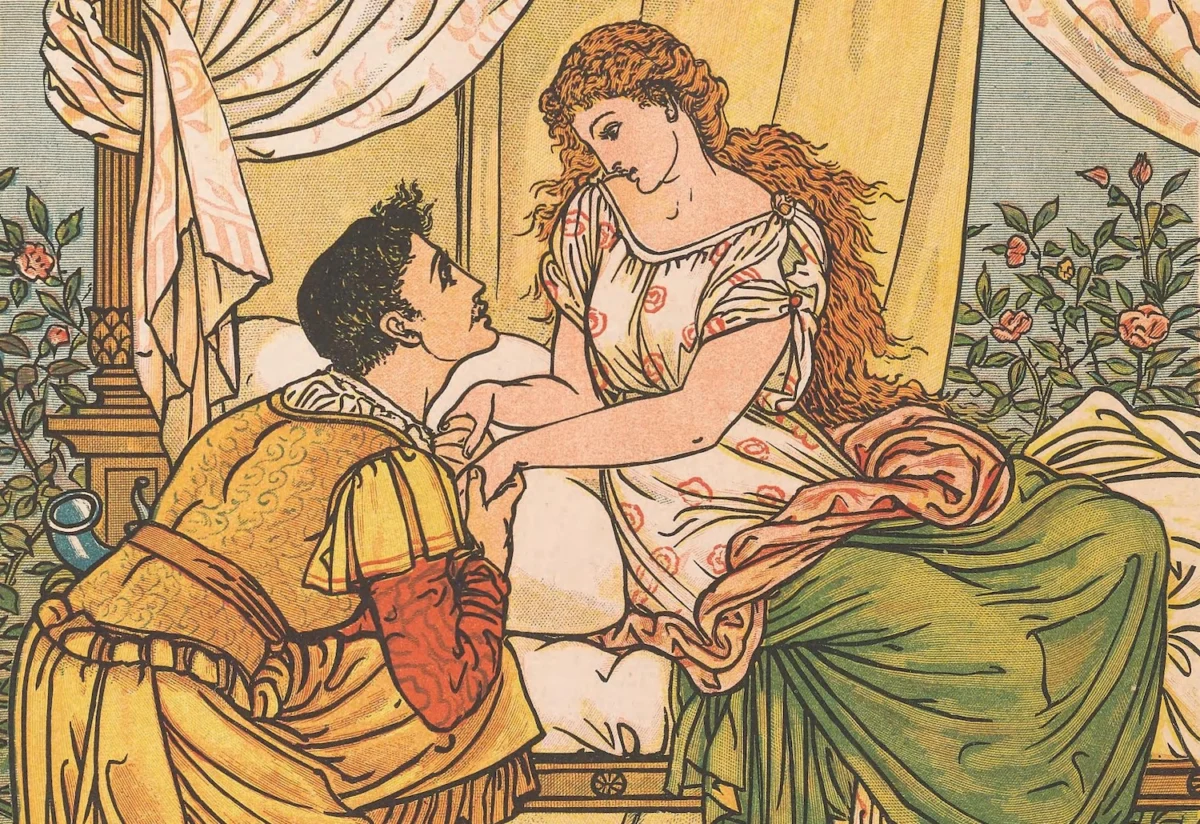
James Davis Nicoll recently curated a selection for Reactor magazine, exploring the thematic use of sleep in speculative fiction. His list includes Ursula Vernon’s Harriet the Invincible, which cleverly flips the "sleeping beauty" trope on its head. In Vernon’s narrative, the curse of a magical sleep acts as a paradoxically protective shield, granting the protagonist a period of functional immortality. This highlights how SFF authors use the biological necessity of sleep to explore deeper concepts of agency, time, and vulnerability.
VII. Industry Moves: Marvel Comics Relocates to the West Coast
In a move that marks the end of an era, Marvel Comics has announced it is leaving its historic New York City home after nearly 90 years. The company is relocating its publishing operations to Burbank, California, to consolidate with its corporate parent, The Walt Disney Company, and Marvel Studios.
Strategic Realignment
The move is accompanied by a leadership transition: Stephen Wacker has been named the new editor-in-chief, while outgoing chief C.B. Cebulski shifts his focus to spearheading Marvel’s expansion into the Japanese manga market. Industry analysts view this as a strategic effort to reinvigorate the comics division, which has recently struggled with a creative slump and loss of market share. By centering operations in Hollywood, Marvel is signaling a long-term commitment to integrating its comic book storytelling more closely with its multimedia empire.
VIII. The Parastronaut: A New Frontier in Space Exploration
Perhaps the most forward-looking development of the week is the collaboration between the UK Space Agency and the startup Vast to send Paralympic athlete John McFall into orbit by 2027.
Inclusion as a Functional Advantage
While this is being celebrated as a victory for disability inclusion, space health researchers argue it is also a pragmatic evolution. The traditional "archetype" of the astronaut—the healthy, military-trained white male—may not be the ideal model for long-duration missions to Mars.

Studies from simulated environments like Mars 500 have shown that psychological and physical responses to space travel are highly individual. Furthermore, emerging data suggests that individuals with lower-limb mobility impairments or vascular differences may actually be better adapted to the headward fluid shifts of microgravity. This paradigm shift—viewing disability not as a liability, but as a potential biological advantage in the hostile environment of space—represents a vital advancement in our journey toward interplanetary habitation.
IX. Preserving the Spectacle: Worldcon Masquerade Archives
Finally, for those interested in the history of fan culture, high-definition footage of the 1989 Noreascon Three Masquerade has been made available on YouTube. The archival project, which features all 52 costumes and the full awards ceremony, serves as a digital monument to the artistry of early fan conventions. It reminds us that the "Summer of Fun"—as the Octothorpe podcast team calls it—is built upon decades of dedication to the craft of costume, performance, and community.
This report was compiled with contributions from the global SFF community, including insights from SF Concatenation, Chris Barkley, and the editorial team at File 770.