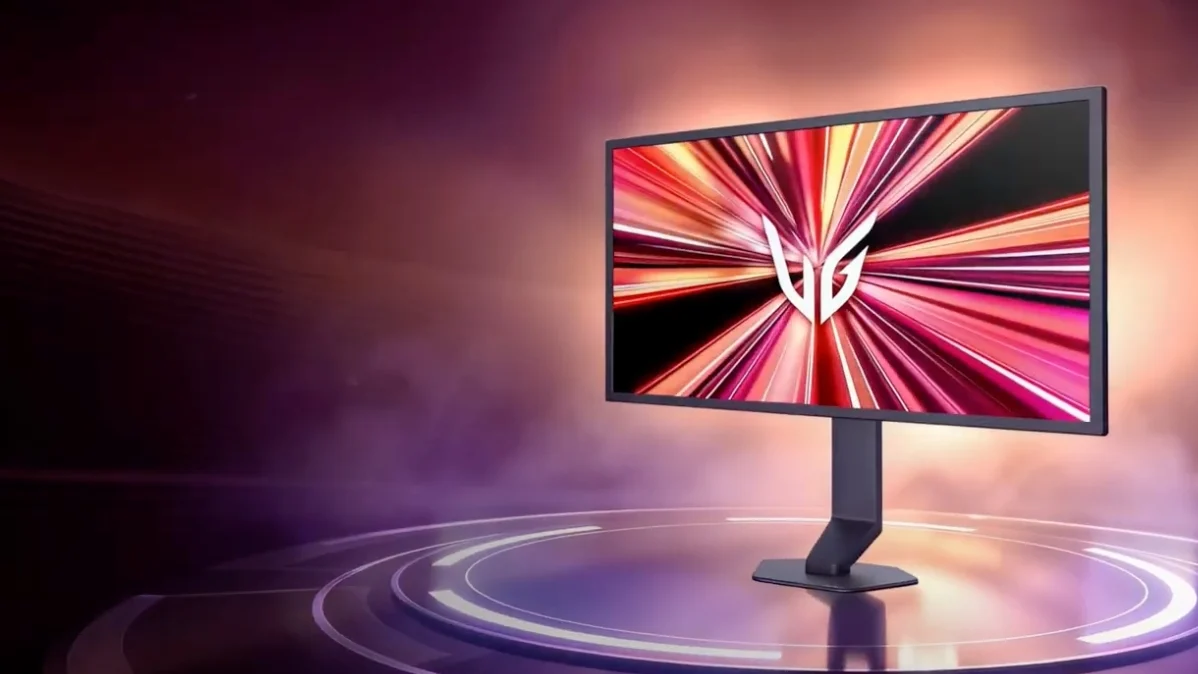
In the relentless pursuit of competitive gaming supremacy, the metric of "fluidity" has evolved from a luxury to a fundamental requirement. For years, the industry standard for professional-grade displays hovered at 144Hz, then climbed steadily to 240Hz, 360Hz, and eventually 540Hz. Today, LG Electronics has officially shattered the four-digit ceiling, announcing the launch of the UltraGear 25G590B—the world’s first gaming monitor to achieve a native 1,000Hz refresh rate at a 1080p resolution.
Priced at $999.99, the 25G590B is not merely a piece of hardware; it is a statement of intent from a market leader. By hitting the 1,000Hz milestone without sacrificing resolution—a trap that has ensnared previous contenders—LG has positioned itself at the absolute vanguard of display technology.
Main Facts: A New Benchmark for Fluidity
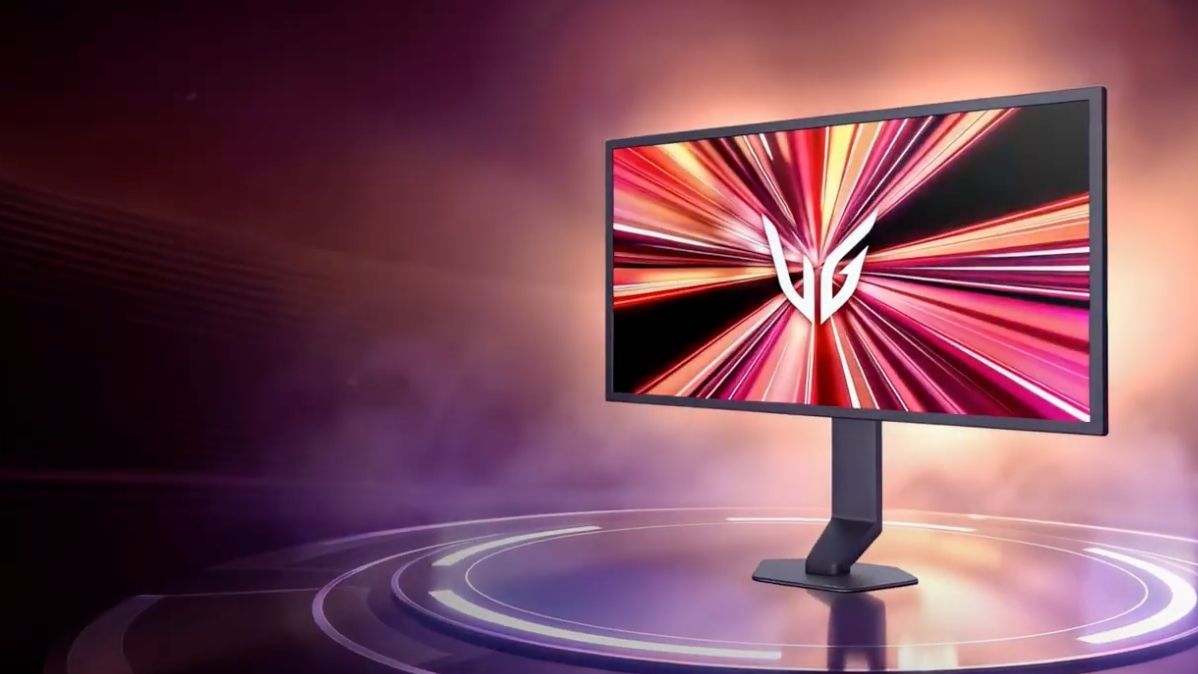
The LG UltraGear 25G590B is a 24.5-inch powerhouse built specifically for the esports elite. At its heart lies an IPS panel, a significant departure from the TN-based displays often used to reach extreme speeds. This choice of panel technology suggests that LG has prioritized color accuracy and viewing angles alongside sheer frame-delivery velocity.
The technical specifications are bolstered by robust connectivity, featuring two HDMI 2.1 ports and a single DisplayPort 2.1 interface. This configuration ensures that the bandwidth required to feed 1,000 frames per second to the display is fully supported. Furthermore, the monitor supports both AMD FreeSync Premium and Nvidia G-Sync, ensuring that frame delivery is synchronized perfectly with the GPU to eliminate screen tearing.
To manage the inherent challenges of high-speed motion, LG has integrated its proprietary Motion Blur Reduction Pro technology. This feature is designed to sharpen moving images, preventing the "ghosting" or smearing that can occur when pixels struggle to keep up with the ultra-fast refresh cycle. Ergonomically, the unit features a highly adjustable stand, supporting height, tilt, and swivel adjustments, all housed within a chassis adorned with the signature UltraGear RGB lighting.
The Chronology of the 1,000Hz Race
The journey to the 1,000Hz monitor has been a multi-year effort involving intense R&D from several display manufacturers.
- Early 2024: The industry buzz began as rumors surfaced regarding "super-speed" panels capable of bypassing the 540Hz wall.
- Mid-2024: LG officially unveiled the UltraGear 25G590B, teasing the industry with the promise of a native 1,000Hz experience. During this announcement, the company outlined its roadmap for a late-2026 release, setting expectations for a competitive launch.
- Late 2026: LG has now fulfilled its promise, opening pre-orders for the unit. The company has utilized this window to refine its panel technology, ensuring that the 1,000Hz output is sustainable for prolonged gaming sessions.
- Current Status: As of August 2026, the unit is available for early adopters. Those who secure their orders before August 31 are eligible for promotional incentives, including a 5% reward on MyLG accounts and a $1 two-year premium care warranty expansion.
Supporting Data: Why Native Resolution Matters
The "1,000Hz barrier" has been a point of contention in the monitor space for some time. Other manufacturers have reached the 1,000Hz mark, but with significant compromises. For instance, the Acer Predator XB273U F6 and the AntGamer ANT275PQ MAX both boast extreme refresh rates, but they achieve these speeds only by dropping the resolution to 720p.
Dropping to 720p in the current era of competitive gaming—where pixel density and clarity are essential for spotting enemies at long distances—is a considerable disadvantage. LG’s ability to maintain a full 1080p resolution at 1,000Hz represents a paradigm shift. It means the monitor is not just a scientific curiosity; it is a viable, high-definition tool for competitive players.
The math behind the monitor is equally staggering. At 1,000Hz, the display updates once every one millisecond. When combined with an IPS panel, which typically carries higher latency than TN panels, the engineering feat of keeping the response time under the one-millisecond frame window is nothing short of miraculous.
Official Responses and Strategic Positioning
LG’s marketing strategy for the 25G590B focuses on the "cost per hertz" metric. At $999.99, the monitor effectively costs $1 per Hz. While this is an expensive proposition for a 1080p display, it is targeted strictly at the professional and semi-professional esports demographic, where the "cost of winning" is often measured in milliseconds.
In a recent press statement, representatives from LG noted that the 25G590B is the culmination of years of development in liquid crystal response times. The company emphasized that the inclusion of Motion Blur Reduction Pro was non-negotiable, as human perception at 1,000Hz is extremely sensitive to micro-stuttering or ghosting. By offering the monitor directly through their online portal, LG is aiming to cultivate a direct relationship with the hardcore enthusiast community, using the pre-order incentives (the 5% MyLG rebate and the $1 warranty) to solidify brand loyalty.
Implications for the Future of Esports
The introduction of a 1,000Hz monitor raises a fundamental question: Is the human eye capable of perceiving the difference between 540Hz and 1,000Hz?
While the average consumer might find the jump imperceptible, professional esports athletes—who operate in a world of sub-millisecond reaction times—often report that higher refresh rates provide a "smoother" tracking experience, particularly during rapid mouse flicks in titles like Valorant, Counter-Strike 2, or Overwatch 2.
However, the hardware implications extend beyond the display. To actually benefit from a 1,000Hz monitor, a user needs a PC capable of generating 1,000 frames per second. This necessitates the absolute top-tier of GPU and CPU performance, likely requiring overclocked hardware and optimized game settings to reach such high-frequency output.
The Technological Ripple Effect
The existence of this monitor will likely force GPU manufacturers and game engine developers to optimize for higher frame rates. Historically, we have seen that whenever a hardware manufacturer pushes a display limit, software developers follow suit to take advantage of that overhead.
Furthermore, the 25G590B sets a new "Gold Standard" for the UltraGear brand. It cements LG’s reputation as the primary innovator in the display space, moving them ahead of rivals who have thus far relied on "dual-mode" or "resolution-compromised" solutions.
Final Thoughts: A Pro-Grade Frontier
The LG UltraGear 25G590B is not a monitor for the masses. It is a specialized instrument designed for a specific purpose: to remove every possible hardware-induced barrier between the player’s brain and the game world.
As we look toward the remainder of 2026 and into 2027, it is highly probable that we will see other manufacturers attempt to replicate this feat. However, LG has secured the "First to Market" title, and their implementation of a full-resolution 1080p IPS panel sets a high bar for the competition. For the competitive gamer who believes that every frame counts, the 25G590B is the new summit. Whether the industry can push past 1,000Hz in the coming years remains to be seen, but for now, the ceiling has been raised to an unprecedented height.