Azzam Bilal Chamdy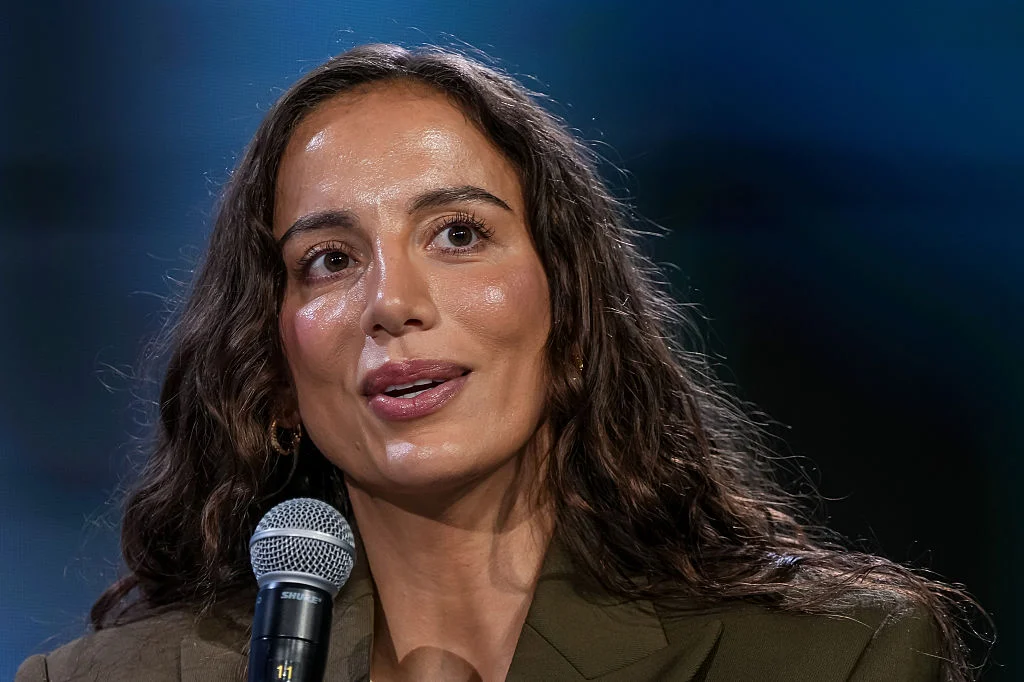
For the better part of eighteen months, Mira Murati has been a ghost in the machine. As the former Chief Technology Officer of OpenAI, she was a central figure during the most explosive period in modern artificial intelligence history. However, since departing to launch her own venture, Thinking Machines Lab, she has deliberately retreated from the spotlight. That self-imposed silence ended abruptly this Thursday in San Francisco, where Murati sat down with Bloomberg’s Emily Chang for her first major media appearance since establishing her new firm.
The interview was a calculated maneuver. In an industry where "visibility is currency," Thinking Machines has spent the last year operating in the shadows. By emerging now, Murati is acknowledging the reality of the current AI arms race: when your competitors—OpenAI, Anthropic, and Elon Musk’s xAI—are capturing the global zeitgeist, staying "heads down" eventually leads to invisibility.
The Chronology of a Silicon Valley Pivot
To understand Murati’s current positioning, one must look back at the chaotic trajectory of her career over the last two years.
The "Blip" and the Boardroom Turmoil
In November 2023, the tech world was paralyzed by the sudden, dramatic firing of Sam Altman from OpenAI. Murati, then the CTO, was thrust into the role of interim CEO. It was a five-day stretch of existential crisis for the company that would define the modern era of AI.
Reflecting on those days, which she calls "the blip," Murati maintained that her actions were driven by a singular mandate: preserving the mission and protecting the team. "The company would have imploded," she asserted, had she not intervened during that turbulent week. Yet, her reflection carried a note of sobering pragmatism. While she felt clear in her decision-making at the time, she admitted that "clarity of intent is not the same thing as clarity about consequences." She conceded that, in retrospect, she would have pushed for greater transparency and a more robust transition plan, hinting at the internal fractures that remained hidden from the public eye.
The Birth of Thinking Machines Lab
Following her departure from OpenAI, Murati quietly founded Thinking Machines Lab. For over a year, the company focused on internal development, capital acquisition, and the recruitment of elite research talent. Their first public output, an API titled Tinker, focused on fine-tuning open-source models—a strategic move that catered to developers looking for flexibility outside the "walled gardens" of the major AI labs.
Technical Innovation: Moving Beyond the "Prompt"
During the Bloomberg interview, Murati provided a glimpse into what Thinking Machines is building. She is moving away from the "prompt-and-response" paradigm that has become the industry standard.
Interaction Models: The 200-Millisecond Threshold
The core vision for Thinking Machines is the development of what Murati calls "interaction models." Unlike current chatbots that operate in discrete, turn-based chunks, these models are engineered to process continuous streams of multimodal data—audio, text, and video—at 200-millisecond intervals.
The ambition here is to bridge the gap between machine logic and human texture. By processing data at this speed, the AI can theoretically recognize the nuances of human speech: the mid-sentence corrections, the interruptions, and the deliberate pauses used to formulate a thought. It is an attempt to create an AI that doesn’t just process information but participates in the rhythm of human communication. Murati was quick to manage expectations, however, framing the technology as a nascent "first step" rather than a finished product, and she pointedly refused to provide a release date, favoring the "under-promise, over-deliver" approach that is standard in early-stage research labs.
Structural Governance: The Industry’s Blind Spot
Perhaps the most compelling part of Murati’s appearance was her shift toward the philosophical and the political. When pressed on whether she still holds trust in her former boss, Sam Altman, she deftly sidestepped the personal, instead broadening the critique to the industry at large.
The Concentration of Power
Murati expressed deep concern regarding the concentration of consequential AI decisions in too few hands. She argued that the industry has become obsessed with the "virtue" of its leaders—the idea that if the person in charge is "good," the outcomes will be "good"—while ignoring the fundamental absence of structural governance.
"Good people make bad calls," Murati noted. "Well-intentioned organizations drift." She argued that current AI development is happening in a vacuum where market pressure often overrides safety and ethical protocols. Her assertion is clear: until the industry moves away from personality-driven leadership and toward transparent, enforceable governance, the risks of "drift" are significant.
Navigating the War for Talent
The growth of Thinking Machines has not been without its own internal friction. The company has seen several high-profile researchers depart in recent months, a reality that has fueled rumors of instability.
Murati addressed these departures with a mixture of industry-wide context and personal conviction. She framed the volatility as a byproduct of the rapid growth inherent in building a "frontier lab" from scratch. "We have compressed years of normal organizational volatility into months," she explained.
While she acknowledged that the nine-figure compensation packages offered by competitors are a massive draw for top-tier talent, she dismissed the notion that money is the sole driver of employee churn. When asked about her competitive drive, she offered a refreshing take on the cutthroat nature of Silicon Valley: "When I wake up in the morning, I am not thinking about how to kill the competitor." It is a sentiment that positions Thinking Machines as a product-first, rather than market-share-first, endeavor.
Implications: The Dystopia-Utopia Binary
As the interview neared its conclusion, the conversation turned to the existential fears surrounding AI: mass job displacement, the weaponization of models for chemical warfare, and the loss of human agency.
Murati, who brings a distinct perspective as an immigrant with a background in engineering, rejected the binary narrative of "inevitable dystopia vs. inevitable utopia." She argued that the path is not predetermined; rather, the current era—the one we are living through right now—is the pivotal moment where the future is being written.
Her closing remarks served as a stern warning to both the public and her peers. She suggested that if humanity takes its "hands off the wheel" too early—whether through complacency, blind trust in tech leaders, or a lack of regulatory foresight—the resulting future will be markedly worse. For Murati, the development of AI is not just a technological challenge; it is a test of human responsibility.
Final Takeaways
- Strategic Silence: Murati’s return to the public eye is a recognition that even "stealth" companies need to command attention to thrive.
- The Interface Shift: Thinking Machines is pivoting toward real-time, multimodal interaction, aiming to make AI more human-responsive rather than task-responsive.
- Governance Over Virtue: Murati is advocating for a structural shift in how AI companies are governed, moving the focus from the character of CEOs to the design of the systems they manage.
- The "Hands on the Wheel" Doctrine: Her philosophy remains one of cautious optimism—AI is a tool that requires constant human oversight, or it will inevitably drift toward undesirable outcomes.
As Thinking Machines Lab continues to iterate on its "interaction models," the industry will be watching closely. Whether Murati’s approach to governance and design can successfully differentiate her from the "move fast and break things" culture of her peers remains the defining question of her second act in Silicon Valley.


 Jia Lissa
 Asro
Asro