

By Alexandra Hopkins
May 8, 2026
"The future we were warned about is no longer distant; it is here."
With this sobering yet lyrical declaration, Oscar-nominated filmmaker Sara Dosa opens her latest documentary, Time and Water. Following her BAFTA-nominated and Academy Award-nominated triumph Fire of Love, Dosa returns to the screen with an expansive, deeply personal meditation on the intersection of generational memory, the fragility of our natural environment, and the persistent, radical power of human affection. By weaving together archival footage, evocative cinematography, and the poignant prose of Icelandic author Andri Snær Magnason, Dosa crafts a film that serves not merely as a climate documentary, but as an elegy for the world we are losing and a manifesto for how we might continue to love in the face of that loss.
The Genesis of a Cinematic Sibling
At the heart of Time and Water lies the work of Andri Snær Magnason, specifically his celebrated book, On Time and Water. Rather than opting for a traditional, linear adaptation of the text, Dosa approached the project as a creative partnership. The goal, she explains, was to construct a "cinematic sibling" to the book—a project that could stand independently while sharing the same DNA as Magnason’s written reflections.
"We really started to get into the themes of the film, of his book, of his archives, to figure out how we could work with his book in a way where the film would be kind of like a cinematic sibling, but not an adaptation," Dosa notes. This collaborative "team sport," as she characterizes it, required constant dialogue between the filmmaker and the author, ensuring that Magnason’s specific, intimate voice remained the heartbeat of the production.
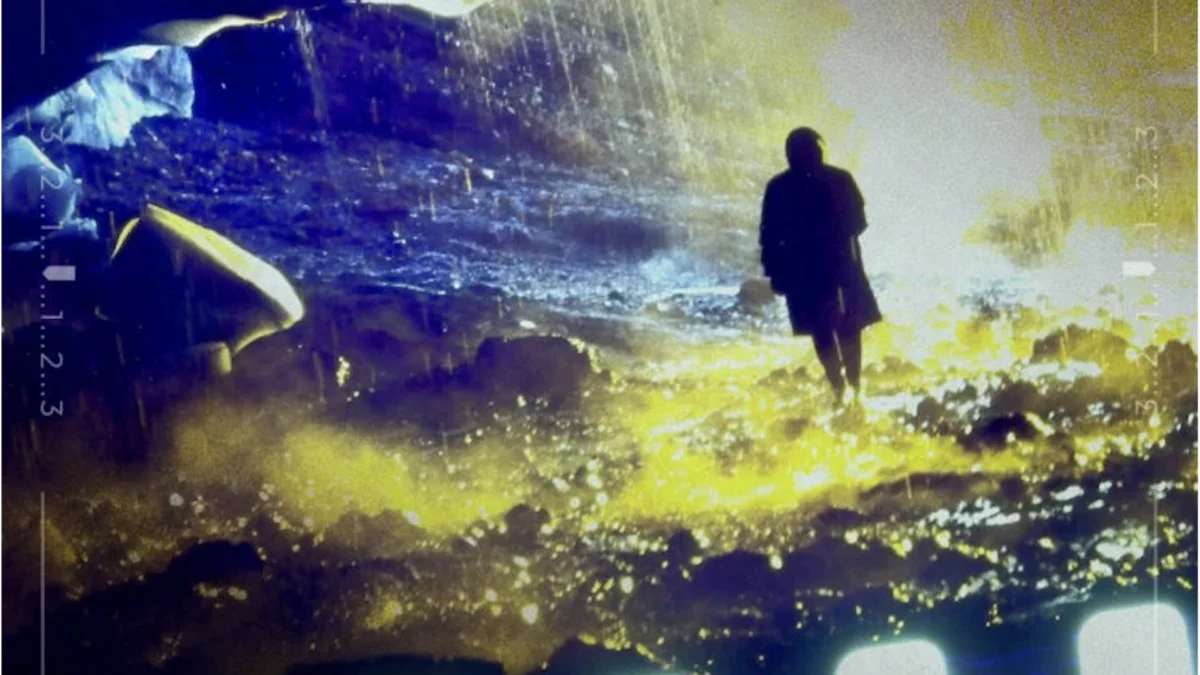
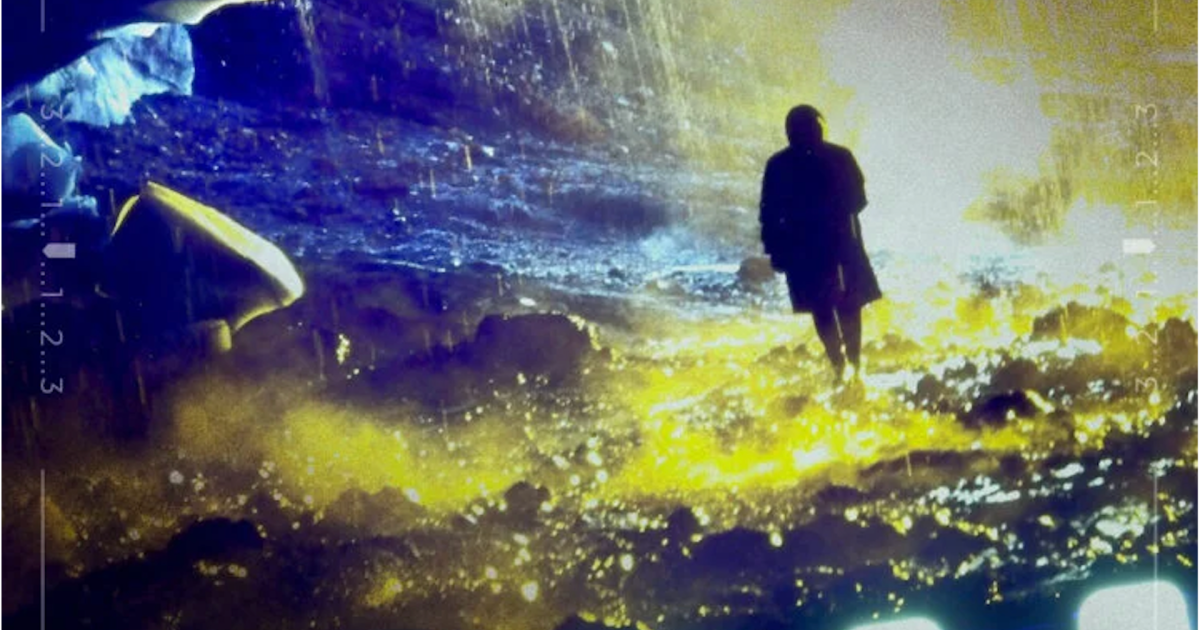
The result is an atmospheric journey that transcends the typical talking-head documentary format. Through Dosa’s lens, the audience is transported across the vast, icy expanse of Iceland’s glaciers. These titans of nature serve as the film’s silent protagonists—slow-moving, ancient, and increasingly ephemeral. As Magnason bears witness to the rapid melting of these glaciers, the film juxtaposes this environmental catastrophe with the personal, localized grief of losing his own grandparents.
Chronology: From the Glaciers to the Screen
The journey of Time and Water began in the creative mind of Magnason, whose literary career has long been defined by his attempt to bridge the gap between human history and geological time.
- The Conceptual Phase: Following the critical acclaim of Fire of Love, Dosa sought a project that would allow her to explore the "sentience of our natural world." She found a mirror in Magnason’s writing, which treats the environment not as a backdrop, but as a living participant in human affairs.
- Production and Collaboration: Throughout 2024 and 2025, Dosa and her team worked closely with Magnason to curate a visual language that reflected his literary cadence. The production focused on the interplay between Iceland’s geological history and the familial histories of those who call it home.
- Sundance Premiere (January 27, 2026): The film made its world debut at the Sundance Film Festival, where it was immediately lauded for its emotional resonance and visual ambition. Critics noted that it offered a fresh perspective on the "climate crisis" genre by centering emotional intelligence rather than just scientific data.
- SXSW Screening (March 12, 2026): Following its Sundance success, the film screened at the SXSW Film & TV Festival, further cementing its status as one of the most significant documentary releases of the year.
The Intersection of Memory and Climate Data
While Time and Water is deeply poetic, it is underpinned by the harsh reality of global environmental shifts. The documentary serves as a vessel for the data that Magnason has long championed: the reality that the warming of our planet is not a future problem, but a current reality.
However, Dosa intentionally avoids the "doom-scrolling" effect of many contemporary climate documentaries. Instead, she utilizes the "archival material" to show that our relationship with the natural world is a legacy. The glaciers are not just melting ice; they are markers of time. By linking the lifespan of a glacier to the lifespan of a human, the film forces the viewer to confront the "indelible impression" we leave on the world.
Supporting data regarding the retreat of Icelandic glaciers provides the film’s skeletal structure. According to regional environmental reports, Icelandic glaciers—including the iconic Vatnajökull—are losing mass at an accelerated rate, a phenomenon that has profound implications for the local ecosystem and the global water cycle. Dosa’s film translates these statistics into the "tremendous loss" felt by an individual, making the abstract concept of climate change feel tangibly, heart-wrenchingly local.
Official Perspectives: The Philosophy of Dosa’s Direction
In interviews, Dosa has been remarkably candid about her motivations. She identifies herself as a filmmaker drawn to stories where humans search for meaning within the natural world. "I’m always drawn to stories about how humans are finding meaning in nature and relationships with nature—specifically stories that show life force or sentience of our natural world," she says.
This perspective is crucial to understanding her directorial style. Dosa does not view her subjects as detached from their environment. Instead, she posits that our ability to care for the environment is inextricably linked to our ability to care for one another.
"I deeply love our natural world. I deeply love humans, despite our flaws, which are many," Dosa reflects. "It’s not something I ever really intentionally thought, ‘I’m going to set out to make love stories.’" Yet, that is precisely what she achieves. Whether she is documenting volcanologists in Fire of Love or a grieving author in Time and Water, her work consistently uncovers the warmth inherent in the human struggle.
The Radical Power of Love
One of the most compelling aspects of the documentary is its insistence on the "radical" nature of love in a polarizing era. Dosa believes that in a world defined by apocalyptic narratives, maintaining joy is an act of defiance.
"There is something radical about love, especially in a time that is so polarizing," she asserts. "Wherever we can center love and joy amid the doom and the apocalyptic stories that abound, I think it could inspire hope. I think it can give a sense of a light in the dark to keep people working toward the change that we so badly need."
Implications: How Do We Say Goodbye?
Perhaps the most haunting question posed by Time and Water is one that echoes throughout the film’s narrative: How do you say goodbye to what you never thought you could lose?
For Dosa, this question is personal. Having experienced the loss of her own grandparents and great-grandparents, she found in Magnason’s work a mirror for her own grief. She describes the breaking point that occurs when the figures who anchored one’s existence disappear, leaving the survivor to navigate a world that feels suddenly alien.
The implication for the audience is clear: we are currently in the process of saying goodbye to the planet as we have known it. The film suggests that the "dread of losing the people that shaped her" is the same dread we must process regarding the extinction of natural wonders. By forcing the viewer to sit with this discomfort, Dosa isn’t trying to leave us in despair; she is trying to wake us up to the urgency of our remaining time.
Conclusion: A Wake-Up Call for the Present
Time and Water is a stark reminder that the future is not something that happens to us—it is something we are actively building. By moving between the macro-scale of global environmental collapse and the micro-scale of family history, Sara Dosa has created a work that feels both infinite and intimate.
The film does not offer easy solutions or hollow optimism. Instead, it offers a mirror. It asks us to consider what we value, what we are willing to fight for, and how we might carry the memory of what we have lost while still working to preserve what remains. As the credits roll, the audience is left not with the crushing weight of hopelessness, but with the quiet, persistent pressure to cherish the present. In the face of a changing world, Dosa suggests that our greatest weapon is not just our intellect, but our capacity for love.
As we look toward the future, the message of Time and Water remains clear: we must protect the planet with the same fierce, tender urgency with which we protect our loved ones. Because, as the film suggests, in the end, they are one and the same.











No comments yet. Be the first to join the conversation!