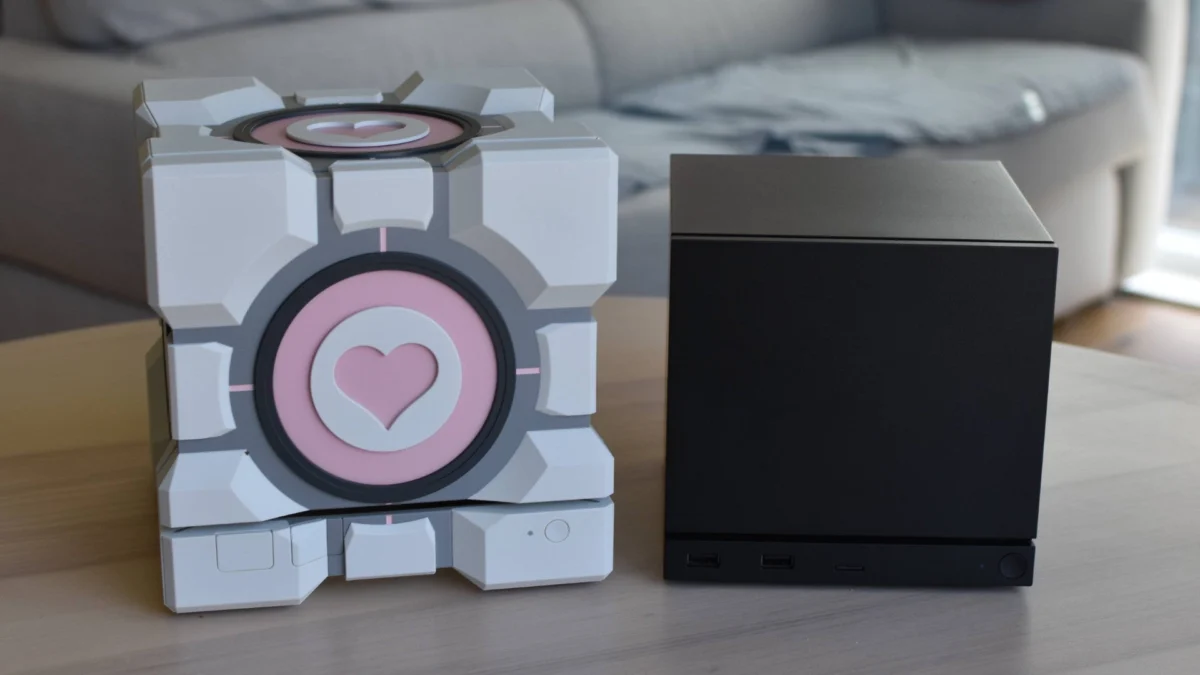
In the hyper-competitive world of PC hardware accessories, the "Companion Cube" enclosure for the Steam Machine was supposed to be a cultural touchstone—a physical manifestation of one of gaming’s most beloved Easter eggs. Instead, it has become a cautionary tale about the perils of "ask forgiveness, not permission" corporate strategies. After generating immense viral interest and securing what was reportedly one of the company’s most successful product launches to date, accessory giant Dbrand has officially scrubbed the project from existence, issuing full refunds to customers and admitting a monumental oversight in their development process.
The Chronology of a Failed Concept
The downfall of the Companion Cube case is a masterclass in hubris meeting intellectual property law. The trajectory of the project can be traced back to mid-November 2025, mere hours after Valve officially announced the Steam Machine.
November 12, 2025: The Spark
Dbrand released a concept render of a custom PC chassis modeled after the iconic Weighted Companion Cube from the Portal franchise. The design was instantly recognizable, tapping into nearly two decades of nostalgia. Within 24 hours, over 15,000 potential customers had signed up for notification alerts.
November 2025 – June 2026: The "Build First" Phase
For seven months, Dbrand’s engineering team poured what the company later described as "more than a thousand hours" into the project. Despite the heavy investment of time, labor, and prototyping, the company failed to initiate any communication with Valve Corporation.
June 22, 2026: The Launch
Dbrand officially opened orders for the Companion Cube enclosure, timed strategically just hours before Valve released the pricing and reservation details for their own hardware. The reception was overwhelming; by all accounts, it became the second-most popular product launch in Dbrand’s history.
Late June 2026: The Legal Reckoning
The momentum came to a screeching halt when Valve’s legal department contacted Dbrand. The message was unambiguous: the Companion Cube is protected Valve intellectual property, and Dbrand had no license to manufacture or sell merchandise bearing its likeness.
Early July 2026: The Final Admission
After a failed appeal to secure a retroactive licensing deal, Dbrand pulled all marketing materials, ceased production, and processed refunds for all pre-orders.
The Anatomy of the Error: A Lack of Due Diligence
The primary point of contention in this saga is not the quality of the product—which was, by most accounts, exceptionally well-engineered—but the complete absence of corporate foresight. Critics and industry analysts have pointed out the glaring absurdity of spending 1,000 hours of engineering time without spending even a fraction of that time on legal compliance.
"We should’ve asked first," Dbrand acknowledged in a public statement posted to Reddit. This admission, while refreshingly candid, highlights a recurring issue in the accessory market: the temptation to leverage massive gaming brands to drive sales, assuming that the sheer popularity of a product will force a copyright holder’s hand into a partnership.
In this instance, Dbrand’s assumption was proven wrong. Valve, a company known for being notoriously protective of its intellectual property while simultaneously maintaining a high level of respect within the developer community, acted swiftly. According to Dbrand, Valve’s legal team was "direct, fair, and respectful" throughout the process, debunking any narrative that the tech giant was acting out of malice or unreasonable aggression.
Supporting Data and Market Impact
The fallout from the cancellation is significant, not just for the company’s bottom line, but for the logistics of the niche PC market.
- Production Investment: Dbrand dedicated significant internal resources, including industrial design, thermal testing, and high-quality materials, to create the chassis. The "thousand-hour" claim underscores the level of risk the company took by operating without a contract.
- Customer Impact: While the exact number of units sold has not been publicly audited, the "second-most popular launch" status implies thousands of units were affected. The overhead cost of refunding these orders, coupled with the sunk costs of research and development, represents a substantial financial hit for the company.
- Media Perception: The incident has created a ripple effect in the tech journalism space. Many reviewers and influencers, who had accepted review units under the assumption that the product was legitimate, found themselves in the awkward position of having to return or dispose of hardware that effectively does not exist.
Official Responses and the "Humble Pie"
The shift in tone from Dbrand is perhaps the most notable aspect of this situation. Historically, the company has been known for its combative, often confrontational relationship with hardware manufacturers—most notably in their past legal skirmishes with Sony over custom PlayStation faceplates.
In those previous instances, Dbrand adopted an aggressive, litigious posture. However, when faced with Valve, the company pivoted toward a tone of contrition. By admitting that their approach was "backwards" and acknowledging that Valve was well within its rights, Dbrand avoided the PR nightmare that typically follows a protracted legal battle.
"To Valve: thank you for Portal, and sorry for the headache," the company wrote. This apology, while late, served to de-escalate what could have been a much more damaging legal confrontation.
Implications: The Future of Fan-Made Hardware
The death of the Companion Cube case serves as a broader lesson for the DIY and boutique hardware community. The intersection of "fan-art" and "commercial product" is a legal minefield.
1. The Precedent of IP Ownership
Companies like Valve, Nintendo, and Sony have become increasingly vigilant regarding the unauthorized use of their branding. This case proves that even a well-intentioned, high-quality tribute product is subject to immediate shutdown if the proper licensing channels are ignored.
2. The Risk of the "Unauthorized" Business Model
Boutique manufacturers often operate on the fringes of licensing, hoping to capture the "hype" of a franchise without paying the hefty fees associated with official collaboration. The Dbrand case demonstrates that the larger the project, the more likely it is to attract legal scrutiny. For a product that is designed to be a permanent piece of a consumer’s home setup, relying on an unlicensed design is a massive liability.
3. A Shift in Consumer Expectations
For the consumer, this saga underscores the importance of transparency. Buyers who pre-ordered the Companion Cube were left in limbo, illustrating the risks of purchasing "unofficial" hardware. It is likely that future projects from independent manufacturers will face increased scrutiny from consumers who are now wary of the "will-it-be-cancelled" nature of fan-centric accessories.
Conclusion: A Lesson Learned?
The saga of the Steam Machine Companion Cube ends not with a whimper, but with a clear, albeit expensive, lesson. Innovation is only half of the battle in the hardware industry; the other half is navigation of the legal frameworks that define intellectual property.
While Dbrand’s engineers succeeded in creating a product that was "so well-made it hurt," their failure to secure the blessing of the original creators rendered the entire endeavor moot. For now, the Companion Cube remains a ghost—a product that captured the imagination of thousands, only to be dismantled by the very laws that protect the creative works the case intended to celebrate.
Whether this represents a genuine change in how Dbrand approaches future collaborations remains to be seen. However, one thing is certain: the next time a "too good to be true" gaming accessory appears, it will be the community’s turn to ask the hard questions—starting with, "Did you ask permission first?"