

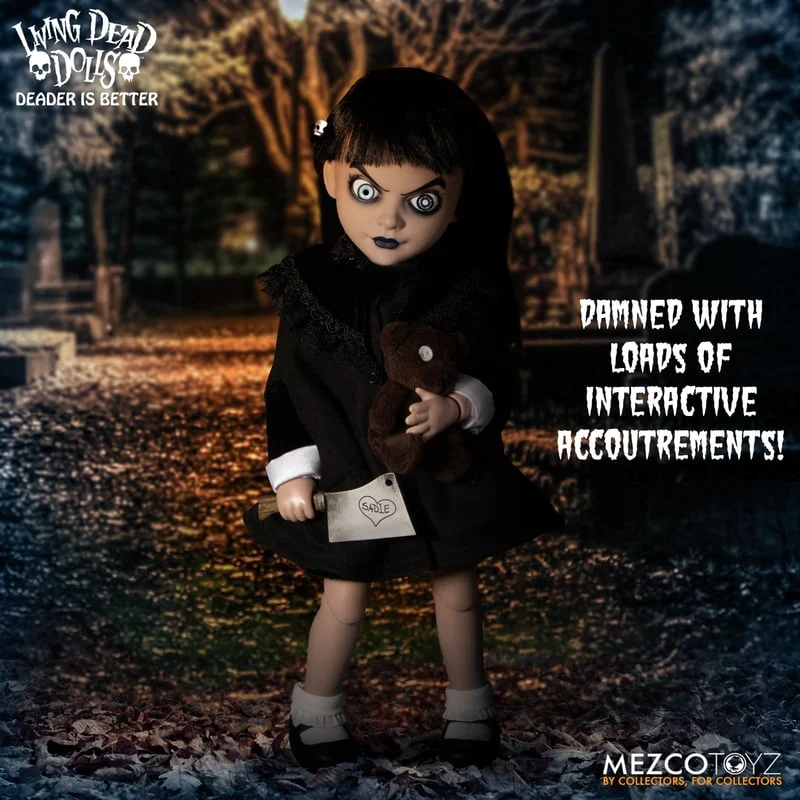
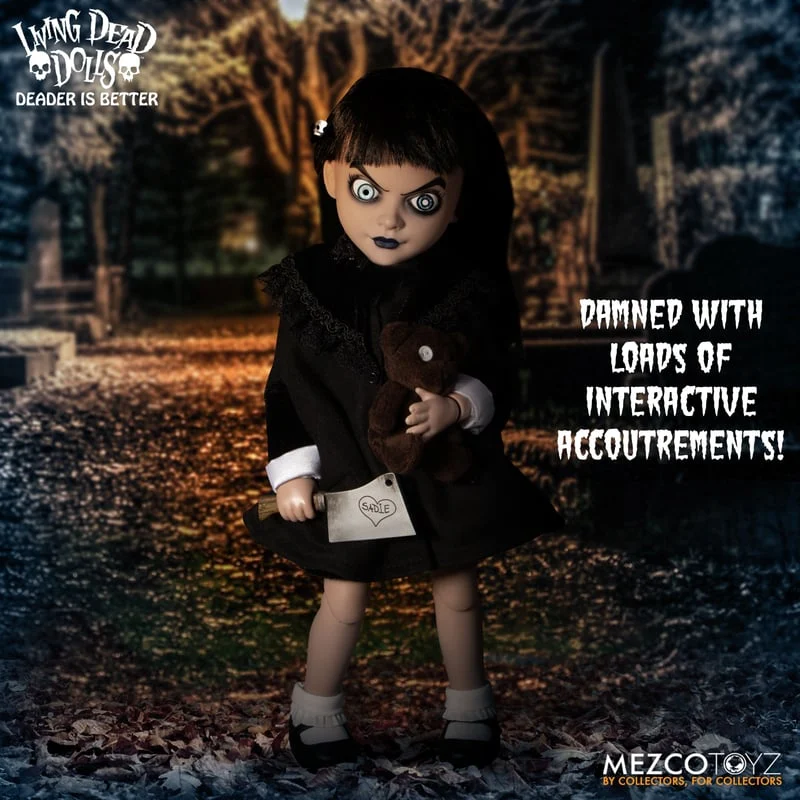
“No one cared how she turned up dead, so Sadie chose to rise instead…”
For over two decades, the Living Dead Dolls (LDD) have occupied a unique, gothic niche in the toy industry, bridging the gap between high-end collectibles and macabre horror art. Today, that legacy reaches a new milestone as the franchise announces a complete technical and aesthetic overhaul. Leading this revival is the undisputed matriarch of the series: Sadie. The "First Living Dead Doll" has been reimagined as a deluxe, highly articulated, and hyper-interactive figure, marking the beginning of a new era for Mezco Toyz’s most iconic property.
The Main Facts: A Modern Rebirth of a Horror Classic
The new "Deluxe Sadie" is not merely a reissue; it is a fundamental reconstruction of what a collectible horror doll can be. Departing from the rigid, traditional vinyl aesthetic that defined the early 2000s, this version of Sadie incorporates advanced engineering to satisfy the demands of modern toy collectors.
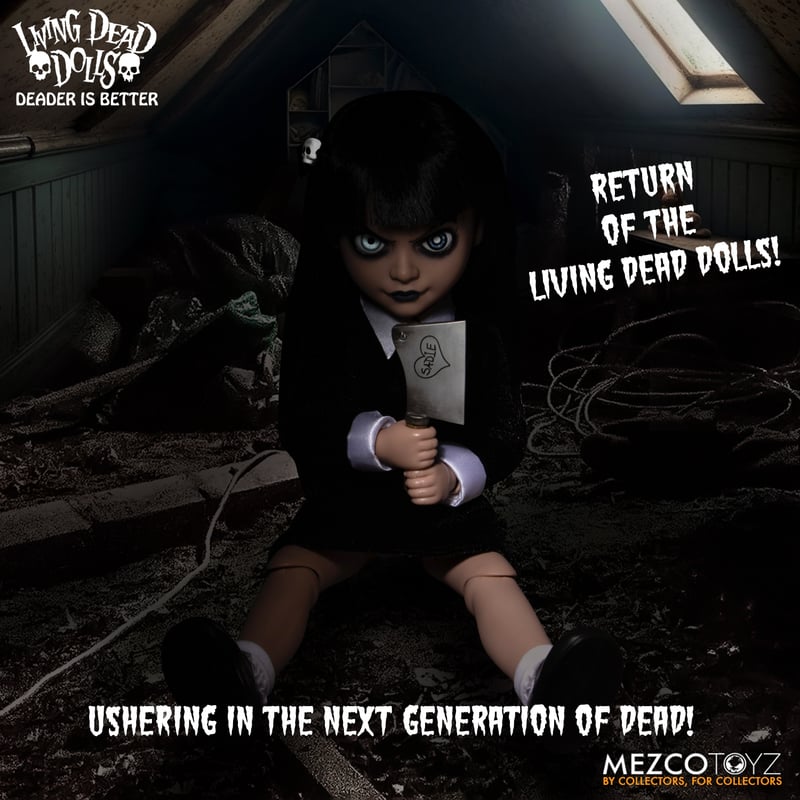
Standing as the flagship for a new generation of Living Dead Dolls, Sadie boasts 18 points of articulation, allowing for a range of motion previously impossible for the line. The figure moves beyond simple aesthetic charm, offering "Death Mask" face plates—interchangeable expressions that shift Sadie from a menacing glare to a sinister, knowing smirk. Furthermore, the inclusion of movable, glass-like eyes, controlled via internal head mechanisms, provides a haunting level of realism that elevates the figure from a static display piece to an interactive horror centerpiece.
The doll arrives in a classic coffin-shaped presentation box, retailing at $120. With a shipping window slated for late 2023, the announcement has already sent shockwaves through the community of horror enthusiasts and toy connoisseurs.
Chronology: The Evolution of the Living Dead Dolls
To understand the gravity of this release, one must look back at the origins of the Living Dead Dolls. The brand was conceived in 1998 by Ed Long and Damien Glonek. What began as a series of handmade, one-of-a-kind dolls sold at horror conventions quickly exploded into a global phenomenon.
The Early Years (1998–2005)
In the late 90s, the market was dominated by traditional, polished dolls. Long and Glonek tapped into the "Goth" subculture, creating characters with tragic backstories, morbid names, and a distinctly DIY aesthetic. When they partnered with Mezco Toyz in the early 2000s, the brand saw mass-market distribution, cementing characters like Sadie, Posey, and Sin in the pantheon of pop-culture horror.
The Middle Era (2006–2020)
For nearly two decades, the design language remained consistent: static poses, rooted hair, and cloth clothing. While the company experimented with different materials and themes—ranging from classic movie monsters to original horror concepts—the technical foundation of the doll remained largely unchanged. They were beloved for their simplicity and the "haunted" aura they brought to bookshelves and curio cabinets.
The Renaissance (2021–Present)
The decision to upgrade the line signals a shift in consumer expectations. Modern collectors now demand "Super Action" features, high-end accessories, and display versatility. The introduction of the Deluxe Sadie represents the company’s intent to compete directly with high-end sixth-scale figure manufacturers, blending their signature gothic charm with modern engineering.
Supporting Data: Technical Specifications and Inclusions
The new Sadie is a masterclass in accessory density and mechanical complexity. Designed for the collector who values display variety, the figure comes equipped with:
- Articulation: 18 distinct points of movement.
- Facial Customization: Interchangeable "Death Mask" face plates.
- Ocular Technology: Internal control for movable, glass-like eyes.
- Hand Variations: Five interchangeable hand sets, allowing for dynamic posing, from a delicate grip on her floral bouquet to a firm hold on her meat cleaver.
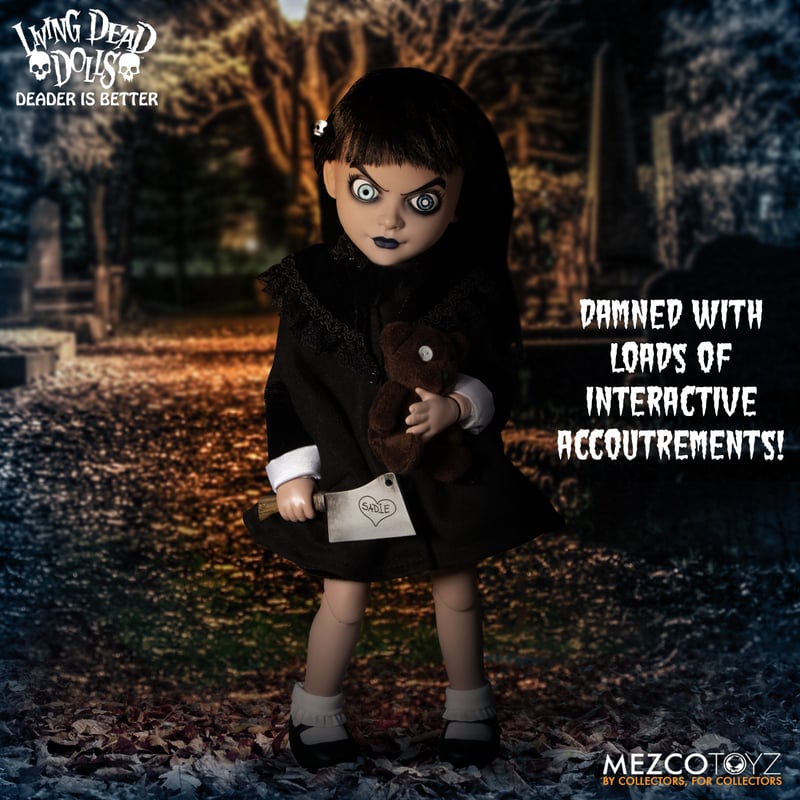
- Costume Details: Her signature velveteen dress, complete with satin collar and cuffs, is accented by removable sunglasses and a shawl—perfect for transitioning from a funeral procession to a night of dark activities.
- Accessories: A personalized, engraved tombstone, a miniature coffin purse, a bouquet of black flowers, a meat cleaver, and a heterochromatic teddy bear.
This level of detail moves the price point into the $100+ bracket, placing the Living Dead Dolls in direct competition with the likes of NECA’s "Ultimate" line and various high-end Japanese import figures.
Official Perspectives: The Philosophy of the Macabre
While Mezco Toyz is known for its secrecy, the promotional material accompanying the launch emphasizes a "reverence for the past, with an eye toward the future." Industry analysts suggest that this pivot is a calculated move to keep the brand relevant in an era of digital saturation.
"The Living Dead Dolls have always been about storytelling," notes Jeff Saylor, a pop-culture historian and industry critic. "By giving Sadie a face that can express emotion and hands that can interact with her environment, the collector is no longer just owning a doll; they are directing a horror scene. The doll has become an actor."
The company’s decision to keep Sadie as the primary vehicle for this change is symbolic. As the original doll of the series, her transformation validates the entire line’s evolution. It suggests that while the "Dead" may remain, they are no longer content to stay still.
Implications: The Future of Horror Collectibles
The release of the Deluxe Sadie has significant implications for the toy industry.
1. The Rise of the "Display-Centric" Toy
Collectors are increasingly prioritizing shelf presence over playability. The Living Dead Dolls are moving away from the "toy" designation toward the "collector’s art piece" category. This transition allows for higher price points and more complex manufacturing processes.
2. Market Saturation and Niche Branding
The horror collectibles market is crowded, with major studios licensing their IP for high-end figures. By sticking to their own original, proprietary characters, Mezco Toyz maintains a brand identity that is immune to the volatility of film licensing. This "original content" approach is a strong hedge against the cyclical nature of movie-based toy popularity.
3. The Tech-Horror Convergence
We are likely to see a trend toward more "active" horror figures. The success of this release will dictate whether other staple characters in the Living Dead Dolls line receive similar upgrades. If Sadie sells out, expect a wave of "Deluxe" versions of classic characters, potentially including electronic features or even more advanced skeletal structures.
Conclusion
The return of Sadie is more than just a product release; it is a statement of intent. By marrying the dark, nostalgic soul of the original 1998 dolls with the technical prowess of 2023 manufacturing, the Living Dead Dolls have successfully resurrected themselves for a new generation.
For those who have kept their original dolls in the dark corners of their homes, the Deluxe Sadie offers a compelling reason to clear a new spot on the shelf. She is dressed to kill, armed with a meat cleaver, and ready to prove that even after 25 years, the Living Dead Dolls remain the undisputed masters of the macabre. As the shipping window of July to September 2023 approaches, fans are left with one final thought: once you’ve risen from the grave with this much articulation, there is no going back.
The Living Dead Dolls have always been, and will always be, a reminder that the most interesting stories are the ones that never truly stay dead.









No comments yet. Be the first to join the conversation!