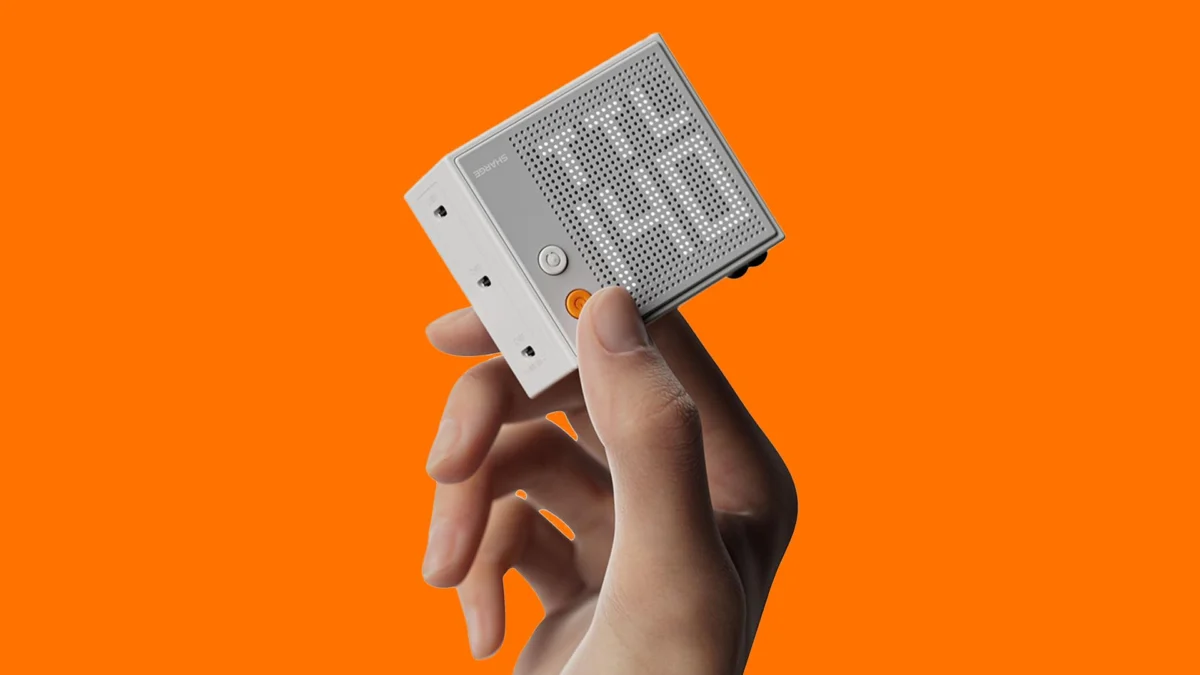
In an era where technology has largely converged toward minimalist, featureless slabs of matte plastic, the humble laptop charger has long been the industry’s aesthetic afterthought. For decades, consumers have been forced to choose between bulky, utilitarian power bricks that hide under desks or fragile, proprietary adapters that offer little in the way of utility or character. However, a shift is occurring. The Sharge Pixel 140W 3-Port GaN Charger has emerged as a disruptor, marrying high-performance Gallium Nitride (GaN) technology with a design language that evokes the golden age of computing while satisfying the modern need for rapid, intelligent power delivery.
With a current promotional offer on Amazon bringing the price down to a record low of $69.98—a 26% reduction from its standard retail price—the Sharge Pixel is no longer just a niche accessory; it is a compelling upgrade for power users, designers, and tech enthusiasts alike.
The Core Specs: Power Meets Precision
The Sharge Pixel 140W is a masterclass in engineering efficiency. At its heart lies GaN technology, a semiconductor material that has revolutionized the charging industry by allowing for smaller, lighter, and more heat-efficient power supplies compared to traditional silicon-based chargers.
Technical Overview
- Total Output: 140W
- Ports: 3 (Typically configured for a mix of USB-C and USB-A, depending on regional model variations)
- Charging Standard: Power Delivery (PD) 3.1
- Display: Real-time dot-matrix LED power monitoring
- Design Language: Retro-futurist/Industrial
The ability to deliver 140W of power—sufficient to charge the most demanding 16-inch MacBook Pro models at full speed—within such a compact frame is a significant feat. By utilizing GaN, Sharge has managed to shrink the footprint of a traditional 140W brick by nearly 40%, making it an ideal companion for the nomadic professional.
Chronology: The Evolution of the "Charging Aesthetic"
To understand why the Sharge Pixel feels so revolutionary, one must look at the timeline of power adapter design over the last two decades.
2000–2010: The Era of Utility
For much of the early 2000s, laptop chargers were defined by their "brick" status. They were heavy, black, and strictly functional. Design was non-existent; the goal was simply to convert AC to DC without overheating. Apple famously tried to soften this with the white "MagSafe" block, which was cleaner but ultimately still just a plastic brick.
2010–2020: The Rise of Portability and GaN
As ultrabooks became the industry standard, the demand for smaller chargers grew. This period saw the introduction of GaN technology. Manufacturers began to focus on portability, but the aesthetic remained largely "Apple-esque"—rounded corners, white plastic, and a complete lack of interface. The charger became an invisible utility.
2021–Present: The "Sharge" Movement
Sharge (formerly Shargeek) entered the market with a different philosophy: technology should be visible. They began releasing power banks with transparent chassis, allowing users to see the circuitry inside. The Pixel 140W represents the next stage of this evolution—the "Smart Charger." By integrating a dot-matrix display, Sharge turned a static tool into a piece of interactive hardware.
Supporting Data: Why Real-Time Monitoring Matters
The defining feature of the Sharge Pixel is its integrated dot-matrix display. While some might dismiss this as a gimmick, data suggests that real-time power monitoring is a significant value-add for modern workflows.
Eliminating Charging Anxiety
Modern devices—phones, tablets, laptops, and professional cameras—all draw power differently. A user might plug a laptop into a port and wonder why it isn’t charging at the expected 140W speed, only to realize that a secondary device is drawing current or the cable being used is limited to 60W.
The Sharge Pixel’s display provides instant feedback:
- Cable Verification: If the display shows a lower wattage than expected, the user immediately knows the cable is the bottleneck, not the charger.
- Health Monitoring: By observing the power draw, users can identify if a battery is beginning to degrade (e.g., if it refuses to pull maximum current even when nearly empty).
- Port Balancing: When multiple devices are plugged in, the display shows how the charger is dynamically splitting the 140W budget, allowing the user to prioritize their most critical device.
Official Responses and Market Positioning
Sharge’s branding strategy has been aggressive and targeted. By positioning their products as "Tech-Art," they have effectively captured the Gen-Z and Millennial demographic that values "desk setup" aesthetics.
Industry analysts have noted that the Sharge Pixel is not just competing with other third-party charger brands like Anker or Satechi; it is competing with the "stock" experience. By offering a product that looks better on a desk and provides more diagnostic data, they are convincing consumers to replace the perfectly functional chargers that came in the box with their laptops.
In recent promotional material, Sharge emphasized that the Pixel’s design was inspired by the early days of personal computing, specifically the 8-bit era. "We wanted to create a device that felt like it belonged in a studio, not under a desk," said a representative during the product’s launch phase.
The Implications: A Shift Toward Transparent Tech
The success of the Sharge Pixel carries broader implications for the consumer electronics industry.
1. The Death of the "Black Box"
Consumers are increasingly demanding transparency in their tech. We want to know how our devices work, how much power they are using, and how they are communicating with our hardware. The Pixel’s display is a harbinger of a future where chargers will likely include even more data, perhaps even communicating with a smartphone app to provide long-term battery cycle analytics.
2. Sustainability and Longevity
By providing real-time data, the Sharge Pixel encourages better maintenance of expensive devices. Knowing exactly how a device charges can help users avoid overheating, which is the primary cause of lithium-ion battery degradation. In this sense, a premium charger is an investment in the longevity of the laptop or phone it is powering.
3. The Desk Setup Culture
The rise of platforms like Instagram and TikTok has birthed a "Desk Setup" culture, where the aesthetic of one’s workspace is as important as its functionality. The Sharge Pixel’s retro-futurist design fits perfectly into these curated spaces. It is a piece of hardware that acts as a conversation starter, bridging the gap between a tool and a display piece.
Final Verdict: Is It Worth the Investment?
At the current sale price of $69.98, the Sharge Pixel 140W is arguably one of the best value-per-dollar tech upgrades available right now.
Pros:
- Unmatched Aesthetics: A departure from boring white or black bricks.
- Diagnostic Utility: Real-time power monitoring is a game-changer for troubleshooting.
- Performance: 140W GaN power delivery handles everything from high-end laptops to modern smartphones.
- Form Factor: Highly portable despite the sophisticated internals.
Cons:
- Premium Price: Even at a discount, it is more expensive than standard non-display chargers.
- Niche Appeal: Those who prefer a minimalist, "hidden" setup may find the display distracting.
For the professional creative, the remote worker, or the student who takes pride in their workspace, the Sharge Pixel is more than a charger. It is a reflection of a shift in how we interact with our technology—moving away from the "hidden utility" model toward a future where our devices are as transparent and communicative as the software they support. As we continue to rely on a growing ecosystem of portable electronics, having a reliable, intelligent, and aesthetically pleasing power source is no longer a luxury; it is a necessity for the modern digital life.
With this record-low price, the barrier to entry has never been lower, making now the ideal time to upgrade your charging station from a mundane necessity to a functional piece of modern art.