

In the rapidly evolving landscape of modern marketing, the integration of Artificial Intelligence (AI) has shifted from a peripheral experiment to an existential necessity. Yet, as the industry races toward automation, a critical question looms: How can brands leverage the immense processing power of AI without eroding the emotional resonance, trust, and unique identity that define their market presence?
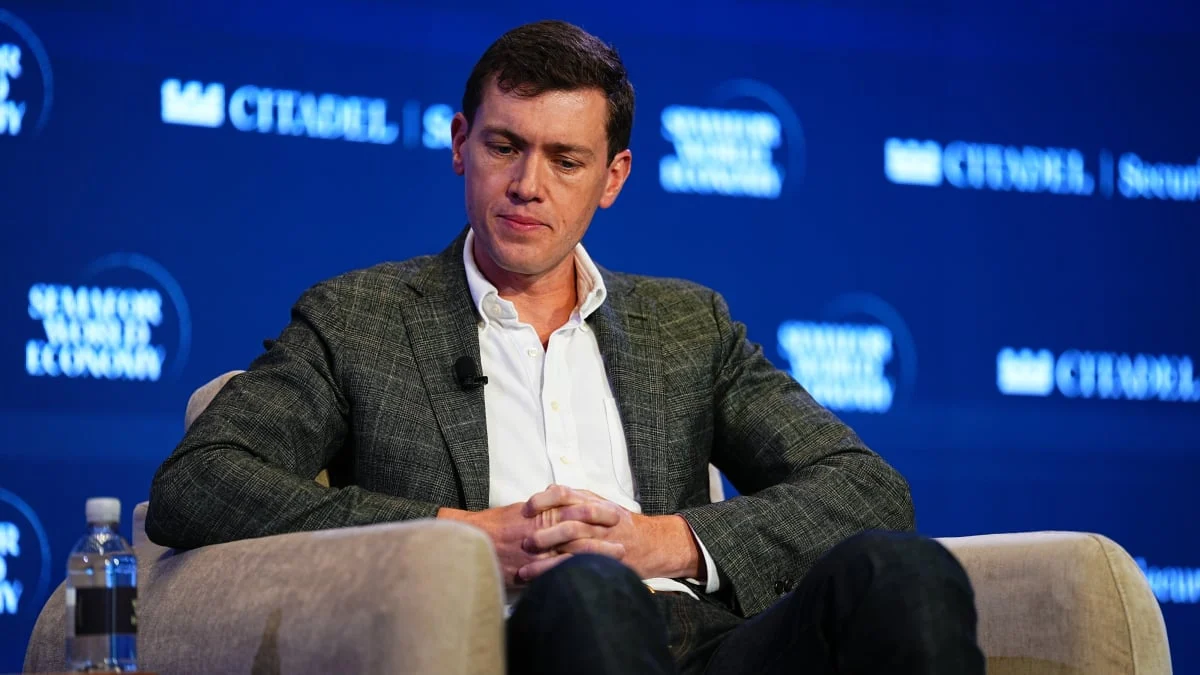
On a recent episode of Adspeak by ADWEEK, host Kim Einan—Chief Strategy Officer at OMD—engaged in a deep-dive conversation with Jim Cowsert, VP of Enterprise Brand, Advertising, and Media at Voya Financial. Together, they explored the delicate equilibrium required to navigate the AI revolution, warning that the "apathy of automation" is the greatest threat to brand differentiation in the 21st century.
The Core Mandate: AI as a Catalyst, Not a Replacement
At the heart of the discussion is the realization that AI, when utilized correctly, is not a creative vacuum but a creative catalyst. Jim Cowsert, whose work at Voya Financial requires navigating the stringent regulatory environment of the financial services sector, argues that AI should be viewed as an extension of the marketing team’s cognitive reach.
"The goal is not to automate the human out of the loop," Cowsert noted during the episode. "It is to provide the human with better insights, faster iteration cycles, and more precise personalization at scale."
According to the insights shared, the most successful brands are those that treat AI as a "knowledge partner." By feeding proprietary "brand DNA"—the unique set of values, voice guidelines, and historical performance data—into generative models, marketers can move beyond generic outputs. The danger, as highlighted by Einan and Cowsert, lies in the "middle-of-the-road" content trap. If every brand uses the same foundational models without injecting their specific, proprietary intelligence, the result is a sea of indistinguishable, "beige" creative that fails to move the needle.
Chronology: The Evolution of AI in Agency Workflows
To understand where we are, one must look at how the relationship between marketing and AI has unfolded over the last decade:
- 2015–2018: The Era of Predictive Analytics. AI was primarily used for data crunching, audience segmentation, and basic programmatic ad buying. It was a backend utility with little influence on the creative process.
- 2019–2022: The Generative Dawn. The release of large language models and generative image tools transformed AI into a front-end creative tool. Brands began experimenting with AI-generated copy and visual assets, though the results were often hit-or-miss.
- 2023–Present: The Integration Phase. We have entered a period of professionalization. Agencies and enterprise brands are now building "Human-in-the-Loop" (HITL) workflows. The focus has shifted from "can we use AI?" to "how do we use AI to maintain compliance, brand safety, and emotional depth?"
This evolution marks a transition from viewing AI as a "magic button" to recognizing it as a sophisticated tool that requires expert human oversight.
Supporting Data: The Efficiency vs. Identity Gap
While industry data consistently shows that AI can reduce production costs by up to 30% and increase content velocity by nearly 50%, the qualitative metrics tell a more nuanced story.
Recent industry studies referenced in the dialogue suggest that while AI-driven personalization significantly improves click-through rates, it often hits a "trust ceiling." Consumers are increasingly capable of identifying "synthetic" content. When content lacks the nuance of human experience, consumer trust—the bedrock of brand loyalty—often declines.
Cowsert points to the financial sector as a litmus test. "In finance, trust is the product," he explains. "If an AI-generated piece of content sounds sterile or, worse, misrepresents a complex financial product due to a hallucination, the brand damage is irreversible."
This underscores the importance of the Human Review Loop. For every hour of AI-generated production, industry leaders are now mandating two hours of human-led audit, testing, and brand-alignment verification.
Official Perspectives: Navigating the Ethical Frontier
Kim Einan’s Vision for Strategy
Kim Einan, who brings 25 years of agency experience to the conversation, emphasizes that the strategy behind the tool is more important than the tool itself. For Einan, the role of a Chief Strategy Officer is to act as a bridge between the technical potential of AI and the human-centric goals of the brand.
"We aren’t just looking for efficiency," Einan stated. "We are looking for ‘brave’ marketing. If the AI is programmed to only look at what has worked before, it will never produce the ‘brave’ work that disrupts a category. Our job is to prompt the AI to take risks, while we provide the safety net."
Jim Cowsert’s Approach to Regulation and Risk
Jim Cowsert’s work at Voya serves as a blueprint for highly regulated industries. He advocates for "siloed AI ecosystems"—proprietary, enterprise-grade AI environments where data is protected and brand voice is hard-coded into the model’s parameters. By isolating the AI from public-facing generic models, brands can ensure that their outputs remain consistent, compliant, and uniquely theirs.
The Implications: Why "Skeptical Talent" Wins
Perhaps the most compelling takeaway from the discussion is the changing profile of the ideal marketing professional. The era of the "prompt engineer" is evolving into the era of the "creative curator."
1. The Death of Apathy
The conversation identified "apathy in using AI" as a primary risk. When teams rely on AI to generate briefs or copy without critical scrutiny, they lose the "friction" that leads to brilliance. Friction—the act of questioning, debating, and refining—is where creative breakthroughs happen.
2. Bias Mitigation as a Strategic Imperative
AI models are reflections of their training data. Without active, human-led bias mitigation, marketing campaigns risk perpetuating outdated tropes or exclusionary language. The future of brand health depends on diverse human teams auditing AI output for systemic biases that machines cannot identify on their own.
3. The Rise of the Skeptical Creative
The marketing leaders of tomorrow will be defined by their healthy skepticism. They must be curious enough to adopt new technologies, but skeptical enough to interrogate every output. They will not ask "what can this tool do?" but rather "does this tool reflect our brand identity, and does it respect our audience’s intelligence?"
Conclusion: Shaping What’s Next
As the industry looks toward events like Brandweek 2026, the mandate for marketers is clear: Technology is no longer an excuse for laziness. It is a demand for higher standards.
The future of brand identity will not be decided by who has the most sophisticated AI, but by who has the most sophisticated relationship with it. By integrating AI into a robust framework of human ethics, brand strategy, and creative rigor, marketers can achieve a rare feat: the ability to scale their reach without diluting the soul of their brand.
For those ready to dive deeper into these strategies, the Adspeak episode serves as a vital resource, mapping out the intersection of human intuition and machine precision. In a world of infinite AI-generated noise, the brands that remain deeply, unapologetically human will be the ones that capture the market’s attention and loyalty.
For more insights into the future of branding, industry leaders are encouraged to attend Brandweek, where the brightest minds in marketing will continue the conversation on how to shape the next era of brand success.











No comments yet. Be the first to join the conversation!