

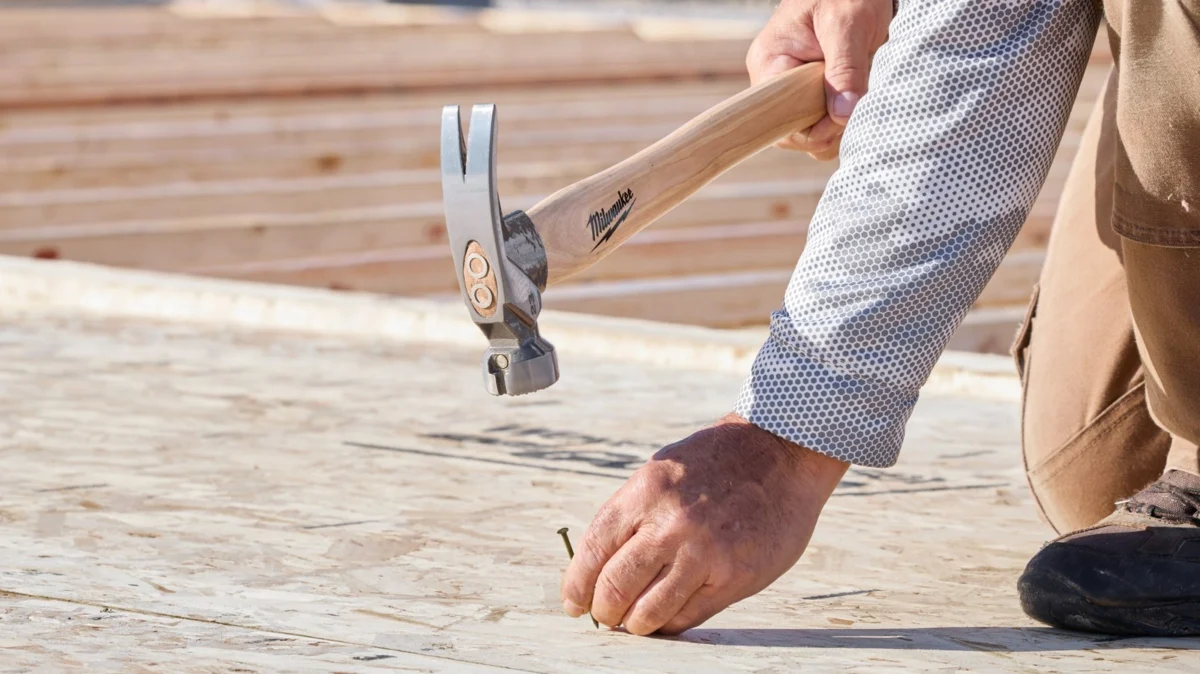
In the high-octane world of power tool manufacturing, Milwaukee Tool has carved out a reputation for relentless innovation. From their industry-leading M12 and M18 cordless platforms to their cutting-edge MX Fuel equipment, the brand is synonymous with the "nothing but heavy duty" mantra. Yet, even as they push the boundaries of lithium-ion technology and digital connectivity, the company continues to demonstrate a profound respect for the fundamentals of the trade.
In a move that underscores this commitment to variety, Milwaukee has announced the upcoming release of two new manual hand tools: a 23-ounce milled-face framing hammer and a 16-ounce smooth-face finish hammer. Both tools, set to hit store shelves in August 2026, feature traditional hickory wood handles, signaling a deliberate bridge between classic craftsmanship and modern ergonomic engineering.
Main Facts: The Specifications of the New Lineup
The upcoming release serves to broaden Milwaukee’s manual tool catalogue, providing tradespeople with options that eschew the standard synthetic grips for the tactile, shock-absorbing qualities of natural wood. The two models represent the extremes of general-purpose hammering: the heavy-hitting framer and the lighter, precision-focused finish hammer.
The 23-Ounce Milled-Face Framing Hammer
Designed for heavy-duty framing and demolition, this model (model 48-22-9418) is built to move large volumes of material. Its 23-ounce head provides the kinetic energy required for driving large-diameter nails into dense lumber, while the milled face—a textured surface—is engineered to grip nail heads, preventing slips that could mar the workpiece or result in "flying" nails. It carries a retail price point of $35.97.
The 16-Ounce Smooth-Face Finish Hammer
For trim work, cabinetry, and lighter assembly, the 16-ounce smooth-face hammer (model 48-22-9517) offers a more delicate touch. The smooth face is essential for finish carpentry, as it leaves no impression on the wood surface during flush-nailing. Priced at $26.97, this model serves as a cost-effective, ergonomic solution for the professional finish carpenter or the home enthusiast.
Shared Engineering Features
Despite their weight disparity, both hammers share a unified design language. Both handles are crafted from high-quality hickory, chosen for its excellent strength-to-weight ratio and ability to dampen vibrations. The handles feature an axe-like curvature, which provides a natural leverage point and improves the "swing" of the tool.
Furthermore, both hammers include a magnetic nail-setting groove, a hallmark of modern Milwaukee design that allows for one-handed nail starting—a critical feature for working on ladders or in confined spaces. The opposite side of the head features an anti-ring claw, designed to minimize the metallic "pinging" sound often associated with striking nails. To solidify user confidence, both tools are backed by Milwaukee’s limited lifetime warranty, protecting against material and workmanship defects.
Chronology: A Year of Unprecedented Expansion
The year 2026 has proven to be a watershed moment for Milwaukee Tool. Long before these hammers were announced, the brand signaled its intent to aggressively expand its market footprint.
- Early 2026: Throughout the first quarter, industry analysts noted a surge in Milwaukee patent filings, hinting at new developments in both battery chemistry and smart-tool integration.
- Spring 2026: The company released a wave of updated power tools, focusing on improved brushless motor efficiency and increased torque-to-weight ratios.
- Mid-2026: As the summer progressed, Milwaukee began to diversify its non-powered inventory, focusing on "everyday problem-solving" tools.
- August 2026: The official launch of the hickory-handled hammer series marks the culmination of this mid-year expansion, catering to the segment of the workforce that prefers the traditional feel of wood over the industry-standard rubberized composite grips.
Supporting Data: Why Wood Still Matters
In an era dominated by titanium, fiberglass, and carbon-reinforced plastics, why would a major manufacturer invest in hickory? The answer lies in the physics of tool operation.
Vibration Dampening and Ergonomics
The primary enemy of the professional carpenter is repetitive strain injury (RSI) and carpal tunnel syndrome. Metal-handled hammers, while incredibly durable, often transfer the shock of every strike directly into the user’s forearm. Hickory, by contrast, acts as a natural dampener. The cellular structure of the wood absorbs the high-frequency vibrations that cause fatigue, allowing for longer work sessions with less physical toll.
Customization and Maintenance
Wood handles offer a degree of personalization that synthetic materials cannot match. Because wood is a natural, homogenous material, it can be sanded, carved, or modified to fit a specific hand shape. Furthermore, many tradespeople develop an emotional attachment to their tools; a well-worn hickory handle gains a "patina" of use that makes the tool an extension of the user’s hand.
Economic Considerations
While fiberglass handles are often touted for their "unbreakable" nature, they are essentially disposable once the head-to-handle bond fails or the grip degrades. Wood handles are not only cheaper to produce—leading to the competitive sub-$40 price points of these new Milwaukee models—but they are also aesthetically superior for those who value the heritage of the building trades.
Official Perspectives: The Strategy Behind the Tools
Milwaukee Tool has not released an extensive manifesto regarding these specific hammers, but their corporate philosophy—as evidenced by their product literature—is clear: solve the problem at hand with the best material for the job.
While the company is a leader in high-tech IoT-enabled tools, they have consistently maintained that a manual tool should be as effective as its powered counterpart. By including the magnetic nail set and the anti-ring claw, Milwaukee is effectively "upgrading" the traditional wood-handled hammer. They aren’t just selling a classic tool; they are selling a classic tool with 21st-century functionality.
Industry experts suggest this move is designed to capture the "traditionalist" segment of the market. Many seasoned carpenters have long resisted the switch to the modern, often neon-red and black rubber-gripped hammers that characterize the current Milwaukee lineup. By offering a refined, hickory-handled version, Milwaukee is inviting these veteran tradespeople back into the ecosystem without asking them to sacrifice their preference for wood.
Implications: What This Means for the Future of Hand Tools
The introduction of these hammers signifies a broader shift in the tool industry. We are witnessing a "hybridization" of tool design:
- Retention of Legacy Materials: Despite the push for high-tech materials, manufacturers are recognizing that legacy materials like hickory and steel remain relevant.
- The "Problem-Solver" Focus: Milwaukee’s strategy is clearly focused on solving the minor, everyday inconveniences of the job site. Adding a magnetic nail set to a wood-handled hammer is a small change, but it is a massive convenience for a framer working on a roof.
- Market Diversification: By offering a 16-ounce and 23-ounce version, Milwaukee is ensuring that they have a product for every price point and every application, from the weekend DIYer to the master carpenter.
As we move toward the final quarter of 2026, it is likely that these hammers will serve as a bellwether for Milwaukee’s success in the manual tool market. If sales reflect the current enthusiasm for traditional materials, we may see an even wider expansion of wood-handled tools in the coming year, potentially extending to hatchets, sledges, or specialized mallets.
Ultimately, the new Milwaukee hammers prove that even a giant of the power tool world understands that, sometimes, the best way to move forward is to look back. By combining the natural shock absorption of hickory with the precision of modern magnetic nail-setting and optimized head geometry, Milwaukee is ensuring that the "old school" feel of carpentry remains a vital part of the "new school" construction site. Whether you are framing a house or trimming out a bedroom, these tools are built to bridge the gap between the heritage of the craft and the demands of modern efficiency.











