


For decades, the “local multiplayer” experience defined the Nintendo 64 era. From the chaotic living room brawls of Super Smash Bros. to the high-stakes espionage of GoldenEye 007, the console was a centerpiece of social gaming. However, as we move deeper into 2026, the logistical hurdle of gathering friends in one room to play on aging, proprietary hardware has become a significant barrier for enthusiasts. While emulators have long provided a way to experience these classics on modern PCs, the bane of online retro gaming has always been input latency.
That narrative, however, is undergoing a radical shift. The recent emergence of RMG-K, a fork of the popular RMG (Rosalie’s Mupen GUI) Nintendo 64 emulator, has introduced a breakthrough feature that many believed would never come to the N64 library: universal rollback netcode.
The Technical Breakthrough: Bringing Rollback to the N64
On May 14, 2026, the RMG-K project released an update that effectively integrated rollback netcode into the emulator’s framework. For the uninitiated, "rollback" is the gold standard for online fighting games and fast-paced competitive titles. Unlike traditional "delay-based" netcode, which forces the game to wait for input packets from the other player—resulting in sluggish, unresponsive gameplay—rollback predicts the next state of the game. If the prediction is incorrect, the game "rolls back" the state and corrects it, allowing for near-instantaneous response times.
In the context of the N64, this is a monumental leap. The architecture of the N64 was never designed for modern internet speeds, and historically, trying to play these games online resulted in desyncs and an unplayable amount of input lag.
Chronology of the Development
- Early 2026: Discussions regarding the limitations of standard emulator netcode reach a fever pitch in the emulation community.
- May 14, 2026: RMG-K is released, marking the first time a comprehensive rollback implementation is applied across the N64 library.
- Post-Launch (May 2026): Evidence begins to surface across social media, with prominent figures in the community demonstrating the stability of the new feature.
- Mid-May 2026: A public controversy erupts regarding the development methodology, specifically the use of Large Language Models (LLMs) in the codebase.
Real-World Performance: Spain to Australia in Four Frames
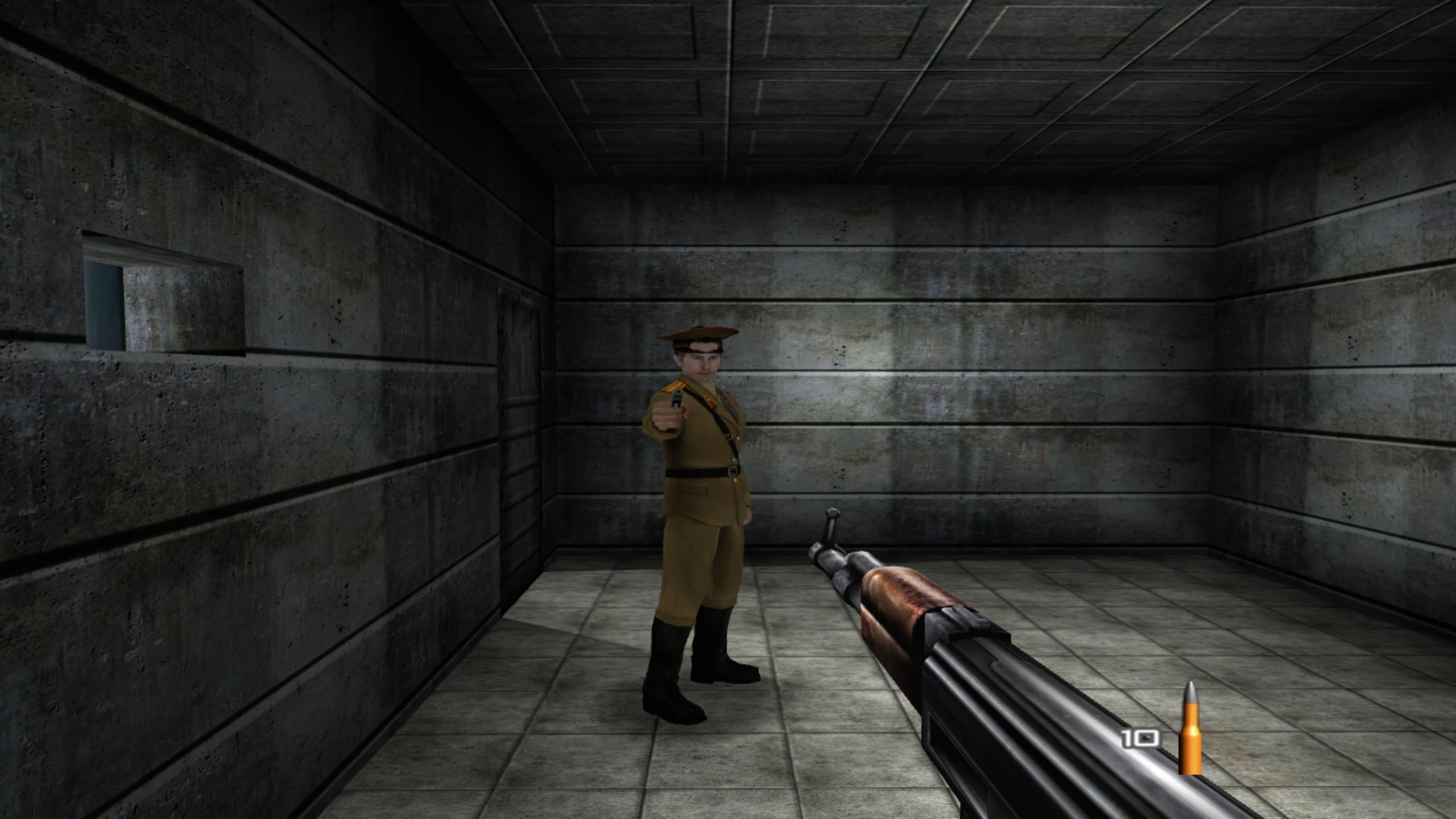
The efficacy of the RMG-K implementation is best observed through the lens of community testing. The prominent retro-gaming content creator Grasluu00 provided a striking proof-of-concept video featuring GoldenEye 007. The demonstration showed players connecting from Spain to Australia—a massive physical distance that would normally render a twitch-based shooter completely broken.
According to Grasluu00, the results were transformative: "Input delay is greatly reduced and desyncs are far more uncommon. This morning we managed to play from Spain to Australia with 4 frames of delay! Before this, we had to do 9!"
This reduction from 9 frames to 4 is not merely a marginal gain; it is the difference between a game feeling like a slide-show and a game feeling like a modern, competitive online title. Further corroboration came from developer NyxTheShield, who shared footage of Super Smash Bros. 64 running with the new netcode. The fluidity of the movement and the responsiveness of the attacks indicate that RMG-K could successfully revive the competitive scenes for games that have been stagnant for years.
The Controversy: AI, Ethics, and the "Vibe Coding" Debate
Despite the excitement, the release of RMG-K has been marred by a fierce debate regarding the ethics of open-source development and the role of artificial intelligence. The original creator of RMG, known as Rosalie241, publicly denounced the fork.
"RMG-K is insulting," Rosalie241 stated in a widely circulated Reddit post. "They took RMG’s code, vibe coded changes with Claude, and then have a donation button in the ReadMe of the project. As someone who has spent years making RMG the way it is without any LLM assistance, seeing these vibe-coded forks pop up is just depressing and just sad."
The "Vibe Coding" Philosophy
The term "vibe coding" refers to the practice of using AI assistants (like Anthropic’s Claude or GitHub Copilot) to generate or refactor code based on high-level instructions rather than a deep, manual understanding of the underlying architecture.
The developers behind RMG-K, including NyxTheShield and CigNus, have defended their methodology. They argue that AI is simply a tool—a force multiplier that allows smaller teams to achieve technical milestones that would otherwise be impossible. NyxTheShield noted on X (formerly Twitter) that the rollback feature was implemented using Codex as "an automation/helper… like in every workspace on the planet."
This clash highlights a growing fracture in the open-source community. On one side, purists value the "human touch" and the rigorous, manual craftsmanship that goes into emulator development. On the other, pragmatic developers are embracing the efficiency of AI to bridge the gap between legacy software and modern standards.
Technical Limitations and Future Implications
While the achievement is impressive, it is important to temper expectations. Currently, the rollback functionality in RMG-K is strictly limited to two-player sessions. This is a significant limitation, especially for the N64, a console famous for its four-controller port setup. Many of the system’s most iconic games, such as Mario Kart 64 and Star Fox 64, rely on multi-player dynamics that simply cannot be replicated with a 1v1 limitation.
Furthermore, the stability of the emulator varies by game. The N64 is notoriously difficult to emulate perfectly due to its unique memory management and microcode. Implementing universal rollback means that every game must be theoretically "predictable," which may lead to edge-case bugs in titles that rely heavily on random number generation (RNG) or specific timing quirks.
What This Means for the Preservation Scene
The implications of this technology extend far beyond just playing GoldenEye online. If rollback netcode becomes a standard feature in N64 emulation, it creates a new paradigm for digital preservation.
- Competitive Longevity: Games that have been relegated to local-only status can now foster global competitive scenes, keeping the communities around these titles active and engaged.
- The "Modernization" of Retro: By abstracting away the hardware-level latency, developers are effectively "modernizing" the feel of these games, making them accessible to a generation of players who have never held a trident-shaped N64 controller.
- The Precedent for Other Consoles: If the N64—a console with complex hardware—can be retrofitted with rollback, it sets a precedent for the PS1, Sega Saturn, and Dreamcast. We may soon be looking at a future where the entire library of 32/64-bit gaming is playable online with modern-feeling netcode.
Conclusion
The arrival of RMG-K represents a turning point in the history of emulation. It serves as a microcosm for the broader technological shifts occurring in 2026: the collision of legacy software with cutting-edge AI, the tension between original creators and opportunistic contributors, and the relentless desire to keep our childhood classics relevant in an increasingly connected world.
Whether one views the use of AI in RMG-K as a triumph of efficiency or a dilution of artistic integrity, the results speak for themselves. The barriers of distance and latency have been breached. For those who still dream of the perfect Smash 64 match or the ultimate GoldenEye showdown, the future of the past has never looked more promising. The code is there, the latency is gone, and for the first time in history, the N64 is truly ready for the internet age.












No comments yet. Be the first to join the conversation!