

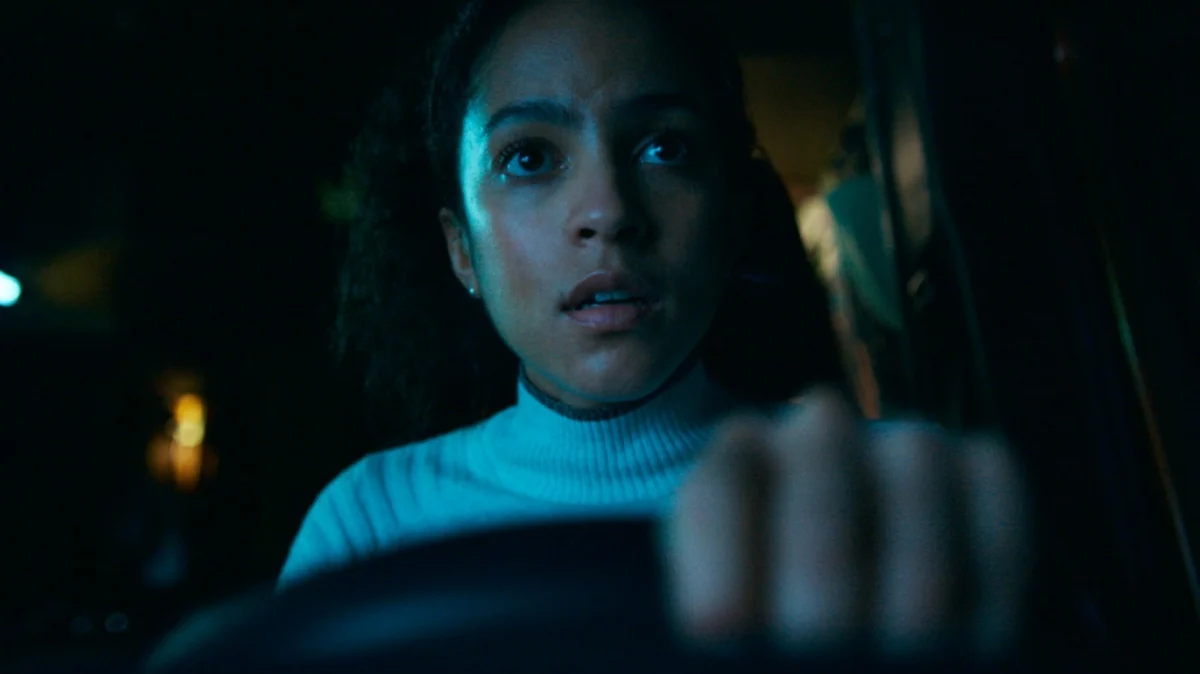
In the modern cinematic landscape, the "breakthrough horror hit" has become the gold standard for studio investment. From the expansion of The Conjuring universe to the viral success of films like Barbarian and the strategic world-building seen in Zach Cregger’s Weapons, Hollywood is increasingly adept at identifying high-concept monsters capable of sustaining long-running franchises. The latest entry into this competitive arena is director André Øvredal’s Passenger, a tension-filled thriller that has already begun to generate significant buzz. With a terrifying, rule-bound antagonist and a mythology that feels purposefully vast, many are asking: Is Passenger the start of something much larger?
The Core Concept: Folklore on the Highway
At its heart, Passenger is a quintessential road-trip nightmare. It follows Maddie (Lou Llobell) and Tyler (Jacob Scipio) as they navigate the American heartland, only to fall prey to a supernatural entity known simply as the Passenger. The creature is not a random slasher; it is a malevolent force defined by a rigid, terrifying set of rules. Those who violate these rules—whether by driving at night, ignoring the etiquette of the road, or stopping to assist stranded motorists—find themselves in the entity’s crosshairs.
Portrayed with unsettling physical precision by Joseph Lopez, the Passenger represents a rare breed of movie monster: one that feels like a piece of dark, forgotten folklore. By grounding the horror in the mundane, lonely stretches of American highways, Øvredal has crafted an antagonist that feels omnipresent, suggesting that for every victim we see on screen, there are countless others who have vanished into the same metaphorical fog.
Chronology of Development: From Script to Screen
The path to Passenger reaching theaters was marked by a careful, deliberate approach to world-building. Initially conceived as a contained thriller, the creative team quickly realized that the entity they were developing held more depth than a standard one-off antagonist.
During pre-production, the discussions regarding the film’s "lore" were extensive. The team aimed to avoid the common pitfall of over-explaining the monster’s origins. By maintaining a shroud of mystery, they ensured that the audience would leave the theater not with a checklist of answers, but with a lingering sense of unease. This narrative choice—to keep the "rules" of the Passenger cryptic—is the very mechanism that allows for future expansion. If the audience doesn’t know everything, they are inherently curious about what remains hidden, creating a built-in demand for sequels, prequels, or spin-offs.
Supporting Data: The Value of Ambiguity
In contemporary horror, "ambiguity" is a form of currency. When a filmmaker like Øvredal chooses to leave gaps in the mythology, it serves two purposes: it enhances the immediate horror experience and provides a roadmap for future installments.
Consider the character of Diana, played by the seasoned Melissa Leo. Diana serves as a bridge between the protagonists and the broader history of the Passenger. She clearly possesses knowledge that the young couple lacks, hinting at a long, blood-stained history involving the creature. This character arc is a masterclass in franchise planting; it establishes that the story of Passenger did not begin with Maddie and Tyler, and it certainly does not need to end with them.
The film’s structure—a satisfying, contained narrative—is the perfect "proof of concept." It proves the monster works, the tone is effective, and the audience is engaged. In the current theatrical climate, where mid-budget horror films are often the only reliable theatrical draws, the potential for a Passenger franchise is a logical step for Paramount Pictures.
Official Responses: What Director André Øvredal Has to Say
In an exclusive conversation with /Film, director André Øvredal addressed the inevitable questions regarding the future of the entity. His responses suggest that while there is no official, greenlit plan at this moment, the conversation is far from closed.
"We want to make sure that it leaves the audience wanting more, actually," Øvredal explained. He noted that the team’s deliberate choice to leave gaps in the lore was a calculated narrative strategy. "You can never feed into everyone’s need of information," he added, acknowledging that while some viewers might find the lack of explicit detail frustrating, it is essential to the nature of good horror storytelling.
When asked specifically about the possibility of the Passenger returning, Øvredal was candid: "Whenever you’re making a movie about a villain, you can always foresee that that villain can come back in some capacity in another movie, another story, for sure." He confirmed that while the team hasn’t finalized a roadmap, the potential for a franchise has been a recurring topic of discussion throughout the production process. This admission confirms that the "franchise-ready" feel of the film was not an accident, but a goal.
The Implications: Where Could a Franchise Go?
If Passenger proves to be a box-office success, the avenues for expansion are nearly limitless. Here are the most likely paths for the studio to take:
1. The Prequel: The Origins of the Rule-Maker
A prequel could explore the entity’s first appearance in the American heartland. By shifting the setting to a different decade, the studio could experiment with period-specific horror tropes, exploring how the "rules" of the road have changed alongside the evolution of the automobile.
2. The Spin-Off: Diana’s Backstory
Melissa Leo’s character, Diana, is a goldmine for franchise potential. A film centered on her history—perhaps involving a previous encounter with the Passenger—would allow the studio to lean into a more detective-noir or occult-thriller aesthetic, contrasting with the high-octane tension of the original film.
3. The Anthology Approach
Given that the Passenger hunts across the vast landscape of the United States, a sequel could follow a new set of protagonists in a different region. This would allow for the "rules" to be tested in new environments, keeping the premise fresh while maintaining the central hook of the supernatural hitchhiker.
4. The "Workaround" Sequel
As the article notes, the Passenger meets a grisly fate in the film, but in the realm of supernatural horror, death is rarely permanent. Whether through some form of spiritual resurrection or the discovery that the entity is merely one of many, writers have a plethora of tools at their disposal to bring the monster back.
Conclusion: A Franchise in the Making
The success of any horror film is ultimately determined by the audience. However, Passenger has checked all the necessary boxes to be a viable candidate for a long-term franchise. It possesses a memorable, iconic villain, a set of rules that can be expanded upon, and a creative team that is clearly thinking about the future.
While we await the final box-office tallies, the foundation is set. André Øvredal has crafted a film that feels like a portal into a larger, darker world. For horror fans, the prospect of returning to those lonely highways to face the Passenger once more is an enticing one. Whether through a direct sequel or a deep-dive into the entity’s mysterious origins, the road ahead for this new franchise appears to be wide open.
For now, the best advice for those looking for a new horror obsession is simple: watch Passenger in theaters, pay close attention to the details, and don’t be surprised if this is the last time we’ve seen the entity stalking the American road. The engine is running, and the journey may just be beginning.









No comments yet. Be the first to join the conversation!