

At this year’s Digital Dragons conference, the industry’s elite gathered under the imposing, neon-lit banner of "Capital Reality." It was a panel discussion centered on the cold, hard mechanics of game industry investment and publishing deals—a space where M&A (Mergers and Acquisitions) specialists move through the room with the practiced ease of people who view creative endeavors through the lens of EBITDA and market saturation. To the average developer, the jargon—"dry powder," "dealflow," and "market velocity"—can feel like a foreign language. But for those seeking funding, these terms represent the difference between a studio’s survival and its quiet shuttering.
Amidst the discussion, a candid realization emerged from the dais: the gaming industry is suffering from a massive identity crisis, fueled by an relentless cycle of trend-chasing that has left publishers and players alike drowning in a sea of sameness.
The Roguelike Deluge: A Genre Under Siege
The centerpiece of the discussion was a startling admission from Victor Lee, director of Europe investments for Krafton—the powerhouse publisher behind Subnautica 2. When prompted on the perennial developer dilemma—whether to chase a fleeting viral trend or stick to a singular creative vision—Lee did not mince words. He expressed a shared frustration that resonates across the industry: the market is currently overwhelmed by an endless parade of roguelike deckbuilders.
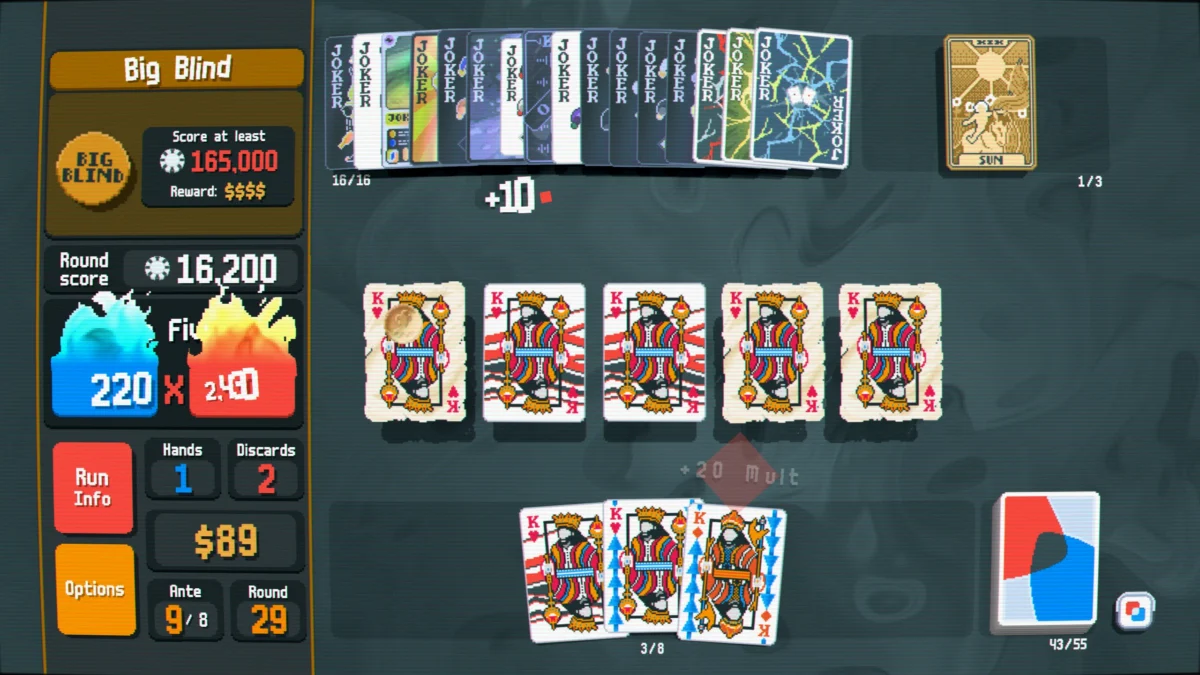
"I feel like the trend cycle in gaming is just getting shorter and shorter," Lee noted, reflecting on the rapid churn of sub-genres that have dominated the Steam storefronts over the last decade. "I remember when survival crafting was the ‘it’ genre. Then it was the deckbuilding roguelikes. In the last 12 months alone, I’ve had maybe 250 pitches for roguelike deckbuilders. I don’t know how to choose. Would you? They’re all Balatros with different card skins."
Lee’s frustration highlights a growing "genre fatigue." When a specific mechanical framework becomes so successful—as Slay the Spire and Balatro have—it inevitably leads to a rush of "me-too" projects. This saturation creates a paradox: the genre becomes a victim of its own success. The mechanics are refined, the loops are polished, but the ability for a new title to differentiate itself becomes nearly impossible.
Defining the "Roguelike" Misnomer
One of the most profound points raised by Lee was the linguistic decay of the term "roguelike." In the current market, "roguelike" is often used as a catch-all buzzword, a marketing sticker meant to imply infinite replayability and high-stakes tension. However, as Lee pointed out, the term has lost all practical meaning.
"That genre is too narrow for you to differentiate far enough from anything else," Lee argued. "Genre is a misnomer. Roguelike isn’t a genre. Roguelike can be anything—it can be an FPS, a deckbuilder, or a strategy sim. If you tell me you have a ‘roguelike game,’ I have no idea what you’re actually making."
This linguistic dilution is a significant hurdle for developers. By leaning on the "roguelike" label, creators are inadvertently signaling that their game is part of a crowded, homogenous mass. Without a unique hook, the game disappears into the algorithm, buried by hundreds of similar titles that all promise the same procedural thrill.
The Strategy of Failure: The Economics of Trend-Chasing
The discussion inevitably turned toward the ethics and practicalities of following market trends. The prevailing wisdom in the venture capital and publishing space is often ruthless: if you want to chase a trend, you must be able to fail—and fail quickly.
Lee laid out a cold reality for developers: "If you can execute a trend-chasing game in a month, fine. If you can pump out 12 roguelike deckbuilders in a month and see what sticks, sure, do it. I might even fund that. But if you bring me one that takes you a year and a half? I don’t know if I’ll be playing that in 2028."
This is the "barrier-to-entry" trap. If a game’s mechanics are simple enough to be cloned or iterated upon by a small team in a short window, then the risk of market saturation is nearly 100%. If a developer is "betting their life" on a low-barrier-to-entry genre, they are likely walking into a trap where the supply of games far outstrips the player base’s capacity to consume them.
The advice is clear: either be the fastest to market with a low-cost experiment, or don’t play the trend-chasing game at all.
The Value of Obsession
If the "fast-and-cheap" approach is for the opportunists, what does the future hold for the dedicated creative? Surprisingly, Lee finds more value in the "obsessives"—developers who are deeply entrenched in a specific genre, even if that genre is currently out of fashion.
"I would rather work with RPG developers who have only ever played RPGs and want to make their magnum opus," Lee explained. "You have no idea if the market will be ‘hot’ for RPGs in 2029, but I can trust the team’s obsession. I can trust the experience they bring from having lived and breathed that genre for a decade."
This suggests a shift in how publishers are viewing long-term investment. While the "viral hit" remains a seductive prospect, the "sustainable studio" is built on expertise and passion. A team that understands the nuances of an aging genre is more likely to innovate within that space than a team that is simply looking for the next "hot" keyword on Steam to exploit.
The Broader Implications: A Market at a Crossroads
The saturation of roguelikes is a symptom of a larger issue within the gaming ecosystem. As the cost of game development rises and the competition for player attention becomes more cutthroat, the industry is seeing a retreat into "safe" mechanical bets. When a game like Balatro finds massive success, it doesn’t necessarily inspire unique creative expression; instead, it triggers a rush of developers attempting to capture that same lightning in a bottle.
This trend-chasing behavior creates a "flat" market. Players are presented with a dizzying array of choices that, upon closer inspection, offer the same mechanical satisfaction. While this is great for consumers who cannot get enough of a specific loop, it is catastrophic for the mid-tier developer trying to build a brand.
Summary of Key Market Insights:
- The Trend Cycle: The lifespan of a "hot" genre is shrinking, making long-term projects in these spaces incredibly risky.
- The "Roguelike" Trap: The term has become so ubiquitous that it no longer serves as a useful differentiator in a pitch.
- The Velocity Factor: If you are chasing a trend, you must have the production speed to hit the market before the trend peaks.
- The Value of Expertise: Publishers are increasingly prioritizing deep, niche expertise over broad-market opportunism.
Conclusion: The Path Forward
As the gaming industry continues to navigate the complexities of "Capital Reality," the message to developers is becoming increasingly nuanced. While the temptation to pivot toward the latest viral hit is understandable, the long-term viability of a studio often rests on the ability to ignore the noise.
The roguelike deckbuilder explosion serves as a cautionary tale. It is a reminder that innovation—true innovation—does not come from following a keyword. It comes from the intersection of deep-seated passion and a willingness to explore mechanical spaces that others have deemed "too niche" or "out of style."
For the developers currently slaving away on their own iterations of deck-based roguelikes, the challenge is clear: if you are not doing something fundamentally new, you are not competing for a player’s attention—you are merely adding to the noise. In an industry that is currently sprinting toward the next big thing, the most radical act a developer can perform might just be to slow down, look at their own obsessions, and build something that doesn’t fit into any of the current, overcrowded boxes.
This article was based on a press trip to Digital Dragons, with the event’s organizers covering travel and accommodation costs.









No comments yet. Be the first to join the conversation!