

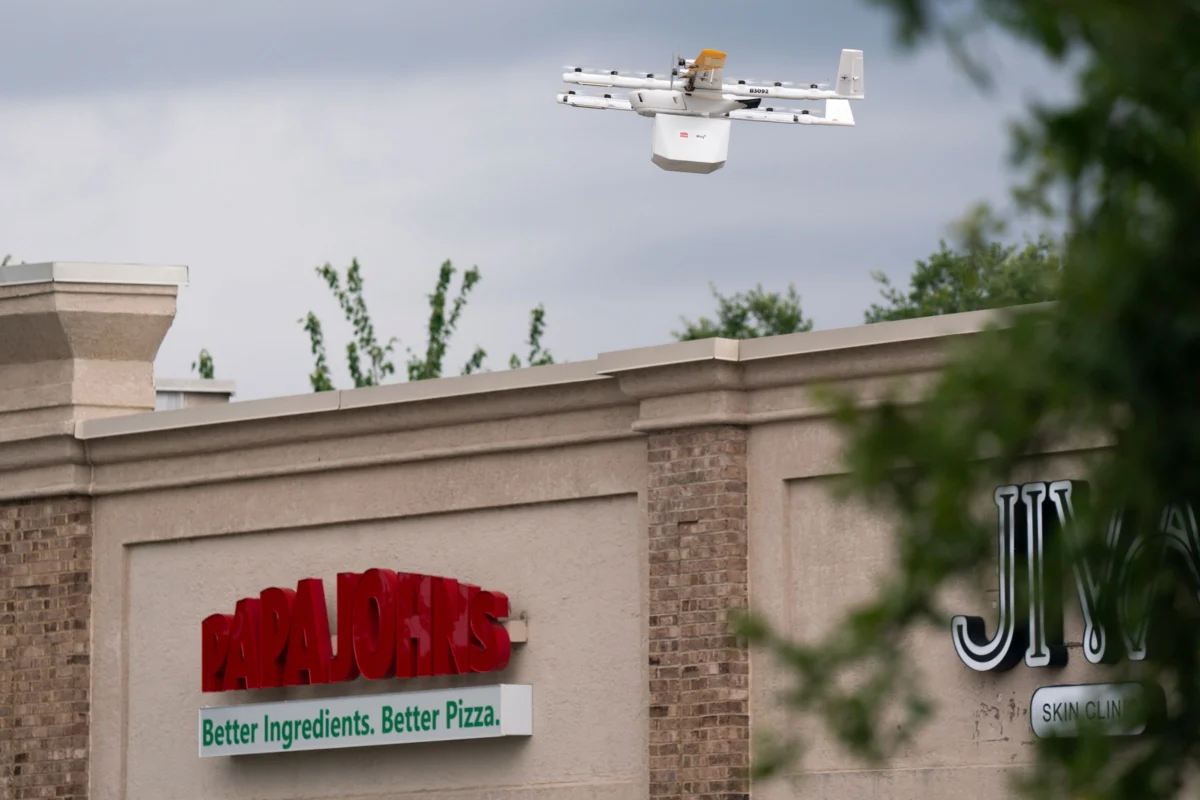
The era of aerial food delivery, once the exclusive domain of science fiction, is rapidly descending into reality. In a significant expansion of the automated logistics market, Papa Johns has officially launched a drone delivery pilot program in Indian Trail, North Carolina, in collaboration with Wing, the drone delivery subsidiary of Alphabet. While the partnership marks a milestone for the pizza giant, the current scope remains limited to select sandwich varieties rather than their signature pies. This development highlights both the immense potential and the persistent engineering hurdles facing the drone-delivery sector as it attempts to integrate into the daily lives of millions of consumers.
The State of Play: Aerial Logistics in 2025
The drone delivery landscape has evolved from experimental flight paths to structured, multi-city operations. Companies like Wing have secured a foothold in the U.S. market, having obtained the Federal Aviation Administration’s (FAA) first air carrier certificate for drone delivery in 2019. Today, Wing maintains a consistent presence in four major metropolitan areas: Atlanta, Charlotte, Dallas-Fort Worth, and Houston. Their operations are supported by high-profile partnerships with retail and food-service titans, including Walmart, Panera, and DoorDash.
However, the industry is far from monolithic. Competitors like Zipline, Amazon Prime Air, and Flytrex are simultaneously racing to capture market share. While Wing focuses on lightweight, nimble aircraft, others are diversifying their approach. Zipline has garnered attention for its ability to deliver medical supplies and consumer goods, recently expanding its partnership with Chipotle to bring burritos to the skies. These companies are not merely competing for the fastest delivery time; they are competing to establish the global infrastructure of last-mile logistics.
A Chronology of the Pizza-Delivery Dilemma
The quest to deliver pizza via drone has been a long-standing challenge for the industry. Historically, pizza has served as the "gold standard" for testing new delivery technologies—from self-driving robots on sidewalks to automated kitchen assembly lines.
- The Early Aspirations: For the better part of a decade, tech startups and major chains have identified pizza as the perfect candidate for automation. Its high demand and popularity among busy families made it an obvious target for efficiency gains.
- The Physics Hurdle: Despite the enthusiasm, drones were initially ill-equipped for the task. Standard pizza boxes are aerodynamically unstable, prone to tilting, and physically awkward for the payload bays of smaller, lightweight drones.
- The Flytrex Breakthrough: In late 2024, the Israel-based company Flytrex made a significant breakthrough. Through a partnership with Little Caesars in Wylie, Texas, they successfully managed the delivery of two large 16-inch pizzas. Unlike standard quadcopters, Flytrex’s "Sky2" drone utilizes a specialized hook-and-net system that maintains a level orientation for the payload during flight.
- The Current Phase: As of today, the Papa Johns and Wing collaboration represents the next stage of this evolution. By starting with smaller, more aerodynamic items like Philly cheesesteaks, the companies are testing the logistical workflows required to transition from manual to automated dispatching.
Supporting Data: Why the Industry is Betting on the Air
The push toward drone delivery is driven by hard numbers. According to the U.S. Department of Agriculture, roughly 11 percent of the American population consumes pizza on any given day. In a restaurant industry that is becoming increasingly fragmented and digital-first, the ability to bypass ground-level traffic is a massive competitive advantage.
Economic and Logistical Constraints
The transition to drone delivery is governed by a complex set of variables:
- Payload Capacity: Most current delivery drones are limited by weight. For instance, the Flytrex Sky2 is engineered to carry approximately 8.8 pounds over a range of four miles.
- Operational Costs: Companies like Flytrex have found that the model only pencils out if retail employees can manage the loading process. Training specialized drone pilots for every store is economically unviable; the process must be automated and intuitive for restaurant staff.
- The "Surprise and Delight" Factor: Beyond raw speed, executives view drone delivery as a branding tool. Papa Johns’ chief digital and technology officer, Kevin Vasconi, noted that the service offers a "surprise-and-delight" experience that can increase customer loyalty in a saturated market.
Official Responses and Strategic Outlook
Industry leaders acknowledge that while the "sexiness" of the drone is what grabs headlines, the real work happens in the spreadsheet. Amit Regev, cofounder of Flytrex, emphasizes that his team spends more time analyzing operational efficiency on Excel than they do tweaking the drone’s flight software.
Wing CEO Adam Woodworth, meanwhile, is transparent about the engineering gap. "Pizza comes in a very different box, with a big, flat surface area," Woodworth explains. "They are not naturally aerodynamic." Wing is currently developing a new design specifically aimed at accommodating the specific dimensions of a pizza box, with the explicit goal of eventually delivering full menus.

For Papa Johns, the current North Carolina pilot is a testbed for internal workflows. The chain plans to train staff on the specific protocols required to load and secure drones, treating them as a supplementary delivery vehicle during peak rush hours. According to Vasconi, the business case is already "penciling out," suggesting that the company sees a path to profitability even with current regulatory and technical constraints.
Future Implications: The Skyward Path Forward
The integration of drones into the food service supply chain will likely face several critical milestones in the coming years:
1. Regulatory Maturation
The FAA’s role remains paramount. As drone traffic increases, the regulatory framework must evolve to handle "beyond visual line of sight" (BVLOS) operations, night flights, and high-density urban corridors. The 2019 certification for Wing was only the first step; full-scale integration will require sophisticated air traffic management systems specifically designed for low-altitude, autonomous flight.
2. Packaging Innovation
The food industry must innovate alongside the drone industry. Just as the pizza box was designed for the back of a delivery car and a human hand, future packaging will need to be optimized for aerial turbulence, heat retention, and automated mounting systems. We are likely to see the emergence of "drone-ready" packaging that is both lightweight and structurally sound for high-speed transit.
3. The Human Element
Despite the focus on automation, the human element remains the most significant variable. The success of these programs depends on the ability of restaurant workers—who are already managing high-pressure environments—to integrate drone-loading into their existing workflows without disruption. If the process is not "simple, simple," as Regev puts it, the operational costs will erode the efficiency gains that drones promise to deliver.
4. Societal Acceptance
Finally, the growth of this industry hinges on public perception. Issues regarding noise pollution, privacy, and the physical safety of neighborhoods are topics that operators will need to address as drones move from suburban test markets to dense urban environments.
Conclusion
The collaboration between Papa Johns and Wing, while currently limited to sandwiches, is a bellwether for the future of the restaurant industry. The move from ground-based delivery to the skies is not merely a technological novelty; it is a calculated response to the persistent challenges of urban congestion and the high cost of last-mile labor. While the perfect "flying pizza" is still in the engineering labs, the path toward a fully automated, skyward delivery ecosystem is clearly defined. As companies continue to refine their hardware and optimize their logistics, the sight of a drone hovering over a suburban driveway may soon become as common as the sight of a delivery car idling at the curb. For now, the industry is taking measured steps, prioritizing operational reliability over speed, and ensuring that when the pizza finally does arrive from the sky, it is as hot and fresh as the day it left the oven.












No comments yet. Be the first to join the conversation!