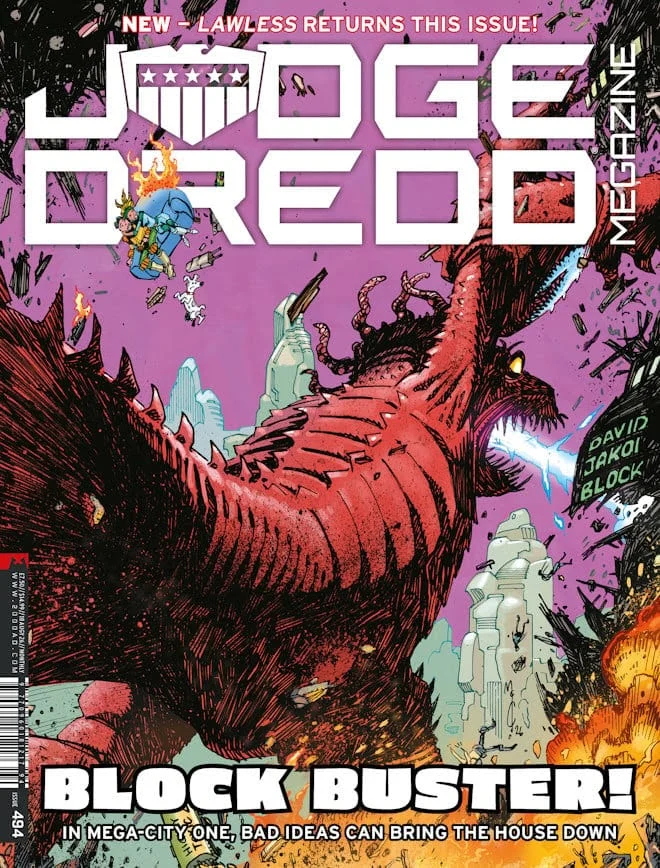
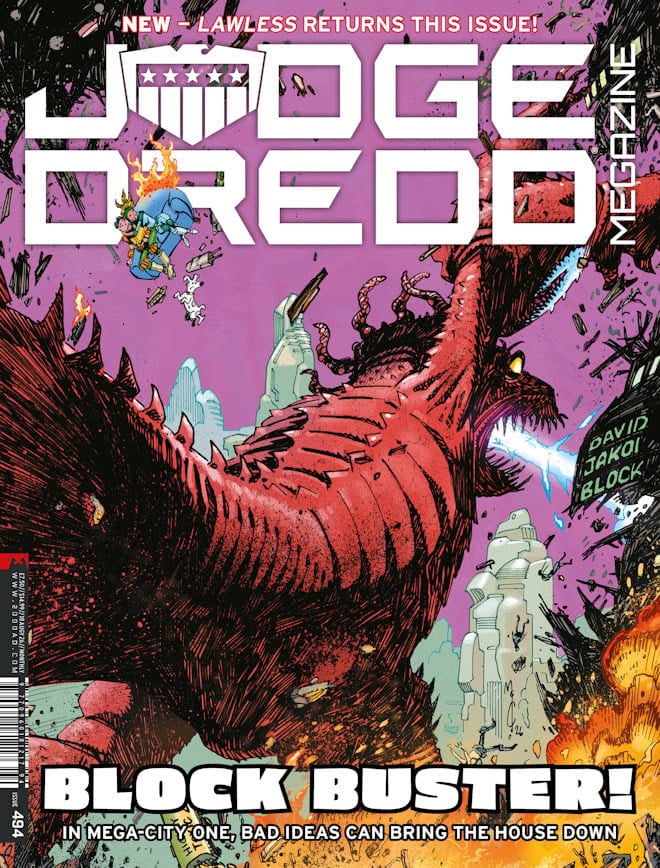
The dystopian landscape of Mega-City One continues to evolve, pushing the boundaries of science fiction and social commentary. Rebellion’s latest release, Judge Dredd Megazine 494, stands as a testament to the enduring power of the 2000 AD universe. Featuring a striking cover illustration by the acclaimed John McCrea and Jack Davies, this issue serves as a critical junction for several long-running narratives, offering readers both visceral thrills and the intricate world-building that has defined the publication for decades.
As the industry grapples with the changing landscape of serialized storytelling, Judge Dredd Megazine 494 reinforces the medium’s capacity for sustained, high-quality narrative arcs. Below, we examine the mechanics, creative forces, and thematic weight of this latest installment.
Main Facts: A New Chapter in Mega-City One
Judge Dredd Megazine 494 arrived on UK newsstands on July 15, 2026, priced at £7.50, with a scheduled North American (Lunar) release set for August 12, 2026, at $14.99. This issue is not merely a collection of shorts; it is a meticulously curated anthology that balances the dark, gritty procedural nature of Dredd’s world with the expansive, often bizarre scope of the wider 2000 AD mythos.
The lineup for issue 494 includes a high-caliber roster of writers and artists:
- Judge Rico // The Black Tower: A dark dive into the legacy of Dredd’s clone brother, helmed by Ken Niemand with evocative art by Nick Percival and lettering by Simon Bowland.
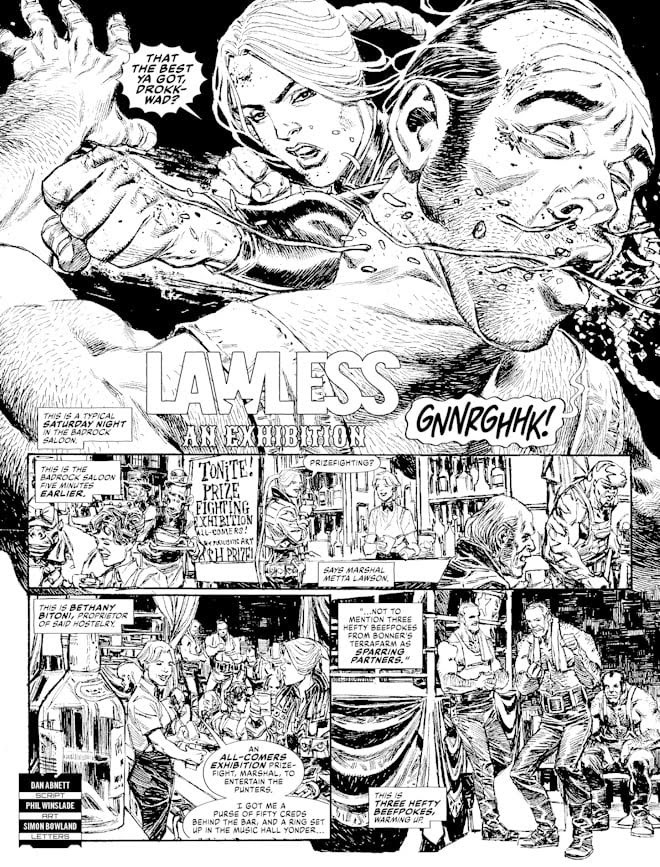
- Lawless // An Exhibition: The fan-favorite series by Dan Abnett returns, featuring the distinct, character-driven linework of Phil Winslade.
- Tales from the Black Museum // Bad Idea: A chilling vignette by James Peaty, illustrated by Stewart K. Moore.
- Rogue Trooper // An Iteration of Allies: A high-stakes sci-fi adventure written by Andi Ewington, featuring art by Sinu Senan and color work by Jim Boswell.
- Megatropolis II: A visionary continuation by Ken Niemand and legendary artist Chris Weston, colored by Antonietta Saulino.
Chronology: The Evolution of the Megazine
To understand the significance of issue 494, one must place it within the broader timeline of the Megazine’s history. Originally conceived as a companion publication to the flagship 2000 AD weekly, the Megazine has evolved from a Dredd-centric periodical into a diverse creative sandbox.
Since its inception, the publication has functioned as a testing ground for experimental narratives that might not fit the rapid-fire pacing of the weekly comic. In recent years, the Megazine has shifted toward a "prestige" format, prioritizing long-form storytelling arcs that reward long-term readership.
The inclusion of Megatropolis II is particularly significant. By revisiting the "Megatropolis" concept—a noir-infused, alternate-reality take on the Dredd universe—Rebellion is signaling a commitment to intellectual property experimentation. Following the momentum of previous issues, 494 continues the practice of pairing veteran writers with rising artistic stars, ensuring that the visual identity of the brand remains as sharp as its satirical bite.
Supporting Data: The Creative Engine
The strength of Judge Dredd Megazine 494 lies in its editorial curation. Rebellion has effectively managed a "writer’s room" atmosphere where thematic resonance takes precedence over simple action.

The Role of Visual Storytelling
The collaboration between Chris Weston and Ken Niemand on Megatropolis II serves as the issue’s visual anchor. Weston, known for his hyper-detailed, architectural approach to panel layout, provides a stark contrast to the more visceral, textured work of Nick Percival in Judge Rico. This dichotomy represents the two faces of the Megazine: the cold, calculated bureaucracy of the Justice Department and the chaotic, crumbling reality of the city streets.
Lettering and Color Theory
While often overlooked by casual readers, the contributions of letterers like Simon Bowland and Annie Parkhouse are vital to the issue’s success. In Judge Dredd stories, the lettering is an extension of the character’s voice—the rigid, blocky text of the Judges versus the frantic, jagged dialogue of the perps. The color palettes, particularly those provided by Antonietta Saulino and Jim Boswell, utilize high-contrast hues that emphasize the artificiality of the Mega-City environments, grounding the reader in a world that is fundamentally "wrong."
Official Perspectives: The Editorial Vision
Rebellion’s editorial strategy for 2026 has been one of consolidation and expansion. In industry briefings, the publisher has emphasized that the Megazine acts as a "long-form laboratory." By allowing series like Lawless to develop over several volumes, they are catering to the growing market of "graphic novel readers" who prefer to consume serialized fiction in substantial chunks.
"The goal," according to recent statements from the editorial team, "is to provide a reading experience that feels substantial. We aren’t just selling a comic; we are selling a piece of a world that lives and breathes between the covers."
This philosophy is evident in the inclusion of Tales from the Black Museum. By focusing on the artifacts of the city’s dark past, the series provides a "world-building backbone" that makes the other, more action-oriented stories feel grounded in a larger, coherent history.
Implications: The Future of the Dredd Franchise
The release of issue 494 carries significant implications for the future of the Dredd franchise and the comic book industry at large.
Market Resilience
Despite the digital shift in the comics industry, the consistent performance of the Megazine suggests a robust demand for high-quality, physical print media. The decision to maintain a distinct "Lunar" release date for international markets demonstrates that Rebellion recognizes the strength of its global fanbase and is willing to invest in the logistics of international distribution.
Thematic Evolution
The themes explored in issue 494—specifically the legacy of violence in Judge Rico and the socio-political commentary inherent in Lawless—suggest that the 2000 AD universe is becoming increasingly self-reflective. These stories are no longer just about "Law versus Crime"; they are about the institutional rot, the toll of service, and the cyclical nature of authoritarianism. This thematic maturity ensures that the Megazine remains relevant to an adult audience, preventing the brand from becoming a relic of its 1970s and 80s origins.

Impact on New Creators
By highlighting collaborators like Sinu Senan and Jack Davies, Rebellion continues its legacy of "scouting." The Megazine serves as a career-defining platform for artists and writers. Many of the industry’s most prominent creators today cut their teeth in the pages of these issues. Issue 494 is not just a collection of stories; it is a launchpad, ensuring a steady stream of new talent enters the professional ecosystem.
Conclusion
Judge Dredd Megazine 494 is a masterful example of contemporary anthology comics. By balancing the heavy, world-weary tone of the Judge Dredd mythos with the innovative and diverse storytelling of the wider Rebellion stable, the issue succeeds in being both a satisfying read for long-term fans and an accessible entry point for those interested in high-concept science fiction.
As the industry moves forward, the Megazine remains a vital, stubborn, and essential pillar of British comics. Whether you are following the intricate political machinations of Lawless or the neon-soaked nightmares of Megatropolis, issue 494 provides a compelling reason to keep returning to the dystopian streets of Mega-City One. The message remains clear: in a world of uncertainty, the law—and the stories that uphold it—must persist.