


The last decade and a half of television has been defined by a relentless, high-stakes arms race. Following the seismic cultural impact of HBO’s Game of Thrones, streaming giants and premium networks scrambled to secure their own “prestige fantasy” crown jewel. From the high-budget sprawl of The Lord of the Rings: The Rings of Power to the grit of The Witcher and the epic scope of The Wheel of Time, studios have poured billions into the genre, hoping to capture the same lightning in a bottle that turned George R.R. Martin’s Westeros into a global phenomenon.
Yet, in this feverish pursuit of the "next big thing," the industry has curiously ignored the very foundation upon which much of modern fantasy was built. Specifically, Tad Williams’ seminal trilogy, Memory, Sorrow, and Thorn, remains unadapted. While it is arguably one of the most influential works in the genre’s history, it remains locked away in prose—a victim, perhaps, of its own proximity to the very series it helped inspire.
The Paradox of Influence
George R.R. Martin has been remarkably candid about his inspirations, repeatedly citing Tad Williams’ Memory, Sorrow, and Thorn as a primary catalyst for his own A Song of Ice and Fire. For those who have read both, the parallels are striking: a world where magic has faded into myth, only to have a cold, supernatural, and ancient threat emerge from the North to jeopardize the squabbling kingdoms of men.
The dilemma for studio executives is one of perception. In an era where "originality" is marketed as a selling point, the superficial similarities between the world of Osten Ard and the continent of Westeros create a marketing nightmare. Even if a series were faithful to Williams’ vision, there is a tangible fear in the C-suite that a general audience—now well-versed in the tropes of Game of Thrones—would view an adaptation of Memory, Sorrow, and Thorn as derivative, rather than the precursor it actually is.

A Chronology of Fantasy Evolution
To understand the significance of this literary impasse, one must look at the timeline of the genre’s evolution.
- 1988–1993: Tad Williams publishes Memory, Sorrow, and Thorn. The trilogy, consisting of The Dragonbone Chair, Stone of Farewell, and To Green Angel Tower, sets a new standard for character-driven epic fantasy.
- 1996: George R.R. Martin releases A Game of Thrones, the first entry in A Song of Ice and Fire. The success of this series would eventually shift the paradigm of television fantasy forever.
- 2011: HBO premieres Game of Thrones, launching the modern era of “Prestige Fantasy.”
- 2017–2024: Tad Williams returns to the world of Osten Ard with The Last King of Osten Ard, a massive, five-book sequel series that proves the depth and longevity of his world-building.
While Martin was refining the “grimdark” aesthetic that would dominate the 2010s, Williams was already demonstrating that fantasy could be both grand in scope and deeply intimate in its character work. The irony is that while Game of Thrones ended its run in 2019, the world of Osten Ard has continued to expand, offering a wealth of narrative material that remains entirely untapped for visual media.
The Aesthetic and Thematic Overlap
The hesitation from studios is not entirely unfounded, as the DNA shared by these two worlds is undeniable. Both series feature an "Iron Throne" equivalent—in Williams’ case, the Dragonbone Chair, forged from the bones of a dragon slain in conquest. Both feature the "Children of the Forest" archetype in the form of the Sithi, a reclusive, magically potent race that predates human civilization.
Furthermore, both authors utilize a "soft magic" system, where the rules of the arcane are mysterious and often come with a heavy, sometimes horrific, cost. The presence of dark, fanatical religious figures—Melisandre in Martin’s work and the Red Priest Pryrates in Williams’—serves as another bridge. These characters act as catalysts for royal instability, manipulating leaders through promises of power granted by the supernatural.

However, to label Williams’ work as a mere "precursor" is a disservice to the nuances of his writing. Where Martin leans into political cynicism and the deconstruction of power, Williams focuses on the loss of innocence and the weight of history. His characters, such as the kitchen-boy-turned-hero Simon, undergo transformations that are fundamentally different in tone from the stark, often brutal arcs found in A Song of Ice and Fire.
Industry Implications: The Cost of Fear
The current reluctance to adapt Memory, Sorrow, and Thorn speaks to a broader, more systemic issue in modern Hollywood: the obsession with "brand" and the avoidance of "familiarity." Studio executives are often terrified of investing nine-figure budgets into a series that might trigger a "seen that" response from viewers who have binged eight seasons of Westeros.
This fear creates a cycle of stagnation. By shunning projects that share thematic roots with Game of Thrones, streamers are missing out on the very stories that could satisfy the hunger of the existing fantasy fanbase. The audience that loved the political intrigue of King’s Landing is exactly the demographic that would appreciate the intricate palace dynamics of the Hayholt in Osten Ard.
Furthermore, the logistical success of Williams’ later works—particularly the massive scope of The Last King of Osten Ard—provides a roadmap for a multi-season, long-term franchise that could rival any existing IP. It is not a lack of quality that keeps these books on the shelf, but a lack of courage in the boardroom.
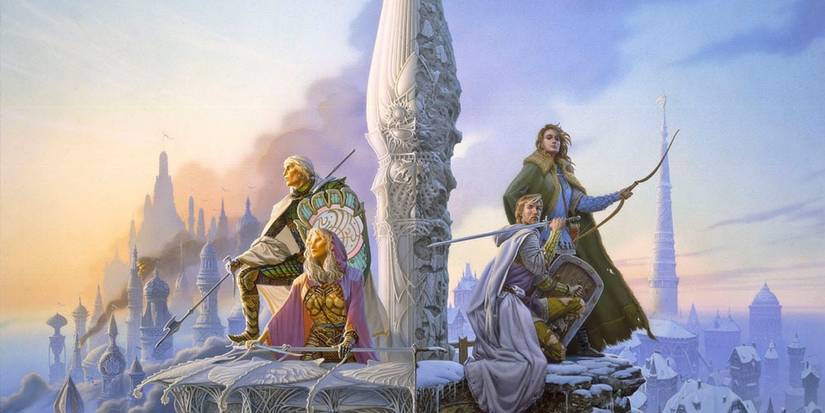
Official Perspectives and the Future of Adaptation
While there have been no official announcements regarding a Memory, Sorrow, and Thorn television series, the conversation among fans and industry analysts has intensified as House of the Dragon continues to dominate Sunday night ratings.
In various interviews, Martin himself has consistently championed the importance of Williams’ work to his own career, often highlighting how Williams helped him realize that fantasy could move beyond the strict Tolkien-esque binary of good vs. evil. By acknowledging these roots, Martin has inadvertently kept the light shining on Williams, yet the industry remains frozen in its "Post-GoT" malaise.
The path forward for a potential adaptation lies in differentiation. If a studio were to approach this project, the marketing would need to pivot away from the "next Game of Thrones" framing. Instead, it must emphasize the unique folklore, the deep, ancient history of the Sithi, and the specific, melancholic tone that defines Williams’ writing.
Conclusion
The story of the fantasy genre is not a closed book; it is a sprawling, interconnected library. The failure to bring Memory, Sorrow, and Thorn to the screen is not just a missed business opportunity; it is a missed opportunity to showcase the history of the genre to a mainstream audience.

Until studios can look past the shadow of Westeros, they will continue to recycle the same tired tropes, ignoring the rich, complex, and deeply influential worlds that were waiting for them all along. For now, the dragon-bone chair remains empty on our screens, while the books themselves—the true progenitors of the current fantasy golden age—wait patiently for a creator with the vision to bring them to life.










