Sagoh
Sagoh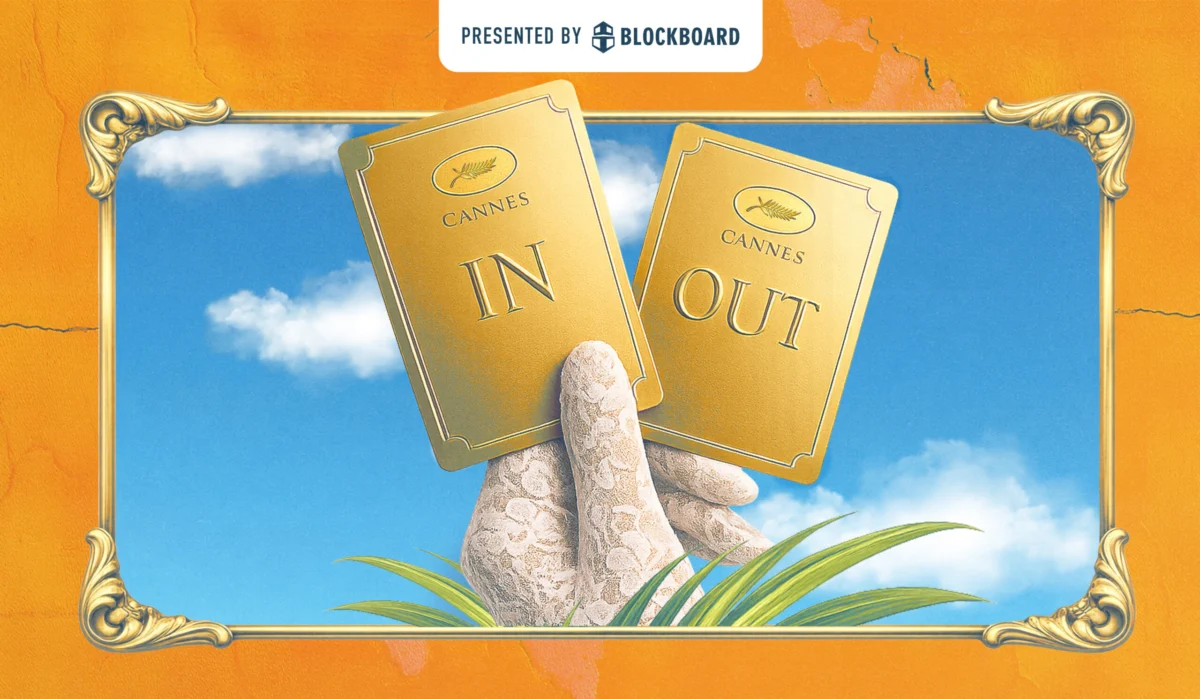
By Seb Joseph
June 15, 2026
The Cannes Lions International Festival of Creativity has long served as the industry’s annual barometer—a sprawling, sun-drenched gathering where the pulse of global marketing is checked, measured, and often, radically redefined. As the 2026 edition unfolds along the Côte d’Azur, the atmosphere is distinctly different from the years preceding it. The money has moved, the lexicon of industry buzzwords has evolved, and long-held assumptions about agency influence and platform dominance have been upended.
This year’s festival is characterized by a "re-leveling" of the playing field. Whether it is the ascent of AI-driven engagement strategies or the complete reversal of power dynamics between CMOs and digital creators, the 2026 iteration of Cannes suggests that the industry is finally moving beyond the experimental phase of digital transformation and into a period of cynical, pragmatic maturity.
Main Facts: The New Hierarchy of Cannes 2026
The most immediate observation at this year’s festival is the reshuffling of corporate and technological alliances. The traditional dominance of legacy holding companies is being challenged not by a singular entity, but by a fragmented ecosystem of AI providers and creator-led ventures.
The most notable shift in corporate presence is the pivot from massive, monolithic beach activations to more targeted, "high-signal" engagements. For instance, the PMG beach has solidified its status as a vital hub for data-driven discourse, effectively sidelining the once-ubiquitous WPP beach as the central nervous system of the festival.

Furthermore, the technological narrative has moved from "innovation at any cost" to "pragmatic utility." OpenAI has emerged as the clear frontrunner in courting the advertising dollar, effectively pushing Perplexity—once the darling of the search-disruption narrative—to the fringes of the conversation.
Chronology of Change: From Hype to Implementation
The evolution of the Cannes discourse did not happen overnight; it is the culmination of 18 months of aggressive experimentation.
- Q4 2025: The industry saw the first major wave of "creator-led" CMO negotiations. Brands stopped asking for "influencer campaigns" and began asking for equity-based partnerships where the creator holds the creative mandate.
- Q1 2026: AI fatigue began to set in. The initial excitement regarding "AI for production"—which focused on cost-cutting through synthetic content—was met with a harsh reality check: generic, AI-generated creative was underperforming in engagement metrics.
- Q2 2026 (The Road to Cannes): The discourse shifted toward "AI for ideation." By the time the festival opened its doors in June, the industry had collectively decided that while AI could dream up a concept, the human hand remained the only thing capable of executing a brand narrative that wouldn’t fall flat in the marketplace.
Supporting Data and The "In/Out" Ledger
To understand the 2026 festival, one must look at the specific, granular shifts in industry vernacular. Digiday’s tracker identifies the following key reversals:
The Technology Pivot
- In: OpenAI / Out: Perplexity. OpenAI’s integration into broader marketing workflows has proven more sustainable than the search-centric model.
- In: The Creator Tech Stack / Out: The Ad Tech Stack. The budget allocation has fundamentally tilted toward managing creator relationships over managing traditional programmatic bidding pipes.
The Human-AI Equation
- In: "AI needs humans in the lead."
- Out: "AI needs humans in the loop."
- Analysis: The change in phrasing is subtle but profound. "In the loop" implies humans are there to check the work of a machine. "In the lead" implies that the human defines the objective, and the AI serves as the instrument, not the architect.
Strategy and Philosophy
- In: Programming thinking / Out: Campaign thinking. Brands are moving away from the "one-off" campaign model in favor of persistent, always-on programming that keeps them relevant in social feeds.
- In: Talking up AI for ideation / Out: Talking up AI for production. The industry has realized that while AI can save on production costs, it cannot replace the strategic intent behind a brand’s creative direction.
Official Responses and Industry Sentiment
During the opening sessions of the festival, there was a palpable shift in the tone of the keynote stages. Senior leadership from major holding companies, while hesitant to comment on the record regarding the decline of their massive, traditional beach activations, have signaled a pivot toward "efficiency-first" networking.
"We aren’t here to build a castle on the sand," one chief digital officer from a major agency network told Digiday. "We are here to facilitate actual, actionable connections between the creator economy and our clients’ bottom lines. The days of ‘activation as a vanity project’ are behind us."
The sentiment regarding AI is similarly guarded. There is a newfound skepticism toward the "tokenmaxxing" culture of 2025, with a much higher premium placed on "tokenomics"—the actual economic viability of digital assets and incentivization structures.
Implications: The Death of the "Campaign"
The most significant implication for the industry is the death of the "campaign" as the primary unit of measurement. As we move through the second half of 2026, the data suggests that brands that view their marketing as a series of distinct, time-bound events are being outpaced by those who treat marketing as a continuous, modular, and iterative stream of content.
This "programming" mindset—where a brand acts more like a media publisher—has direct consequences for the agency model. Agencies that rely on "big reveal" campaign revenue are facing a crisis. They are being forced to pivot toward the "creator tech stack," providing the infrastructure for brands to operate as constant publishers rather than occasional advertisers.
The Trade Desk vs. TikTok
Perhaps the most telling "In/Out" on the list is the change in conversation surrounding industry risks. We have moved from obsessing over the potential regulatory or operational demise of TikTok (the "Out") to questioning the long-term, structural viability of The Trade Desk (the "In"). This reflects a broader industry anxiety regarding the consolidation of the open web and the potential for a "walled garden" future that favors those who own the identity data, rather than those who simply bid on it.
Conclusion: A More Mature Cannes
The 2026 Cannes Lions festival will be remembered not for a singular, groundbreaking creative work, but for the moment the industry collectively grew up. The obsession with "what’s next" has been replaced by an obsession with "what works."
As the festival continues, the divide between those who are successfully integrating the creator-tech stack and those who are still clinging to the ad-tech stack of the early 2020s will only grow wider. The "In" list for 2026 is a roadmap for survival in an era where the old guard is being replaced by those who understand that in the age of AI, the human element isn’t just a safety net—it is the only competitive advantage left.
Think something’s missing from this analysis? As the festival continues to evolve, we invite you to reach out to our team with your own observations from the Croisette at [email protected].

 Nana
Nana
 Jia Lissa