

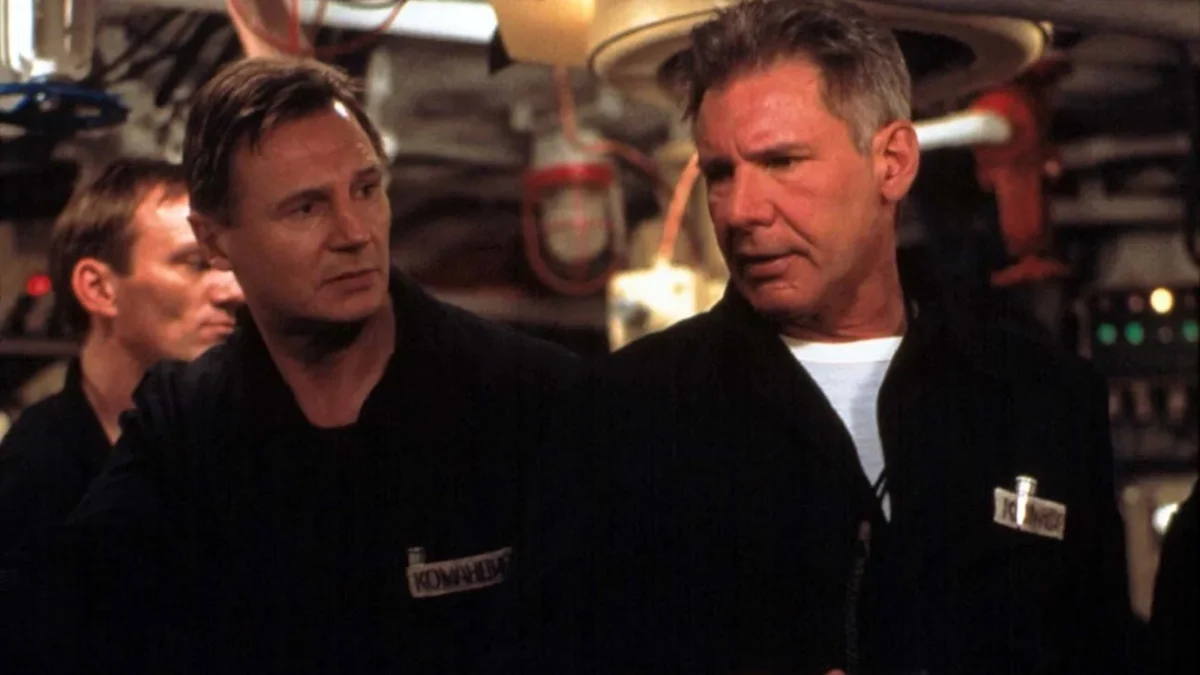
In the vast tapestry of Hollywood history, certain pairings feel inevitable. We expect the chemistry of De Niro and Pacino, or the recurring collaborations of DiCaprio and Scorsese. Yet, there are rare, fascinating anomalies—moments where two cinematic titans share the frame exactly once, only to never cross paths professionally again. Such is the case with Harrison Ford and Liam Neeson in the 2002 Cold War submarine thriller, K-19: The Widowmaker.
Directed by Kathryn Bigelow, the film was intended to be a prestige blockbuster, a marriage of high-stakes suspense and historical gravitas. Instead, it became a curious footnote in the careers of two of the world’s most bankable stars.
The Context: A Career Crossroads for an Icon
To understand the weight of K-19, one must look at the climate of 2002. Harrison Ford was approaching his 60th birthday, a milestone that often signals a quiet transition in Hollywood leading men. After a decade of unparalleled dominance in the 80s and 90s, Ford had hit a turbulent patch. While the 2000 thriller What Lies Beneath proved his bankability remained intact, films like Six Days, Seven Nights and Random Hearts had failed to ignite the box office or critical imagination.
Ford was at a juncture defined by the legacies of his predecessors. He was acutely aware of the pitfalls of the aging star—the fear of becoming a caricature or, worse, overstaying one’s welcome, as some perceived John Wayne to have done in his final years. Conversely, he observed the career path of Clint Eastwood, who had successfully transitioned into roles that embraced his age, grit, and stoic authority.
K-19: The Widowmaker offered the perfect vehicle for this transition. As Captain Alexei Vostrikov, Ford was stripped of the roguish charm of Han Solo or the action-hero bravado of Indiana Jones. This was a role of cold command, a man burdened by the weight of a dying superpower and a failing vessel. It was an opportunity to lean into his natural gravitas, trading wit for the grim, uncompromising demeanor of a Soviet commander.
The Synergy: Bigelow, Ford, and Neeson
Kathryn Bigelow, an auteur known for her mastery of tension and atmospheric storytelling, was arguably the ideal director for a submarine drama. The genre is essentially a pressure cooker—a claustrophobic environment where the external threats of the Cold War mirror the internal volatility of the crew.
To anchor this high-stakes production, the studio secured Liam Neeson. In 2002, Neeson was not yet the "action hero" of the Taken franchise. He was, however, one of the most respected dramatic actors of his generation, having anchored the moral heart of Schindler’s List and portrayed the revolutionary fire of Michael Collins.
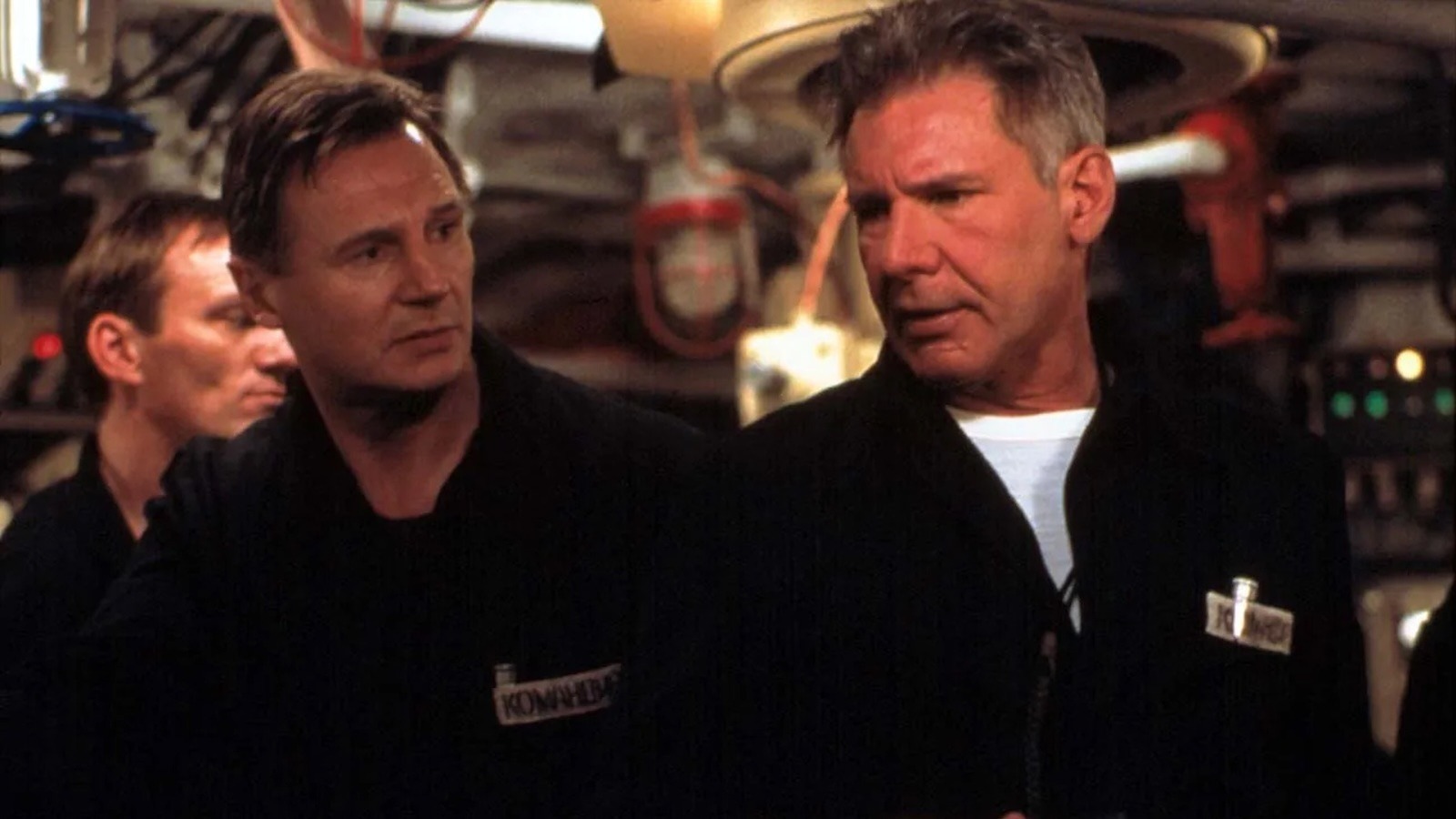
The pairing of Ford and Neeson was viewed by industry insiders as a masterstroke. You had Ford—the quintessential American icon—playing the hard-lined commander, and Neeson—the nuanced, empathetic actor—playing the executive officer, Mikhail Polenin, whose primary loyalty lay with his men rather than the mission’s political optics. Their on-screen friction was the film’s narrative spine: a clash of ideologies between the man who follows orders at any cost and the man who knows the true price of those orders.
Chronology of a Disaster: The True Story Behind the Film
The film is grounded in the harrowing true story of the Soviet nuclear submarine K-19. Known colloquially as "The Widowmaker" due to the high mortality rate of its crew during construction, the vessel’s maiden voyage in 1961 was plagued by a series of mechanical failures that bordered on the cursed.
The film chronicles the sequence of events with grim efficiency:
- The Launch: The failure of the champagne bottle to shatter against the hull at launch serves as the film’s ominous prologue, setting the tone for the disaster to follow.
- The Critical Failure: The bursting of a reactor coolant pipe forces the crew into a desperate race against time.
- The Sacrifice: The engineers, fully aware that they are walking into a death trap of radiation, are forced to improvise a cooling system to prevent a meltdown that would not only destroy the ship but potentially trigger a nuclear conflict with the United States.
Bigelow successfully captured the technical terror of the situation. However, the film suffered from a narrative imbalance. While it hit the necessary beats of the genre—the threat of mutiny, the fear of hitting crush depth, and the looming specter of World War III—it struggled to find a consistent emotional resonance with audiences.
Financial and Critical Implications
Despite the pedigree of its leads and the expertise of its director, K-19: The Widowmaker was a financial disappointment. Budgeted at an exorbitant $100 million—a massive sum for a character-driven historical drama in 2002—the film grossed only $66 million domestically.
Critical reception was equally lukewarm. While many critics praised the performances of Ford and Neeson, others were distracted by the "accent problem"—a recurring trope in Hollywood, where the necessity of maintaining English-language dialogue while attempting to sound authentically Russian often leads to performances that feel jarring to the ear.
Looking back 24 years later, the film’s failure can be attributed to its relentless, downbeat nature. It is a story of institutional failure and the callousness of a Soviet state that valued the glory of its military machines far more than the lives of the men operating them. In a post-9/11 landscape, American audiences were arguably less interested in the nuances of Soviet-era malaise than in escapism or traditional heroics.
The Legacy of the Only Collaboration
Why did Ford and Neeson never work together again? There is no public record of animosity; in fact, both actors have spoken highly of the experience. The reality is likely a combination of scheduling, the evolution of their respective brands, and the sheer randomness of the Hollywood casting machine.
Following K-19, their career trajectories diverged sharply. Ford returned to his established franchises and prestige dramas, while Neeson underwent a mid-career metamorphosis, becoming the definitive cinematic action star of the late 2000s and 2010s.
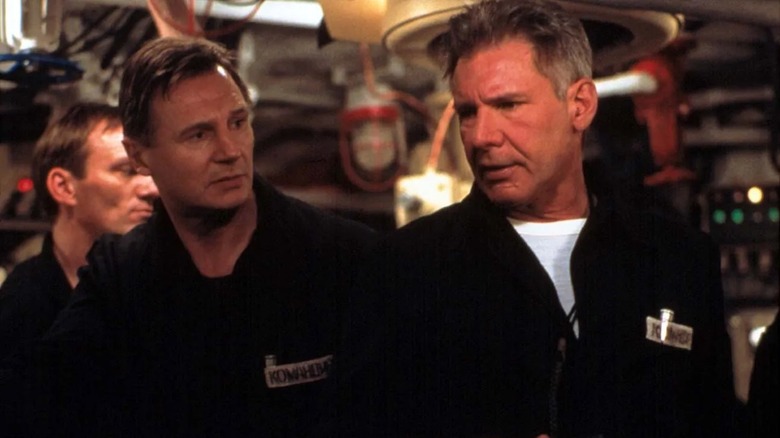
However, the legacy of their singular collaboration remains. For fans of both actors, K-19 serves as a "what if" moment. It is a film that captured two legends at the top of their game, trapped in a submarine, locked in a battle of wills that felt more real than the pyrotechnics surrounding them.
Looking Forward: The Potential for a Reunion
As both actors enter the later stages of their careers, the prospect of a reunion is more enticing than ever. In an era where legacy sequels and character-driven reunions are the gold standard of cinema, one wonders if a script could be found that reunites Ford and Neeson.
They no longer need to play the young, brash commanders. They possess the age, the experience, and the gravitas to portray characters who have moved past the idealism of their youth—characters who are tired, perhaps cynical, but still possessing that undeniable, crackling intensity that defined their brief, singular encounter on the bridge of the K-19.
Until that day arrives, The Widowmaker remains a testament to what happens when two giants of the screen collide. It is a flawed, somber, and ultimately underrated film that deserves a second look—if only to witness the rare, unrepeatable spark of two icons holding the screen together against the weight of the deep ocean.











No comments yet. Be the first to join the conversation!