Raul Delapena Setiawan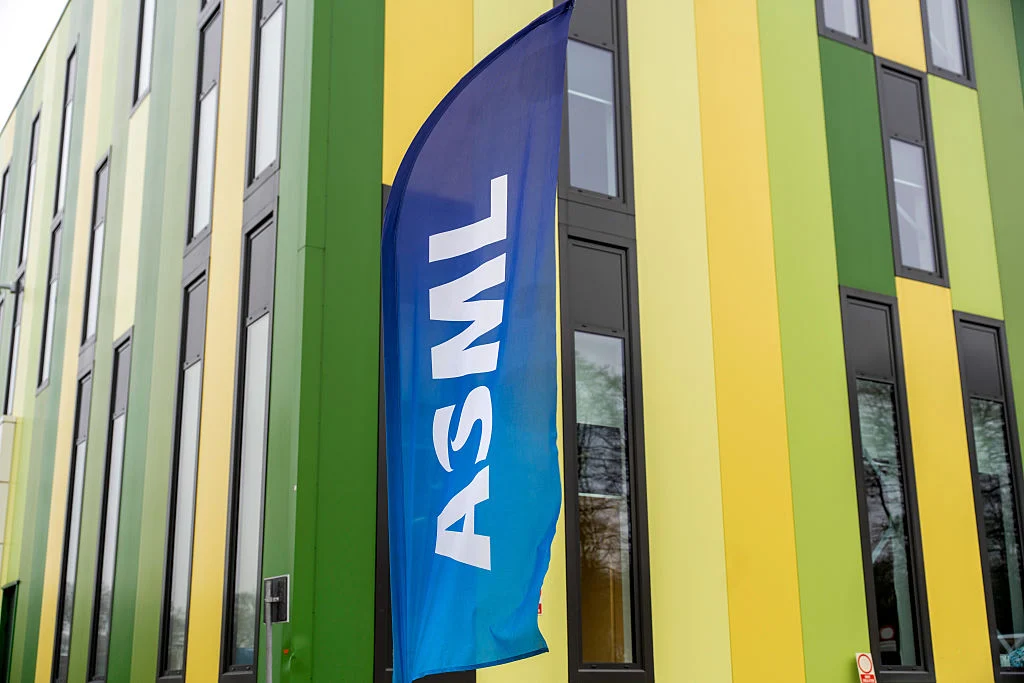
Introduction: A High-Stakes Collision in Washington
In a rare and high-profile display of diplomatic urgency, Dutch Trade Minister Sjoerd Sjoerdsma traveled to Washington, D.C., this week to engage in a series of critical negotiations with U.S. Commerce Secretary Howard Lutnick and key congressional leaders. The mission: to dismantle the momentum behind the "MATCH Act" (H.R. 8170), a piece of proposed legislation that represents the latest escalation in the escalating geopolitical tug-of-war over global semiconductor dominance.
At the heart of the dispute is ASML, the Dutch technological juggernaut and Europe’s most valuable company. As the world’s sole provider of the sophisticated lithography machines required to manufacture cutting-edge artificial intelligence chips, ASML sits at the strategic center of the U.S.-China technology conflict. The proposed MATCH Act threatens to sever the company’s access to the Chinese market—a move the Dutch government argues would have catastrophic economic consequences for the Netherlands and potentially destabilize the global semiconductor supply chain.
Chronology of a Geopolitical Friction Point
The tension between Dutch industrial interests and American national security policy has been building for years, but the introduction of the MATCH Act in April marked a significant departure from previous, more targeted restrictions.
- Pre-2023: The U.S. and its allies largely focused on restricting China’s access to the most advanced Extreme Ultraviolet (EUV) lithography tools. These machines are the gold standard for high-end chip fabrication.
- April 2026: The MATCH Act is introduced in the House of Representatives, proposing a sweeping expansion of export controls that would capture older-generation Deep Ultraviolet (DUV) machines.
- May 2026: ASML CEO Christophe Fouquet publicly addresses the fragility of the status quo, emphasizing that current Chinese restrictions already limit them to decade-old technology, cautioning against further overreach.
- June 2026: Minister Sjoerdsma arrives in Washington for emergency talks, signaling that the Netherlands views the legislative threat as an existential concern for its flagship corporation.
The bill, while currently in the committee phase, remains a volatile element in Washington. Industry analysts suggest that given the current legislative climate, the MATCH Act is unlikely to pass as a standalone measure; however, it remains a prime candidate to be folded into a larger, "must-pass" legislative package, such as a defense spending bill or a broader technology competitiveness act.
The Technical Stakes: EUV vs. DUV
To understand the gravity of the conflict, one must understand the hardware. ASML’s machines are essentially the "printing presses" of the modern digital age.
Extreme Ultraviolet (EUV) Lithography
These systems are the most complex machines ever built by human engineers. They use light with an extremely short wavelength to etch microscopic patterns onto silicon wafers, enabling the creation of the powerful AI processors used in data centers and military applications. The sale of these to China has been banned for several years under existing multilateral agreements.
Deep Ultraviolet (DUV) Immersion Systems
These are the focus of the current debate. While less advanced than EUV, DUV immersion machines are workhorses for the industry. They are used to produce a wide range of chips for automotive, household, and industrial applications. Under the current regulatory framework, ASML is permitted to sell these machines to Chinese firms. The MATCH Act would fundamentally change this, reclassifying these systems as restricted goods and effectively forcing a total decoupling of ASML from the Chinese market.
Supporting Data: Economic Interdependence
The Dutch government’s alarm is rooted in cold, hard data. China currently accounts for approximately 19% of ASML’s net system sales. For a company that serves as the backbone of the European tech sector, the sudden loss of nearly one-fifth of its revenue stream is not merely a budgetary hiccup—it is a structural threat.
Furthermore, the semiconductor industry relies on a global, integrated supply chain. ASML’s machines are composed of thousands of parts sourced from companies in Germany, the United States, Japan, and the Netherlands. By imposing unilateral U.S. controls on a Dutch company, the MATCH Act creates a "compliance nightmare" for ASML, which must navigate a complex web of Dutch, European, and American export laws simultaneously.
"The stakes for the Netherlands may be very high," Sjoerdsma noted in a press conference following his meetings with Secretary Lutnick. His visit was a deliberate attempt to remind American policymakers that while national security is a sovereign right, the economic health of key NATO allies is an essential component of the collective security the U.S. seeks to preserve.
Official Responses and Diplomatic Tensions
The mood in Washington during the Minister’s visit was described by insiders as "cordial but firm." The U.S. Commerce Department, under the direction of Secretary Lutnick, continues to prioritize the "de-risking" of supply chains from Chinese influence. The U.S. position is predicated on the theory that any technological advancement in Chinese semiconductor manufacturing represents a direct threat to American military and economic primacy.
Conversely, the Dutch delegation is pushing for a "targeted, not broad" approach. Their argument is twofold:
- Economic Viability: ASML cannot sustain its massive R&D budgets—which exceed those of many national space agencies—without a global, unrestricted market.
- Diminishing Returns: The Dutch argue that the DUV machines currently exported to China are already a decade behind current state-of-the-art technology. Denying access to this "legacy" tech will not prevent China from developing its own internal solutions; it will only force China to accelerate its own domestic chip-making efforts, potentially bypassing Western technology altogether.
ASML’s leadership has echoed this sentiment. CEO Christophe Fouquet has repeatedly pointed out that the global semiconductor market is too interconnected for "hard-line" barriers to work without causing collateral damage to the companies building the infrastructure of the future.
Implications: The Future of the Semiconductor Landscape
1. Fragmentation of the Global Market
If the MATCH Act passes, the world may see the definitive end of a unified semiconductor ecosystem. We are already witnessing the rise of a "bifurcated" tech sector, where China invests heavily in domestic manufacturing to circumvent Western sanctions, while the West consolidates its own supply chains. This "siloing" of technology could lead to a massive increase in costs, as economies of scale are lost and redundant manufacturing processes are developed on both sides of the divide.
2. Strain on Transatlantic Relations
The Netherlands has historically been one of the United States’ most reliable allies. However, forcing the Dutch to shutter a major segment of their most successful industry in the name of U.S. foreign policy creates a dangerous precedent. If the U.S. continues to use extraterritorial reach to dictate the business dealings of European firms, it may force the European Union to adopt a more assertive, "strategic autonomy" stance, potentially distancing themselves from future U.S. trade initiatives.
3. The "China Speed" Factor
There is a legitimate fear among industry analysts that the MATCH Act might inadvertently backfire. By cutting China off from legacy DUV technology, the U.S. is creating a powerful incentive for the Chinese state to pour billions more into local equipment manufacturers. If China successfully develops its own viable DUV-class lithography, ASML will have lost 19% of its revenue, and the U.S. will have gained nothing but a more self-sufficient, and perhaps more hostile, technological competitor.
Conclusion: A Delicate Balancing Act
As Minister Sjoerdsma heads back to The Hague, the outcome of his trip remains uncertain. The MATCH Act is not just a trade bill; it is a manifestation of the geopolitical anxiety defining the mid-2020s. For the United States, the legislation is a tool to safeguard the future of AI. For the Netherlands, it is a threat to the foundation of its industrial prosperity.
The coming months will be decisive. Whether the U.S. Congress chooses to soften the language of the bill or press forward with a hard-line approach will send a signal to the world about the future of global trade. In the meantime, ASML remains in a state of suspended animation, waiting to see if its most critical markets will remain open or if the digital iron curtain is about to fall a little further to the West. The outcome will not only determine the balance sheet of a single corporation, but the technological trajectory of the entire 21st century.

 Neng Nana
 Iffa Jayyana