

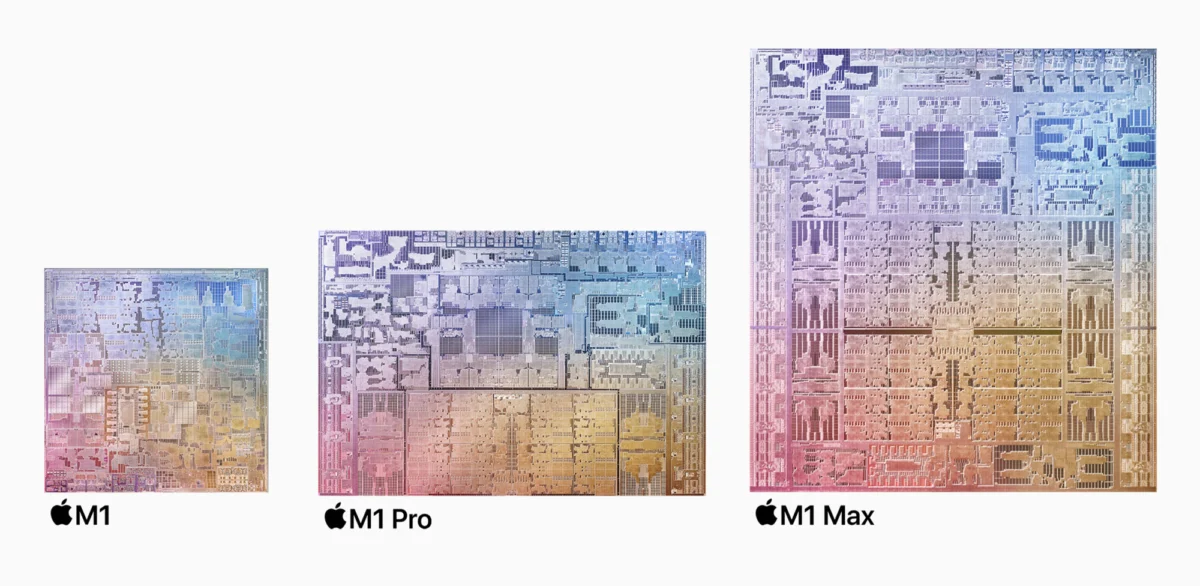
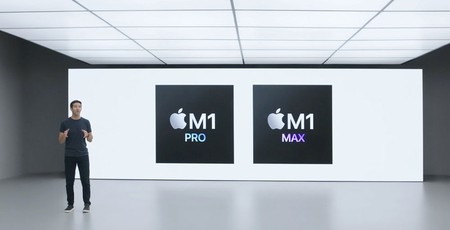
In a landmark "Unleashed" event held at its Cupertino headquarters, Apple has officially ushered in the next chapter of its silicon transition. Marking the halfway point of its two-year migration away from Intel architecture, Apple has introduced the M1 Pro and M1 Max—two systems-on-a-chip (SoCs) that represent the most ambitious hardware engineering in the company’s history. Designed to power the overhauled 14-inch and 16-inch MacBook Pro models, these chips promise to fundamentally alter the landscape of professional mobile computing.
The Architecture of Power: Main Facts
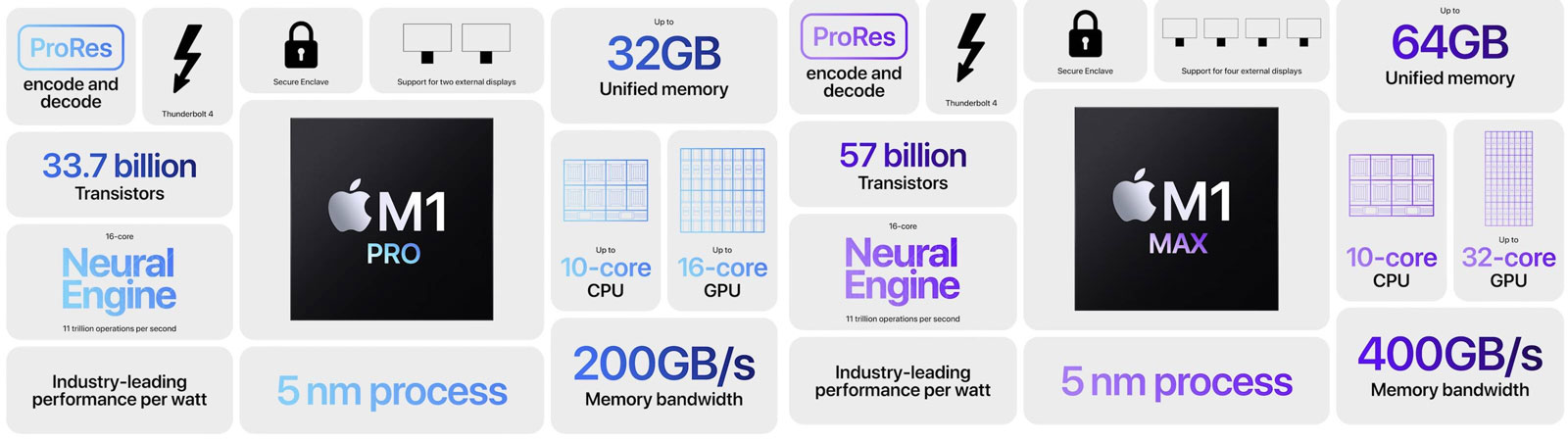
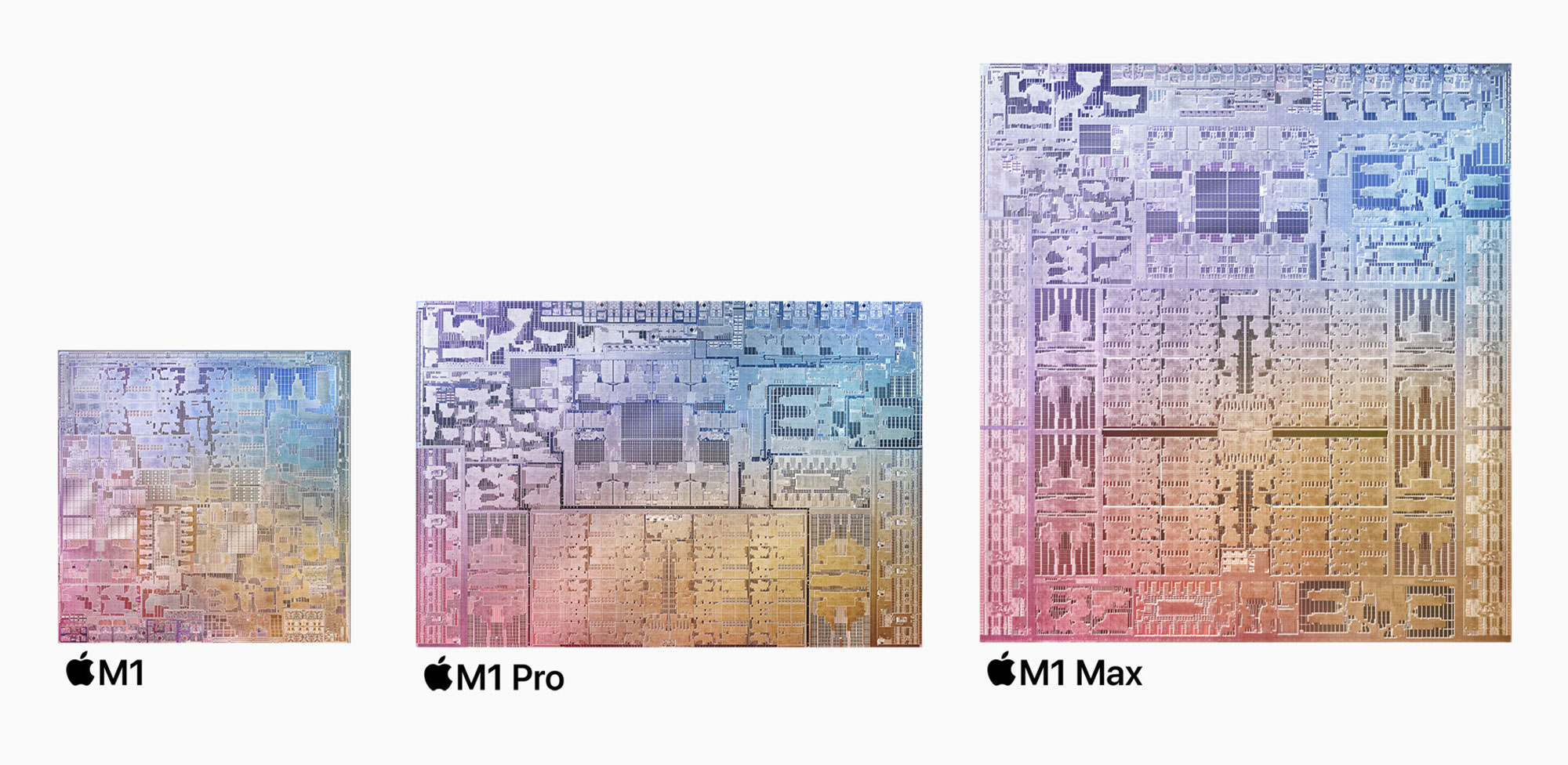
Built on a cutting-edge 5nm process, the M1 Pro and M1 Max are architectural marvels. The M1 Max, the more potent of the two, houses an staggering 57 billion transistors—a figure that dwarfs the original M1’s 16 billion.
At the core of these chips is a sophisticated CPU configuration featuring 8 high-performance (P) cores and 2 high-efficiency (E) cores. This balance ensures that the machines can handle heavy multithreaded workflows—such as 8K video rendering or complex code compilation—without sacrificing the battery longevity that has become an Apple Silicon hallmark.
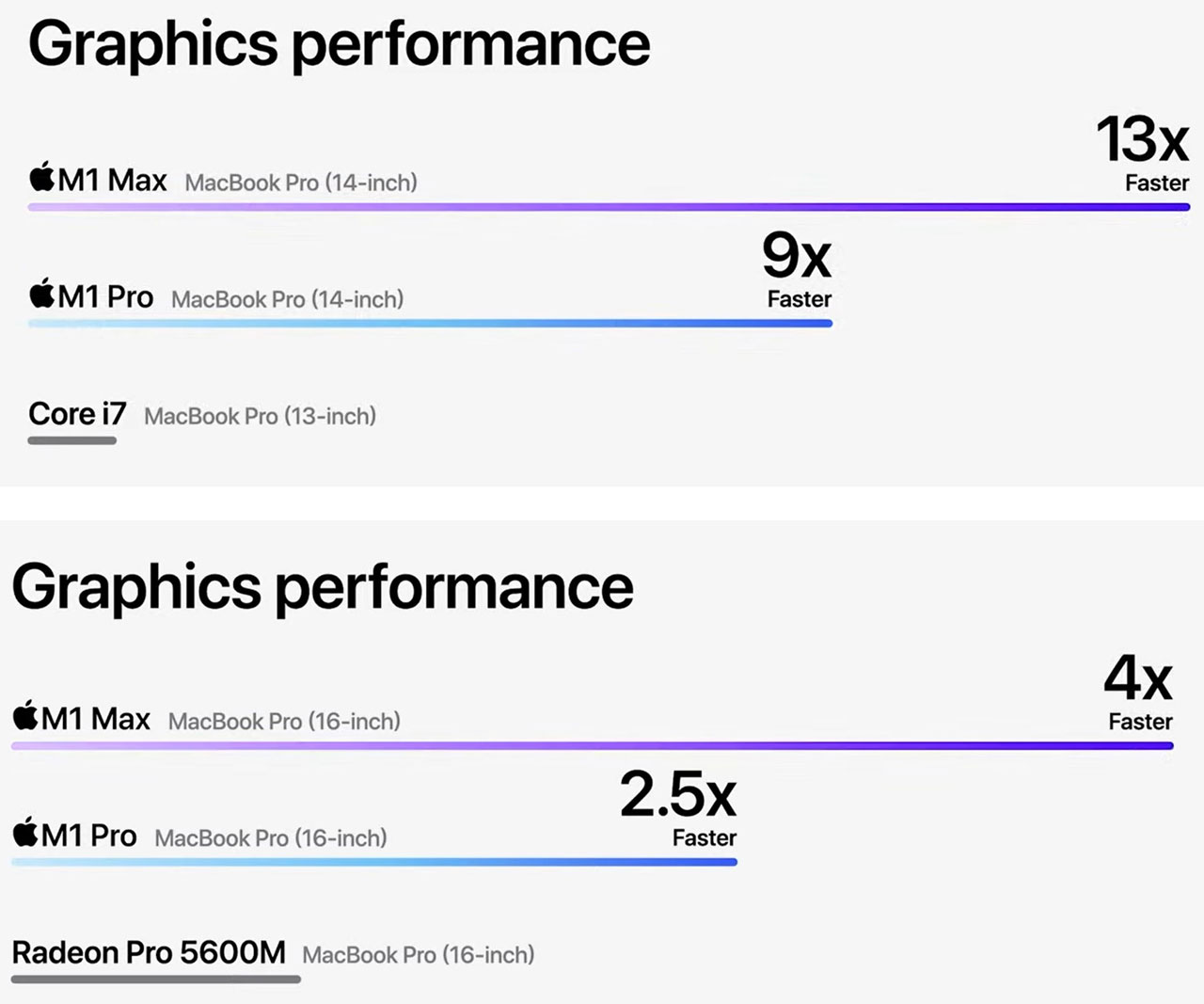
The graphics capabilities have seen the most dramatic evolution. The M1 Pro offers a GPU with up to 16 cores, while the M1 Max scales that to a massive 32-core configuration. When paired with up to 64GB of unified memory and a 16-core Neural Engine for AI and machine learning tasks, these SoCs are positioned not just as upgrades, but as a complete departure from the thermal and performance limitations of the previous Intel-based MacBooks. Apple asserts that these new chips provide up to 70 percent faster CPU performance than the original M1 and, in the case of the M1 Max, up to four times the GPU throughput.
A Chronology of the Transition
To understand the significance of this launch, one must look at the timeline of Apple’s silicon journey:
- June 2020: Apple announces its intent to transition its entire Mac lineup to custom silicon at the Worldwide Developers Conference (WWDC).
- November 2020: The M1 chip debuts in the MacBook Air, 13-inch MacBook Pro, and Mac mini, shocking the industry with its performance-per-watt metrics.
- April 2021: Apple introduces the M1 in the redesigned iMac and iPad Pro, signaling the chip’s versatility.
- October 2021: The "Unleashed" event showcases the M1 Pro and M1 Max. This represents the final push toward the high-end professional market, directly challenging the workstation-class laptops that have historically relied on discrete GPUs from AMD or Nvidia.
This trajectory reflects a calculated, methodical dismantling of Apple’s dependence on third-party CPU and GPU providers, culminating in a vertical integration that allows the company to optimize software and hardware at a granular level.
Supporting Data: Benchmarking the Claims
During the keynote, Johny Srouji, Apple’s Senior Vice President of Hardware Technologies, emphasized that these chips were built to remove the bottlenecks traditionally associated with high-end creative work.
"The M1 Pro and M1 Max deliver massive gains in CPU and GPU performance, up to six times the memory bandwidth, and a new media engine with ProRes accelerators," Srouji stated. The memory bandwidth is a critical factor here; the M1 Max boasts up to 400GB/s of bandwidth, which is nearly triple that of the M1 Pro, allowing for seamless handling of massive assets in applications like DaVinci Resolve or Adobe Premiere Pro.
Apple provided internal performance comparisons showing the M1 Max’s GPU performance significantly outpacing mobile discrete GPUs, including the AMD Radeon RX 5600M. While Apple’s marketing charts are undeniably impressive, the tech community remains eager for independent, third-party benchmarks. Historically, Apple’s "up to" claims hold weight, but the true test of these machines will be in real-world scenarios—specifically, how they handle sustained thermal loads under extended gaming or 3D rendering sessions.
The industry is particularly interested in the "ProRes" media engine. By dedicating specific silicon to the encoding and decoding of professional video codecs, Apple has effectively turned the MacBook Pro into a portable video production suite. Apple claims that the M1 Max can transcode ProRes video in Compressor up to 10 times faster than the previous generation 16-inch Intel-based MacBook Pro.
Official Responses and Industry Sentiment
The professional creative community has responded with cautious optimism. For years, "Pro" users felt sidelined by the thermal throttling and keyboard reliability issues of the late-2010s Intel MacBooks. The new machines, which also reintroduce functional ports like HDMI, an SD card slot, and MagSafe charging, appear to be a direct response to this feedback.
Industry analysts have noted that Apple’s focus on "industry-leading power efficiency" is perhaps the most disruptive aspect of the new silicon. While a gaming laptop with a high-end discrete GPU often sees its battery life crater within an hour or two of intense use, the new MacBook Pro 16 is rated for up to 21 hours of video playback. This is an unprecedented efficiency metric for a machine of this performance tier.
However, the lack of support for user-upgradeable RAM or storage remains a point of contention among power users. Because the memory is "unified" and located directly on the SoC package, buyers must make definitive choices about their hardware needs at the time of purchase, a legacy trade-off of the Apple Silicon architecture.
Implications for the Future of Computing
The release of the M1 Pro and M1 Max signals several major shifts in the broader computing industry:
1. The Death of the "Wattage War"
For a decade, Intel and AMD laptops competed by increasing TDP (Thermal Design Power) limits, resulting in laptops that were bulky, hot, and required massive power bricks. Apple has successfully pivoted the conversation toward performance-per-watt. If these chips prove as efficient as claimed, it may force competitors to rethink their reliance on high-wattage, high-heat silicon for mobile workstations.
2. The Rise of Vertical Integration
Apple’s success with the M1 series proves that vertical integration—where the OS, the silicon, and the hardware chassis are developed in tandem—can yield results that general-purpose hardware manufacturers struggle to replicate. By creating custom media accelerators for ProRes, Apple has optimized a specific workflow for a specific demographic, creating a "moat" that is difficult for Windows laptop manufacturers to cross without similar levels of chip customization.
3. A New Paradigm for Professional Workflows
The implications for creative professionals are profound. The ability to edit multiple streams of 8K ProRes video on a battery-powered device while on a flight or in a remote location is no longer a theoretical possibility; it is a tangible feature of the M1 Max. This effectively untethers creative directors, editors, and sound engineers from the studio desk, democratizing high-end production capability.
4. Gaming: The Last Frontier
While Apple has historically struggled to attract high-end AAA gaming, the raw GPU power of the M1 Max theoretically places it in competition with high-end PC gaming laptops. Whether Apple will leverage this hardware to build a more robust gaming ecosystem remains the "elephant in the room." Without a significant push toward gaming API support and developer incentives, the M1 Pro and Max will remain powerhouses for production, while gaming may remain a secondary use case.
Conclusion: A Turning Point
As the first of these new MacBook Pros reach end-users, the narrative surrounding Apple Silicon has shifted from "can they do it?" to "how much further can they go?" The M1 Pro and M1 Max are not merely faster chips; they are the physical manifestation of Apple’s long-term strategy to own the entire stack of its technology.
By prioritizing efficiency, specialized media acceleration, and massive memory bandwidth, Apple has addressed the primary pain points of the professional Mac user. While we await the inevitable onslaught of third-party stress tests and gaming benchmarks to verify the marketing claims, one thing is certain: the era of the high-performance, power-hungry, Intel-powered MacBook is rapidly coming to an end. In its place is a new, remarkably efficient machine that promises to keep Apple at the forefront of mobile computing for years to come.











No comments yet. Be the first to join the conversation!