Nila Kartika Wati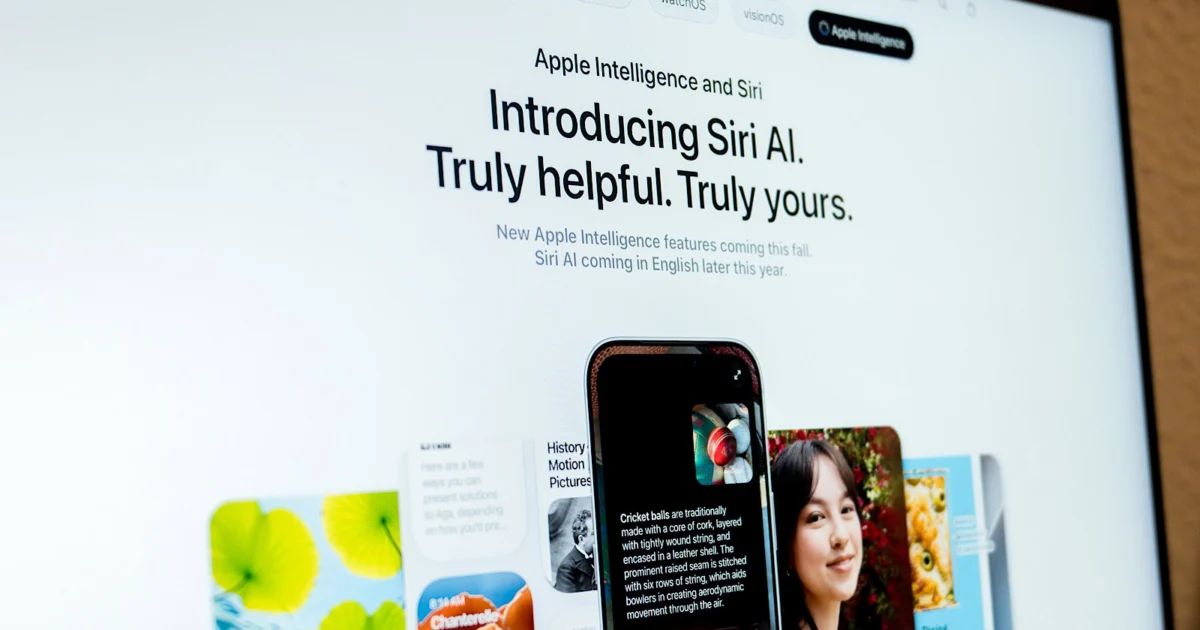
Apple’s Worldwide Developers Conference (WWDC) this week served as the stage for a seismic shift in the digital landscape. With the unveiling of "Siri AI," built upon the foundation of next-generation Apple Intelligence, the tech giant has fundamentally altered the interaction between users, their devices, and the open web. For search marketers, SEO professionals, and brand managers, this is not merely a feature update—it is the arrival of a new, potentially opaque, answer-driven paradigm.
As Siri AI integrates deep-system capabilities with real-time web access, the traditional "search-then-click" model faces its most significant challenge to date.
The Core Transformation: What Apple Announced
At its heart, Siri AI is a profound evolution of Apple’s long-standing assistant, now rebuilt to function as a conversational, context-aware engine. According to Craig Federighi, Apple’s senior vice president of Software Engineering, the new iteration is designed to move beyond simple command execution. It offers "broad world knowledge," "onscreen awareness," and "personal context understanding."
Key Features Reshaping the User Experience:
- Conversational Web Answers: Siri can now pull up-to-date information from the web to generate comprehensive, conversational responses. Users are no longer limited to static results; they can ask follow-up questions, effectively turning search into a dialogue.
- Systemwide Ubiquity: Siri AI is no longer an isolated app. It is woven into the fabric of the OS. On iPad and Mac, it resides within Spotlight—the primary interface for most power users. On the iPhone, a simple swipe down from the Dynamic Island initiates a session.
- Visual Intelligence: By leveraging the iPhone camera, the new "Siri mode" allows users to gain information about their physical surroundings. Whether identifying a product, a landmark, or a menu, the camera now acts as a query device, bypassing traditional text-based search entirely.
- Agentic Behavior: Beyond just answering questions, features like "Notify Me" in Safari and automated password management suggest that Apple is moving toward an agentic model where the browser acts on behalf of the user, potentially reducing the need for direct human interaction with a website’s interface.
A Chronology of the Apple-Google AI Alliance
The path to this moment was paved by years of quiet negotiation and industry-wide speculation.
March 2024: The first reports surfaced via Bloomberg that Apple was in active talks to license Google’s Gemini models to power generative AI features on the iPhone. This was a significant admission of the technical gap between Apple’s proprietary LLM research and the market-leading capabilities of Google and OpenAI.
Spring 2025: The discussions took center stage during the Google antitrust remedies trial. Google CEO Sundar Pichai’s testimony confirmed that Google was aiming for a mid-2025 agreement, signaling a strategic pivot toward becoming the infrastructure layer for the world’s most popular hardware.
January 2026: A formal joint statement confirmed the partnership. Apple announced that Gemini models and cloud technology would form the backbone of the "Apple Foundation Models."
June 2026: Monday’s WWDC keynote transformed this architectural alliance into a consumer product. While Apple’s messaging deliberately downplayed the Google connection—attributing intelligence to "Apple Foundation Models" and "Private Cloud Compute"—the underlying technology represents a landmark synthesis of Apple’s hardware ecosystem and Google’s massive data processing capabilities.
Supporting Data: The Shrinking Click-Through Landscape
The industry is currently grappling with a "measurement gap." Historical data regarding search behavior provides a sobering backdrop for the arrival of Siri AI.
According to research from SparkToro and analysis of Similarweb clickstream data, the vast majority of Google searches now conclude without a user ever clicking through to a website. We are seeing a shift from a "navigation" economy to an "answer" economy. SE Ranking data indicates that while platforms like Gemini and Perplexity are gaining traction, they are still a small slice of the overall traffic pie—but that slice is growing rapidly.
Siri AI, however, changes the distribution game. Unlike a standalone app that a user must choose to download, Siri AI is a default-installed, OS-level utility. It benefits from the same "default status" that once made Safari’s placement on the iPhone worth billions of dollars in search revenue.
Official Responses and the "Applebot" Dilemma
Apple’s stance on transparency remains, for now, restricted to a singular, updated support page for "Applebot." This document serves as the only rulebook for publishers.
The Rules of Engagement:
- Source Citation: Apple notes that answers "may" include links to sources. It does not clarify the frequency, the algorithm for source selection, or the UI design for these citations.
- Control Mechanisms: Sites can block AI training by disallowing
Applebot-Extendedin theirrobots.txtfile. They can prevent content from being used as context for answers via thenosnippettag. - The Default Fallback: If a site does not explicitly set rules for Applebot, it defaults to the directives provided for
Googlebot.
The lack of a dedicated "Siri Search Console" is a significant concern for the SEO community. Without clear reporting on impressions, citations, or traffic attribution, brands are effectively flying blind. If a user asks Siri a question about a product and receives an accurate answer without a link, the brand gains zero referral credit, zero analytics tracking, and zero engagement data.
Implications for Search Professionals and Brands
The shift to an answer-first, AI-driven interface has profound implications for digital strategy.
1. The Rise of "Answer Surfaces"
As Jim Yu, founder of BrightEdge, noted, a new "answer surface" has opened between brands and their customers. The goal is no longer just to rank for keywords; it is to ensure that content is "accessible, accurate, and structured" for an AI to consume and verify. If an AI cannot parse your site’s data, you effectively do not exist in the Siri ecosystem.
2. The Convergence of SEO and GEO
Nitin Manhar Dhamelia of Barilla Group argues that SEO is evolving into "Generative Engine Optimization" (GEO). Brands must now focus on:
- Brand Governance: Ensuring the AI has a consistent, accurate source of truth for the brand.
- Intent Interpretation: Moving beyond keywords to understand the "intent of the query" as interpreted by an assistant.
- Structured Data: Doubling down on Schema markup to help AI models categorize product data and service information.
3. The Regional Variability
The rollout is not uniform. With Siri AI currently excluded from the EU and China due to regulatory complexities, brands must prepare for a fragmented global search experience. A user in the U.S. might interact with a brand via an AI assistant, while a user in Germany continues to use traditional search engines. This requires a tiered regional strategy that accounts for platform-specific capabilities.
The Road Ahead: Why Caution is Essential
For the SEO community, the temptation to jump into "Siri Optimization" is high. However, the current reality is that no one truly knows how Siri weighs sources. Is it purely based on the Gemini training set? Does it prioritize sites that have high authority in Apple’s internal index? Does it favor Apple Maps or Apple News data over independent web content?
The immediate checklist for professionals:
- Audit your
robots.txt: Ensure yourApplebotandGooglebotsettings are intentional. Do you want your content powering Apple’s AI, or do you want to restrict it? - Focus on Structural Clarity: Invest in technical SEO that makes your site’s content easy to extract. High-quality, semantically structured data is the only currency AI models understand.
- Monitor the Beta: The upcoming user beta will provide the first real-world data. Watch for referrer headers, citation patterns, and whether users are being funneled to your site or kept within the OS interface.
As we move toward the final release of iOS 27 this fall, one thing is certain: the era of the passive, link-heavy web is ending. In its place, we have an era of active, assistant-led information retrieval. Success in this new landscape will not be measured by the number of clicks, but by the ability to become the definitive source of truth in an age of automated answers.


 Lina Irawan
 Raul Delapena Setiawan