Nila Kartika Wati
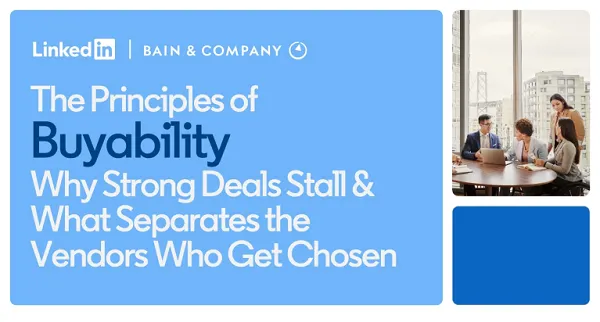
In the high-stakes world of Business-to-Business (B2B) commerce, conventional wisdom has long suggested that the path to a closed deal is paved with superior product features, competitive pricing, and undeniable ROI. However, a groundbreaking new report from LinkedIn, developed in partnership with management consulting giant Bain & Company, suggests that these traditional pillars of B2B sales are no longer enough. The research, titled “The Principles of Buyability,” argues that the modern B2B landscape is defined by a shift from rational justification to emotional defensibility.
For marketers and sales professionals, the implication is clear: to drive revenue in a volatile economic climate, brands must stop selling features and start selling "buyability"—the ability for a decision-maker to defend their choice to their peers and stakeholders without fear of professional repercussions.
The Core Concept: Redefining the B2B Decision Unit
At the heart of the LinkedIn and Bain & Company report is the concept of the "Buying Group." In modern organizations, purchasing decisions are rarely made by a single individual. Instead, they are the result of a consensus-driven process involving multiple stakeholders, each with their own priorities, risks, and agendas.
LinkedIn defines "Buyability" as a strategic framework that recognizes the reality of these buying groups. It posits that being "buyable" is not about reaching a rational threshold—where the numbers simply make sense—but rather about hitting an emotional threshold. When a decision-maker chooses a vendor, they are not just buying a product; they are putting their professional reputation on the line. If the project fails, they are the ones who must answer for it. Therefore, their primary objective is often not to find the "best" product, but to find the "safest" one.
The Stagnation Crisis
The report reveals a sobering statistic: 40% of B2B deals fail not because a competitor won, but because the buyer group reached an impasse and chose to do nothing. This paralysis is driven by the fear of making a wrong move. As the report poignantly notes, "Buyers would rather do nothing than risk a decision that damages their career." This phenomenon of self-preservation dictates that the most "buyable" vendor is not the one with the most innovative tech, but the one that provides the most robust justification for the purchase.
Chronology: The Evolution of the Buying Journey
To understand why "buyability" has become the primary hurdle for B2B brands, one must look at how the buying journey has evolved over the past decade.
- The Era of Information Asymmetry (Pre-2010): Historically, vendors held the cards. Buyers relied on sales representatives to provide information about products and pricing. Sales teams drove the conversation, and success was predicated on being the best educator.
- The Digital Proliferation (2010–2020): With the rise of the internet and B2B review platforms, the power dynamic shifted. Buyers began conducting independent research, often completing 70-80% of their journey before ever engaging with a sales rep.
- The Modern Consensus Age (2020–Present): Today, we operate in an environment of high complexity and high risk. Buying groups are larger and more diverse than ever. With economic uncertainty, budget scrutiny has intensified. The decision-making process has become a battleground of internal politics and risk mitigation.
This progression has led to the current state of "Buyability," where the vendor’s job is no longer to educate, but to provide the internal champion with the "social and rational armor" they need to convince the rest of their organization that the purchase is a safe, defendable bet.
Supporting Data: The Power of Advocacy
The report provides compelling evidence that the most effective way to build this "armor" is through external validation. According to the data, buyers are three times more likely to select a vendor that is heavily recommended by peers or existing customers, even if that vendor does not offer the lowest price or the most advanced feature set.

The "Self-Recommendation" Effect
Perhaps even more striking is the finding that buyers are four times more likely to choose a vendor with whom they have had a direct, successful experience in the past. The report explains this psychological quirk: "Past experience is, in effect, a recommendation from themselves."
When a decision-maker chooses a brand they have worked with before, they are effectively removing the "unknown" variable. They are not just buying a solution; they are buying the comfort of familiarity. This creates a massive competitive advantage for incumbent vendors and places an immense burden on challengers to prove their worth through social proof.
The Hierarchy of Influence
LinkedIn’s research highlights a shift in what influences buying decisions:
- Top Tier (Social/Emotional): Peer recommendations, past success, and alignment of working styles.
- Middle Tier (Rational/Practical): Feature sets, price points, and integration capabilities.
- Lower Tier (Brand Status): Being a category leader or being touted by industry experts.
The data makes it clear: while "rational" attributes are necessary for a deal to be considered, "social" attributes are what ultimately push a deal over the finish line.
Official Insights and Strategic Responses
LinkedIn’s analysis serves as a wake-up call for the B2B marketing community. "Customer advocacy is not a nice-to-have content play," the company stated in its release. "It is the highest-leverage asset in your marketing strategy, especially in final-stage decisions."
How Brands Should Respond
For CMOs and sales leaders, the report suggests a fundamental pivot in how they deploy their resources:
- Elevate the Customer Voice: Stop using testimonials merely as window dressing on a website. Instead, integrate customer advocacy into every stage of the funnel. Facilitate peer-to-peer connections where prospects can speak directly to current users.
- Focus on Internal Selling: Marketing materials should not just be directed at the "buyer." They should be directed at the "internal champion" who needs to sell your brand to their CFO, their CTO, and their legal team. Provide them with the documentation, case studies, and risk-mitigation arguments they need to survive the internal vetting process.
- Align with "Working Styles": The research suggests that cultural and operational alignment is as important as technical fit. Brands that communicate how they work—their responsiveness, their project management philosophy, and their post-sale support—will outperform those that focus only on the output of their software or services.
Implications for the Future of B2B Marketing
The "Buyability" report signals a move toward a more human-centric B2B model. As AI and automation continue to commoditize the "rational" aspects of products, the differentiator will increasingly be trust.
The Death of the "Lone Wolf" Sale
If buying groups are the new unit of decision-making, the "lone wolf" sales approach—where a single rep manages a relationship—is becoming obsolete. Modern sales success requires a team-based approach that addresses the needs of multiple stakeholders simultaneously.
The Rise of "Defensibility" as a Metric
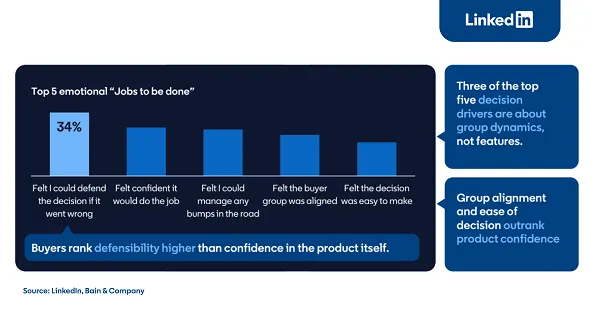
Marketing teams should begin measuring the "defensibility" of their messaging. When a prospect views a piece of content, do they feel equipped to take that information to their board of directors? If the answer is no, the marketing is failing. The goal should be to provide a narrative so compelling and so grounded in social proof that the decision-maker feels intellectually and emotionally protected in choosing that brand.
Conclusion: Trust as a Competitive Moat
Ultimately, the LinkedIn and Bain & Company report serves as a reminder that business is, and always will be, a human endeavor. Even in the most technical, enterprise-grade B2B environments, the people writing the checks are motivated by the same desires as any other human: the need for safety, the desire for social approval, and the wish to avoid professional regret.
Brands that master the art of "Buyability"—by leveraging the collective voice of their customers and providing the tools for internal champions to succeed—will find themselves with a massive competitive advantage. In a market where buyers are increasingly paralyzed by the fear of making a mistake, the vendor that provides the most comfort will be the one that wins.


 Jia Lissa
 Raul Delapena Setiawan