Evan Lee Salim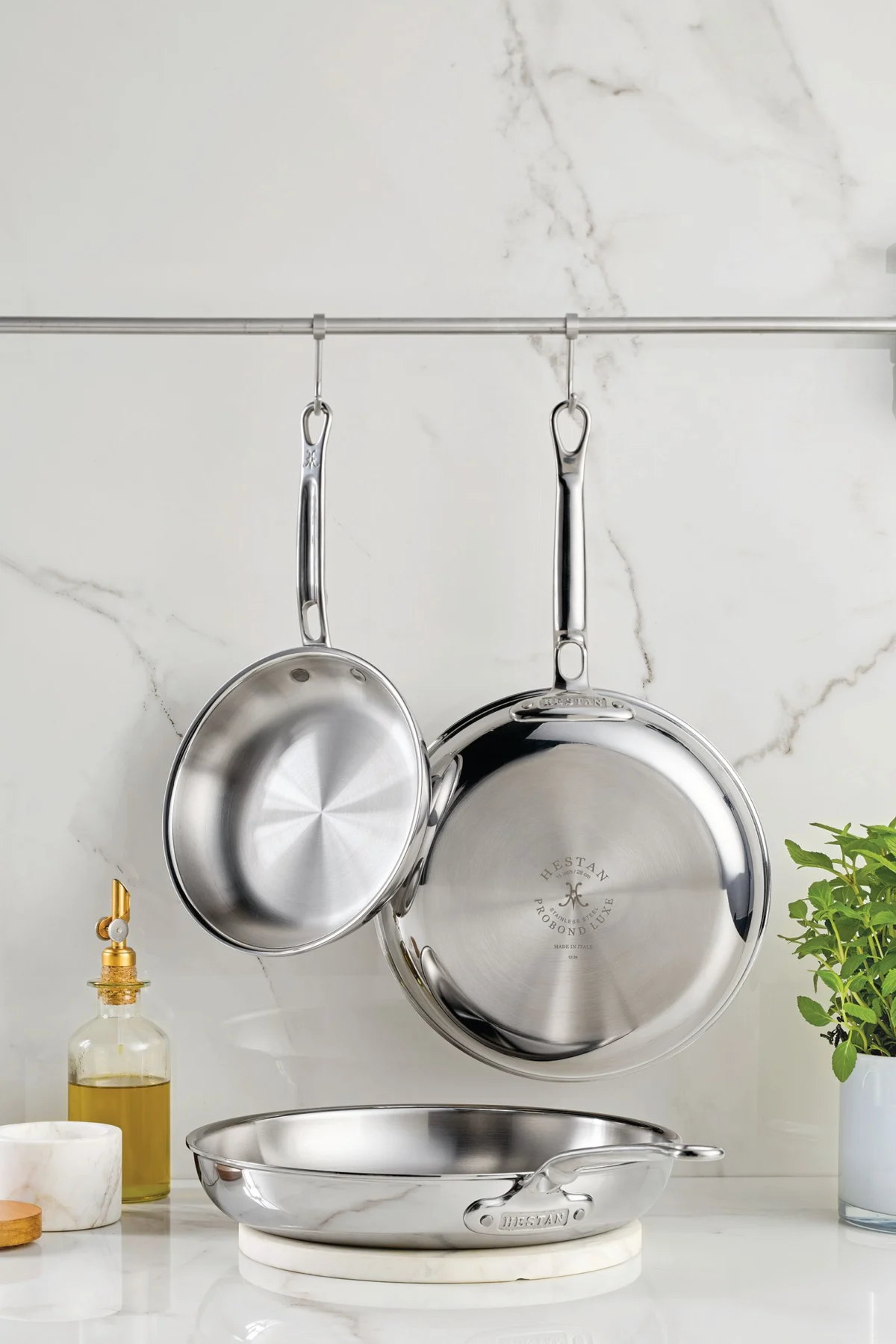
Skillets have long occupied a hallowed, if volatile, space in the domestic kitchen. For the home cook, the search for the "perfect" pan is a perennial quest, a cycle of consumer obsession that has seen materials like copper, cast iron, and carbon steel rise and fall in the public consciousness. In the 1980s, the industry was captivated by the Teflon revolution—a promise of effortless omelettes that later curdled into a health-conscious exodus as the dangers of overheating synthetic coatings became common knowledge.
When the industry largely abandoned nonstick coatings, ceramic alternatives stepped into the breach, only to reveal their own fragility: the "nonstick magic" that defines them often dissipates with alarming speed. Amidst this shifting landscape, stainless steel has remained the steadfast, unsung hero of the culinary world. It is durable, devoid of the maintenance-heavy temperament of cast iron, and possesses a longevity that makes it a true "buy-it-for-life" investment. Yet, as this investigation reveals, even the most legendary brands are not immune to quality control failures, and a higher price tag does not always guarantee a perfectly flat cooking surface.
The Baseline: Testing the Titans of Cookware
To determine which stainless steel skillets truly earn their place on a modern stove, I established a rigorous testing protocol. I used the industry standard—the All-Clad 10-inch D3 Fry Pan—as a baseline. For years, the D3 has been a darling of testing labs and professional kitchens alike, celebrated for its uniform heat distribution and its bonded metal construction. However, when I requested a sample for this review, the results were unexpectedly inconsistent.
The D3 sent for testing featured a noticeably domed surface—higher in the center than at the edges. While not immediately apparent to the casual user, it meant that oil would pool toward the rim, creating uneven heat contact. Furthermore, the rivets securing the handle were not fully compressed. While these issues were within All-Clad’s accepted manufacturing tolerances, they fell well outside my own. When I followed up, the company replaced the unit; the new rivets were correct, but the "doming" issue persisted, a testament to the fact that even established titans face manufacturing hurdles.
To broaden the scope, I called in competitors from Hestan, Viking, and Heritage Steel, subjecting them to the same battery of tests. The result was a "Pans Labyrinth" of varying quality, forcing me to shift from subjective impressions to empirical data gathering.
Chronology of an Investigation: From Anecdote to Data
The testing process began with high expectations and quickly veered into frustration. My initial experience with the Viking Pure Glide Pro was particularly disheartening. While its titanium-infused surface promised a high-performance nonstick experience over an aluminum-stainless core, the pan’s structural integrity was lacking. It arrived with a significant warp, turning the cooking surface into a literal moat for oil.
Confronted with these initial failures, I realized that "feel" was insufficient. I moved the entire collection to a workstation, purchased a professional feeler gauge set, and opened a spreadsheet to quantify the performance of each model.
The Methodology of Measurement
The testing was broken down into five core categories:
- Heat Distribution: Using an induction burner, I set every pan to medium-low and allowed them to warm for 3.5 minutes.
- The "Warp Gap": I used a flat-edge ruler and feeler gauges to measure the precise gap between the pan’s center and the cooking surface.
- Thermal Consistency: Using thermal imaging, I identified hot spots and surface-temperature variances.
- Handling and Tossability: I evaluated the ergonomics of the handles and the ease of the "skillet toss"—a vital maneuver for sautéing.
- Durability and Maintenance: I assessed dishwasher compatibility and the ease of cleaning after intense use.
Supporting Data: The Heat and The Warp
The data revealed a stark divide between the top-tier performers and the underachievers. On my induction burner, most pans maintained a remarkably consistent surface temperature of approximately 150°F, with variations between the hottest and coolest spots limited to a mere 14 to 21 degrees.
The exception, surprisingly, was the Viking line. The Viking pans acted as massive heat sinks, with surface temperatures soaring into the mid-to-high 300s—more than double that of the competition. This lack of heat management suggested a core construction issue, preventing the pans from effectively dissipating thermal energy across the surface.

The "Warp Gap" testing provided the most objective evidence of build quality. The All-Clad D3 and the Viking pans were, quite simply, not flat. Conversely, my own 8-year-old All-Clad D5 Essential Pan remained perfectly level, proving that while brands may have manufacturing variance, the "buy-it-for-life" promise is achievable. The standout, however, was the 12-inch Titanium Series skillet from Heritage Steel. After intense, high-heat stir-fry testing, it remained "wicked flat," showing no signs of the thermal warping that often plagues thinner or poorly bonded pans.
Official Responses and Industry Standards
When confronted with findings of doming, industry representatives often point to "manufacturing tolerances." The reality is that during the bonding process—where layers of stainless steel are fused with aluminum or copper—the cooling phase can introduce slight structural variances.
However, as evidenced by the Hestan ProBond Luxe line, this is not an unavoidable byproduct of production. Hestan utilizes a design philosophy that incorporates countersunk rivets, which creates a smooth, flush surface inside the pan. Unlike most competitors, Hestan has also engineered its rims to be fully sealed. This is a critical design feature because it allows the pans to be dishwasher-safe without the risk of water ingress, which can lead to corrosion or, worse, unsanitary buildup within the rim.
Implications for the Home Cook
What does this mean for the person standing in the aisle of a kitchenware store, debating between a $150 and a $200 pan?
First, the "name brand" bias must be tempered by skepticism. The market is saturated with legacy brands that rely on reputation, while newer or more specialized manufacturers—such as Heritage Steel—are focusing on the precision of the bonding process to ensure a perfectly flat base.
Second, the design details matter more than the marketing. Countersunk rivets are not just an aesthetic choice; they are a functional necessity for easy cleaning. If you are a home cook who values the ability to toss your cookware in the dishwasher after a quick lunch, you must look for sealed rims. If a manufacturer hasn’t sealed the rim, they are essentially telling you that the pan is not designed for the modern, high-intensity kitchen.
Finally, the takeaway is one of empowerment. If you purchase a high-end pan and find the bottom is not flat, do not accept it as a quirk of the material. Use a straight-edge to verify your findings, and if it fails the test, send it back. The price of premium cookware is, in part, a premium for quality control.
The Verdict
After dozens of eggs, hours of stir-frying, and extensive data analysis, the landscape of stainless steel is clear:
- The Heritage Steel Titanium Series is an exceptional value, offering a flat surface and incredible heat tolerance at a price point that competes directly with the industry standards.
- The Hestan ProBond Luxe represents the future of user-focused design. While more expensive, the combination of dishwasher compatibility, countersunk rivets, and superior ergonomics makes it a superior choice for the busy home cook.
- The All-Clad D3, while a classic, is currently suffering from a lack of consistency that should give potential buyers pause.
The quest for the perfect skillet is not over, but it is now informed by data. You are not merely buying a pan; you are investing in a tool that will handle your dinner for decades. Demand the flat surface you are paying for, prioritize designs that facilitate easy maintenance, and never be afraid to put your equipment to the test.

 Sagoh
Sagoh
 Raul Delapena Setiawan