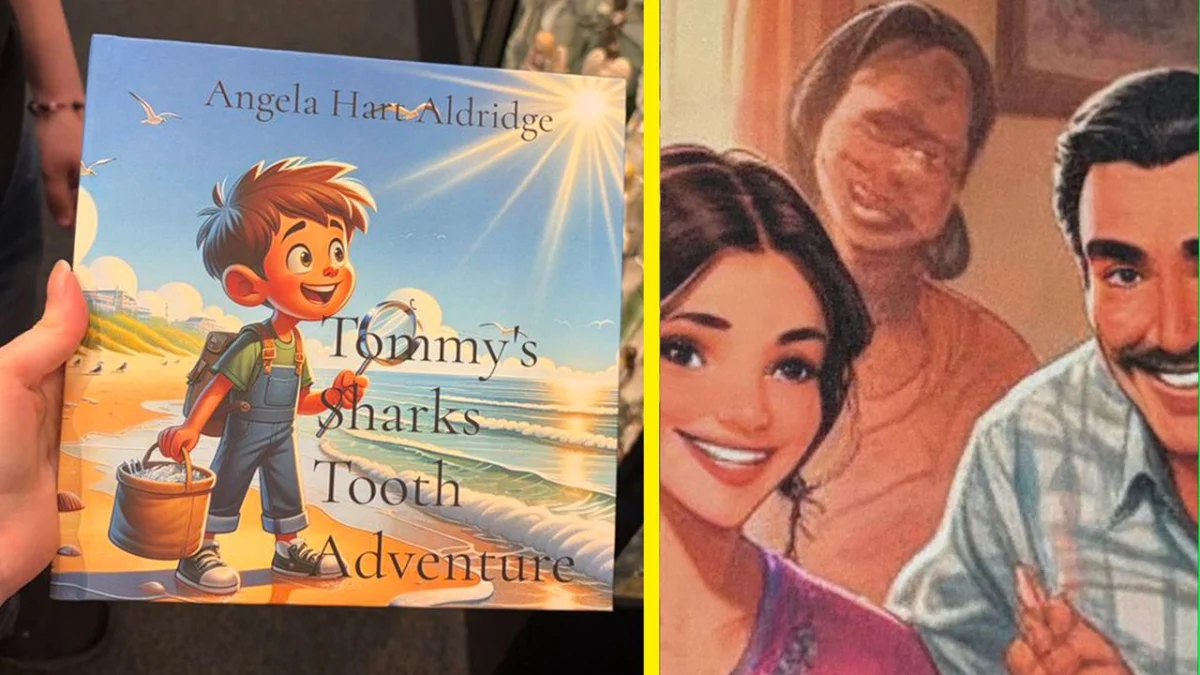
The shelves of local bookstores, libraries, and online marketplaces are increasingly being infiltrated by a new, insidious form of content: AI-generated children’s books. While the tech industry heralds the democratization of publishing, a growing chorus of parents, educators, and artists warns that we are witnessing the erosion of a vital cultural medium. From nonsensical plotlines to visual inconsistencies that border on the surreal, these AI-authored products are being criticized as "slop"—low-quality, mass-produced content that lacks the human soul, nuance, and structural integrity required for early childhood development.
The State of the Market: A Tsunami of Low-Quality Content
The rise of generative AI has lowered the barrier to entry for self-publishing to near-zero. Tools that can synthesize text and imagery in seconds have empowered opportunists to flood platforms like Amazon’s Kindle Direct Publishing with thousands of titles. However, the quality gap between these automated outputs and traditional, human-authored literature is stark.
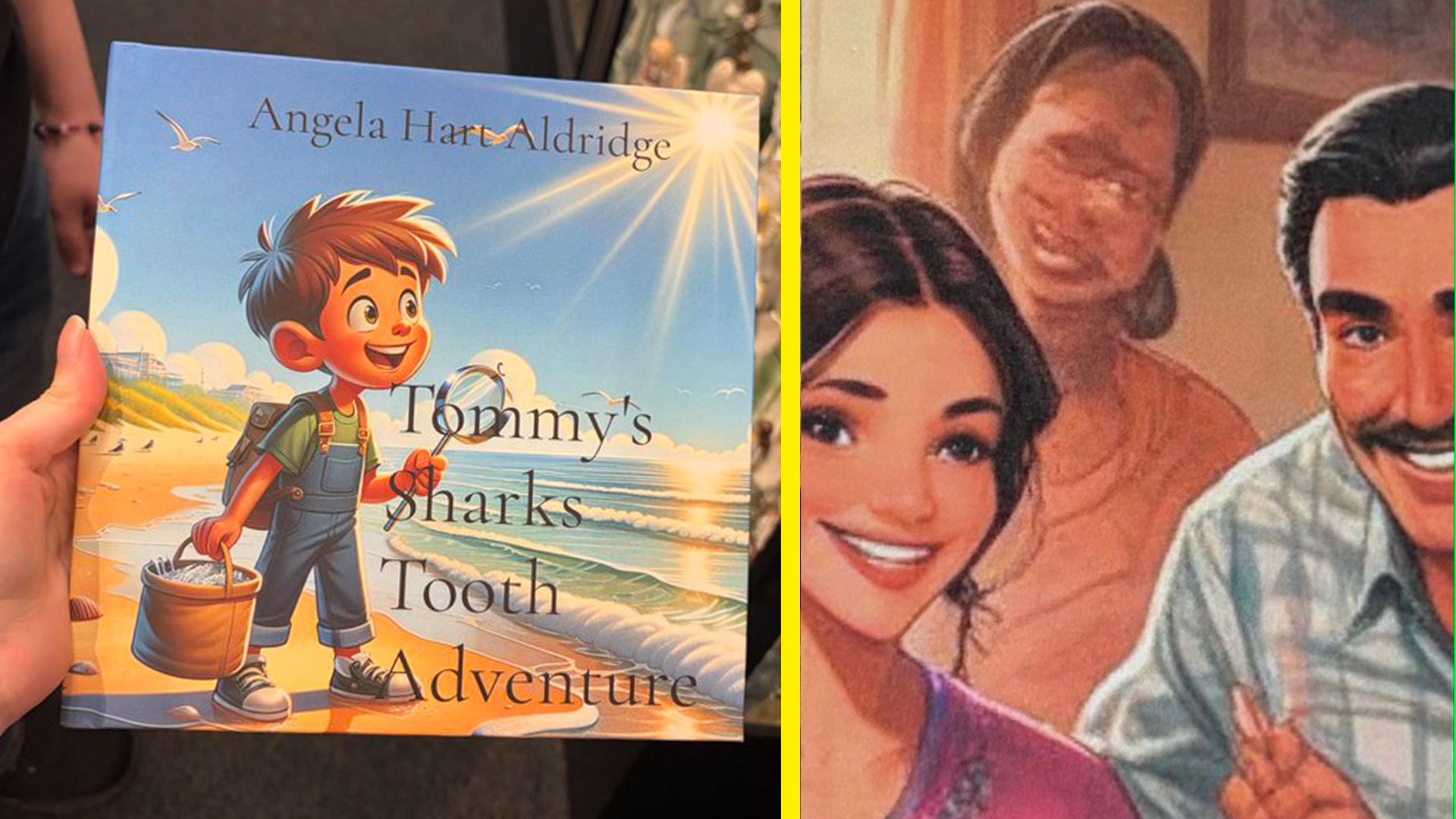
Reports from social media and consumer forums highlight a disturbing trend. Parents are frequently gifting, or receiving as gifts, books featuring their own children’s names and likenesses, generated by opaque AI tools. These books often exhibit "hallucinations"—a technical term for AI errors—where a character’s hair color changes mid-story, or a character’s physical features shift from page to page.
Beyond the visual, the linguistic quality is equally poor. The text often suffers from repetitive sentence structures, illogical pacing, and a complete lack of emotional resonance. For young readers, who rely on books to develop language skills, understand symbolism, and process complex emotions, this "AI slop" offers a hollow experience that fails to teach or inspire.
A Chronology of the AI Publishing Boom
The proliferation of AI-assisted media did not happen overnight. The current landscape is the result of a multi-year trend toward automation in the creative arts:
- 2023: Generative AI tools became widely accessible to the general public. Platforms like ChatGPT and Midjourney began to be used for rapid prototyping, which quickly pivoted to mass-market production of e-books.
- Early 2024: Retailers, including Amazon, struggled to keep up with the influx of AI-generated content. Critics began to note the presence of "book spam," where thousands of identical, low-effort titles were listed to game search algorithms.
- Mid-2025: The trend shifted from simple e-books to physical print-on-demand services. The "gifting" market grew, as third-party services allowed users to input personal data to create "custom" books for children, often without the consent of the parents.
- 2026: Public backlash hit a fever pitch. Viral social media posts, including a widely circulated image of a poorly designed children’s book found in a physical retail outlet, highlighted the "heartbreaking" lack of quality control in physical bookstores.
Supporting Data and Research: Why Substance Matters
Academic research into child development underscores why this shift is particularly dangerous. Dr. Daozhi Xu, a researcher at Macquarie University, has been at the forefront of analyzing this phenomenon. Her study, published in May 2026, emphasizes that a child’s engagement with a book is predicated on the strength of the narrative, not the novelty of seeing their name on a page.
"Children do not love a storybook simply because their name or image appears in the story," Xu writes. "They love the book because the story itself is interesting." Her research indicates that AI-generated stories systematically lack the core elements of successful literature: humor, memorable character arcs, and dramatic tension.
Furthermore, the physical interaction with books—such as "connect-the-dots" puzzles or mazes—is being compromised. Social media users have documented "impossible" puzzles generated by AI, such as mazes with no exit or coloring pages with nonsensical geometric artifacts. These failures are not just annoying; they are a direct interference with a child’s cognitive development and problem-solving practice.
The Tension Between Generations: The "Grandparent Problem"
A particularly poignant aspect of this trend is the generational divide. Reports from Wired and other outlets have identified a pattern: older relatives, perhaps unaware of the technical limitations or ethical concerns surrounding AI, are increasingly gifting these custom-made, AI-generated books to their grandchildren.
For the grandparents, the appeal is the personalization. For the parents, however, the experience is often frustrating and invasive. Many parents are discovering that their children’s photos and personal data have been fed into third-party AI models—models with questionable privacy policies—to produce these books. This has led to domestic tensions, with parents feeling that their boundaries regarding their children’s digital footprint have been violated for the sake of a novelty product that the child finds "boredom-inducing" at best.
Ethical and Industry Implications
The broader implications of this trend extend beyond the nursery. The publishing industry is facing an existential crisis. If "reputable" publishing houses continue to incorporate AI-generated assets into their catalogs to cut costs, the definition of a "book" is at risk of being permanently downgraded.
The Erosion of Literacy and Interpretive Skills
Children learn the fundamental building blocks of communication—symbolism, nuance, and logic—through high-quality prose and intentional illustration. Exposure to the clunky phrasing and generic imagery of AI-generated content may stunt a child’s linguistic growth. If a generation is raised on stories that lack depth, the long-term impact on their ability to interpret literature, understand metaphor, and think critically could be profound.
The Amazon Connection
This issue is compounded by the news that Amazon has been accused of "massacring" rare, out-of-print books to train their AI models. The fear among authors and historians is that if the very foundation of human literature is being consumed to fuel machines, and those machines are then used to replace human creators, we are entering a feedback loop of cultural degradation. The "KPop Demon Hunters" incident—an AI-animated mockbuster—served as a warning shot that even visual media is not safe from this trend of "content-first, quality-last" production.
Conclusion: The Path Forward
The path forward requires a multi-faceted approach. First, there must be a greater emphasis on media literacy. Parents, educators, and librarians must act as curators, vetting the quality of the materials they introduce to children. Just as we check food labels for nutritional content, we must begin to evaluate the "provenance" of the books we provide to the next generation.
Second, the publishing industry and retailers must step up their quality control. The reliance on algorithms to populate bookstore shelves has allowed low-quality, AI-generated content to bypass the traditional gatekeeping that once ensured a baseline standard of excellence.
Finally, we must reaffirm the value of human labor in the arts. Children’s literature is a medium of empathy, crafted by humans who understand the joy, fear, and wonder of childhood. No algorithm, regardless of how fast or efficient it may be, can replicate the deliberate choice of a word or the emotional weight of a hand-drawn illustration. If we allow the market to be flooded with the cheap and the artificial, we are not just losing books; we are losing the very tools that help our children make sense of the world.