

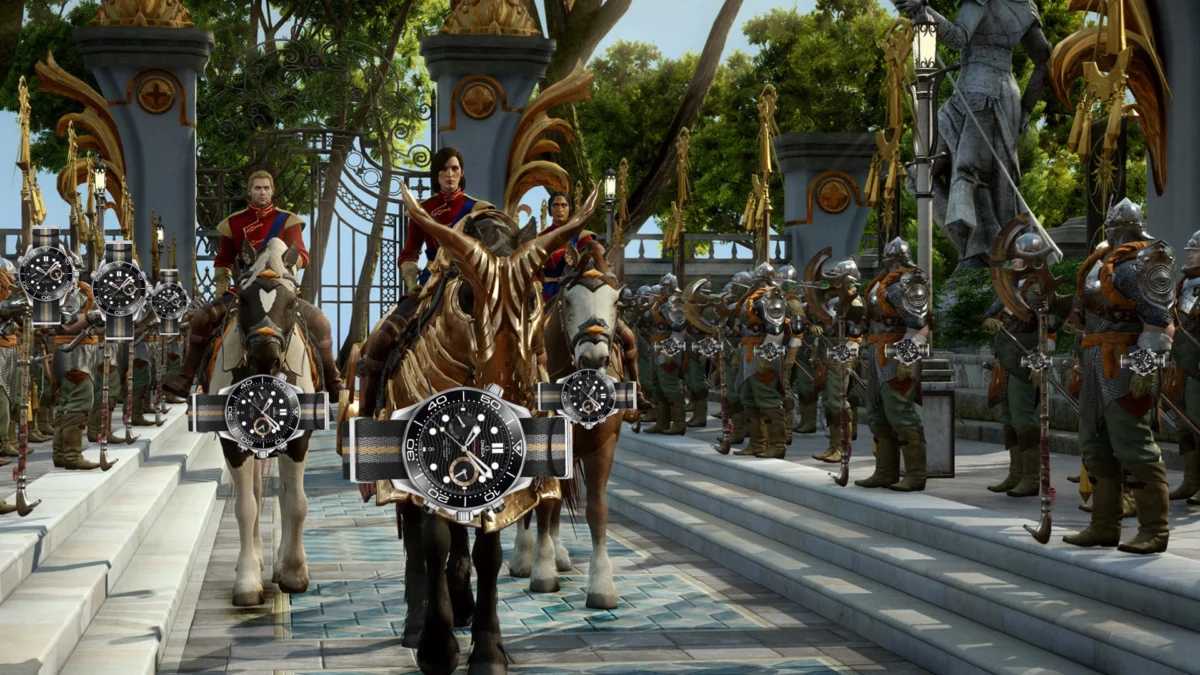
In an era where the video game industry is increasingly defined by the volatile "live-service" model—a cycle of battle passes, microtransactions, and perpetual monetization—a veteran voice has emerged with a radical, if controversial, proposition. Mark Darrah, the former executive producer of the critically acclaimed Dragon Age series, has suggested that the industry might find its salvation in an unlikely place: the world of cinema-style product placement.
As developers struggle to balance the immense costs of AAA game production with the aggressive monetization strategies that often alienate core fanbases, Darrah’s suggestion invites a broader debate: Could branded watches in Dragon Age or soda machines in the wasteland of Fallout offer a sustainable alternative to the predatory microtransactions currently stifling creative expression?
The Core Proposal: Moving Beyond the Live-Service Trap
The fundamental argument put forth by Darrah in his recent analysis is that the current reliance on "Games as a Service" (GaaS) has created a dangerous monoculture. When a game’s profitability is predicated on keeping players engaged for years via recurring microtransactions, it inherently prioritizes certain genres—shooters, hero-based brawlers, and open-world survival titles—at the expense of traditional, narrative-driven single-player experiences.
"Is there an opportunity for games to take a step back and think about different ways that we could make money?" Darrah posed in his recent YouTube discussion. "Product placement is a very small part of video games right now compared to movies and television. Maybe it could be a larger part of development. Maybe there are relationships there to be formed."
The implication is clear: if brands were willing to subsidize the development of a game through integrated product placement, the pressure to include "whale-hunting" microtransactions could potentially be mitigated.
Chronology of Commercialization in Gaming
To understand the weight of Darrah’s suggestion, one must look at the history of commercial integration in digital entertainment.
- The Early Days (1980s–1990s): Initial forays into in-game advertising were often clumsy. Titles like Cool Spot (featuring the 7-Up mascot) or Chester Cheetah were essentially long-form commercials masquerading as platformers. While successful as marketing tools, they were rarely considered "serious" art.
- The Realistic Era (2000s): With the rise of 3D graphics, developers began integrating real-world brands to heighten realism. Splinter Cell featured Sony Ericsson phones, and Need for Speed popularized real-world car licensing, turning the vehicle list into a showroom for manufacturers.
- The Microtransaction Pivot (2010s–Present): As development costs for AAA titles ballooned to hundreds of millions of dollars, publishers moved away from external brand partnerships toward internal monetization. Skins, loot boxes, and time-savers became the industry standard, replacing "immersion-breaking" product placement with "immersion-breaking" digital storefronts.
- The Current Crossroads (2024 and beyond): We are now at a saturation point. Player fatigue regarding live-service titles is at an all-time high, and developers are looking for ways to fund massive single-player projects without relying on predatory psychological loops.
Supporting Data: The Economics of High-Budget Development
The financial math behind modern AAA gaming is unforgiving. A flagship title today can easily cost $200 million to develop, with marketing budgets often matching that figure. To recoup these costs, companies must move millions of units—and then ensure those users continue to spend money long after the initial purchase.
The "Smurfs 2" Paradox
Darrah’s reference to film industry financing is telling. The movie The Smurfs 2 famously covered a significant portion of its production costs through brand partnerships before the film even premiered. By integrating products into the narrative, the studio shifted the financial burden away from the box office alone.
If a hypothetical Dragon Age sequel were to incorporate high-end branded timepieces or luxury gear, the influx of capital from these corporate partners could theoretically offset the "need" for internal premium currency stores. While the aesthetic of a Rolex in a fantasy kingdom might seem absurd, proponents argue that a carefully curated brand partnership could provide the "economic buffer" necessary for developers to focus on quality gameplay rather than retention metrics.
Official Responses and Industry Sentiment
The reception to Darrah’s comments has been mixed, reflecting a deep divide within the gaming community and the industry at large.
The Developer Perspective
Many developers view product placement as a "necessary evil" that could restore creative freedom. By securing external funding, studios could reclaim the ability to design "finished" games that do not require an internet connection or a constant stream of updates to justify their price point. However, there is a legitimate concern regarding "creative interference." Would a brand demand that their product be featured in a specific way? Would a sponsor demand changes to the narrative to ensure their brand isn’t associated with "negative" themes?
The Consumer Reaction
For the average player, the immediate reaction is one of skepticism. Gamers have spent a decade fighting against the intrusion of "real-world" stressors into their escapist hobbies. The thought of seeing a billboard for a real-world energy drink in a high-fantasy setting or a branded watch on a protagonist is, for many, an affront to the "magic circle" of gaming.
However, there is a growing contingent of players who argue that a watch is preferable to a "pay-to-win" sword. If the choice is between a subtle piece of branding that does not affect gameplay and a disruptive, game-breaking microtransaction, the former is increasingly being viewed as the lesser of two evils.
Implications: The Future of Immersion
If the industry were to embrace Darrah’s suggestion, what would it look like?
1. The Death of the "Generic" Store
If external brands funded the game, the necessity for a "cash shop" filled with neon-colored outfits and questionable assets would vanish. This could lead to a more cohesive art style, as developers would no longer be forced to design "store-ready" items that stand out from the game’s original art direction.
2. The Integration Challenge
The true hurdle lies in "ludonarrative harmony." As suggested in the initial exploration of this topic, fitting a watch into a prehistoric Far Cry game or a magical Dragon Age questline requires a level of creative finesse. It would demand that brands become "partners in fiction" rather than just "sponsors of product."
3. Subscription Shifts
Darrah also noted that games might move toward a "Netflix model," where titles enter and leave subscription services based on licensing deals rather than being permanent, ever-updating fixtures. This would allow games to have a definitive "beginning, middle, and end," which is currently a rarity in the industry.
Conclusion: A Necessary Trade-off?
The idea of a branded watch on the wrist of a fantasy hero like Morrigan from Dragon Age or an Imperial soldier in The Elder Scrolls is undeniably jarring. It challenges our perception of what a game "should" be. Yet, we are currently living in a landscape where the alternative—aggressive, intrusive, and often predatory monetization—is actively eroding the quality of the games we love.
If product placement can provide the economic stability required to decouple game development from the live-service treadmill, it may be a price worth paying. Whether the industry can execute this with the subtlety required to avoid total immersion-breakage remains to be seen. But as Darrah suggests, the industry needs to stop looking for new ways to squeeze the player, and start looking for new ways to fund the dream.
Perhaps the future of gaming isn’t in a battle pass, but in a well-placed, stylish watch that keeps the adventure ticking without demanding your wallet every month. It is a bold, bizarre, and potentially brilliant gamble—one that might just save the soul of the single-player experience.











No comments yet. Be the first to join the conversation!