

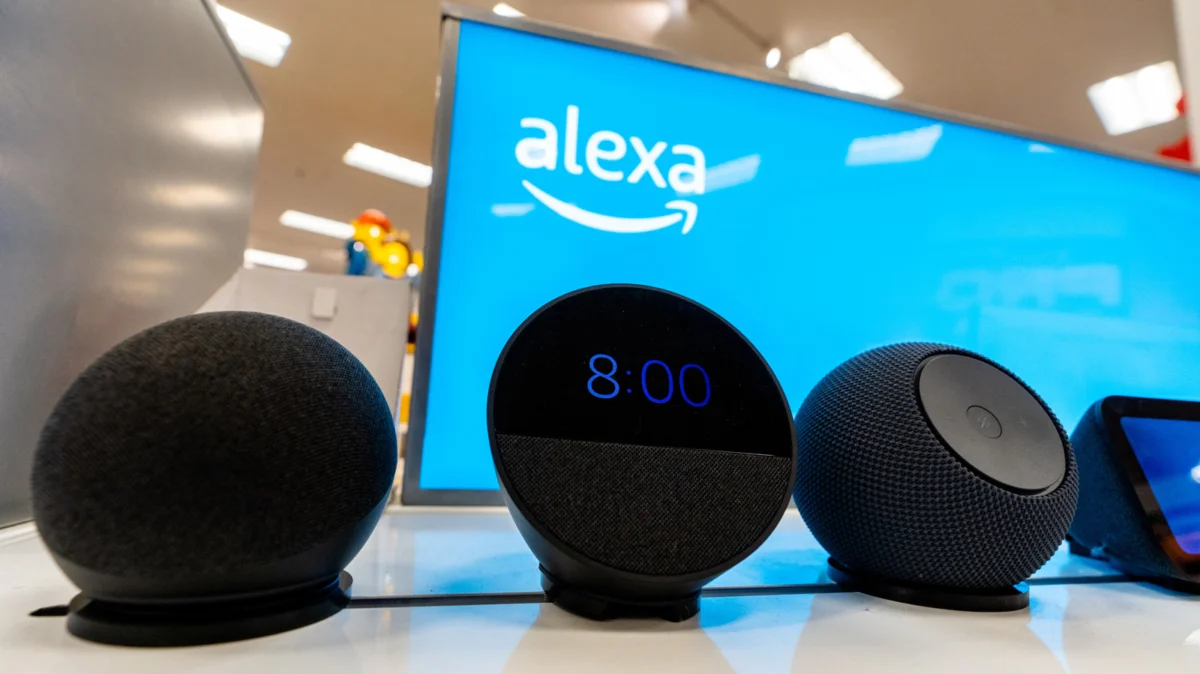
The landscape of domestic automation has evolved from a niche hobby for tech enthusiasts into an essential component of modern living. As we navigate 2026, the smart home market is dominated by a tripartite struggle for dominance between Apple’s Siri, Google’s Gemini, and the market-leading Amazon Alexa. While each ecosystem offers distinct advantages, Amazon’s deep vertical integration—leveraging its status as the world’s largest e-commerce platform—has allowed it to maintain a unique hardware-to-consumer pipeline that its competitors struggle to match.
For the budget-conscious consumer, the sheer volume of "Alexa-ready" devices can be overwhelming. However, by focusing on direct-from-manufacturer hardware, one can build a robust, responsive, and highly capable smart ecosystem without breaking the bank. This report examines five of the most cost-effective entry points into the Amazon Alexa ecosystem as of 2026.
Main Facts: The Strategic Advantage of Amazon’s Ecosystem
The primary appeal of Amazon’s hardware lineup is interoperability. Because Alexa functions as a central nervous system for thousands of third-party devices—ranging from smart bulbs and thermostats to advanced security cameras—the barrier to entry is remarkably low.
In 2026, the "smart home" is no longer just about voice commands; it is about predictive intelligence. Amazon’s current generation of devices, many of which now support the "Alexa+" AI framework, are designed to learn user behaviors, preemptively dim lights, or alert homeowners to security anomalies before they are even prompted. The following devices represent the current "value tier" of this technology, balancing performance with affordability.
Chronology: The Evolution of Accessible Smart Hardware
The trajectory of Amazon’s Echo line is a masterclass in product refinement.
- 2014-2017: The era of the "smart speaker" debut, focusing on voice recognition and basic music playback.
- 2018-2021: The pivot to visual intelligence. The introduction of the Echo Show series transformed the assistant from a voice in a tube into a multi-modal interface.
- 2022-2024: The refinement of aesthetics and eco-conscious manufacturing. Devices like the Echo Pop and the second-gen Echo Auto were released, focusing on sustainability and specialized use cases (the car).
- 2025-2026: The AI revolution. The current generation focuses on the integration of "Alexa+," a more conversational and context-aware iteration of the voice assistant that drastically reduces latency and improves natural language processing.
Supporting Data: The 2026 Value Lineup
1. Echo Pop ($39.99): The Compact Audio Powerhouse
For those prioritizing utility over display features, the Echo Pop remains the definitive entry-level device. Despite its diminutive size, the Pop delivers surprisingly rich sound, capable of filling bedrooms or home offices.
- Technical Specifications: Equipped with a front-firing speaker, it supports lossless audio formats and integrates seamlessly with Bluetooth, allowing users to bypass Alexa for direct music streaming from mobile devices.
- Sustainability: Notably, 100% of the fabric used is post-consumer recycled yarn, and 80% of the aluminum in the casing is recycled, aligning with Amazon’s recent environmental pledges.
2. Echo Auto ($54.99): Extending Intelligence to the Road
The Echo Auto effectively bridges the gap between home and transit. By utilizing a five-microphone array, it filters out engine and road noise to ensure that voice commands are captured accurately.
- Use Case: Beyond music, the device allows for hands-free text messaging, calendar management, and—crucially—remote control of home devices while the user is still in transit. One can trigger a "Welcome Home" routine that turns on lights and adjusts the thermostat while the car is still pulling into the driveway.
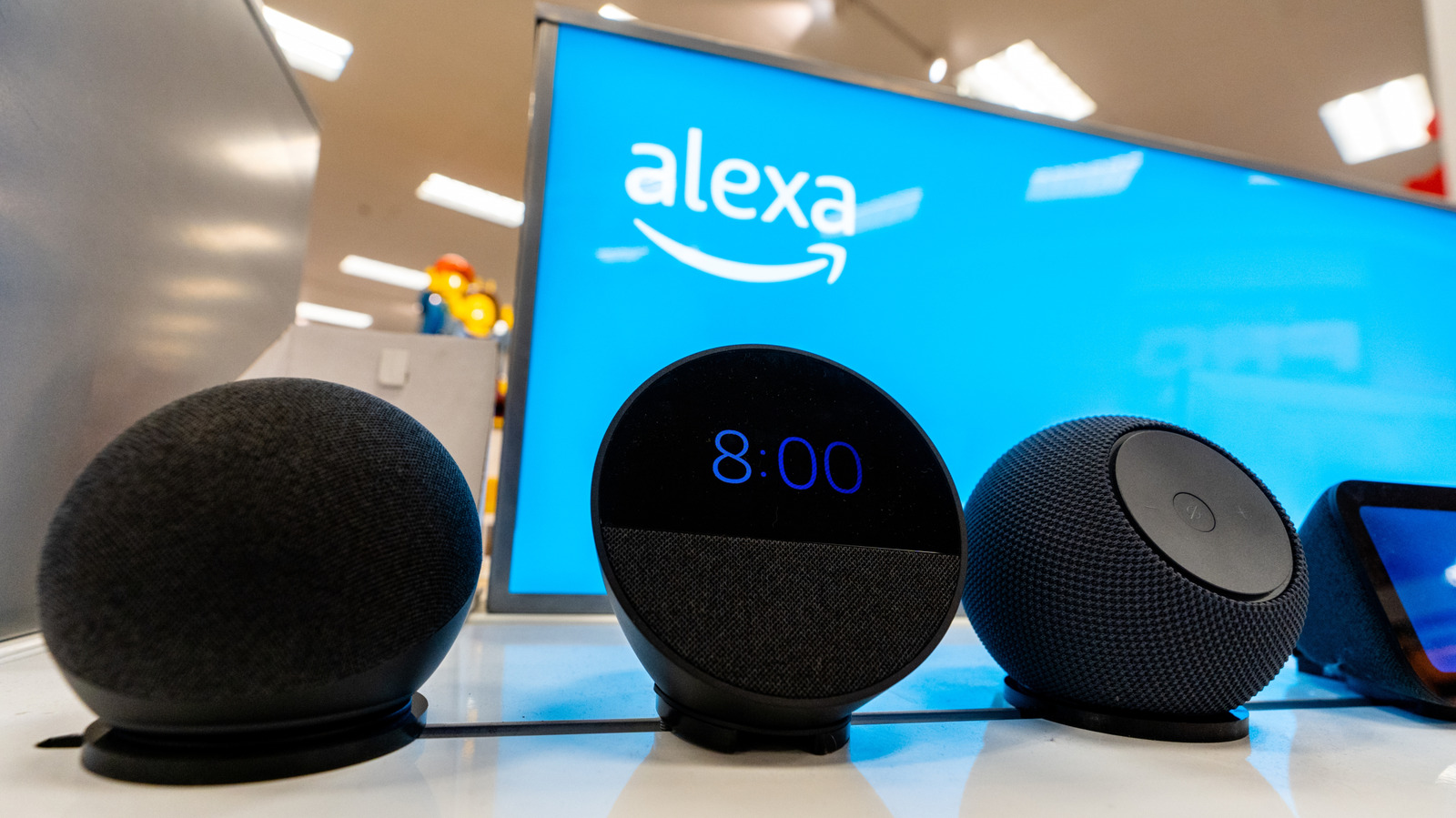
3. Echo Spot ($79.99): The Smart Alarm Clock Redefined
The "Spot" form factor has returned to the market after being discontinued in its previous iteration. The 2026 version is a hybrid device featuring a flat, high-definition display alongside a speaker.
- The Utility: It is designed specifically for the nightstand. It provides a visual, customizable interface for time, weather, and home security feeds. Its primary innovation is the "Sleep-Sync" capability, which manages light dimming and ambient noise to facilitate healthier sleep cycles.
4. Echo Show 5 ($89.99): The Visual Smart Hub
The Echo Show 5 serves as the "gateway" device for most households. Its 5.5-inch screen offers enough real estate for video conferencing, recipe viewing, or monitoring doorbell cameras (such as Ring).
- Audio Advancements: Amazon has implemented significant acoustic upgrades in the latest generation, addressing previous complaints regarding bass response and clarity at higher volumes.
5. Echo Hub 8 ($179.99): Centralized Command
While it sits at the higher end of the "affordable" spectrum, the Echo Hub 8 is the essential backbone for a complex smart home.
- Versatility: With an 8-inch touchscreen, it is designed to be wall-mounted. It acts as a dashboard for every connected sensor, light, and lock in the property. Because it supports the latest Alexa+ protocols, it can manage thousands of devices simultaneously, providing a centralized, low-latency control center.
Official Responses and Industry Standards
In recent press releases, Amazon representatives have emphasized that the 2026 hardware rollout is less about "new gimmicks" and more about "invisible integration." The goal, according to official company literature, is to make the technology disappear into the background of the user’s life.
Furthermore, Amazon has addressed security concerns by highlighting the physical hardware shutters on all cameras and the dedicated "microphone off" buttons across the entire lineup. The company maintains that all "Alexa+" processing happens locally on the device wherever possible to minimize privacy risks associated with cloud-based data storage.
Implications: The Future of the Connected Home
The democratization of smart home technology has profound implications for the real estate and energy sectors. By making these devices affordable, Amazon is effectively standardizing the "smart home" as a baseline expectation rather than a luxury.
Energy Efficiency: A key implication of this shift is the potential for massive energy savings. As more homes integrate smart thermostats and lighting controlled by these affordable hubs, the ability to automate power consumption during peak hours becomes a reality for the average household, not just those with high-end custom-built systems.
Accessibility: For the elderly and those with physical disabilities, the evolution of voice-activated, affordable hardware provides a newfound sense of independence. The ability to lock doors, adjust temperatures, and communicate with emergency services via a $39 device is a significant leap forward in domestic safety.
Conclusion
Building a smart home in 2026 does not require a significant capital investment. By selecting the right combination of Echo devices—whether it be the space-saving Echo Pop for the kitchen, the Echo Auto for the commute, or the Echo Hub 8 for central control—consumers can tailor their environment to be more efficient, entertaining, and secure. As AI integration continues to advance, these devices will only become more intuitive, marking the end of the "setup" era and the beginning of the "ambient computing" era.
Disclaimer: This report includes information regarding current retail pricing, which may fluctuate based on promotional events and regional availability. Links provided in original documentation may contain affiliate tracking.












No comments yet. Be the first to join the conversation!