

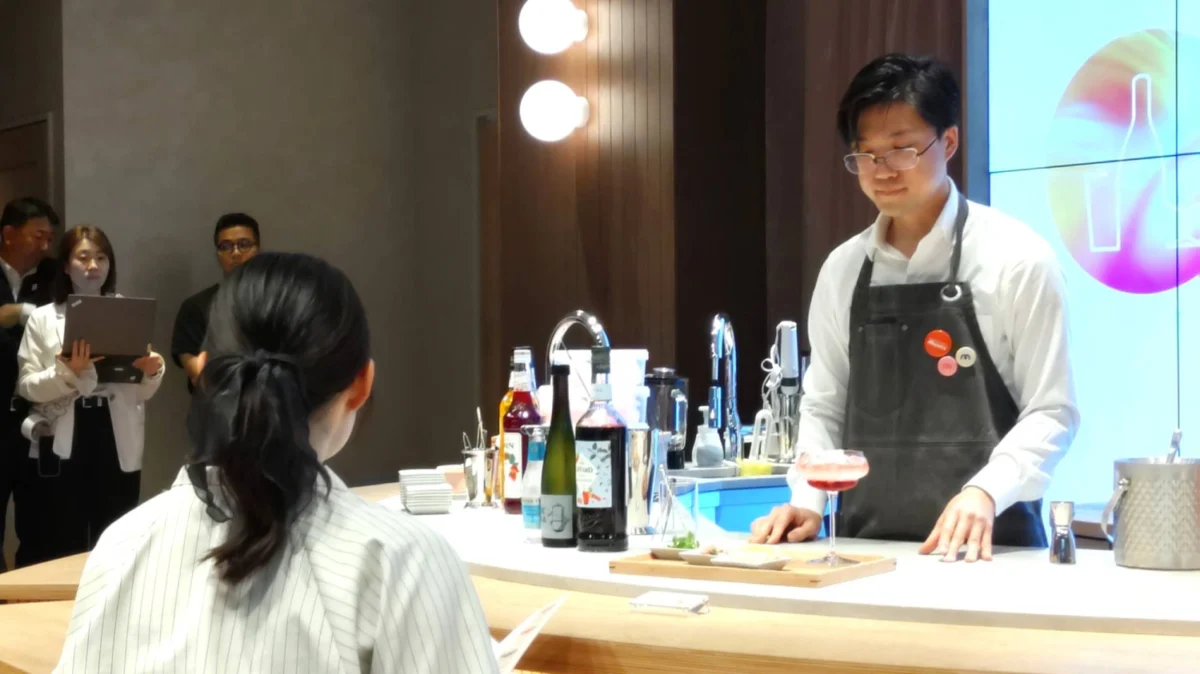
In the heart of Tokyo’s bustling Omotesando district, a sleek, modern establishment named "Sumadori Meets" is challenging the long-standing norms of Japanese social life. Here, the clinking of glasses remains a constant soundtrack, but the contents of those glasses tell a new story: one of zero-percent alcohol, complex botanical infusions, and the rising tide of "sober-curious" culture. As Japan’s youth increasingly pivot away from traditional drinking, the nation’s brewing titans are undergoing a seismic strategic transformation, racing to capture a market that prioritizes health, clarity, and social inclusivity over the traditional "nomikai" (drinking party) culture.
The Paradigm Shift: A Demographic in Flux
For decades, the Japanese corporate and social landscape was defined by the late-night salaryman culture, where alcohol acted as the primary lubricant for networking and stress relief. However, the data reveals a profound generational rupture.
According to a pivotal 2024 survey conducted by Japan’s Ministry of Health, Labour and Welfare, the shift is undeniable. The proportion of respondents in their 20s who explicitly identify as non-drinkers has climbed to 37.2%—a staggering 6.7 percentage point increase from just a decade ago. This is not merely a transient trend; it is a fundamental realignment of lifestyle priorities.
Health consciousness has become the primary driver, but it is supported by a desire for improved mental clarity, fitness, and a rejection of the social pressures that previously dictated alcohol consumption. As a result, major brewers—long dependent on the steady revenue of beer and highballs—are now pivoting their R&D budgets toward sophisticated, non-alcoholic alternatives that offer the "experience" of a bar without the physiological impact of ethanol.
Chronology of a Changing Market
To understand how Japan arrived at this turning point, one must examine the slow erosion of alcohol’s dominance over the last fifteen years:
- 2010–2015: The Emergence of Niche Alternatives: Early non-alcoholic beer offerings were widely criticized for their lackluster taste and "watery" profiles. They were largely viewed as utilitarian products for designated drivers, rather than lifestyle choices.
- 2016–2019: The "Sober-Curious" Infiltration: Influenced by global wellness trends and the rise of social media—where curated images of fitness and wellness dominated—younger Japanese consumers began to reconsider the necessity of alcohol in social settings.
- 2020–2022: The Pandemic Catalyst: The COVID-19 pandemic acted as an accelerant. With bars and restaurants shuttered, the traditional "nomikai" vanished overnight. Consumers began experimenting with home-drinking, discovering that the "social" aspect of drinking could be decoupled from the alcohol itself.
- 2023–2024: The Strategic Pivot: Major breweries began launching high-end "Sumadori" (Smart Drinking) campaigns. Instead of marketing "alcohol-free" as a negative, companies started branding it as a premium lifestyle choice, focusing on flavor complexity and social inclusion.
Supporting Data: Why the Industry is Reeling
The economic stakes are significant. For Japan’s major brewers, the decline in alcohol consumption among the youth is an existential threat to their traditional business models.
Consumption Trends by Age Group
| Age Group | 2014 Non-Drinker Rate | 2024 Non-Drinker Rate | Change |
|---|---|---|---|
| 20s | 30.5% | 37.2% | +6.7% |
| 30s | 28.1% | 32.4% | +4.3% |
| 40s | 25.0% | 29.8% | +4.8% |
The data shows that the trend is not isolated to the youngest demographic but is bleeding into the 30s and 40s. The industry is effectively losing its "pipeline"—the next generation of habitual drinkers that corporations rely on for long-term growth. When analysts cross-reference these statistics with declining birth rates and an aging population, the math becomes clear: brewers must innovate or face irrelevance.
Official Responses and Corporate Strategy
Japan’s beverage giants, including Asahi, Kirin, and Suntory, have moved from reactive posturing to proactive innovation. Their strategies, however, are far more nuanced than simply bottling non-alcoholic beer.
The "Smart Drinking" Philosophy
Industry leaders have coined the term "Smart Drinking" to describe a future where alcohol is an option, not a requirement. This philosophy is centered on:

- Product Diversity: Moving beyond "near-beer" to include non-alcoholic cocktails (mocktails) that utilize bitters, herbs, and exotic fruit extracts to mimic the complexity of premium spirits.
- Strategic Partnerships: Collaborating with universities to study the sensory experience of drinking. These partnerships are not just for research; they are designed to tap into the mindsets of Gen Z and Gen Alpha.
- Space Activation: Establishments like Sumadori Meets in Omotesando serve as "living laboratories." By creating spaces where non-alcoholic drinks are the star of the show, companies are de-stigmatizing the choice to stay sober in a public setting.
"We are not trying to stop people from drinking," a spokesperson for a leading brewery noted during a recent industry forum. "We are trying to ensure that our products remain relevant in a world where the customer has more choices than ever. Whether a consumer wants 5% alcohol, 0.5%, or 0.0%, we want to be the brand that provides the best experience."
Implications for Japanese Culture and Society
The ripple effects of this shift extend far beyond the balance sheets of brewing conglomerates.
The Evolution of the "Nomikai"
The traditional Japanese "nomikai"—once a mandatory ritual of corporate life—is effectively being dismantled. As younger employees prioritize boundaries between work and personal life, the pressure to bond over booze is dissipating. This is leading to a healthier work-life balance, though some sociologists warn that the loss of these "informal communication channels" may necessitate new, more intentional ways of building team cohesion.
Public Health Outcomes
From a policy perspective, the government welcomes this trend. The health ministry has long struggled with the social and economic costs of alcohol-related illnesses. If the younger generation naturally gravitates toward lower-alcohol or zero-alcohol lifestyles, Japan could see long-term savings in healthcare spending and a reduction in alcohol-related workplace accidents and domestic issues.
Global Influence
Japan is often a bellwether for global consumer trends. As the "sober-curious" movement gains momentum in the West, the Japanese model of premiumizing non-alcoholic beverages may provide a blueprint for other nations. By treating non-alcoholic drinks as a legitimate culinary pursuit rather than a mere substitute, Japan is helping to elevate the global standard for what it means to socialize.
Conclusion: A New Social Contract
The transition away from alcohol among Japan’s youth is not a rejection of socializing, but a refinement of it. Young people today are seeking environments that are safer, more inclusive, and conducive to their long-term well-being.
For the brewing industry, the challenge is clear: they must shed the baggage of a century of alcohol-centric marketing and reinvent themselves as purveyors of "social experiences." The success of initiatives like Sumadori Meets suggests that the appetite for social connection remains as strong as ever—it is simply the vessel that has changed. As the market continues to evolve, the distinction between "drinkers" and "non-drinkers" will likely blur, replaced by a more flexible, conscious approach to how we choose to celebrate, connect, and unwind in the modern age.
In this new era, the most successful companies will be those that realize that the value of a drink is not in its alcohol content, but in the community it fosters.











