
 Basiran
In the landscape of 21st-century television, there exists a specific, hallowed ground—the "Post-Lost, Pre-Streaming" era. It was a time of immense creative volatility, where networks were desperate to replicate the water-cooler success of serialized mysteries but often lacked the infrastructure to sustain them. During this window, producers frequently swung for the fences with budgets that barely covered the lumber, resulting in a unique strain of genre television defined by its "handmade" bravado. Among these strange, ambitious experiments, Syfy’s Helix (2014–2015) stands out as a relic of pure, unadulterated pulp-horror ambition.
Now that both seasons are available to stream for free on Tubi, the series serves as a haunting reminder of what happens when creators prioritize tone and atmosphere over the polished, algorithm-driven safety of modern streaming content.
The Genesis of an Arctic Nightmare: Main Facts
Helix arrived on the Syfy network in January 2014, executive produced by Ronald D. Moore (the visionary behind the Battlestar Galactica reimagining). The premise was deceptively simple: A team of scientists from the Centers for Disease Control and Prevention (CDC) is dispatched to a high-tech, remote research facility in the Arctic to investigate a potential viral outbreak.

The team, led by Dr. Alan Farragut (Billy Campbell), finds themselves in a facility that operates as a closed system. As the virus—a volatile, evolving agent—begins to mutate its hosts, the show shifts from a medical procedural into a claustrophobic descent into madness. The facility, with its endless white corridors, sealed laboratories, and frozen isolation, acts as a silent antagonist. It is a machine that demands order, yet it is currently being dismantled by an infection that defies biological logic.
A Chronology of Chaos: From Outbreak to Evolution
The series is defined by its refusal to play by the rules of traditional outbreak narratives. In most television of this genre, viewers are accustomed to "patient zero" scenarios, clear incubation periods, and a steady, predictable progression of symptoms. Helix tosses those conventions into the snow.
Season 1: The Lockdown (2014)
The inaugural season focuses on the immediate terror of the Arctic base. The virus isn’t just a biological hazard; it is a catalyst for social disintegration. As the CDC team tries to contain the threat, they discover that the research being conducted at the base—led by the mysterious Dr. Hiroshi Hatake (Hiroyuki Sanada)—is far more sinister than a simple pathogen study. The tension is built through a slow, rhythmic erosion of trust. Characters who arrive as colleagues quickly find themselves viewing one another through the lens of paranoia. The cold isn’t just an environmental factor; it is a narrative tool that forces the characters to stay in close quarters, exacerbating the friction until it inevitably sparks into violence.

Season 2: The Pivot (2015)
If the first season was about the claustrophobia of the Arctic, the second season was a masterclass in narrative risk-taking. Shifting the setting to a remote island inhabited by a cryptic cult, the show abandoned the "trapped in a lab" aesthetic for something broader and more surreal. While this shift alienated some viewers, it cemented the show’s legacy as a series that refused to stay in its lane. The move allowed the show to explore the ideological roots of fear, suggesting that the true virus was not the pathogen itself, but the way terror warps human relationships and loyalties.
Supporting Data: The Anatomy of a Scrappy Production
To understand the "scrappy" nature of Helix, one must look at the production constraints of the mid-2010s. Unlike the high-gloss, massive-budget spectacles of modern streaming giants, Helix operated with a sense of "let’s just try it" energy.
- The Cast: The series featured a robust ensemble, including Billy Campbell, Kyra Zagorsky, and Hiroyuki Sanada, who brought a level of gravitas to the material that grounded the more outrageous plot twists.
- The Setting: The production design relied heavily on practical effects and a stark, color-desaturated palette. The Arctic setting provided an inherent sense of isolation that CGI, regardless of how advanced, struggles to replicate. The biting, tangible cold—visible in every character’s breath—served as the show’s most effective special effect.
- The Writing: The writers’ room, which included talents like Misha Green and Javier Grillo-Marxuach, favored "pulp impulses." They leaned into body horror, sudden reversals, and a dark, dry humor that made the show feel less like a clinical procedural and more like a late-night cable discovery.
Official Responses and Critical Reception
At the time of its release, Helix received a polarized response. Critics praised the show’s atmosphere and the audacity of its pacing but often pointed to its narrative inconsistencies as a flaw. However, in the years since its cancellation, the critical consensus has shifted.
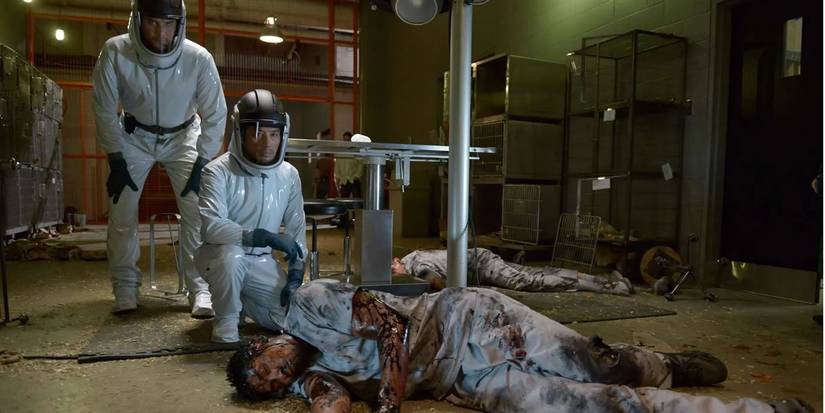
Many genre aficionados now look back at Helix as a "hidden gem." In an era where shows are "engineered for retention"—meaning they are paced to keep the viewer from clicking "stop"—Helix feels refreshingly unrefined. It does not worry about looking polished or shaping itself into something "prestige." Instead, it moves with a jumpy, unpredictable energy that trusts the audience to keep up. It is precisely this "beat-up" quality that has allowed the show to age better than many of its more expensive, sterile contemporaries.
The Implications: Why It Matters Today
The existence of Helix is a poignant reminder of the value of "disposable" genre television. Today, we are witnessing a "streaming-overload" window, where even the most bizarre sci-fi concepts are often sanded down to be palatable to the widest possible audience.
Helix broke the mold because it refused to be consistent. It was willing to be strange, messy, and occasionally frustrating. The implications for modern television are clear: when a show tries to behave, it loses the "intoxicating" quality that comes from true creative risk. Helix remains a case study in how to build a world that feels dangerous—not because of the monsters in the vents, but because of the unpredictable nature of the people running the experiment.
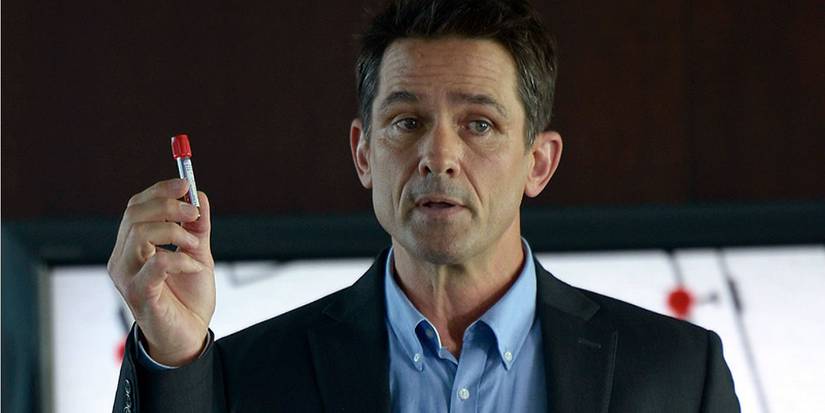
As viewers continue to scour streaming platforms for something that doesn’t feel mass-produced, Helix offers a compelling alternative. It is not a perfect show by traditional metrics, but it is a show with a pulse. It is a reminder that the best science fiction often thrives in the corners of the industry, far away from the mandates of boardrooms and algorithms. It remains, above all, a testament to the idea that a great story doesn’t need a massive budget—it just needs an arctic wind, a mysterious virus, and the courage to be weird.


 Pevita Pearce
 Asep Darmawan




