

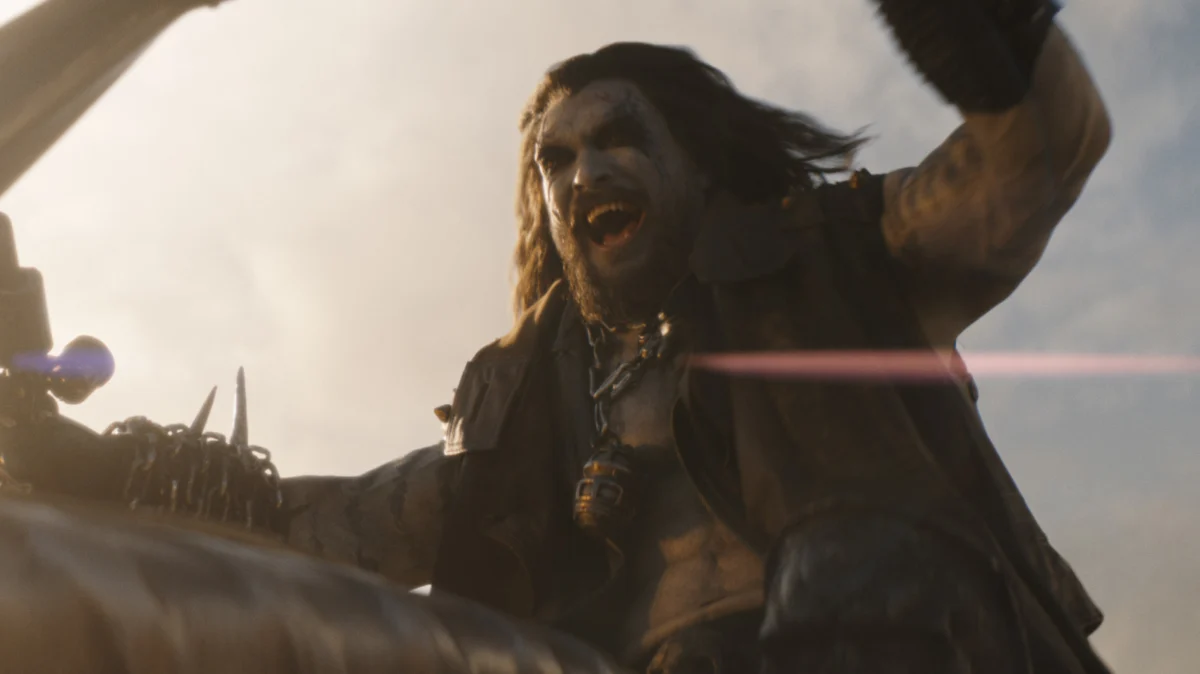
The upcoming DC Universe (DCU) film Supergirl, directed by Craig Gillespie and starring Milly Alcock as Kara Zor-El, is shaping up to be a landmark moment for the franchise. While the spotlight is naturally fixed on the Last Daughter of Krypton, a significant portion of the fan base is vibrating with anticipation for the live-action debut of one of DC’s most chaotic antiheroes: Lobo. After years of speculation and public campaigning, Jason Momoa has officially transitioned from the depths of Atlantis to the fringes of the galaxy as the "Main Man" himself.
As the film moves toward its June 26, 2026 release date, new details from the set reveal that Momoa’s commitment to the role goes far beyond mere performance. According to costume designer Michael Mooney, the actor played a pivotal, and at times humorous, role in shaping the aesthetic identity of the Czarnian bounty hunter, ensuring that his transition from the comic page to the silver screen was as authentic—and as "extra"—as possible.
A Legacy of Anticipation: The Long Road to the Big Screen
The journey to bring Lobo to life has been a storied one within the halls of Warner Bros. For nearly two decades, the studio explored various avenues to bring the interstellar biker to a wider audience. In the mid-2010s, there was significant momentum behind an ultra-violent, R-rated solo Lobo feature, which ultimately stalled in development hell. Similarly, a planned spin-off from the Syfy series Krypton was once in the works, only to be scrapped as creative directions shifted.
Jason Momoa, however, remained the constant variable in the equation. A longtime fan of the character’s rebellious spirit and over-the-top brutality, Momoa has been vocal about his desire to portray Lobo for years. When James Gunn and Peter Safran took the helm of the new DCU, they identified the perfect opportunity to utilize Momoa’s specific brand of charisma. By casting him as Lobo in Supergirl, the studio isn’t just checking a box for a fan-favorite character; they are integrating a wildcard element into the new DC cinematic tapestry.
Chronology of a Costume: From 1918 Dispatch Riders to Space-Biker Chic
During a set visit, /Film’s Jacob Hall gained exclusive insight into how the creative team, led by costume designer Michael Mooney, navigated the delicate balance of translating Lobo’s iconic look into a functional, cinematic reality. The process was highly collaborative, characterized by extensive research and a series of late-stage adjustments dictated by Momoa’s own creative instincts.
The Foundation: Historical Inspiration
The core of Lobo’s aesthetic relies on his status as a space-faring biker. Mooney revealed that the team began by analyzing historical motorcycle gear, specifically drawing inspiration from early 20th-century functional attire. "We had biker costumes from everywhere," Mooney explained. "We found a vintage dispatch rider’s coat, dating back to around 1918. It had that rugged, utilitarian quality that felt perfect for a character who spends his life on a motorcycle traversing the stars."
![Supergirl Star Jason Momoa Had Some Major (And Hilarious) Input On Lobo's Costume [Set Visit]](https://www.slashfilm.com/img/gallery/supergirl-star-jason-momoa-input-lobo-costume/l-intro-1780504819.jpg)
The Challenges of Practicality
As the costume moved from concept to prototype, the team faced the inevitable reality of action-movie cinematography. Lobo is famous for his spiked armor and intimidating silhouette, but these elements proved difficult to manage during filming. "We went lower on the spikes in the shoulder," Mooney noted. "It’s difficult to shoot an actor with too many big spikes. You have to ensure that the costume doesn’t impede the actor’s range of motion or become a hazard during high-octane sequences."
Momoa’s "Major Input": Claws, Chains, and Grenades
If the dispatch coat was the foundation, Jason Momoa’s input was the finishing polish. According to those on set, the actor was deeply invested in the minute details of his character’s appearance, often pushing the design team to lean into the more extreme elements of the comic book source material.
The Last-Minute Addition of Claws
One of the most defining characteristics of Lobo is his ferocity, often expressed through his razor-sharp fingernails. Interestingly, this wasn’t an initial requirement. "He [Momoa] came to us at the last minute and said, ‘I think I should have claws,’" Mooney recalled. The costume department scrambled to fabricate them, resulting in a look that adds a feral edge to the character’s hand-to-hand combat scenes.
The "Bigger is Better" Philosophy
Momoa’s most humorous contribution involved the character’s signature chain. Initially, the prop department provided a substantial chain for the character to wear around his neck. However, Momoa felt it lacked the necessary impact.
"He looked at the prop and said, ‘I’ve got bigger chains on my wallet,’" Mooney laughed. The team took the feedback to heart, significantly scaling up the size of the chain to ensure it felt appropriately oversized for the character. Furthermore, the prop was made functional, designed to be unwrapped and used in combat. The final touch—a grenade added to the chain’s assembly—was a suggestion from director Craig Gillespie, solidifying the look as a mix of high-concept comic book aesthetic and gritty, tactical gear.
Supporting Data: The Impact of Character-Driven Design
The synergy between an actor and the costume design team is often what distinguishes a "suit" from a "character." By allowing Momoa to advocate for features like the claws and the enlarged chains, the Supergirl production team has fostered a sense of ownership that is palpable in the film’s trailers.
![Supergirl Star Jason Momoa Had Some Major (And Hilarious) Input On Lobo's Costume [Set Visit]](https://www.slashfilm.com/img/gallery/supergirl-star-jason-momoa-input-lobo-costume/intro-1780504819.jpg)
Data from the production suggests that this hands-on approach has saved time and resources in post-production. When an actor feels comfortable and "in character" due to the authenticity of their gear, the performance is often more nuanced and requires fewer digital touch-ups. Momoa’s stature and screen presence—what Mooney refers to as "gravitas"—allow him to pull off a look that would appear absurd on a less imposing performer. By leaning into the absurdity of the character rather than shying away from it, the production is effectively signaling to the audience that this iteration of the DC Universe will be bold, unapologetic, and unafraid of its comic book roots.
Implications for the Future of the DC Universe
The inclusion of Lobo in Supergirl carries significant implications for the future of James Gunn’s DCU.
- Expanding the Scope: By introducing a character as cosmic and unpredictable as Lobo, the DCU is clearly signaling that its stories will not be limited to Earth-bound conflicts.
- The "Wildcard" Element: Lobo’s presence introduces a layer of moral ambiguity. He is a character who oscillates between antagonist and antihero, providing a perfect foil to the more idealistic Kara Zor-El.
- Studio Strategy: The transition from canceled, R-rated solo projects to an integrated role in a major ensemble film suggests that DC is refining its strategy. Instead of risking standalone failures, they are using established franchises to test the waters with more niche characters.
Conclusion: A Labor of Love
As the release date for Supergirl approaches, the narrative surrounding the film is shifting from a standard superhero flick to a creative project defined by collaboration and passion. Jason Momoa’s dedication to the role of Lobo—from his years of campaigning for the part to his meticulous attention to the length of his chains and the sharpness of his claws—speaks to a larger trend in modern filmmaking: the importance of actor-led creative input.
Whether Lobo will eventually headline his own solo adventure remains a question for another day. However, for now, fans can rest assured that the Main Man is in good hands. By honoring the comic book source material while embracing the practical realities of the set, Momoa and the team behind Supergirl have created a version of Lobo that feels earned, authentic, and undeniably ready for chaos. June 26, 2026, cannot come soon enough.











No comments yet. Be the first to join the conversation!