Jia Lissa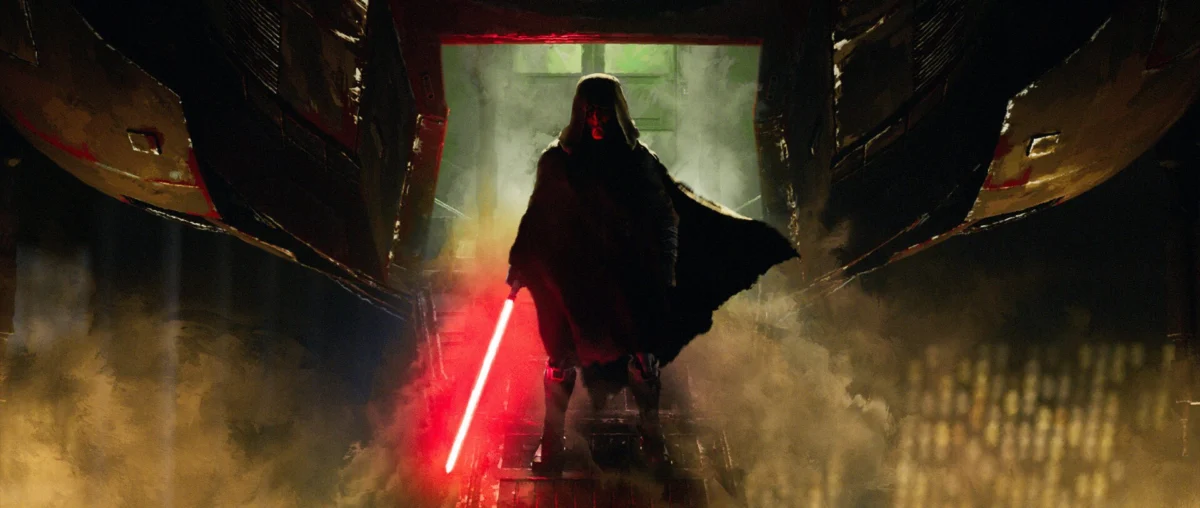
The Star Wars galaxy has always been defined as much by its auditory landscape as its visual scope. From the sweeping, brass-heavy overtures of John Williams to the experimental soundscapes that have characterized the animated era, music is the heartbeat of the franchise. Recently, the release of Star Wars: Maul – Shadow Lord on Disney+ has introduced a radical shift in this sonic tradition. Tasked with capturing the tortured, volatile essence of one of the galaxy’s most iconic villains, the Kiner family—composed of patriarch Kevin Kiner and his children, Sean and Deana Kiner—has delivered a score that blends the traditional Star Wars grandeur with the gritty, raw aesthetic of heavy metal and film noir.
A Legacy of Animation: The Kiner Evolution
The Kiner family’s relationship with Star Wars is nothing short of foundational. Kevin Kiner’s tenure began nearly two decades ago, stepping into the massive shoes left by the franchise’s musical architects to score the 2008 feature film Star Wars: The Clone Wars. Over the years, the family expanded their creative footprint; Sean and Deana joined their father in 2014 to contribute to the revolutionary sound design of Star Wars Rebels.
This collaboration grew into a powerhouse partnership, with the trio providing the atmospheric, high-stakes compositions for Star Wars: The Bad Batch and the live-action success Ahsoka. However, Maul – Shadow Lord presented a unique challenge: it required a departure from the heroic, expansive themes of their previous work. The creators, led by Supervising Director Brad Rau and Head Writer Matt Michnovetz, sought to push the boundaries of what a Star Wars score could be, aiming for a "heavy metal" sensibility that mirrored the character’s internal chaos.
Chronology: Crafting the Sound of Shadow
The journey to the final score was not a linear path. In the early stages of production, the Kiners experimented with literal interpretations of the requested "metal" aesthetic. Kevin Kiner recalls an initial, somewhat humorous struggle: "At first I got out all my guitars and started thrashing things around, and totally failed."
The realization that they needed to translate the feeling of metal, rather than the literal genre, became the turning point. By integrating distorted synthesizers and manipulating audio through a vast arsenal of over 100 physical pedals and digital emulators, the team began to sculpt a soundscape that felt, as Deana Kiner describes it, "like soul-ripping."
This process involved a highly collaborative, iterative workflow. Because the series was heavily serialized, the Kiners were given a comprehensive look at the season’s arc from the outset. This allowed them to weave long-form narrative motifs into the score, a luxury not always afforded to composers in the episodic television format. Over the course of three weeks per episode, the trio traded creative responsibilities, ensuring that while the music felt diverse, it remained unified by a singular, haunting voice.
Supporting Data: The Technical Architecture of Fear
The complexity of the Maul – Shadow Lord score lies in its technical density. Following the precedent set by John Williams, the Kiners maintained a high level of thematic density, which they consider the gold standard of Star Wars composition.
"John Williams set the masterclass," Kevin Kiner notes. "His scores aren’t just dense in orchestration; they are dense in themes that shift constantly. In other styles, you can stretch a musical thought, but here, you have to be coming up with something new, something interesting, and something good, very fast."
The team’s reliance on distortion—often applying it to traditional synths or running instruments through vintage guitar amps—created a "dirty" sound that contrasted sharply with the cleaner, more orchestral sounds of the Jedi. For the character of Devon Izara, the Padawan-turned-apprentice, the Kiners employed a specific musical trick: they embedded elements of Maul’s Rebels motif within Devon’s own theme. As her character arc drifts into the dark side, the two themes align, musically representing their unification of purpose. This level of intentionality ensures that the audience feels the shift in loyalty, even before it is explicitly stated in the dialogue.
Official Responses: Directing the Dark Side
The collaboration between the Lucasfilm production team and the composers was defined by a shared vision of risk-taking. Brad Rau, the Supervising Director, emphasized that the goal was never to merely mimic the past, but to expand it.
"Matty Michnovetz and I could talk all day about John Williams," Rau explains, "but you don’t want it to just be those themes all the way through. Having new characters with new motifs and new themes is great."
By sharing the full narrative trajectory with the composers early on, Rau empowered the Kiners to build motifs that could evolve alongside the characters. This was particularly crucial for the introduction of Detective Brander Lawson, a character influenced by the noir genre. The composers had to navigate the thin line between paying homage to the classic noir scores of the 1940s—such as those by Max Steiner—and maintaining the Star Wars identity. The resulting sound for Lawson is one of the most distinct departures in the series, proving that the Star Wars universe can accommodate genres as diverse as detective mystery and Sith-centric tragedy.
The Implications of the "Age of Maul"
The success of Maul – Shadow Lord signifies a maturation of the Star Wars animated sound. The series has proven that the franchise is at its strongest when it dares to experiment with genre-blending. The integration of noir elements and industrial, distorted metal textures has opened the door for future projects to explore even darker, more complex auditory landscapes.
Furthermore, the Kiner family’s workflow—a multi-generational, highly collaborative approach—has created a template for future Star Wars scoring. Their ability to manage long-term narrative arcs through recurring, evolving motifs provides a level of emotional depth that resonates with the audience. Fans have already begun to dissect the layers of the soundtrack, praising the "Duel of the Fates" transition in the first episode, where a familiar choir melts into the series’ signature distorted synths.
"The music is kind of saying this is the Maul you know, and now this is the Maul that this show is about," Kevin Kiner observes. This statement effectively summarizes the entire ethos of the project: honoring the legacy while carving out a new, more dangerous identity for one of the galaxy’s most enduring villains.
Looking Forward: A Legacy Continued
As the Kiners prepare for the second season of Maul – Shadow Lord, the sense of creative freedom fostered by Lucasfilm remains their greatest asset. The "safe space" provided by producers like Athena Portillo and Dave Filoni has allowed the Kiners to take "big swings," which has translated into some of the most memorable musical moments in recent Star Wars history.
The interaction with the fanbase, which the Kiners describe as a "fun, interactive community," serves as the final piece of the puzzle. By treating the audience as participants in the storytelling process, the Kiners have ensured that the music is not just background noise, but a character in its own right.
As the "Age of Maul" continues, one thing remains clear: the Kiner family has successfully bridged the gap between the symphonic roots of the franchise and the cutting-edge, experimental future of Star Wars music. All episodes of Star Wars: Maul – Shadow Lord are currently streaming on Disney+, and the full Season 1 soundtrack is available on all major music platforms, offering fans a chance to dive deeper into the dark, distorted heart of the galaxy.


 Evan Lee Salim
 Nana Wu