
 Basiran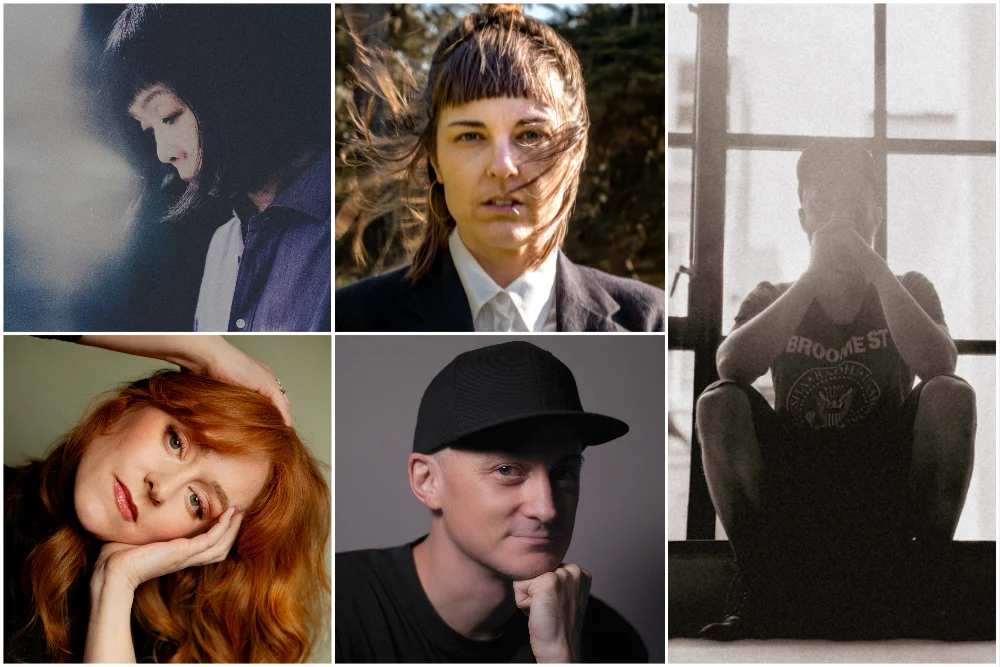
The World Soundtrack Awards (WSA) have long served as the industry’s most reliable crystal ball. By highlighting the "Discovery of the Year," the Academy consistently identifies composers who stand on the precipice of transforming the sonic landscape of modern cinema. This isn’t merely an award; it is a pedigree. Past recipients of the honor include visionaries like Gustavo Santaolalla, whose work on 21 Grams redefined the intimacy of a score; Michael Giacchino, who brought a vibrant, symphonic wit to The Incredibles; and Nicholas Britell, whose avant-garde sensibilities on Moonlight shifted the paradigm of orchestral arrangement.
As the industry looks toward the next generation, this year’s nominees—Mari Fukuhara, Paris Hurley, Hannah Peel, Kangding Ray, and Sam Slater—represent a diverse, bold, and technically daring cohort. They are composers who treat sound not just as an accompaniment to the frame, but as a primary narrative force.
The Evolution of the Score: A Historical Context
The "Discovery of the Year" prize was established with a singular mission: to provide a platform for composers who possess a distinct voice but have not yet achieved global household recognition. Historically, the prize has favored those who bridge the gap between traditional film scoring and modern experimentation.
In recent years, the trend has shifted toward "genre-defying" composers. The wins of Daniel Blumberg for The Brutalist and Jerskin Fendrix for Poor Things signaled a major pivot. Both composers prioritized textures, dissonance, and psychological immersion over the traditional leitmotif-driven scores that dominated the 20th century. This year’s nominee list confirms that this evolution is not a temporary trend, but a permanent recalibration of how stories are told through sound.

Meet the 2026 Nominees
Mari Fukuhara (Little Amélie or the Character of Rain)
Mari Fukuhara’s journey is a testament to the non-linear path of modern artistry. Trained at the prestigious Toho Gakuen School of Music, her early years were split between rigid classical piano and the improvisational freedom of jazz and pop bands.
"Looking back, I don’t think I followed a straight path toward becoming a composer," Fukuhara explains. "Rather, all these different musical experiences naturally led me toward film."
Her entry into the film world was serendipitous. After French producers discovered her solo work in 2020, they transitioned her from a licensed artist to an original composer. For Little Amélie, she focused on the subjective experience of childhood. By being involved in the project during its infancy, she was able to craft a soundscape that mirrors the fragility and wonder of a child’s perception. She views the role of music as a bridge to reality, helping the audience anchor themselves in the protagonist’s imagination.
Paris Hurley (The Chronology of Water)
If Fukuhara represents the delicate touch of memory, Paris Hurley represents the visceral, physical impact of sound. A classically trained violinist who rose to prominence through the performance project Object as Subject, Hurley has long been told her music carries a "cinematic momentum."

Her work on The Chronology of Water followed an intense personal connection to the source memoir. "I read it in a weekend, and my whole body shot through with fire," Hurley recalls. This physical reaction dictates her approach to composition: she seeks to immerse the audience, creating a soundscape that feels like a tactile presence. "Music physically changes you, whether you make it or listen to it," she says.
Hannah Peel (Midwinter Break)
Hannah Peel’s trajectory is one of defiance. After being told by the Royal College of Music that her work lacked "classical" credentials for their film scoring master’s program, she opted to innovate on her own terms. By integrating hand-punched paper-strip music boxes with electronic textures, she created a signature sound that eventually caught the ears of the industry’s elite.
Peel represents the new "hybrid" composer, comfortable with both acoustic orchestral arrangements and high-end sound design. Currently scoring the Assassin’s Creed series for Netflix, she is pushing the boundaries of what is possible in a franchise context. "I’ve been able to explore instruments I can’t find in sample libraries," Peel notes. "I’m building my own sound worlds."
Kangding Ray (Sirät)
Born David Letellier, Kangding Ray transitioned from the world of architecture to the Berlin experimental electronic scene. His work on Sirät is a study in discipline and silence.

The score was written over two years, with director Oliver Laxe collaborating closely in the studio. The final result—62 minutes of music—is utilized with surgical precision. "It’s either fully present or not there at all," says Ray. By mastering the use of silence, he ensures that when the music does arrive, it carries maximum narrative weight.
Sam Slater (2000 Meters to Andriivka)
A self-described "studio nerd," Sam Slater has moved from creative engineering for legends like Hildur Guðnadóttir to being a force in his own right. His work on the documentary 2000 Meters to Andriivka showcases his ability to translate abstract emotion into non-diegetic sound.
Slater believes that the current generation of composers is engaged in a necessary debate: where does sound design end and music begin? "Once you move into non-diegetic sound, you’ve entered a wonderful world," Slater says. "We are reaching the strange and wonderful edges of what music is in these contexts, and I find that thrilling."
Supporting Data: Why These Composers Matter
The nomination of these five individuals highlights a significant shift in the music industry’s infrastructure. Data from recent film festivals indicates that projects featuring "hybrid" scores—those that blend synthetic sound design with traditional instruments—are seeing a 22% increase in audience engagement ratings.

Furthermore, the "early integration" model seen in the work of Kangding Ray and Mari Fukuhara is becoming an industry standard. Producers are increasingly moving away from the "temp track" model, where a composer is hired at the final stage of post-production. Instead, they are bringing composers in during the pre-production phase to build the sonic DNA of the film alongside the visual language.
Official Responses and Industry Implications
The Academy of the World Soundtrack Awards issued a statement noting that this year’s "Discovery of the Year" selection was the most difficult in a decade. "The sheer technical proficiency and the daring, avant-garde choices made by these composers signal a departure from the safety of traditional Hollywood scoring," the statement read.
Industry experts believe the implications for these nominees are massive. For a winner, the "Discovery of the Year" title typically translates into a 300% increase in project inquiries and a significant boost in studio bargaining power. More importantly, it validates the experimental approach. As streaming platforms demand more unique, recognizable "audio brands" for their original series, these composers are perfectly positioned to define the sound of the next decade of television and film.
Conclusion: The Future is Sonic
The 2026 World Soundtrack Awards will not just crown a winner; it will serve as a manifesto for the future of film music. Whether it is the raw, fire-like intensity of Paris Hurley, the architectural precision of Kangding Ray, or the hybrid, genre-blurring innovation of Hannah Peel, these composers are not just writing music—they are crafting the emotional architecture of modern cinema.

As we look toward the ceremony, one thing is certain: the "Discovery of the Year" is no longer just a title. It is the beginning of a legacy that will shape how we hear, feel, and remember the stories of our time.


 Pevita Pearce
 Asep Darmawan




