Muslim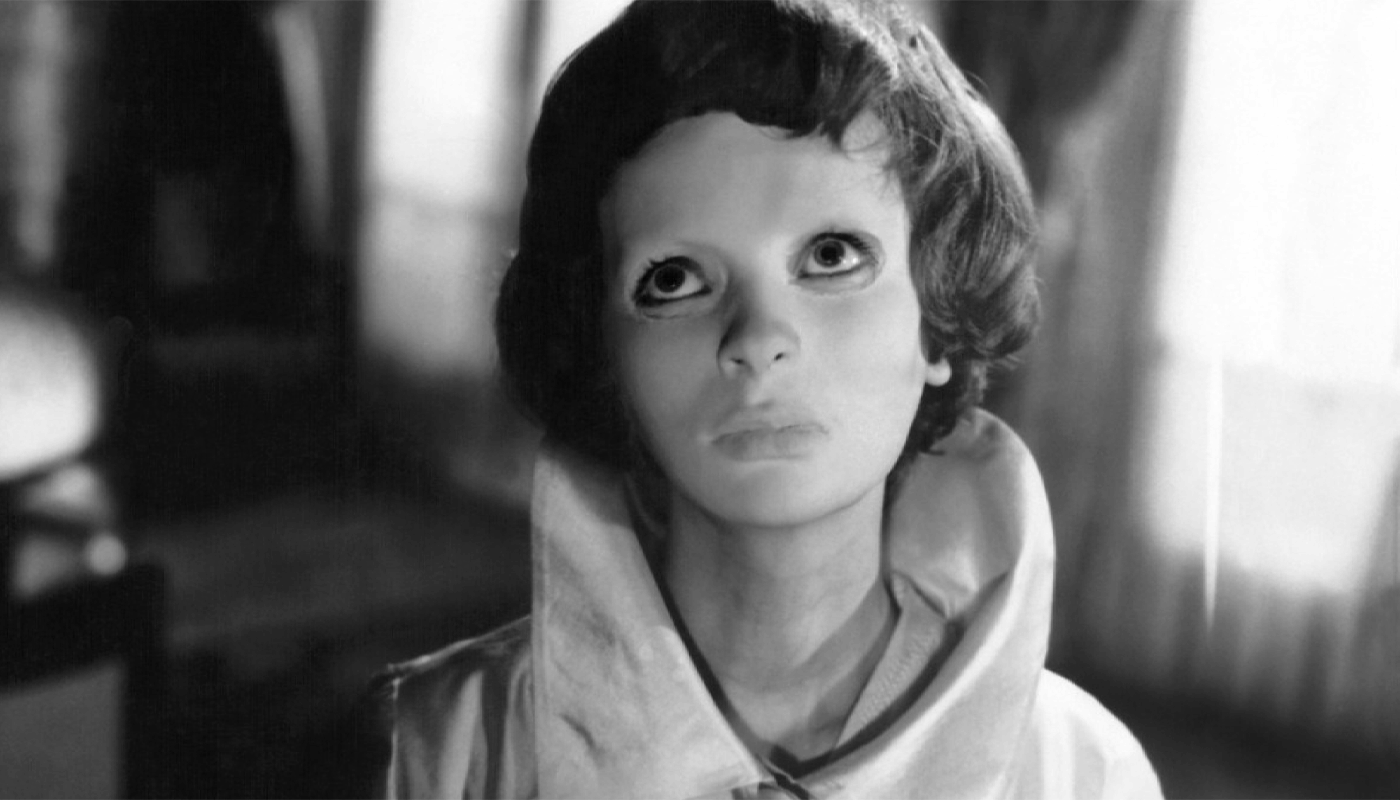
In the annals of mid-century cinema, few films occupy a space as hauntingly bifurcated as Georges Franju’s 1960 masterpiece, Eyes Without a Face (Les yeux sans visage). It is a film that refuses to be categorized, existing simultaneously as a visceral horror story, a lyrical tragedy, and a sterile, clinical examination of the human obsession with vanity and control. While the film has earned its status as a foundational pillar of the horror genre, its true legacy lies in how it elevated pulp sensibilities into the realm of high-brow, psychological art.
Main Facts: The Anatomy of a Masterpiece
Eyes Without a Face tells the harrowing story of Dr. Génessier (Pierre Brasseur), a brilliant surgeon who, driven by profound guilt and an obsessive desire to restore the beauty of his daughter, Christiane (Édith Scob), embarks on a series of macabre experiments. After a disfiguring car accident for which he is responsible, Christiane is forced to live in isolation, her face obscured by a rigid, expressionless mask. To restore her identity, Génessier and his loyal, surgically altered assistant, Louise (Alida Valli), abduct young women, hoping to graft their faces onto Christiane’s ruined features.
The film was directed by Georges Franju, a figure previously known for his unflinching, often disturbing documentary work. The screenplay, penned by an ensemble of literary heavyweights including Pierre Boileau and Thomas Narcejac—the architects of the novels behind Vertigo and Les Diaboliques—transformed what could have been a tawdry “mad scientist” story into a Gothic poem of despair.
Chronology: From Abattoirs to Art-House Horror
The journey of Eyes Without a Face began with a producer’s calculated gamble. Jules Borkon, a producer eager to tap into the burgeoning market for horror cinema, purchased the rights to Jean Redon’s novel of the same name. Redon’s original work was, by all accounts, a piece of lurid, exploitation-heavy pulp, featuring a cast of drug-addicted, depraved characters.
Borkon sought out Franju, who had recently completed his first feature film, La tête contre les murs (1959). Franju’s reputation had been established a decade earlier with the 1949 short film Le sang des bêtes (The Blood of the Beasts). This 22-minute documentary, which captured the mechanical, emotionless slaughter of animals in Parisian abattoirs, remains a landmark of "unflinching" cinema. It was this specific talent—the ability to juxtapose the mundane with the gruesome without moralizing—that led Borkon to believe Franju was the perfect director to handle a story about forced surgery.
Production was marked by the tight constraints placed upon Franju by international censors. To ensure global distribution, the director was instructed to avoid excessive gore, animal cruelty, and the "mad doctor" tropes that were considered particularly sensitive in post-war Germany. Franju, however, did not view these as obstacles; rather, he treated them as aesthetic challenges, forcing him to rely on atmosphere, silence, and the haunting, static performance of Édith Scob to convey horror.
Supporting Data: The Talent Behind the Lens
The film’s efficacy is due in no small part to the legendary talent assembled behind the scenes:
- Cinematography: Eugen Schüfftan, the visionary who pioneered the "Schüfftan process" (a system of mirrors used for visual effects in Fritz Lang’s Metropolis), provided the film’s stark, high-contrast, black-and-white photography. His work lends the film a dreamlike, nocturnal quality, emphasizing the cold, sterile environment of the Génessier estate.
- The Score: Maurice Jarre, who would later become one of the most celebrated composers in Hollywood for his work on Lawrence of Arabia and Doctor Zhivago, provided a score that is both aggressive and disarmingly jaunty. Its fast-paced, circus-like energy often clashes with the gravity of the onscreen violence, creating a jarring, unsettling tension that serves as a precursor to the modern psychological thriller.
- Performance: Alida Valli, already an international icon for her role in The Third Man, brought a chilling, quiet loyalty to the role of Louise. Opposite her, Édith Scob delivered a masterclass in physical acting. Despite her face being covered for almost the entire duration of the film, her eyes—conveying everything from terror to resignation—became the emotional anchor of the narrative.
Official Responses and Censorious Interference
Upon its initial release, the critical response was, at best, fractured. In the United States, the film was subjected to the indignity of a B-movie marketing campaign, retitled The Horror Chamber of Dr. Faustus and paired in a double feature with The Manster, a schlocky Japanese-American production about a man growing a second head. This pairing likely confused audiences, as the poetic, methodical horror of Franju’s film bore little resemblance to the sensationalist, creature-feature nature of its double-bill partner.
Contemporary reviewers were often caught off-guard by the film’s surgical precision. Reports circulated—some perhaps exaggerated—of patrons fainting during the film’s centerpiece sequence: the face-removal operation. While the sequence lacks the buckets of corn syrup and hyper-violence of modern slashers, its clinical, matter-of-fact portrayal of the procedure remains deeply uncomfortable. It forces the audience to participate in the gaze of the doctor, making them complicit in the act.
Implications: The Horror of Possessive Love
The most significant implication of Eyes Without a Face is its subversion of the "mad scientist" archetype. Unlike the traditional Frankenstein narrative, where the doctor is driven by a desire for discovery or power, Dr. Génessier is driven by a warped, possessive, and ultimately destructive form of love.
The film posits that the most monstrous acts are not necessarily those committed by villains in dark alleys, but those committed by fathers who believe they are "saving" their children. By stripping away the individuality of his victims to "fix" his daughter, Génessier renders Christiane a prisoner of his own vanity. The white mask she wears is more than a prosthetic; it is a symbol of the loss of self, a blank slate onto which her father projects his own needs.
The ending—in which Christiane, having finally reclaimed her autonomy, releases the hounds that turn upon her father—is a cathartic rejection of this possessive love. Her departure into the woods, accompanied by a flock of doves, is one of the most lyrical, haunting images in 20th-century horror. It suggests that her liberation is not found in the restoration of her former face, but in the total abandonment of the environment that sought to define her by it.
Conclusion: A Lasting Legacy
Today, Eyes Without a Face is widely recognized as a masterpiece that transcends the horror genre. Its influence can be felt in the works of directors ranging from John Carpenter to Pedro Almodóvar and Guillermo del Toro. Del Toro’s assertion that "the brutality is made all the more disturbing when the reason for it is genuine" perfectly encapsulates the film’s enduring power.
Franju’s work reminds us that horror is not merely about the visceral shock of the blade, but about the philosophical weight of what is being cut. By focusing on the tragedy of the victim rather than the triumph of the villain, Eyes Without a Face remains a somber meditation on the cost of beauty, the danger of obsession, and the thin, permeable veil between the clinical and the cruel. It is a film that, like its protagonist, remains masked, hiding its deep, complex soul behind a beautiful, haunting exterior.

 Neng Nana
 Layla Zulfa