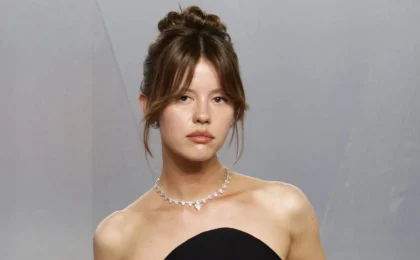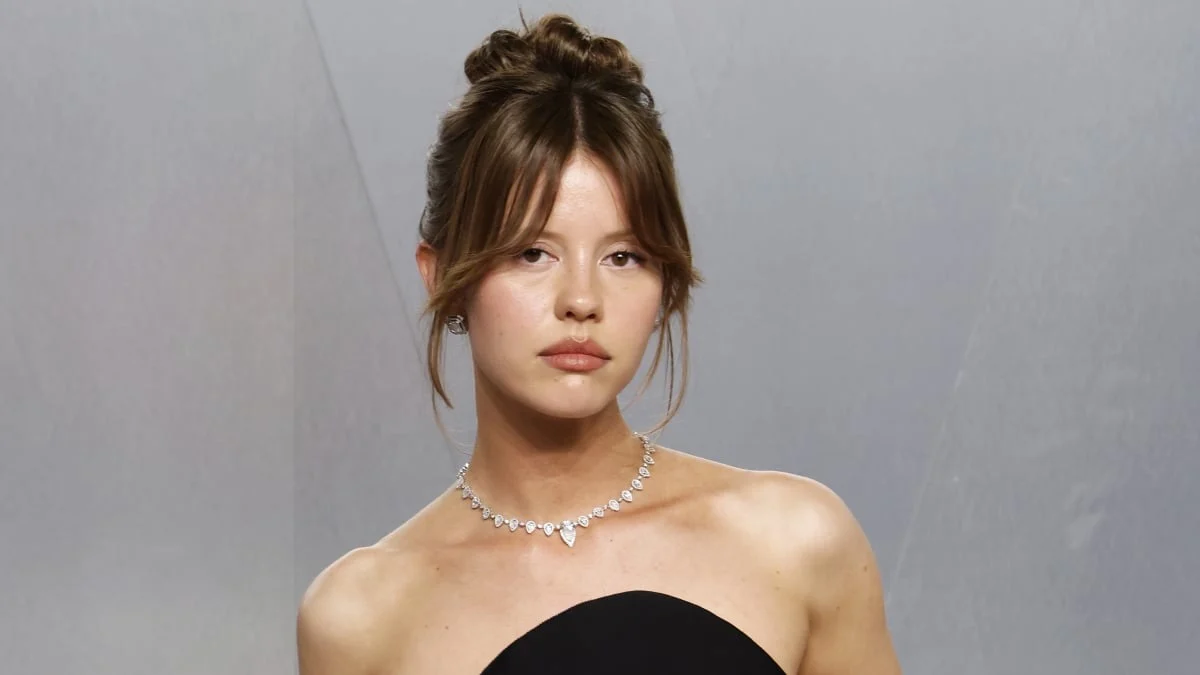
In an era where the lines between authentic human experience and digital fabrication are increasingly blurred, the concept of a "celebrity moment" is undergoing a radical, and often unauthorized, transformation. Recently, actress Mia Goth—known for her compelling performances in Pearl and MaXXXine—found herself at the center of a viral narrative she had no part in creating. Following news of her divorce from actor Shia LaBeouf, an image circulated on Instagram showing Goth wearing a provocative T-shirt emblazoned with the words, "MY EX IS MY BIGGEST FAN." The post was accompanied by the quintessential breakup anthem, Beyoncé’s "Single Ladies (Put a Ring on It)."
To the casual observer, it appeared to be a bold, public statement from the actress. In reality, it was a sophisticated piece of AI-generated misinformation. Goth, who maintains no official presence on social media, was effectively "deepfaked" into a social media scandal, highlighting a growing crisis in digital media: the weaponization of generative AI to exploit the likenesses of public figures for clout, profit, or deception.
The Anatomy of an Impersonation: A Chronology
The incident involving Goth serves as a chilling case study in how quickly misinformation can gain traction when cloaked in the guise of authenticity.
The image originated from the account @miagoth_, a verified "fan page" on Instagram that had amassed over one million followers. The blue checkmark, once a symbol of platform-verified identity, served to lend the fabricated post a veneer of legitimacy. So convincing was the deception that reputable news outlets, including People, initially reported on the image as a genuine selfie posted by Goth herself, interpreting the shirt as a sartorial jab at her former partner.
Although the article and the post were eventually retracted, the damage was done. The incident underscored a fundamental failure in platform oversight: how a fan account—posing as a celebrity who famously avoids social media—could secure verification and use that status to disseminate forged imagery without immediate repercussion.
Following intense pressure from Goth’s legal and public relations team, the account was eventually removed by Meta. "The fact that this fan account meets Instagram’s criteria to qualify for a ‘blue check’ is disconcerting on a fundamental level," said Christine Tripicchio, Goth’s representative. "It is incomprehensible that Instagram evidently prioritizes the dissemination of forged and manipulated images over the protection and integrity of a public figure’s likeness."
The Ecosystem of Synthetic Exploitation
The Goth incident is not an isolated anomaly but rather a symptom of a burgeoning "synthetic influencer" industry. A March investigation by Indicator exposed a network of six AI-generated influencer accounts that, combined, held over a million followers. These accounts were not merely posting harmless fan art; they were crafting fabricated celebrity encounters.
One such account, @ayannasoblack, regularly shared photos of the "influencer" in gym settings alongside A-list stars like Dwayne "The Rock" Johnson and John Cena. The goal of these accounts is rarely benign. Most of the entities identified in the report were linked to Fanvue profiles—a platform used to sell access to synthetic adult content. By utilizing the names and visual clout of real celebrities, these bad actors drive traffic to subscription-based services, effectively commodifying the stolen likenesses of stars without their consent.
Furthermore, the theft extends beyond static imagery. AI personas have been deployed to replicate the intellectual property of performers, including comedians. Comedian Sarah Purdum has spoken out about how the routines and material of female performers are being harvested to train "sexy" AI models, essentially automating the plagiarism of human creativity to build digital audiences that generate advertising revenue.
The High Stakes of Misinformation
While the exploitation of celebrities for adult content or "fan moments" is ethically reprehensible, the implications of AI-driven deception extend into the realms of political discourse and public safety.
In January 2024, the internet was flooded with nonconsensual, sexually explicit AI-generated images of Taylor Swift. The incident prompted a stern condemnation from SAG-AFTRA, which labeled the imagery "upsetting, harmful, and deeply concerning." The impact of such technology on public perception is profound. Later that year, Swift herself pointed to a separate AI-driven fabrication—an image falsely depicting her endorsing Donald Trump—as a primary motivator for her subsequent political endorsement of Kamala Harris.
"It really conjured up my fears around AI, and the dangers of spreading misinformation," Swift stated. Her experience highlights a terrifying new reality: the potential for AI to alter the course of public opinion by manufacturing false endorsements and fabricated controversies.
The danger of this technology is not limited to the living. The families of deceased icons are now being forced to engage in a digital tug-of-war. Filmmaker Zelda Williams, daughter of the late Robin Williams, has spent the better part of 2025 urging the public to stop sharing AI-generated videos of her father. She has noted that these recreations are "NOT what he’d want," emphasizing that the technology strips away the agency of the deceased, turning their life’s work into a puppet for modern content creators.
Meta’s Policy and the "Detection" Paradox
At the heart of the debate is the role of the platforms themselves. Meta, the parent company of Instagram and Facebook, has faced consistent criticism for its reactive, rather than proactive, approach to synthetic content.
Meta’s official policy generally permits the presence of manipulated media unless it violates specific community standards, such as those prohibiting bullying, harassment, or non-consensual sexual imagery. Instead of an outright ban on AI-generated personas, Meta relies on a system of "AI info" labels. These labels are intended to provide transparency when the platform’s internal systems detect technical markers of synthetic generation.
However, the efficacy of these markers is highly questionable. Meta has candidly admitted that its detection systems are imperfect and that the invisible watermarks used to identify AI content can be stripped by sophisticated users. Furthermore, the company has frequently adjusted its labeling criteria—moving from "Made with AI" to "AI info"—as it struggles to distinguish between harmless photo editing and malicious deepfakes.
Critics argue that by placing the burden of detection on algorithms that are demonstrably fallible, platforms like Instagram are effectively washing their hands of the responsibility to protect their users and the public figures whose images populate their servers.
Toward a Future of Digital Integrity
The case of Mia Goth and the broader trend of AI-generated impersonation represent a critical inflection point for the internet. As Scarlett Johansson noted in 2025, after being included in an AI-generated video protesting antisemitism—a cause she supports, but a video she never agreed to participate in—the issue is about more than just the content of the message.
"We must call out the misuse of AI, no matter its messaging, or we risk losing a hold on reality," Johansson said. Her sentiment echoes the growing consensus among legal experts and tech ethicists: that the right to one’s own likeness must be protected as a fundamental digital human right.
As we move forward, the solution likely requires a tripartite approach:
- Platform Responsibility: Social media companies must move beyond mere labeling and implement robust, human-in-the-loop verification processes for accounts claiming to represent public figures.
- Legal Frameworks: Legislators must accelerate the development of "Right of Publicity" laws that specifically address AI-driven deepfakes, providing victims with clear, streamlined legal avenues to seek damages and injunctions.
- Technological Provenance: Industry-wide adoption of cryptographically secure provenance standards—often referred to as "content credentials"—will be essential in verifying the authenticity of images, allowing users to trace the origin of a file back to its camera or creator.
The digital age has brought unprecedented connectivity, but it has also created a Wild West where identity is no longer fixed. The fight to preserve the truth, and to ensure that an individual’s face and voice belong to them alone, is no longer just a legal battle—it is a struggle for the very foundation of our shared reality. Without systemic change, we risk entering a future where "seeing is believing" is a relic of the past, and every image, every post, and every moment is subject to the whims of an algorithm.