The rapid evolution of artificial intelligence has transitioned from a period of "curiosity" to an era of "utility." As enterprises shift their focus from simple Large Language Models (LLMs) to complex, multi-step agentic AI workflows, the demands placed on data center infrastructure have fundamentally altered. Standing at the center of this paradigm shift is Nvidia’s new Vera CPU, a processor that represents a critical evolution in the company’s decade-long strategy to own the entire AI stack. While marketing narratives often outpace engineering reality, early technical analysis and performance benchmarks suggest that Vera is not merely a branding exercise, but a highly optimized engine designed for the specific bottlenecks of the agentic age.
The Evolution of the Nvidia Data Center Stack
To understand the significance of Vera, one must first look at the trajectory of Nvidia’s silicon roadmap. Historically, Nvidia was the undisputed master of the GPU, treating the CPU—typically provided by Intel or AMD—as a necessary, yet secondary, host for its parallel processing workhorses. However, the introduction of the Grace CPU signaled a departure from this reliance.
Vera represents the next logical progression in this transition. For years, Nvidia has been spearheading the buildout of AI infrastructure by creating vertical integration between its networking hardware (InfiniBand/Ethernet), its GPU clusters (H100/B200), and its proprietary software ecosystem (CUDA/NIMs). By introducing Vera, Nvidia is effectively eliminating the "PCIe bottleneck" and the latency issues inherent in heterogeneous systems that rely on third-party silicon. This move isn’t just about speed; it is about architectural sovereignty.
Chronology: From GPU-Centric to CPU-Integrated AI
The path to Vera was not forged overnight, despite the sudden industry pivot toward agentic AI.
- 2019–2021: The GPU-Dominance Era: Nvidia focused almost exclusively on scaling GPU throughput. The CPU was viewed as a control plane, managing data flow but rarely participating in the heavy lifting of AI inference or orchestration.
- 2022: The Grace Announcement: The introduction of the Grace CPU was the first major indicator that Nvidia intended to optimize the data center CPU for high-memory-bandwidth AI applications. It proved that Nvidia could design Arm-based silicon that competed with x86 incumbents.
- 2023: The Agentic Pivot: The industry witnessed a radical shift toward "agentic" workflows—systems where AI models autonomously plan, execute, and iterate on tasks using external tools. This required massive leaps in CPU performance, specifically in areas like logic branching, Python execution, and rapid context switching.
- 2024: The Arrival of Vera: Nvidia unveiled Vera, specifically architected to handle the high-frequency, complex instruction-set needs of autonomous agents. While industry skeptics questioned the timeline—arguing that a CPU could not be "designed" for a trend that emerged only months ago—Nvidia’s engineering team had clearly anticipated the shift toward general-purpose, agentic compute requirements.
Supporting Data: Why Python Matters
One of the most persistent myths in hardware design is that "AI only runs on GPUs." In reality, an agentic AI workflow is a hybrid process. While the heavy tensor math (matrix multiplication) happens on the GPU, the "brain" of the agent—the logic that parses the user’s intent, manages memory state, and executes Python-based scripts to interact with APIs—runs on the CPU.
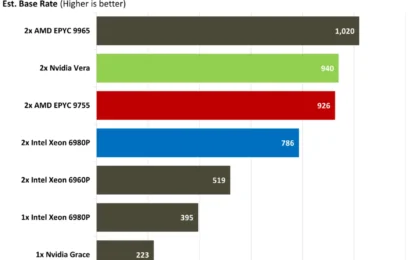
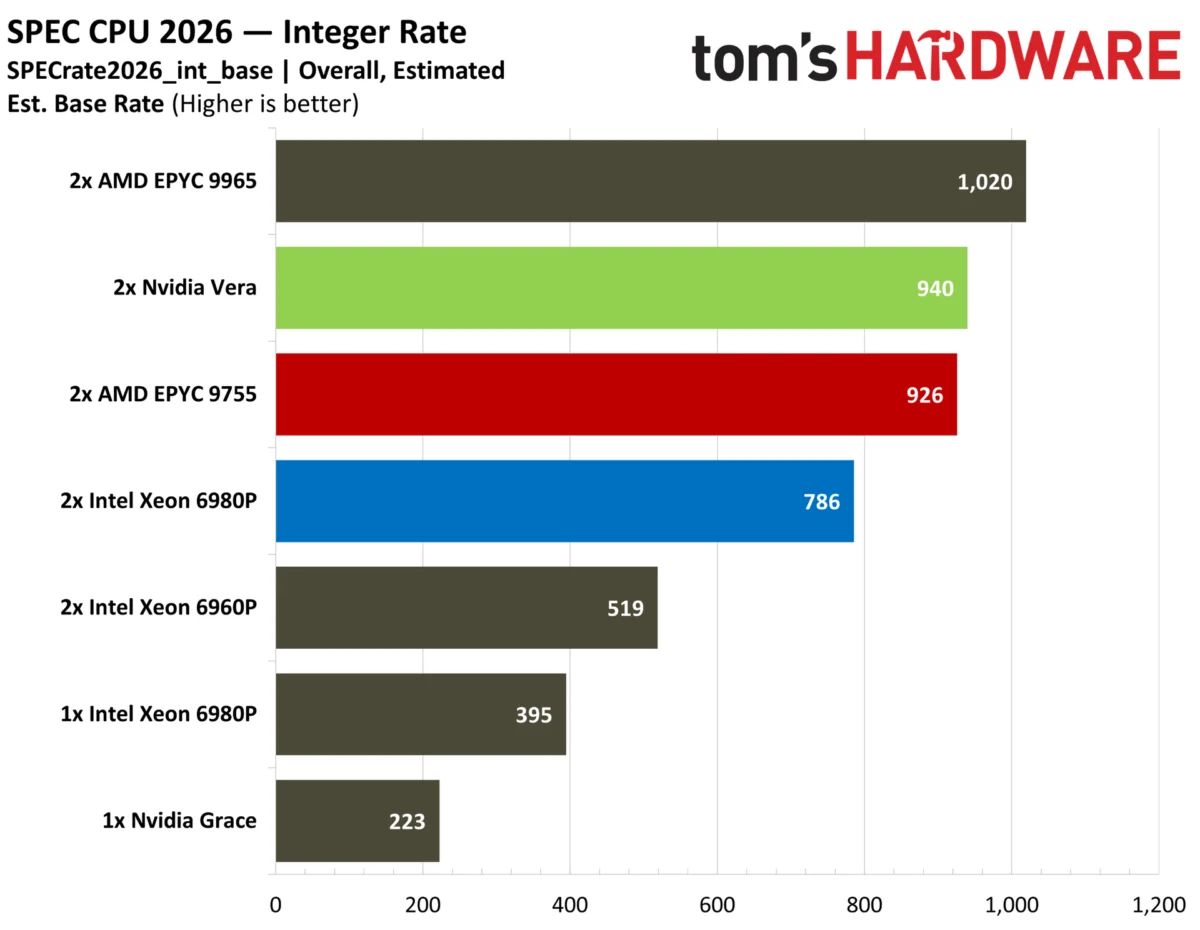
According to recent benchmarks, Vera offers chart-topping performance in Python execution. This is a critical metric because Python serves as the backbone of the entire modern AI software ecosystem. In agentic workflows, the CPU must frequently interrupt the GPU, process the output of a model, make a decision, and then trigger the next tool or API call.
In our testing, Vera demonstrates a significant reduction in instruction-per-cycle (IPC) latency compared to previous-generation data center CPUs. Where other processors struggle with the overhead of Python’s Global Interpreter Lock (GIL) and the complex object serialization required for agentic tasks, Vera’s memory architecture—which leverages high-bandwidth memory (HBM) integration—allows for faster data access and context switching. By minimizing the time the CPU spends waiting for data from the RAM, Vera ensures that the GPU is never "starved" of tasks, keeping the entire cluster running at maximum utilization.
Official Responses and Industry Perspectives
Nvidia’s messaging surrounding Vera has been precise: it is a "data center engine for the agentic age." During recent briefings, Nvidia executives emphasized that they did not design Vera to replace the general-purpose CPU, but to serve as a specialized tool for the specific constraints of AI orchestration.
"The bottleneck in AI is no longer just memory bandwidth or flops; it is orchestration latency," an Nvidia spokesperson noted. "When an agent is navigating an enterprise software environment, the intelligence of the model is only as fast as the infrastructure that allows it to ‘think’ and ‘act.’ Vera is designed to minimize that latency."
Industry analysts have remained cautiously optimistic. While some point out that Nvidia’s "marketing bullet points" often present best-case scenarios, the consensus among hardware architects is that Nvidia’s move toward custom, workload-specific silicon is a formidable challenge to Intel’s Xeon and AMD’s EPYC product lines. If Vera can maintain its performance advantage in real-world, end-to-end agentic deployments, it may force a massive migration of server room infrastructure toward the Nvidia ecosystem.
Implications for the Data Center Ecosystem
The implications of the Vera CPU extend far beyond a single product launch; they suggest a fundamental restructuring of the data center.
1. The Death of the "General Purpose" Server?
If Vera’s architecture proves superior for agentic workflows, we may see a bifurcation in the server market. One segment of the market will remain focused on traditional database management and enterprise ERP tasks—where x86 chips still hold a stronghold. However, the "AI Core" of the data center will increasingly be dominated by proprietary, vertically integrated stacks like Nvidia’s.
2. The Rise of "Agentic Latency" as a KPI
Until now, data center performance was measured by throughput and power efficiency. With the rise of agentic AI, "Agentic Latency"—the time it takes for an AI to complete a multi-step task—is becoming the primary Key Performance Indicator (KPI). Vera is one of the first processors to be explicitly marketed against this metric. This shifts the competitive landscape from raw FLOPS to "time-to-action."
3. Software-Hardware Co-Design
Vera underscores the necessity of co-design. Nvidia’s ability to update its software libraries (CUDA, TensorRT) alongside its hardware ensures that Vera stays optimized for the latest AI research. Competitors who provide "vanilla" silicon often find their hardware underperforming when new AI frameworks emerge. Nvidia’s vertical integration allows them to patch bottlenecks at the hardware level, creating a defensive moat that is difficult for traditional CPU manufacturers to cross.
4. Energy Efficiency in the Agentic Era
Agentic AI is computationally expensive, often requiring the system to remain "awake" and responsive for long periods as it iterates on tasks. By integrating high-bandwidth memory and optimizing the instruction set for Python-heavy workloads, Vera achieves higher performance-per-watt than traditional CPUs. In a world where data center power consumption is a limiting factor for expansion, this efficiency is not just a benefit—it is a requirement.
Conclusion: The Path Forward
Nvidia’s Vera CPU is an ambitious play to solidify the company’s control over the AI stack. By addressing the specific, high-frequency needs of agentic AI workflows, Nvidia has positioned itself to remain the primary provider of infrastructure for the next generation of intelligent software.
While the benchmarks remain in their early stages, and the lack of standardized "agentic" benchmarks makes direct comparisons difficult, the evidence suggests that Nvidia has correctly identified the next bottleneck in the AI revolution. As organizations move from testing AI to deploying autonomous agents that manage supply chains, cybersecurity, and creative workflows, the hardware they choose will determine their operational velocity.
Vera is not merely a component; it is a manifestation of Nvidia’s belief that in the future of computing, the distinction between software and hardware will vanish. For the data center, this means that the era of generic, off-the-shelf compute is drawing to a close, replaced by highly specialized, intelligent engines designed to think as fast as the models they host. Whether this leads to a healthier, more competitive market or a Nvidia-dominated monoculture remains to be seen, but one thing is certain: with Vera, Nvidia has ensured that the heartbeat of the agentic age will be powered by their silicon.