

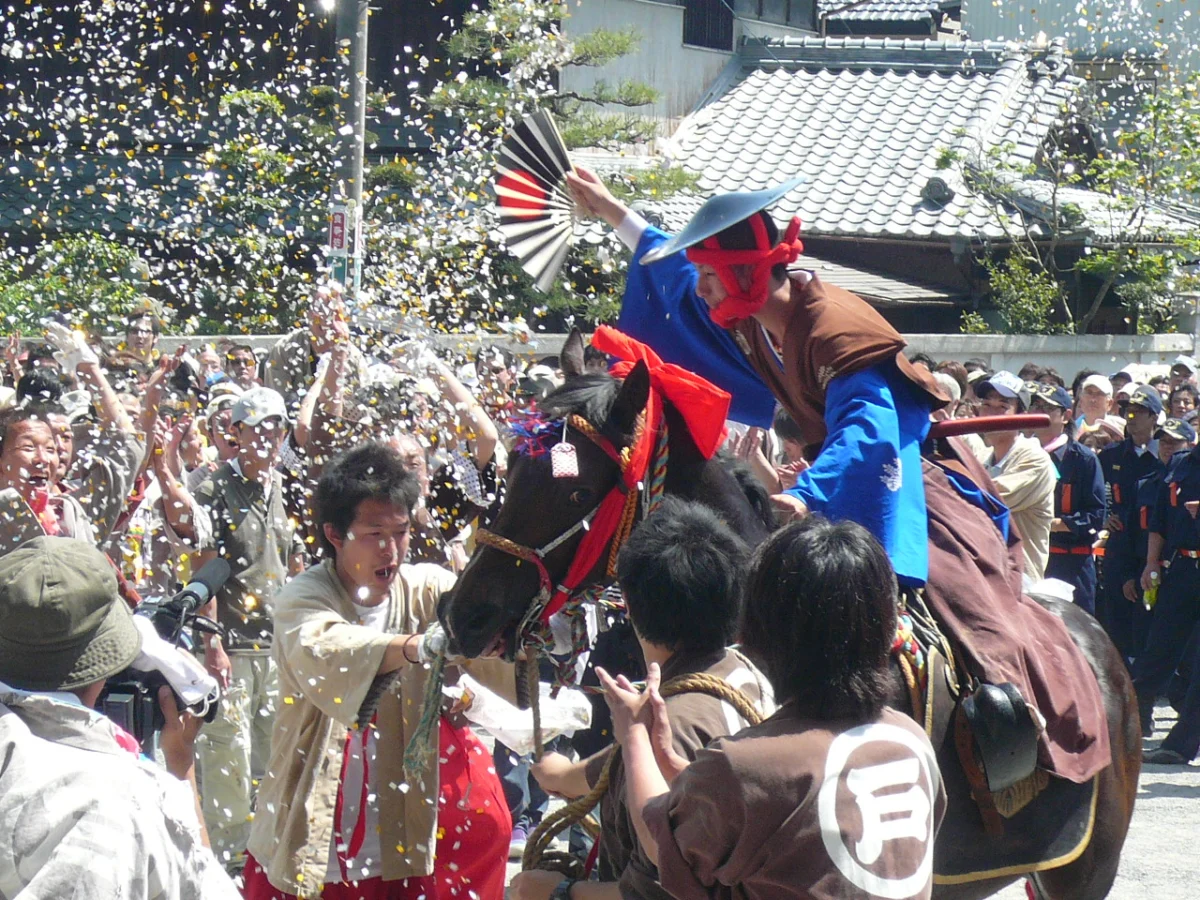
The Tado Festival (Tado Matsuri), held annually on May 4–5 at the Tado Grand Shrine (Tado Taisha) in Japan’s northern Mie Prefecture, stands as one of the most visually striking and physically demanding Shinto rituals in the country. At its heart lies the Ageuma Shinji—the "Rising Horse Rite"—a spectacle that blends medieval equestrianism with ancient agricultural divination.
For over a thousand years, this ritual has served as a barometer for the year’s harvest. However, in the 2020s, the festival has become the epicenter of a fierce national debate regarding animal welfare. As Japan grapples with the tension between preserving "Intangible Cultural Properties" and modern ethical standards, the Tado Festival offers a window into the complex evolution of Japanese folk religion.
The Core Ritual: Ageuma Shinji
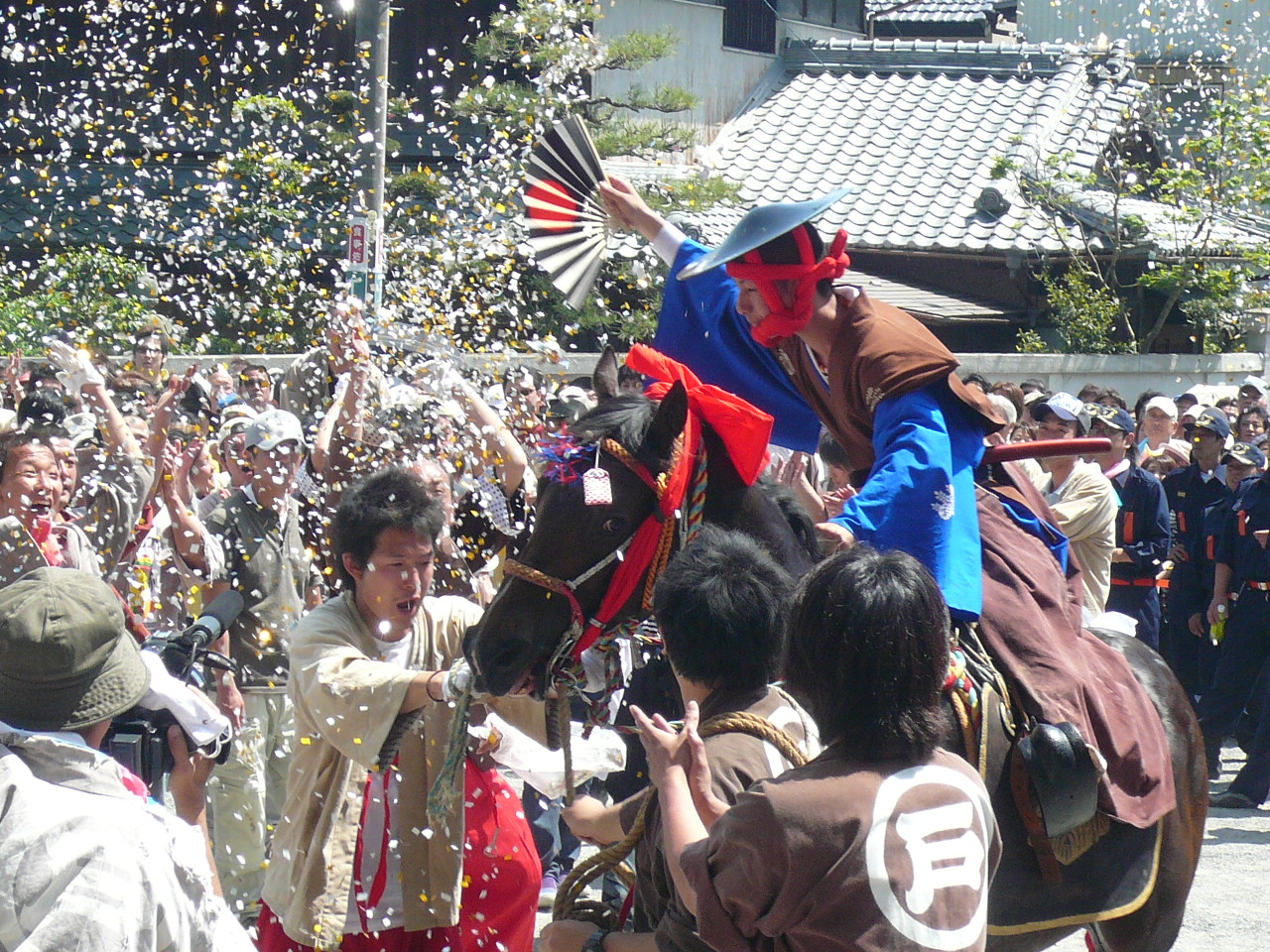
The Ageuma Shinji is the focal point of the Tado Festival. On the afternoon of May 5, young men clad in traditional samurai armor—reminiscent of the early Edo period—mount local farm horses. The objective is to gallop at full speed up a steep, 100-meter packed-earth slope. At the summit, the path terminates in a two-meter vertical wall.
The horse must leap over this wall to complete the rite. According to local folklore, the height and success of the jump serve as a prophetic indicator of the year’s rice harvest. A clean, successful jump is traditionally interpreted as a harbinger of a bountiful year, while a refusal or failure is seen as a sign of impending drought or hardship. The tension is palpable; for the participants and the thousands of spectators who gather from dawn, the outcome is more than a display of horsemanship—it is a spiritual petition for communal survival.
Historical Chronology: From Samurai to Modernity
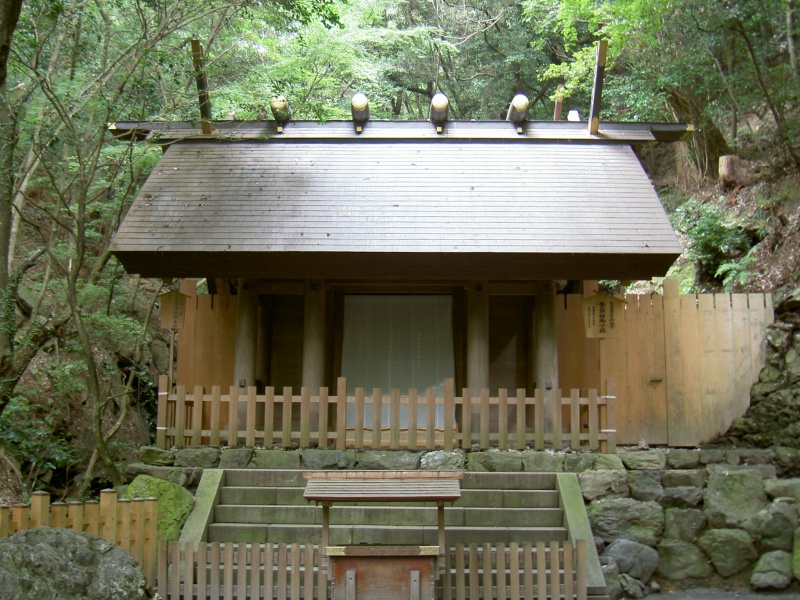
The origins of Tado Taisha are as deep as the traditions it hosts. Historical records suggest the shrine was established in 459 CE during the reign of Emperor Yuryaku. If accurate, this would place Tado among the oldest surviving Shinto institutions in Japan, predating the venerated Ise Grand Shrine.
- 9th Century: The shrine appears in the Engishiki (927 CE), a register of officially recognized shrines, signaling its elevated national status during the Heian period.
- Kamakura Period (1185–1333): The Ageuma Shinji began to take its recognizable form. During this era, the shrine became a site for samurai to seek blessings for their cavalry, cementing the connection between the deity Amatsuhikone-no-mikoto and horse-related prosperity.
- Edo Period (1603–1867): The ritual evolved to reflect the agricultural focus of the local peasantry, cementing the link between the horse jump and the rice crop.
- 2020–Present: A period of intense scrutiny. The rise of social media and animal rights advocacy has brought the physical toll of the ritual into the public eye, forcing the shrine to adapt its ancient practices to modern ethical expectations.
Tado Taisha: A Sanctuary for the Horse
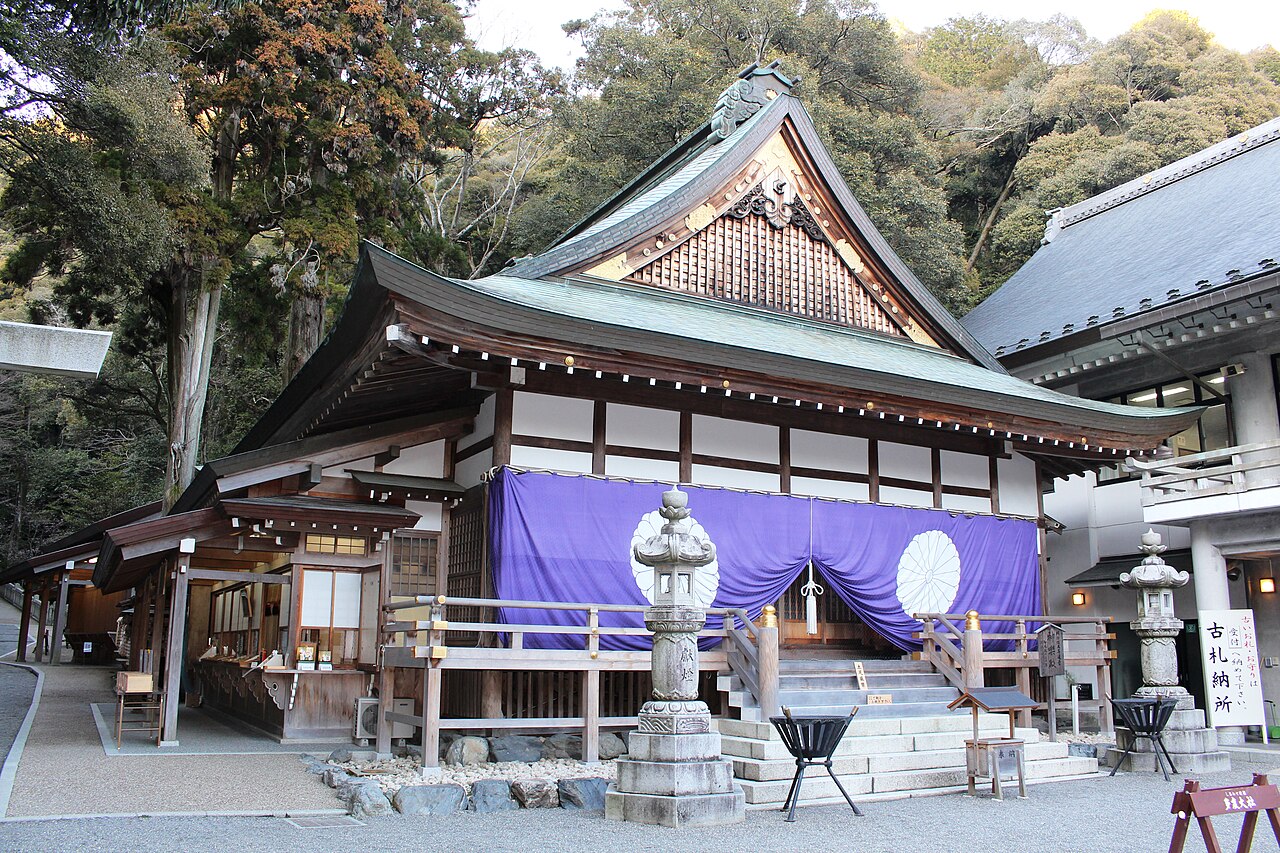
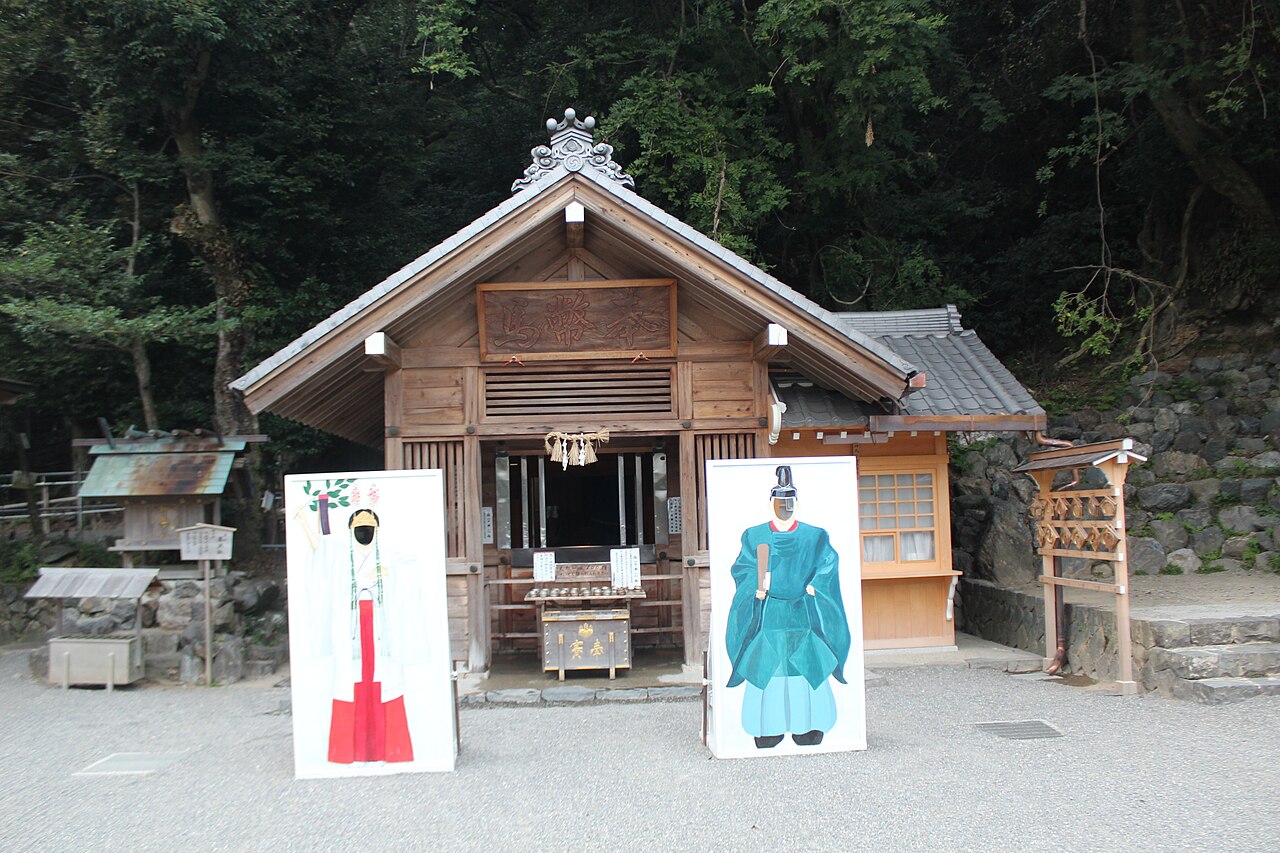
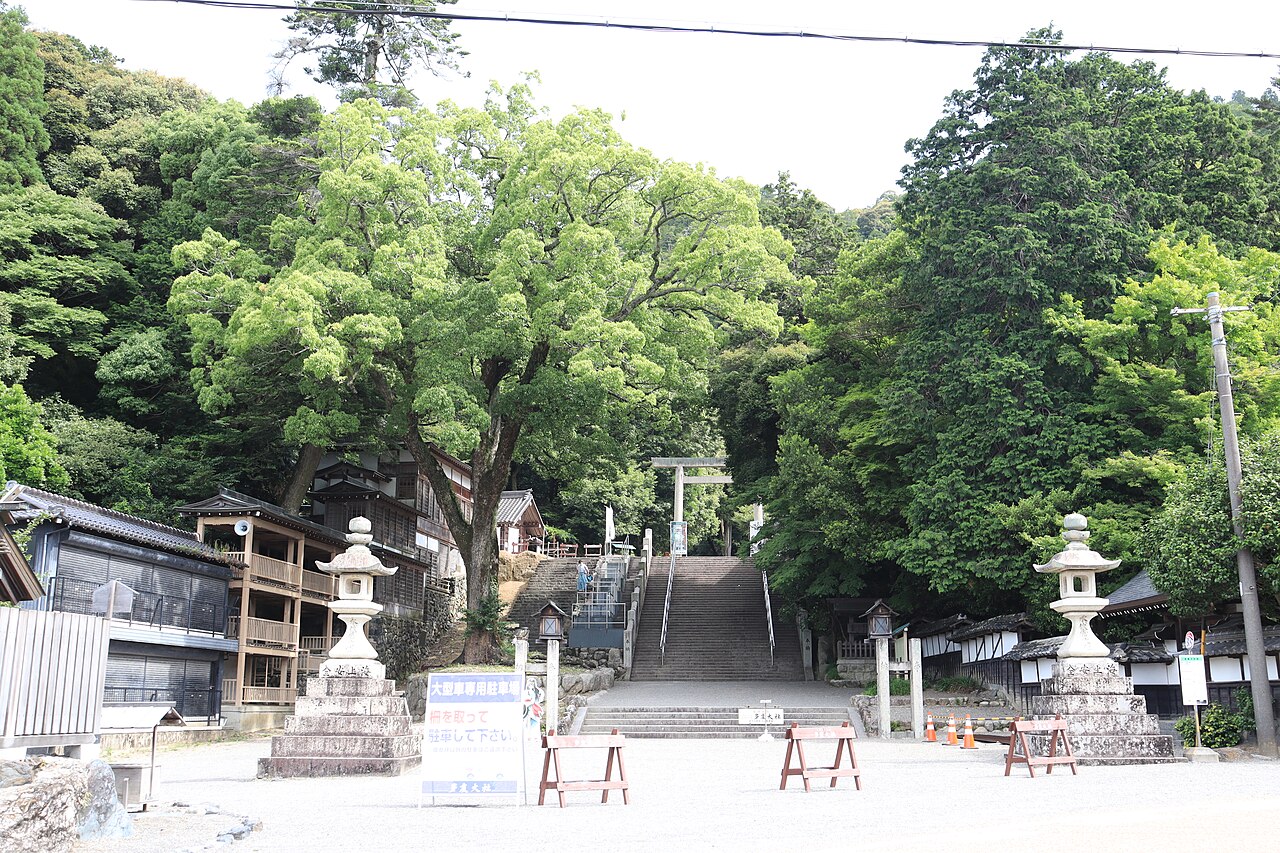
Tado Taisha is not merely a venue for a festival; it is a profound religious center. Built into the base of the 403-meter Mt. Tado, the shrine is dedicated to Amatsuhikone-no-mikoto, a son of the sun goddess Amaterasu. In Shinto mythology, he is revered as the "horse protector."
This divine connection defines the shrine’s identity. Throughout the centuries, the "horse blessing" has evolved:
- Cavalry Blessings: For medieval warriors preparing for battle.
- Farm-Horse Blessings: For Edo-era farmers ensuring the health of their livestock.
- Modern Motorsport Blessings: Today, motorcycle and car enthusiasts flock to Tado to pray for safety on the road. The shrine’s ability to remain relevant by adapting its theology to the "iron horse" of the modern era is a testament to the fluidity of Shinto.
The precinct itself is home to several architectural landmarks, including the Gakuraden (ceremonial music hall) where traditional kagura dances are performed, and the Jinmesha (sacred horse stable). While the festival horses are working farm animals, the shrine maintains a permanent "sacred horse," currently a white thoroughbred named Kintaro, who serves as a living symbol of the deity’s presence.
The Controversy: Balancing Tradition and Welfare
Since 2020, the Ageuma Shinji has faced mounting pressure from animal-welfare organizations. The primary concern is the physical injury sustained by horses during the rite. The combination of a hard-packed earth slope and a high, vertical wall has historically resulted in leg and shoulder injuries.
The Shrine’s Response
Rather than yielding to calls for the total abolition of the ritual, the Tado Taisha authorities have pursued a path of rigorous modification:
- Slope Geometry: The height of the jumping wall has been reduced to decrease the impact force on the horses.
- Cushioning: The landing zone and the base of the wall have been treated with shock-absorbing materials to prevent injuries.
- Participant Regulation: The age and experience requirements for riders have been tightened to ensure better control and safer handling of the animals.
- Transparency: The shrine has opened lines of communication with the Mie prefectural cultural-properties board, acknowledging the need for the ritual to evolve while maintaining its "Intangible Cultural Property" status.
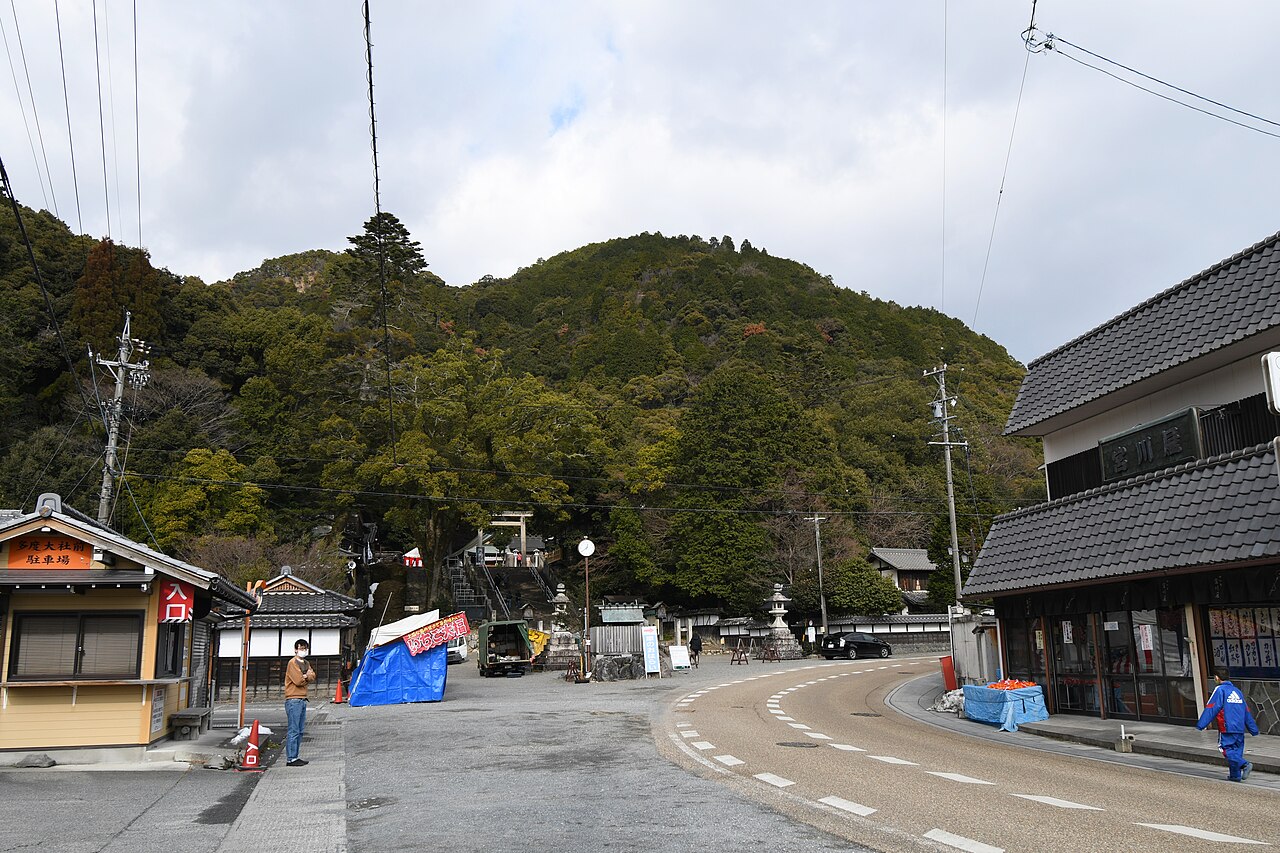
Despite these changes, the controversy remains visible. Visitors to the 2026 festival and beyond will likely encounter protest groups alongside the traditional spectacle. The shrine welcomes all, but it is clear that the festival is no longer a private, insular event; it is a public-facing performance subject to global scrutiny.
Supporting Data and Practical Visitor Information
For those planning to visit, the Tado Festival is an intense, high-energy experience.
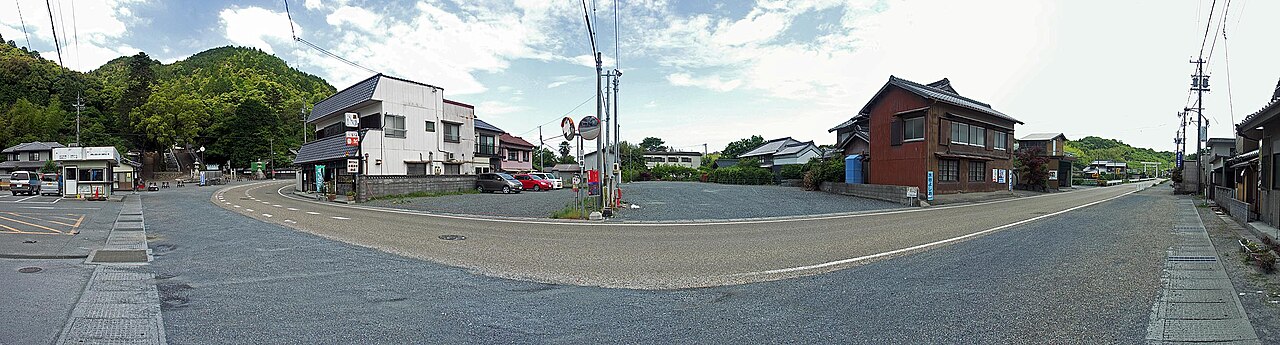
- Logistics: The festival draws 300,000 to 400,000 people over two days. Public transport, particularly the Yoro Railway, becomes extremely congested by 17:00 on May 5.
- Participation: Entry is free, but prime viewing spots near the climbing slope are highly sought after. Reserved seating, ranging from ¥3,000 to ¥5,000, is available for booking starting in late March via the shrine’s website.
- Accessibility: While the shrine grounds are generally accessible, the festival environment is loud, crowded, and emotionally charged. Families with small children should be aware that the intensity of the Ageuma rite can be overwhelming.
- Off-Season Value: Outside of the May festival, Tado Taisha is a serene, photogenic location. The hike to the summit of Mt. Tado takes approximately 90 minutes and offers expansive views of the Ibi River delta. The Treasure Hall (Shuho-kan), open on weekends, provides deeper historical context, including displays of the samurai armor and ceremonial saddles used in the rites.
Implications: The Future of Shinto Rituals
The situation at Tado reflects a broader national trend in Japan: the struggle to preserve traditional folk customs in a society that is increasingly sensitive to the welfare of animals and the human participants involved.
The Tado Festival is more than a relic of the past; it is a living entity. Its survival depends on its ability to negotiate with the present. By choosing reform over prohibition, Tado Taisha is attempting to prove that a 1,000-year-old ritual can maintain its spiritual integrity while acknowledging that the ethical standards of the 21st century cannot be ignored.
For the traveler, attending the Tado Festival is an opportunity to witness this negotiation in real-time. It is a chance to see a piece of Japanese history that is not tucked away in a museum, but is instead out in the open, struggling, evolving, and ultimately, continuing. Whether viewed as an essential cultural pilgrimage or a contentious display, the Tado Festival remains one of the most compelling narratives in contemporary Japanese culture.











