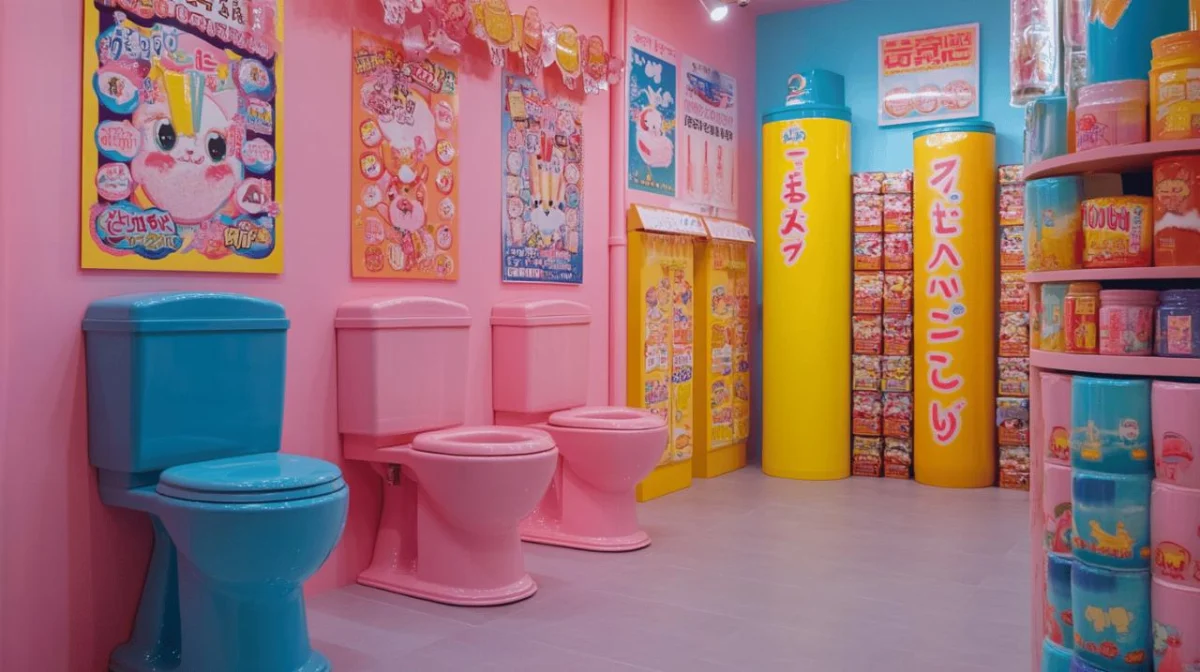
In the vast and kaleidoscopic world of Japanese confectionery, where innovation is measured by the ability to defy convention, few products have achieved the legendary, albeit bizarre, status of the Moko Moko Mokoletto. At first glance, the product appears to be nothing more than a miniature, plastic toy toilet. However, once assembled, it transforms into an interactive, fizzy, and undeniably humorous culinary experience. This "toilet candy" has become a quintessential symbol of the "Kawaii" and "WTF" Japanese culture, bridging the gap between traditional candy making and avant-garde toy design.
Main Facts: The Science of Fizz
At its core, the Moko Moko Mokoletto is a DIY candy kit. The experience begins with the assembly of a small, colorful plastic toilet bowl—complete with a lid and tank. The "magic" happens when the user pours a specific sachet of acidic, flavored powder into the tank, adds water, and watches as the mixture overflows into the bowl in a bubbling, effervescent foam.
This chemical reaction, while simple, serves as the cornerstone of the product’s appeal. It is not merely a sugar fix; it is a laboratory experiment on a desktop scale. The foam, which is essentially a carbonated, fruit-flavored confection, must be consumed directly from the "bowl" using a miniature straw, an act that is intentionally provocative and designed to elicit giggles, shock, or confusion from observers.
A Chronology of a Viral Sensation
The trajectory of Moko Moko Mokoletto from a local novelty item to a global internet sensation is a masterclass in modern digital marketing.
The 2013 Launch: A Local Curiosity
When the product was first introduced to the Japanese market in 2013, it was initially viewed as an extension of the country’s affinity for "Dagashi"—inexpensive, playful snacks targeted at children. However, the sheer audacity of the design—a miniature bathroom fixture—quickly transcended the children’s market, finding an unexpected audience among teenagers and young adults who appreciated the irony and the "shock factor" of the product.
The 2014 Global Expansion
By 2014, the candy had breached international borders. As the early YouTube "unboxing" and "taste test" culture began to flourish, Moko Moko Mokoletto became a rite of passage for influencers. The product’s visual absurdity made it perfect for the rapidly growing video-sharing economy. It wasn’t just a candy; it was content.
The Maturation into a "Cult Classic"
Throughout the late 2010s and into the 2020s, the product cemented its place in pop culture. It is no longer just a trend but a staple of specialty import shops and "Fantaisyland" sections of global snack retailers. It has been reviewed by thousands of creators, including notable blogs like La Banane qui Parle and Un Loulou et une Poupette, which helped translate the unique Japanese context for a Western audience.
Supporting Data and Digital Impact
The success of Moko Moko Mokoletto cannot be analyzed without acknowledging the power of the digital ecosystem.
Metrics of Engagement
The engagement levels surrounding these kits are significant. For example, anecdotal data from niche blogs suggests that articles dedicated to the Moko Moko Mokoletto experience have garnered thousands of unique visitors. On platforms like YouTube, search queries for "toilet candy" have consistently yielded high volumes of traffic, with individual videos often reaching hundreds of thousands of views. This data suggests that the product’s marketing strategy—relying on user-generated content and social media sharing—has been far more effective than traditional advertising campaigns.
The "Community" Factor
The brand successfully cultivated a community of "snack explorers." By categorizing the product within the broader realm of "WTF" or "Strange Japanese Snacks," the manufacturers tapped into a psychological desire for novelty. Collectors began seeking out different iterations of the kit, including various colors and limited-edition flavors, effectively turning a disposable candy item into a collectible object.
Official Responses and Industry Reception
While the manufacturers have remained relatively quiet regarding the "toilet" imagery, the industry response has been one of fascination. Confectionery analysts often cite Moko Moko Mokoletto as a perfect example of "Edutainment"—a blend of education (basic chemistry) and entertainment.
The "Edutainment" Perspective
Industry experts note that the Japanese confectionery market is uniquely positioned to take risks that Western brands might find too "risky" or "distasteful." In Japan, the separation between hygiene and play is more fluid in the context of children’s toys. The official branding often highlights the "creative" and "DIY" aspects, framing the assembly of the plastic pieces as a skill-building activity for children, while the fizzing reaction provides the immediate reward.
Brand Partnerships and Collaborations
The product has also benefited from strategic placements. By positioning itself as a "must-try" item for visitors to Japan or enthusiasts of Japanese pop culture, it has secured shelf space in premium export boutiques worldwide. These partnerships have allowed the brand to maintain a premium price point despite the relatively low cost of the raw materials involved, proving that the value proposition lies in the experience rather than the caloric content.
Implications for the Future of Confectionery
The success of Moko Moko Mokoletto has broader implications for how food companies approach product development in the 21st century.
The Rise of the "Instagrammable" Food
We are living in an era where the visual presentation of food is often as important as its taste. The Moko Moko Mokoletto was an early pioneer of the "Instagrammable" food movement. It proved that if a product is inherently shareable—meaning it invites the consumer to document the process of eating—it effectively markets itself.
Innovation Beyond Flavor
Traditionally, candy manufacturers focused on flavor profiles (strawberry, grape, soda). The Moko Moko Mokoletto shift suggests that the future of the industry lies in sensory interaction. The tactile experience of assembling the plastic components, the visual spectacle of the foam, and the auditory feedback of the fizzing reaction create a multi-sensory experience that standard chocolate bars or gummy bears simply cannot replicate.
A Cultural Bridge
Perhaps the most profound implication of this product is its role as a cultural bridge. It introduces Western consumers to the playful, sometimes irreverent side of Japanese culture. It demystifies the "strange" by making it accessible and, ultimately, delicious. It invites the consumer to step outside their comfort zone, even if only for the duration of a small, foam-filled cup.
Conclusion: More Than Just a Joke
While it is easy to dismiss the Moko Moko Mokoletto as a passing fad or a crude novelty, its staying power suggests otherwise. It represents a fundamental shift in how we perceive snacks: from passive items of consumption to active components of our social and digital lives.
As we look toward the future of the global confectionery market, we can expect to see more products that borrow from the "Mokoletto" playbook. Whether through interactive packaging, DIY elements, or products designed specifically to "go viral," the lessons taught by this miniature, fizzy toilet are clear: in a world saturated with choices, the products that win are those that provide an experience that is as unforgettable as it is unique.
The Moko Moko Mokoletto remains a testament to human creativity and our universal desire to play with our food—even when that food comes from a place as unlikely as a miniature toilet. It is a reminder that in the world of global commerce, the most successful innovations are often those that dare to be different, those that embrace the absurd, and, most importantly, those that never take themselves too seriously.