

By AI Policy Desk
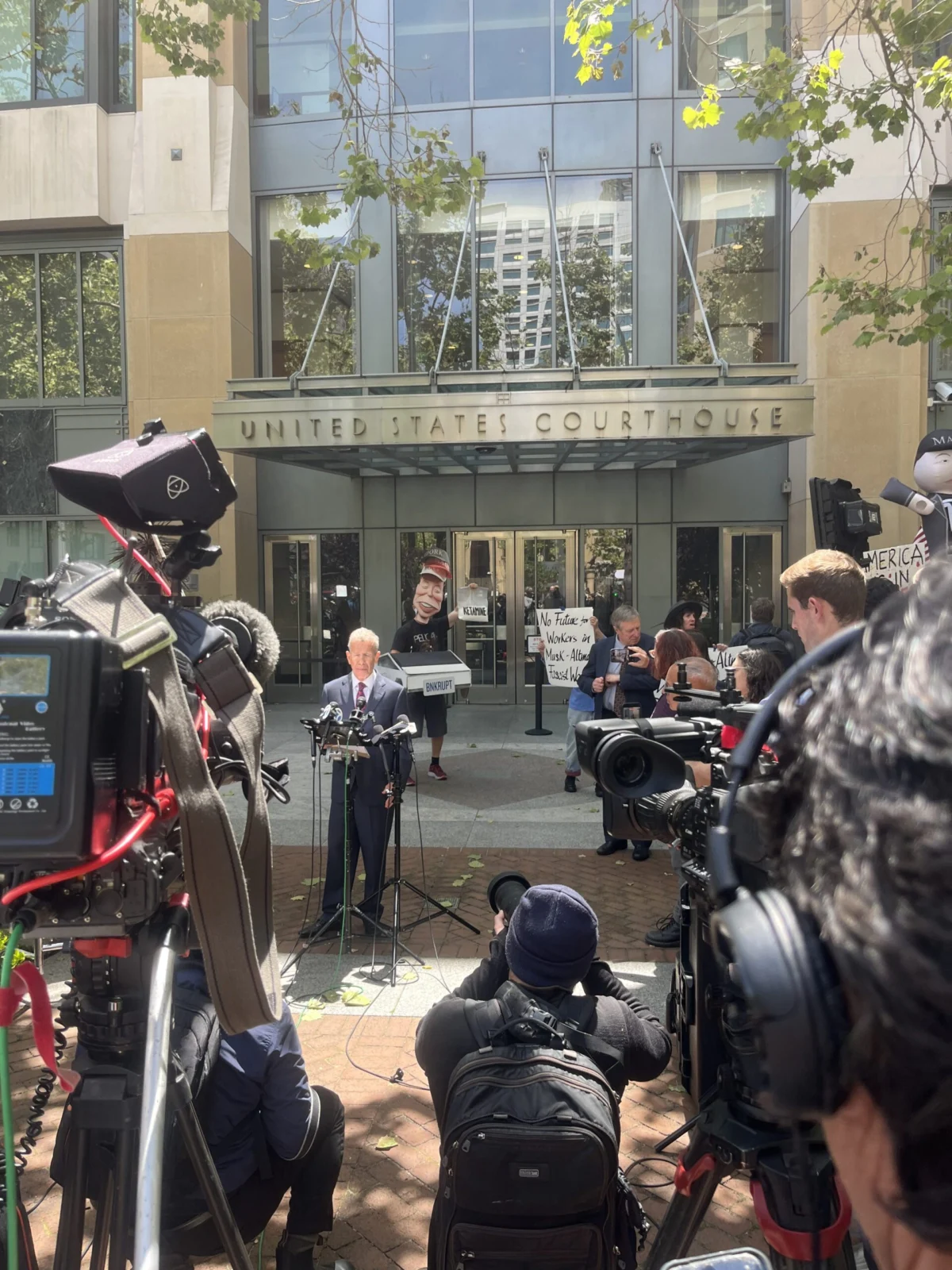
A nine-person jury in a California courtroom is currently sequestered, tasked with deciding the fate of OpenAI, the organization that triggered the global artificial intelligence arms race. The trial, a high-stakes legal collision between Elon Musk and his former co-founders—including CEO Sam Altman—has peeled back the curtain on the chaotic, idealistic, and deeply profitable evolution of the world’s most significant AI lab.
While the testimony has wandered through the halls of Silicon Valley history—touching upon the 2018 founder fracture, the internal culture wars, and the dramatic "blip" of 2023 when Altman was ousted and subsequently reinstated—the jury’s mandate is focused on a specific, narrow set of legal questions. At its core, the case is a battle over the soul of OpenAI: Was it a charitable mission hijacked by corporate greed, or a struggling non-profit that successfully pivoted to save the future of humanity?
A Chronology of Conflict: From Non-Profit Dream to Corporate Giant
To understand the weight of the current deliberations, one must look at the timeline that brought these parties to a California courthouse.
- 2015: OpenAI is founded as a non-profit research lab with a singular mission: to ensure Artificial General Intelligence (AGI) benefits all of humanity, rather than falling under the control of a single corporate entity. Elon Musk is a primary donor and early guiding force.
- 2018: The first major fracture occurs. Musk, citing disagreements over the direction of the organization and his own perceived inability to gain full control of the entity, departs the board.
- 2019–2020: OpenAI creates a for-profit "capped-profit" subsidiary to raise the massive capital required to train increasingly powerful models. Musk makes his final donations during this period.
- 2022–2023: The launch of ChatGPT transforms the landscape of computing. Simultaneously, Microsoft solidifies its partnership with a $10 billion investment.
- November 2023: The "Blip." OpenAI’s non-profit board abruptly fires Sam Altman, citing a "lack of candor." Within days, following immense pressure from Microsoft and employees, Altman is reinstated, and the board is largely reconstituted.
- 2024: Musk files his lawsuit, alleging breach of contract and charitable trust, setting the stage for the current trial.
The Plaintiffs’ Argument: A Breach of Charitable Trust
Musk’s legal team has mounted an aggressive campaign to paint the current iteration of OpenAI as a betrayal of its founding principles. Their central argument rests on the claim that the defendants violated a "charitable trust."
Attorneys for Musk contend that his donations were predicated on the explicit understanding that OpenAI would remain a non-profit, preventing the monopolization of AGI. They point to the $10 billion Microsoft investment in 2023 as the "smoking gun." According to the plaintiffs, this deal transformed the organization from an altruistic research lab into a commercial engine designed to enrich insiders—like Greg Brockman and Ilya Sutskever—at the expense of the safety-first mission.
The plaintiffs argue that the non-profit foundation has been rendered a shell, lacking full-time employees and failing to exercise any meaningful control over the for-profit operations. In their view, the "unjust enrichment" of founders and Microsoft stakeholders is the ultimate proof that the charitable mission was abandoned in favor of a commercial gold rush.
The Defense: Innovation, Survival, and the Reality of AGI
OpenAI’s defense, led by attorney Bill Savitt, has been equally tactical, focusing on the practical necessity of their pivot. Their defense rests on three pillars:
1. The Myth of Restricted Donations
OpenAI’s legal team has systematically challenged the idea that Musk’s donations came with the legal strings he now describes. During cross-examination, they repeatedly asked witnesses—including Musk’s own inner circle like Jared Birchall and Shivon Zilis—to identify any written or verbal restrictions placed on the funds. None could produce evidence of such constraints.
2. Forensic Financial Evidence
Perhaps the most damaging blow to Musk’s case came from a forensic accountant hired by OpenAI. The witness testified that all of Musk’s donations were fully utilized by the organization by August 2021—well before the alleged breach involving the 2023 Microsoft investment. This timeline, the defense argues, renders any claim of a breached charitable trust legally moot, as the funds had already served their purpose years prior.
3. Fulfilling the Mission
Sam Altman and his team have maintained that the for-profit structure is not an abandonment of the mission, but the only way to achieve it. By generating nearly $200 billion in equity value, OpenAI argues it has secured the resources necessary to solve the immense technical challenges of AGI. Altman has frequently cited the free, public release of ChatGPT as evidence that the company is actively democratizing AI, thus fulfilling its original promise to the world.
The Role of Microsoft: Aiding and Abetting?
A significant portion of the trial explored the "blip" of 2023, with Musk’s lawyers attempting to prove that Microsoft exerted undue influence over OpenAI’s governance. They focused heavily on a clause in the Microsoft-OpenAI agreement that granted the tech giant veto rights over major corporate decisions.
Microsoft’s defense was firm: executives testified that they had no knowledge of any specific conditions on Musk’s donations and that they never exercised their veto rights to override the board. They frame their involvement—including Satya Nadella’s role in the 2023 leadership crisis—as a responsible stewardship of a partner company that was on the verge of implosion, rather than a hostile takeover.
The "Unclean Hands" Doctrine
Perhaps the most stinging part of the defense was the invocation of the "unclean hands" doctrine. OpenAI’s attorneys presented evidence suggesting that Musk himself was scouting for ways to launch a competing AI venture while serving as the chair of OpenAI.
The defense highlighted that Musk attempted to merge OpenAI into Tesla and allegedly used his position to recruit talent for his own AI endeavors. Bill Savitt did not mince words in his closing statement, telling the jury, "Mr. Musk abandoned OpenAI for dead in 2018." By painting the plaintiff as a disgruntled former investor who only sued after realizing the immense value of the company he left behind, the defense has sought to characterize the lawsuit not as a quest for justice, but as a strategic maneuver born of professional jealousy.
Legal Implications and the Path Forward
The implications of this verdict are seismic. If the jury finds in favor of Musk, the legal consequences remain murky. A judge will hold follow-up hearings next week to determine the appropriate remedy. Could the court force a restructuring of OpenAI? Could it invalidate the Microsoft partnership?
Conversely, a verdict for OpenAI would solidify the company’s current governance structure, effectively ending the most significant legal challenge to its existence.
The Question of Timeliness
The jury must also contend with the "statute of limitations" and "unreasonable delay" arguments. OpenAI has pointed out that the terms of the for-profit model were established in 2018 and reviewed by Musk’s own advisors. They argue that waiting until 2024 to sue—after the company achieved global dominance—is an unreasonable delay that ignores the public reality of OpenAI’s operations for years.
Conclusion
As the jury weighs these conflicting narratives, they are essentially deciding what it means for a mission-driven organization to evolve in the face of exponential technological change.
Was OpenAI’s transition to a for-profit a necessary evolution to survive in the high-stakes world of AI research, or was it a calculated betrayal of the public trust? The evidence presented suggests a complex reality: an organization that grew from a dream of global benefit into a trillion-dollar engine of innovation, all while its founders and early donors grappled with the massive, often conflicting, demands of money, power, and the future of human intelligence.
For now, the courtroom remains quiet, save for the hushed discussions of nine jurors who hold the keys to the future of the world’s most powerful technology firm. Regardless of the outcome, the transcript of this trial will likely be studied for decades as the definitive record of the "AI Gold Rush" and the legal limits of philanthropic ambition.
Disclaimer: This report is based on current courtroom testimony and filings. For further updates on the verdict, continue following our dedicated AI policy feed.










No comments yet. Be the first to join the conversation!