

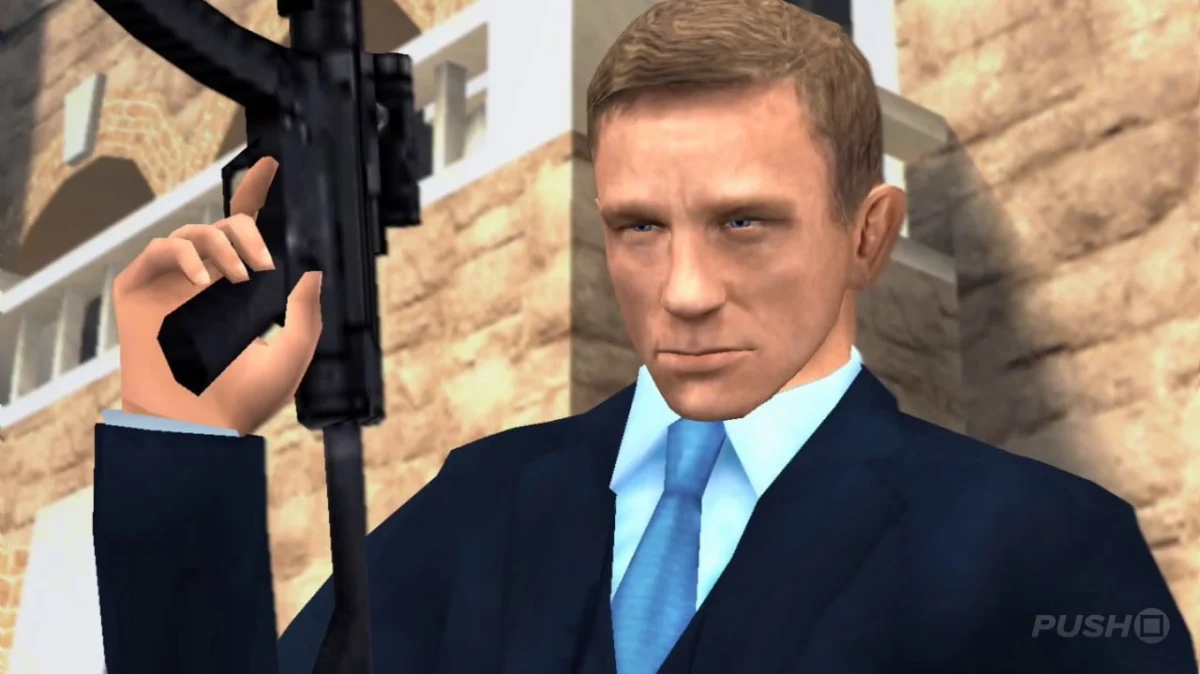
As anticipation builds for IO Interactive’s ambitious new 007 title, "First Light," the gaming landscape is once again abuzz with discussions of James Bond’s interactive legacy. While modern iterations and upcoming releases often capture the spotlight, it’s a poignant moment to reflect on the often-overlooked corners of Bond’s gaming history. In particular, the PlayStation 2 adaptation of Quantum of Solace, developed by Eurocom, stands out as a remarkably prescient and surprisingly sophisticated experience that, in many ways, foreshadowed the blockbuster success of Naughty Dog’s Uncharted: Drake’s Fortune. This isn’t the frantic, first-person shooter often associated with the film’s tie-in; rather, it’s a single-player campaign that embraced the core tenets of Bond – espionage, stealth, and globe-trotting adventure – in a manner that resonated deeply with the emerging third-person action-adventure genre.
While the PS3 iteration of Quantum of Solace, developed by Treyarch, leaned heavily into a more conventional Call of Duty-esque shooter formula, Eurocom’s PS2 counterpart charted a distinctly different course. It masterfully blended the narrative threads of both Casino Royale and its titular sequel, weaving a compelling story that took players across diverse and exotic locales. This narrative fusion, coupled with a gameplay design that prioritized tactical engagement and environmental interaction, positioned the PS2 Quantum of Solace as a curious anomaly – a game that felt remarkably ahead of its time and, in retrospect, a strong precursor to the cinematic action-adventure that would soon dominate the PlayStation 3.
A Tale of Two Bond Games: The Genesis of Quantum of Solace
The release of Quantum of Solace on home consoles in 2008 was a significant event, marking another chapter in the enduring partnership between the James Bond franchise and the world of video games. However, the development of the game was a bifurcated affair. Treyarch, a studio with a strong pedigree in the first-person shooter genre, was tasked with creating the main console experience for the PlayStation 3, Xbox 360, and PC. This iteration aimed to deliver a high-octane, action-packed shooter that mirrored the explosive sequences of the film.
Simultaneously, a separate development team at Eurocom, a UK-based studio with a history of working on Bond titles including the well-regarded The World Is Not Enough and Nightfire, was tasked with developing a version for the PlayStation 2. The PS2, then in its twilight years but still boasting a massive install base, presented a unique challenge and opportunity. The developers at Eurocom recognized the limitations of the aging hardware but also saw the potential to craft a game that could offer a different, arguably more authentic, Bond experience.
This distinction in development focus led to two vastly different games bearing the same title. While Treyarch’s title was a competent, if somewhat generic, shooter, Eurocom’s PS2 version embarked on a more ambitious and, as it turns out, prescient design philosophy. They opted to move away from the first-person perspective and embrace a third-person viewpoint, a decision that would prove to be a critical differentiator and a key factor in its uncanny resemblance to the burgeoning Uncharted series.
Uncharted Echoes: Gameplay Mechanics and Design Philosophy
The most striking aspect of Eurocom’s Quantum of Solace is its uncanny resemblance to Uncharted: Drake’s Fortune, a game that would release on the PS3 just a year prior. This similarity isn’t coincidental; it speaks to a shared understanding of what made cinematic action-adventure games compelling.
H2: The Cover System: A Foundation for Tactical Play
One of the most prominent parallels lies in the game’s cover system. Much like Naughty Dog’s flagship franchise, Quantum of Solace on PS2 encouraged players to utilize environmental cover to their advantage. The game featured a robust cover mechanic that allowed Bond to seamlessly snap to cover, peek around corners, and engage enemies with a tactical advantage. This wasn’t merely a defensive measure; it was an integral part of the offensive strategy. Players were actively encouraged to flank enemies, using the cover system to outmaneuver their opponents and set up silent melee takedowns, a signature move for the iconic spy. This emphasis on tactical positioning and stealthy engagement was a stark contrast to the more direct firefights of its PS3 counterpart and aligned perfectly with the methodical approach to espionage that defines James Bond.
H3: Environmental Interaction and Destructible Arenas
Beyond the cover mechanics, Eurocom’s Quantum of Solace also showcased impressive environmental interaction for its time. When the bullets started flying, the game delivered a surprisingly dynamic spectacle. Cover points could be shattered and destroyed, forcing players to constantly adapt their positions and seek new vantage points. Environmental elements would splinter and explode, adding a layer of visceral chaos to the firefights. This dynamic destruction, while perhaps not as sophisticated as later titles, contributed significantly to the immersive and thrilling nature of the gameplay, further cementing its connection to the cinematic action that Uncharted would champion.
H3: The Art of Espionage: Stealth and Precision
Where Eurocom’s Quantum of Solace truly differentiated itself was in its commitment to the core Bond fantasy of espionage. While combat was certainly present and often intense, the game actively rewarded stealthy approaches. Players were encouraged to utilize silenced weapons, silent takedowns, and environmental distractions to neutralize threats without raising a general alarm. This focus on genuine espionage, rather than purely reactive gunplay, resonated deeply with the established persona of James Bond. It allowed players to embody the spy’s cunning and resourcefulness, making each encounter feel like a carefully orchestrated operation rather than a desperate scramble for survival.
Navigating the Controls: A Legacy of the DualShock 2 Era
Despite its forward-thinking design, Quantum of Solace on the PS2 was not without its technical limitations, primarily stemming from the era’s controller technology and the hardware’s capabilities. The controls, while functional, did betray the conventions of game development at the time, where gunplay and precise aiming were still being refined.
H2: The DualShock 2’s Fiddly Precision
The analog stick functionality for snapping to cover and peeking around corners was innovative, but the DualShock 2 controller’s inherent "deadzone" – the area where analog stick input is not registered – could make precise aiming a frustrating endeavor. Lining up headshots or targeting specific weak points often required a degree of patience and fine motor control that could be challenging.
To mitigate this, the game incorporated a precise aim toggle, activated by pressing down on the left analog stick (L3). While this feature undoubtedly aided in targeting, it wasn’t a perfect solution and could disrupt the flow of combat for some players. This aspect of the controls, while a product of its time, serves as a reminder of the significant strides made in controller design and aiming mechanics in subsequent console generations.
H3: Embracing the Spectacle: Difficulty and Enjoyment
Given the control nuances, the author suggests that playing Quantum of Solace on its easiest difficulty setting is likely the most enjoyable approach. This recommendation isn’t a dismissal of the game’s challenge but rather an acknowledgment that the reduced difficulty allows players to focus on the game’s strengths: its impressive presentation, engaging narrative, and the sheer spectacle of its action sequences. By minimizing the frustration associated with the controls, players can more fully immerse themselves in the world of James Bond and appreciate the ambitious design choices Eurocom made.

Visual Fidelity and Voice Acting: A Testament to Eurocom’s Skill
For a game released in 2008 on the PlayStation 2, the visual presentation of Quantum of Solace was remarkably impressive. Eurocom clearly pushed the hardware to its limits, delivering environments and character models that, while not on par with their PS3 counterparts, were not "a million miles away" from what was achievable on the newer generation of consoles.
H2: A Glimpse of the Next Generation on PS2
The attention to detail in the character models, particularly for the returning film cast, was noteworthy. The game featured the likeness and voice work of Daniel Craig as James Bond, lending an authentic air to the proceedings. Similarly, the inclusion of other notable actors from the film franchise, such as Judi Dench reprising her role as M, further enhanced the immersion and bridged the gap between the game and its cinematic source material. The environments, too, were rendered with a level of detail and atmospheric quality that belied the PS2’s capabilities, featuring diverse locales that evoked the globe-trotting nature of Bond’s adventures.
H3: A Full Performance from a Fading Console
The visual achievements of Quantum of Solace on the PS2 were a testament to Eurocom’s technical prowess and their understanding of the platform. They managed to extract a level of graphical fidelity that surprised many at the time, demonstrating that even on aging hardware, compelling and visually engaging experiences could be crafted. This commitment to presentation, coupled with the strong voice acting, created a cohesive and believable Bond universe that players could truly inhabit.
A Short but Sweet Campaign: Value and Legacy
One of the most frequently cited criticisms of Eurocom’s Quantum of Solace is its relatively short campaign length. Reports suggest that the game could be completed in just over 90 minutes. This brevity, while understandable given the development constraints and the focus on a distilled Bond experience, would have presented a questionable value proposition at full launch price.
H2: A Bite-Sized Bond Adventure
However, the author argues that the game’s brevity does not detract from its overall quality or enjoyment. Instead, it can be viewed as a tightly curated and focused experience. In an era where many games boast sprawling, often padded, open worlds, a concise and well-executed campaign can be a refreshing change of pace. The game delivers its Bond fantasy effectively, packing a significant punch within its limited runtime.
H3: Eurocom’s Bond Pantheon: From Underrated Gem to Disastrous Cash-In
The legacy of Eurocom’s work on the James Bond franchise is a complex one. Quantum of Solace on the PS2 stands as a shining example of their talent and their ability to deliver innovative gameplay. However, their subsequent Bond titles painted a more mixed picture. GoldenEye 007 Reloaded on PS3 and Xbox 360 was a respectable remake, but it struggled to recapture the magic of its N64 predecessor. The true nadir came with 007 Legends, a game that was widely criticized as a rushed cash-in, attempting to tie together various Bond eras in a disjointed and uninspired fashion.
Despite these later missteps, the PS2 Quantum of Solace remains a significant achievement for Eurocom. It demonstrated their capability to craft engaging, narrative-driven action games that could stand shoulder-to-shoulder with the best of the era, even on less powerful hardware.
A Nod to History: James Bond Jr. and the Origins of Eurocom’s Bond Connection
Eurocom’s relationship with the James Bond universe predates their work on the Quantum of Solace film tie-ins. The UK studio’s gaming history is deeply intertwined with Ian Fleming’s iconic agent, stretching back to the early days of console gaming.
H2: From Cartoons to Cinematic Espionage
One of Eurocom’s earliest forays into the world of 007 was the development of a platforming adaptation of the animated series James Bond Jr. for the Nintendo Entertainment System. This early experience, while seemingly disparate from the mature espionage of the films, provided Eurocom with valuable insights into adapting Bond’s universe for interactive media. It showcased their willingness to explore different facets of the franchise and to experiment with various game genres.
This historical context makes their achievement with the PS2 Quantum of Solace even more impressive. They transitioned from a cartoon-based platformer to a sophisticated third-person action-adventure that was, in many ways, ahead of its time. It highlights their evolution as developers and their enduring connection to the James Bond IP.
Conclusion: A Diamond in the Rough, Worth the Hunt
In the pantheon of James Bond video games, Eurocom’s PS2 adaptation of Quantum of Solace is undeniably one of the most underrated. While it may not possess the same polish or widespread recognition as more contemporary titles, its innovative design, strong narrative, and impressive presentation for its platform make it a standout.
The game’s uncanny resemblance to Uncharted: Drake’s Fortune is not a mark of imitation but rather a testament to Eurocom’s prescient understanding of what made for compelling cinematic action-adventure gameplay. They embraced the core elements of Bond – espionage, stealth, and globe-trotting thrills – and translated them into a gameplay experience that was both engaging and forward-thinking.
While the control quirks and short campaign length are valid points of discussion, they do little to diminish the overall enjoyment and historical significance of this overlooked gem. If you ever encounter a copy of Quantum of Solace for the PlayStation 2 in a bargain bin or online marketplace, it is an experience well worth seeking out. It may not reach the lofty heights of James Bond 007: Everything or Nothing, another highly regarded Bond title, but it offers a surprisingly enjoyable and historically relevant adventure that deserves to be remembered and played. It’s a powerful reminder that sometimes, the most memorable experiences can be found in the unexpected corners of gaming history.











No comments yet. Be the first to join the conversation!