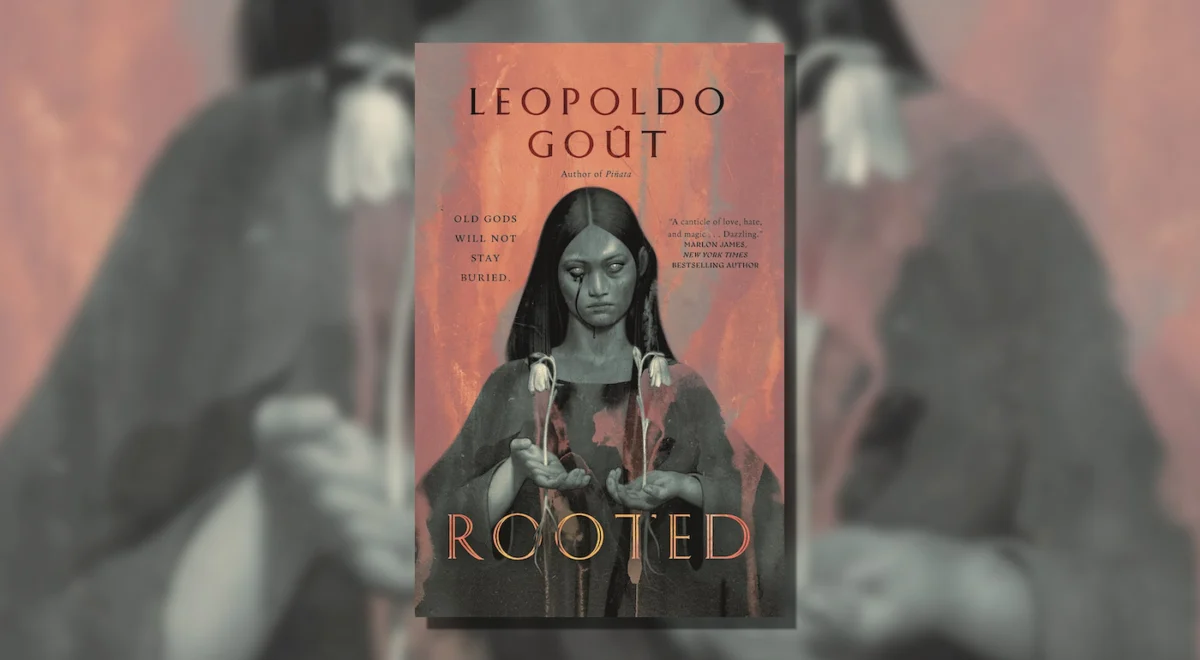
In the realm of contemporary horror, few authors manage to weave the intricate tapestry of colonial trauma with the visceral dread of the supernatural quite like Leopoldo Gout. His latest novel, Rooted—published by Tor Nightfire on September 15th—serves as a chilling meditation on history, memory, and the physical manifestations of suppressed national guilt. Following the story of Aurora, a high-powered art lawyer, the novel explores the precarious intersection of professional repatriation efforts and the awakening of ancient, malevolent forces.
The Premise: When the Past Refuses to Stay Buried
The narrative centers on Aurora, a successful art lawyer who has dedicated her career to the repatriation of stolen artifacts. Her latest campaign—a high-stakes endeavor to return Mexican antiquities from abroad—brings her back to her home city of Mexico City. Among the recovered items is a statue of terrifying significance: "The Flayed One," an Aztec deity whose return acts as the catalyst for the novel’s escalating supernatural horror.
As Aurora celebrates the success of her repatriation campaign, she finds that her hometown is no longer the place she left behind. The streets of Mexico City appear to warp and fracture, and the boundaries between reality and the spectral begin to blur. For Aurora, the repatriation is not just a professional triumph; it is the beginning of a descent into a nightmare where her family’s darkest secrets and the legacy of the "The Flayed One" threaten to consume her sanity.
Chronology of the Unraveling
The novel’s pacing is meticulously crafted, mirroring the slow, rhythmic sinking of the city itself.
- The Ceremony: The story opens in the courtyard of the Museo Nacional de Antropología. Aurora, alongside her colleague Ociel, attends a formal event marking the return of artifacts. The atmosphere is tense, marked by the ominous presence of a large, empty crate meant to represent the repatriation of "The Gateway to the Underworld," a massive Olmec carving.
- The First Omen: Following the ceremony, Aurora encounters her mother, Maria, whose health appears to be failing. A strange, pale, fleshy-looking flower sprouts from a crack in the museum’s concrete, triggering a sense of déjà vu that haunts Aurora throughout the day.
- The Descent into Memory: As Aurora navigates the historic center of Mexico City, she notes the physical decay of the Metropolitan Cathedral, which is literally sinking into the ancient ruins upon which it was built. This architectural metaphor underscores the novel’s central theme: the past is not gone; it is merely waiting for the ground to give way.
- The Nightmare Realized: The climax of the excerpt occurs within a dream sequence. Aurora is pulled into a childhood memory involving her mother and grandmother, only to realize that the nightmare she once feared—a presence she convinced herself did not exist as long as she refused to look at it—has followed her into her adult life. The barrier between her past and present collapses, and she is forced to confront the entity.
Supporting Data: The Cultural Context of Repatriation
While Rooted is a work of fiction, it draws heavily on the very real and ongoing discourse regarding the repatriation of indigenous artifacts. In recent years, nations such as Mexico, Nigeria, and Greece have aggressively petitioned Western museums to return cultural treasures taken during periods of colonial rule.
In the novel, Aurora articulates the philosophy behind this movement:
"When a people’s art is taken from them, it not only damages the pieces—removed from their original context and sometimes physically damaged—but it also harms the people. A void is created in our cultural memory with each theft."
This perspective highlights a critical implication: cultural heritage is not merely a collection of objects but a repository of identity. By returning these items, Aurora and her team are attempting to restore a "memory" of who the people were before the "trauma of colonialism." Gout uses this sociopolitical backdrop to elevate the horror; the supernatural elements of the book are presented as the literal, visceral response of a history that has been violated and is now demanding to be heard.

Official Responses and Literary Reception
Early reviewers have noted that Gout, known for his ability to blend thriller elements with deep psychological insight, has reached a new peak in Rooted. Literary critics have praised the novel’s "claustrophobic tension" and its ability to transform the geography of Mexico City into a character in its own right.
The inclusion of the supernatural is being hailed as a fresh take on "haunted object" tropes. Rather than simply being a cursed item, "The Flayed One" functions as a bridge between the physical and metaphysical, representing the unresolved pain of a nation. As one early reader noted, "Gout makes you feel the weight of every stone, every crack in the pavement, and every cough in the dark, building an atmosphere that is as suffocating as it is compelling."
Implications: The Sinking City and the Fragility of Sanity
The central question posed by Rooted is whether it is possible to truly "repatriate" history. Aurora’s struggle with her own sanity suggests that the act of bringing the past into the present—of digging up that which was meant to stay buried—has a cost.
The Metaphor of the Sinkhole
Mexico City, built on a lakebed, is a city literally sinking into its own past. Gout uses this geographical reality to symbolize the instability of the characters’ lives. Aurora’s mental state mirrors the city; as the water table drops and the ground settles, the cracks in the street become wider, allowing the old world to bleed into the new.
The Cost of Knowledge
Aurora’s mantra, "If you can’t see it, it’s not there," represents the denial often used by individuals—and nations—to cope with trauma. By the end of the excerpt, this defense mechanism fails her. The realization that the entity exists regardless of her observation forces a confrontation with the "truth" she has spent her life trying to manage as an art lawyer.
The Generational Echo
The interaction between Aurora, her mother Maria, and her grandmother Teresa in the dream sequence suggests that the horror is hereditary. The "groaning" entity is not just an external threat but a family burden, passed down through generations. This implies that the repatriation campaign is not just an academic exercise for Aurora, but a personal reckoning with a legacy she may not be able to escape.
Conclusion
Rooted is a haunting addition to the horror genre, expertly balancing the gravity of colonial history with the immediate, pulse-pounding dread of a psychological thriller. By anchoring the supernatural in the very real, very painful history of Mexico, Leopoldo Gout has created a novel that feels both ancient and urgently modern. As readers follow Aurora’s descent, they are invited to consider the heavy price of truth and the dangerous reality of what happens when we finally stop looking away from the cracks in our own foundations.
Whether Rooted serves as a cautionary tale about the past or a terrifying look at the limits of human perception, one thing is certain: after finishing this book, the reader will look at the world—and the ground beneath their feet—with a new, profound sense of unease.