Suro Senen
Published: June 14, 2026, 4:00 PM EDT
By Aimee Hart
In the unpredictable landscape of streaming, where algorithms often dictate discovery and nostalgia fuels viewership, certain films achieve an unexpected renaissance. One such cinematic curiosity currently captivating audiences on Netflix is "Passengers," the 2016 sci-fi romance starring Hollywood heavyweights Chris Pratt and Jennifer Lawrence. Despite its initial release being met with a polarized critical reception and sparking intense ethical debates, the film has inexplicably surged up the Netflix charts, prompting a re-examination of its enduring, albeit controversial, appeal.
The phenomenon of a critically maligned or divisive film finding a new lease on life through streaming platforms is not entirely novel. The convenience of access, the absence of ticket price pressure, and the sheer volume of content often allow audiences to approach films with different expectations. For "Passengers," a film once deemed by many as a prime example of "wasted potential" despite its stellar cast and ambitious premise, its current popularity on Netflix underscores a fascinating divergence between critical consensus and mainstream streaming viewership.
Main Facts: A Stellar Cast, A Morally Complex Premise, and a Netflix Ascent
"Passengers" presents a high-concept science fiction romance set aboard the interstellar spaceship Avalon, transporting 5,000 colonists in suspended animation to a new planet, Homestead II, on a 120-year journey. The core of its narrative revolves around Jim Preston (Chris Pratt), a mechanical engineer who is accidentally awakened from cryo-sleep 90 years too early due to a malfunction. Facing an unbearable lifetime of solitude and certain death before reaching his destination, Jim makes a morally reprehensible choice: he deliberately awakens another passenger, Aurora Lane (Jennifer Lawrence), a writer, to share his fate, effectively dooming her to the same solitary existence.
Directed by Morten Tyldum, known for the critically acclaimed "The Imitation Game," and featuring a script by Jon Spaihts (who would later contribute to "Doctor Strange" and "Dune"), "Passengers" arrived with significant expectations. Its premise promised a compelling exploration of loneliness, ethical dilemmas, and the boundaries of human connection in the vastness of space. Beyond Pratt and Lawrence, the film boasts a strong supporting cast including Michael Sheen as an android bartender, Arthur, and cameos by Laurence Fishburne and Andy Garcia.
Upon its December 2016 release, however, the film was largely panned by critics, primarily for its handling of Jim’s central transgression and the subsequent romantic arc, which many labeled as a problematic depiction of "Stockholm Syndrome." Despite this, "Passengers" managed a modest box office performance, grossing over $303 million worldwide against a $110 million budget. Yet, its critical reputation remained largely bruised. Fast forward to mid-2026, and the film has become a surprise hit on Netflix, drawing in a significant number of viewers and rekindling discussions about its controversial themes and its place within the sci-fi genre. This unexpected surge highlights the evolving dynamics of film consumption and the enduring power of star appeal, even in the face of critical disapproval.
Chronology: From Blacklist Script to Streaming Revival
The journey of "Passengers" to the screen was a protracted one, spanning nearly a decade and undergoing several iterations. The script, penned by Jon Spaihts, first gained prominence in 2007 when it appeared on The Black List, an annual survey of the "most liked" unproduced screenplays in Hollywood. Its high-concept, contained nature made it an attractive prospect, drawing interest from various studios and filmmakers.
Initially, the project garnered significant buzz with Keanu Reeves attached to star as Jim Preston, and Reese Witherspoon considered for Aurora. Later, the roles were offered to Emily Blunt and then Rachel McAdams. Directors like Brian Kirk and Gabriele Muccino were also in contention over the years. The script was lauded for its intriguing premise and its potential to explore profound psychological and ethical questions within a compelling sci-fi setting.
In 2014, the project finally gained traction with Sony Pictures acquiring the rights, Morten Tyldum signing on to direct, and the casting of Chris Pratt and Jennifer Lawrence, two of Hollywood’s most bankable stars at the time. Pratt was fresh off the success of "Guardians of the Galaxy" and "Jurassic World," solidifying his status as a charismatic leading man. Lawrence, an Academy Award winner, was a global superstar following "The Hunger Games" franchise and acclaimed dramatic roles. Their combined star power, coupled with the intriguing premise, set high expectations for the film.
Production commenced in September 2015, utilizing advanced visual effects and practical sets to create the visually stunning spaceship Avalon. The film was released on December 21, 2016, positioned as a holiday blockbuster. However, its release was met with immediate and strong reactions. Critics lambasted the film for its narrative choices, particularly the decision to frame Jim’s morally abhorrent act as the beginning of a romance rather than a profound ethical crisis with lasting consequences. The perception that the film romanticized a form of "Stockholm Syndrome" became its defining critical issue.
Despite the critical backlash, the film performed adequately at the global box office, buoyed by its stars’ appeal. Yet, its reputation as a flawed, ethically troubling film persisted. For years, "Passengers" remained a reference point in discussions about problematic movie tropes and squandered potential.
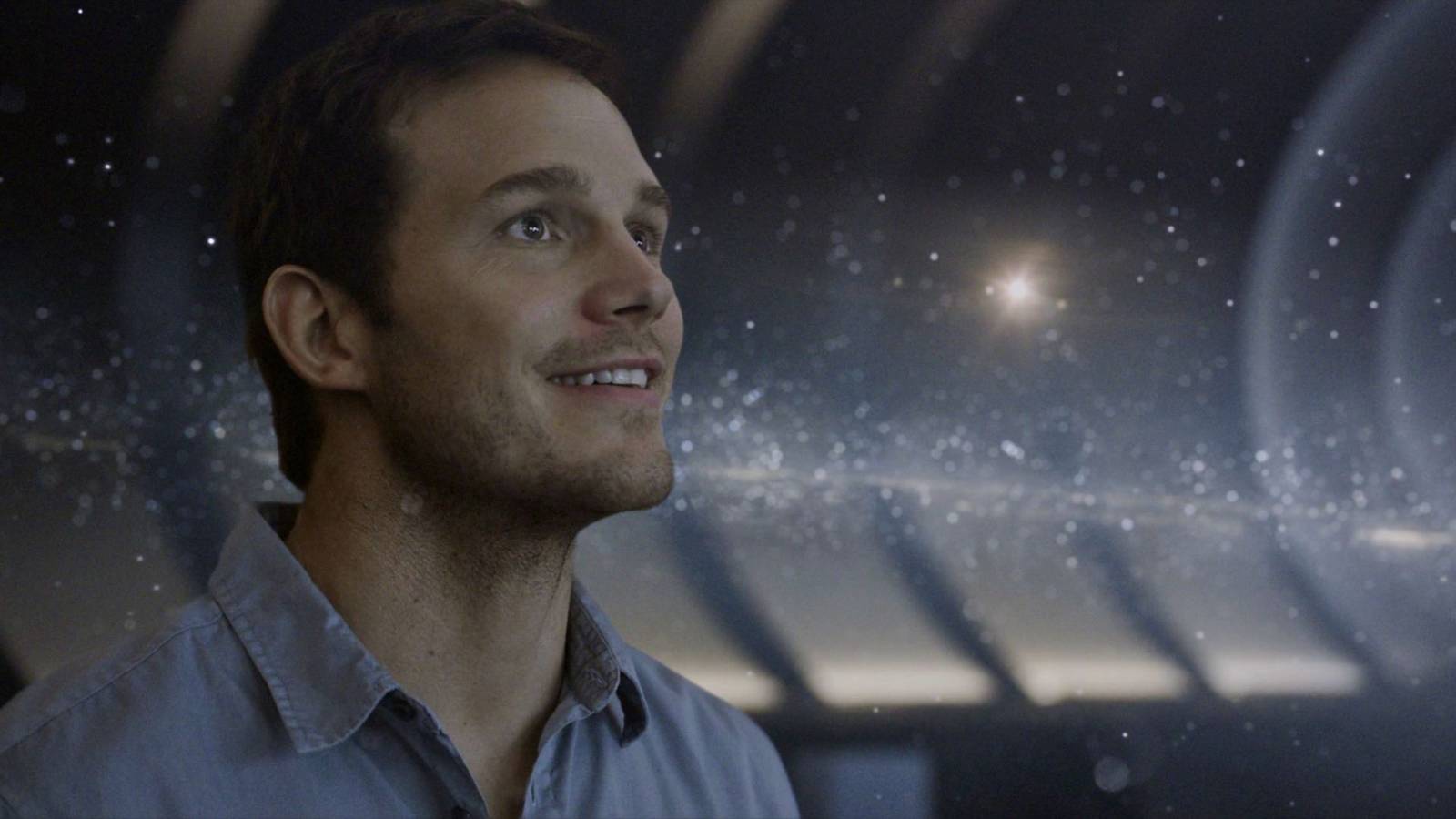
The recent surge on Netflix marks a significant shift. Without the pressure of critical reviews or the initial box office narrative, viewers are seemingly discovering the film anew. Its presence in Netflix’s Top 10 lists indicates a broad audience engagement, suggesting that for many, the controversies either are unknown, overlooked, or perhaps even part of the film’s morbid curiosity. This streaming revival recontextualizes "Passengers," not just as a 2016 cinematic misstep, but as a compelling case study in how films can evolve in public perception long after their theatrical run.
Supporting Data: Critical Reception, Ethical Debates, and the Star Power Paradox
The critical reception of "Passengers" was predominantly negative, with a 30% rating on Rotten Tomatoes based on 258 reviews and an average score of 41 out of 100 on Metacritic, indicating "generally unfavorable reviews." The consensus among critics highlighted a profound disconnect between the film’s promising premise and its execution.
Many critics praised the film’s visual grandeur, production design, and the performances of its lead actors. The initial sequences, focusing on Jim’s solitary existence and psychological breakdown, were often cited as the strongest elements. However, the turning point – Jim’s decision to awaken Aurora – became the film’s Achilles’ heel. Critics argued that the narrative failed to adequately grapple with the ethical weight of this act, instead pivoting towards a conventional romance that felt deeply unsettling and unearned.
Richard Roeper of the Chicago Sun-Times called it "a creepy, manipulative, and deeply problematic film." The New York Times‘ Manohla Dargis described it as a "disquieting male fantasy," pointing out how the film’s structure seemed to validate Jim’s decision. Perhaps the most prominent critique revolved around the concept of "Stockholm Syndrome," where Aurora, after discovering Jim’s deception, eventually falls in love with him. Critics like Alissa Wilkinson of Vox famously dubbed it "a fantasy of Stockholm Syndrome," arguing that the film’s resolution of the ethical dilemma was not through genuine atonement or consequence, but through a romanticization of a non-consensual act. This transformed what could have been a nuanced exploration of isolation and survival into a troubling narrative about male entitlement.
The film’s defenders, though fewer, often pointed to its technical achievements, the undeniable chemistry between Pratt and Lawrence, and the underlying "what would you do?" question as its merits. They suggested that the film was intentionally provocative, forcing audiences to confront uncomfortable moral choices, and that the "romance" was a consequence of extreme circumstances rather than an endorsement of Jim’s actions. However, these arguments largely failed to sway the critical majority, who found the film’s resolution of these complex themes to be simplistic and morally evasive.
The "Stellar Cast, Awful Movie" Trope:
"Passengers" perfectly embodies the "stellar cast, awful movie" paradox, a recurring phenomenon in Hollywood. Chris Pratt, at the height of his "Guardians of the Galaxy" and "Jurassic World" fame, brought his signature charming, everyman persona to Jim. However, this charm, when juxtaposed with Jim’s morally dubious actions, created a jarring dissonance for many viewers. Jennifer Lawrence, an actress celebrated for her strong, independent roles, found herself in a character arc that, for many, diminished her agency. Her initial portrayal of rage and despair upon discovering Jim’s deception was widely praised, showcasing her dramatic prowess. Yet, her character’s eventual capitulation to romance was seen as undermining her strength and the film’s ethical commentary.
The presence of Michael Sheen as Arthur, the observant android bartender, was often a bright spot. His character served as a confidante to Jim and a detached observer of the unfolding drama, embodying the film’s ethical mirror. Laurence Fishburne and Andy Garcia, though in brief roles, added gravitas, further highlighting the talent assembled for a film that struggled to coalesce into a cohesive and universally appreciated narrative.
This disconnect between the talent involved and the critical outcome highlights the challenges of balancing commercial appeal with complex thematic exploration. "Passengers" aimed for a blockbuster romance with a philosophical edge but, in the eyes of many, stumbled by prioritizing the former at the expense of adequately addressing the latter. Its current Netflix success suggests that a significant portion of the audience is either less concerned with these critical nuances or finds other elements of the film compelling enough to overlook its perceived flaws.
Official Responses: Navigating the Controversy
The ethical backlash surrounding "Passengers" caught its creators somewhat by surprise. During the film’s promotional tour, both director Morten Tyldum and screenwriter Jon Spaihts, along with stars Chris Pratt and Jennifer Lawrence, addressed the controversy, albeit often with varying degrees of success in assuaging critics.
Jon Spaihts, who had worked on the script for years, frequently emphasized that the film was intended to be a thought experiment, challenging audiences to consider what they would do in Jim’s extreme situation. He argued that Jim’s act was not meant to be heroic but a desperate, flawed human choice, and that the film aimed to explore the consequences and complexities of that decision. Spaihts reportedly intended for the audience to grapple with Jim’s loneliness and his subsequent transgression, and for Aurora’s journey to be one of profound emotional reckoning. He believed the film presented a nuanced perspective on a morally ambiguous situation, rather than outright endorsing Jim’s actions.
Morten Tyldum echoed this sentiment, stating in interviews that he wanted the film to provoke discussion. He acknowledged the discomfort surrounding Jim’s actions but insisted that the narrative was designed to make audiences feel Jim’s isolation before Aurora’s awakening, and then to feel Aurora’s betrayal and rage. Tyldum pointed to specific scenes, like Aurora’s initial violent reaction to Jim’s confession, as evidence that the film did not shy away from the gravity of his choice. He also highlighted the practical challenges of survival on a damaged spaceship, suggesting that their eventual reliance on each other was a pragmatic outcome of their shared predicament, rather than a romantic idealization.

Chris Pratt, in discussing his character, often emphasized Jim’s humanity and vulnerability. He portrayed Jim as a man pushed to his absolute limit by loneliness and despair, making a catastrophic error in judgment from a place of desperation. Pratt suggested that the audience was meant to empathize with Jim’s impossible situation, even if they condemned his actions.
Jennifer Lawrence, whose character was the victim of Jim’s choice, had a more delicate line to walk. She acknowledged the controversial nature of the plot point and the "Stockholm Syndrome" critiques. Lawrence often spoke about the difficulty of playing Aurora’s journey, especially the shift from justified anger to a complicated love. She noted that the circumstances were extraordinary and that the film was exploring a unique ethical space. She reportedly questioned some aspects of the script herself during development, highlighting the internal discussions that likely occurred regarding the narrative’s direction.
However, despite these explanations, many critics felt that the film ultimately shied away from the full implications of its premise. The "official response" embedded within the film’s narrative arc itself – wherein the couple overcomes external threats, falls in love, and creates a life together – was perceived by many as a soft-pedaling of Jim’s profound violation. The film’s conclusion, depicting a thriving ecosystem created by Jim and Aurora on the Avalon, tended to be read as a romanticized happy ending, effectively absolving Jim without sufficient narrative consequence or deeper exploration of Aurora’s psychological trauma. This perceived lack of genuine accountability for Jim’s actions and the swiftness of Aurora’s forgiveness remained the most significant sticking point, overshadowing the creators’ intentions for a complex moral dilemma.
Implications: Legacy, Streaming Culture, and Audience Reassessment
The unexpected resurgence of "Passengers" on Netflix carries several implications for the film’s legacy, streaming culture, and how audiences engage with controversial narratives.
Reassessing a Divisive Film:
For many, "Passengers" will likely remain a flawed film. However, its newfound visibility on Netflix might prompt a re-evaluation. New viewers, unburdened by the initial critical discourse, may approach it with fresh eyes, focusing on its spectacle, its stars, or its more straightforward romantic elements. Some might even find themselves drawn into the ethical debate, perhaps arriving at different conclusions than the original critics. This second wave of engagement can reshape a film’s cultural footprint, moving it from a "critical failure" to a "cult curiosity" or even a "guilty pleasure." The film’s gorgeous cinematography and compelling visual effects, which were largely praised even in negative reviews, also make it an attractive casual watch on a large screen.
The Power of Streaming Algorithms and Passive Consumption:
The Netflix algorithm plays a significant role in resurrecting older titles. By analyzing viewing habits, it can push films to new audiences who might enjoy similar genres or have watched other films starring Pratt or Lawrence. Furthermore, streaming often facilitates a more passive viewing experience. Without the investment of a cinema ticket, viewers may be more forgiving of a film’s imperfections or less critical of its ethical complexities. "Passengers," with its stunning visuals and a generally engaging (if problematic) story, might be an ideal candidate for this type of casual, at-home viewing, where deep philosophical scrutiny takes a backseat to entertainment value.
The "Bad Movie" as Cultural Artifact:
The popularity of "Passengers" on Netflix also speaks to the broader cultural phenomenon of "bad movies" or "so bad it’s good" cinema. While "Passengers" wasn’t intentionally campy, its narrative missteps and ethical conundrums make it a fascinating case study. For some viewers, the appeal might lie precisely in dissecting its flaws, discussing its problematic themes with friends, or simply marveling at how such a star-studded, high-budget production could elicit such strong, negative reactions. It becomes a conversation starter, a film to be experienced and debated rather than simply enjoyed or dismissed.
Impact on Star Legacies:
For Chris Pratt and Jennifer Lawrence, "Passengers" represents a peculiar blip in otherwise highly successful careers. While it didn’t derail their trajectories, it remains a film often cited in discussions about their less critically acclaimed works. Its Netflix resurgence, however, might subtly shift this perception. If enough new viewers embrace the film, it could soften its image, or at least ensure its continued relevance, however controversial.
Evolution of Sci-Fi Romance:
"Passengers" attempted to blend sci-fi adventure with a character-driven romance and ethical quandary. Its reception serves as a cautionary tale for the genre, highlighting the delicate balance required when exploring dark themes within a commercial framework. The film’s legacy will continue to influence how future sci-fi romances are conceived and marketed, particularly those that delve into moral compromises and non-consensual elements. The public’s continued fascination with it indicates a hunger for stories that push boundaries, even if the execution sometimes falls short of expectations.
In conclusion, "Passengers" remains a paradox: a technically impressive film with a compelling premise that was undone by its narrative choices, yet now thrives in the streaming era. Its Netflix success is a testament to the platform’s power to reshape cinematic legacies and the enduring, complex relationship between audiences, critics, and the films that spark their impassioned, sometimes contradictory, reactions. Whether viewed as a flawed masterpiece, a moral quandary, or simply an entertaining space spectacle, "Passengers" has undeniably secured a renewed, if still debated, place in the cinematic conversation.
Passengers is available to stream on Netflix or for free on Tubi.


 Lina Irawan
 Sagoh
Sagoh