

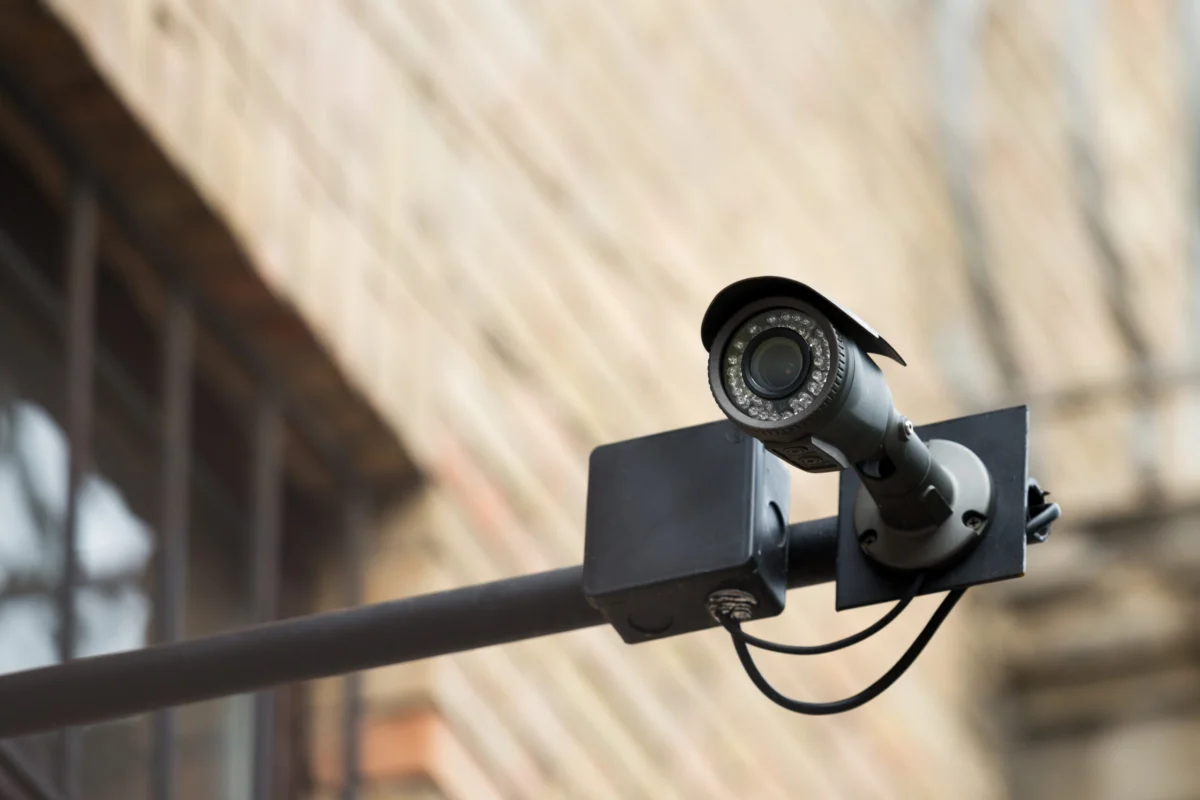
For decades, the gold standard of biometric security has been the face. From the smartphone in your pocket to the high-definition cameras guarding airport terminals, our identity has been tethered to the unique geometry of our features. However, as surveillance technology advances, security experts are hitting a fundamental physical barrier: facial recognition requires a clear, well-lit, and front-facing view. When that fails—due to distance, poor lighting, or obstructions—the camera essentially goes blind.
A breakthrough in artificial intelligence, recently detailed in the International Journal of Reasoning-based Intelligent Systems, is poised to shatter this limitation. The development of a new system dubbed "SKDMap-Net" suggests that in the very near future, you will no longer need to be seen to be identified. Instead, security systems will recognize you by the unique, rhythmic signature of your walk.
The Core Mechanics: Tracking the Skeletal Keypoint
Traditional surveillance relies on "appearance-based" recognition—essentially trying to match a photograph of a face against a database. SKDMap-Net pivots away from this, moving toward "gait recognition," a process that interprets human motion as a complex data stream.
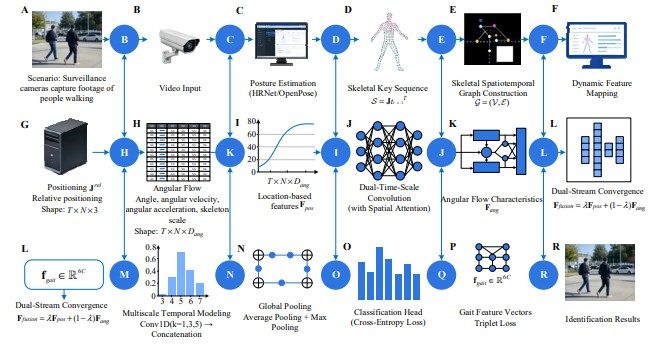
The system functions by mapping the human body into a series of "skeletal keypoints." Rather than attempting to process the pixels of a person’s skin, clothing, or facial features, the AI focuses on the coordinates of joints: the hips, knees, ankles, shoulders, and elbows. By tracking how these points move in relation to one another over a sequence of video frames, the model constructs a "gait signature."
This signature is surprisingly difficult to mask. While a person can easily wear a mask to hide their face or sunglasses to obscure their eyes, altering the subconscious mechanics of one’s gait—the way the hips rotate, the duration of a stride, or the subtle sway of the torso—is nearly impossible to maintain for long periods.
Chronology of Gait Research
The evolution of gait analysis has been a slow march from laboratory curiosity to viable security application:
- Early 2000s: Initial academic interest in gait analysis was primarily focused on medical rehabilitation, specifically helping physical therapists monitor the recovery of patients with mobility issues.
- 2010s: With the rise of deep learning, researchers began applying convolutional neural networks (CNNs) to video analysis. Early gait models were notoriously unstable, often failing if the subject changed their shoes or carried a heavy bag.
- 2020-2023: The "Skeletal Keypoint" era begins. Researchers move away from "silhouettes" (which are easily distorted by wind or camera angles) toward high-precision skeletal mapping, which tracks internal joint motion.
- 2024-2025: Current models like SKDMap-Net achieve commercial-grade accuracy, demonstrating the ability to identify individuals from distances where facial recognition is mathematically impossible.
Supporting Data and Technical Efficacy
The primary challenge for any biometric system is the "real-world" test. Laboratory environments are sterile and predictable, but the real world is chaotic. SKDMap-Net addresses this through a robust architectural design that accounts for partial occlusion—situations where a person’s legs might be hidden behind a bench, a car, or a low wall.
In recent trials, the system achieved a 95.8% accuracy rate on standard, high-quality datasets. More impressively, it maintained an 83.7% Rank-1 accuracy on complex, real-world datasets characterized by poor lighting, varied camera angles, and moving backgrounds.
This performance is achieved by "weighting" the joints. If the AI detects that the lower body is obscured by a physical barrier, it automatically shifts its algorithmic priority to the movement patterns of the shoulders and torso. By cross-referencing these upper-body rhythms with established gait databases, the system can maintain a high confidence score even when the view of the subject is severely compromised.

The Technological Pivot: Why Gait Wins Where Faces Fail
Facial recognition is a "high-resolution" requirement. To work effectively, the system needs high pixel density on the eyes, nose, and mouth. As a subject moves further from a camera, the number of pixels available to describe those features drops exponentially.
Gait recognition, by contrast, is a "low-resolution" advantage. The motion of a leg swinging forward is a large-scale movement that remains visible even at significant distances. Furthermore, gait analysis is inherently immune to:
- Face Coverings: Masks, scarves, or heavy makeup do not affect the skeletal model of a person’s stride.
- Angle Variance: While a profile view makes facial recognition nearly impossible, it is often the ideal angle for analyzing the arc of a step.
- Lighting Conditions: Because the system tracks the relative movement of joints rather than surface features, it can operate in low-light environments where high-contrast facial details are lost in the noise.
Implications for Public and Private Security
The deployment of this technology carries massive implications for the future of urban design and personal privacy.

The "Silent" Watcher
In public spaces, the ability to track individuals through crowds based on movement patterns could fundamentally change policing and security. In high-security environments like government buildings or corporate data centers, gait recognition acts as a secondary layer of "liveness" and identity verification. If a visitor enters a facility, the system could verify that their gait matches their previously scanned ID, preventing "badge pass-backs" or unauthorized entry by individuals using stolen credentials.
The Privacy Conundrum
However, the rise of gait recognition also presents a significant shift in the surveillance paradigm. For years, the public has been told that if they want to remain anonymous, they should cover their faces. If gait becomes a reliable biometric identifier, "anonymous" movement in public spaces may become a thing of the past.
Privacy advocates argue that gait is a "behavioral biometric," distinct from a fingerprint or iris scan. A fingerprint is a static, immutable physical trait. A gait, however, is a behavior—a manifestation of a person’s physical habits. Tracking it creates a permanent digital map of how an individual moves through the world, potentially allowing for the tracking of individuals across entire cities without them ever realizing they are being monitored.
Official Responses and Ethical Considerations
Industry leaders and developers of SKDMap-Net argue that the technology could actually improve privacy if implemented correctly. The core argument is that the system does not need to store video footage. Instead, a camera can process the skeletal data locally, discard the raw video, and only store the mathematical vector representing the gait.
"If the system is designed to discard the visual, identifiable record immediately after generating the gait vector, we are moving toward a ‘privacy-by-design’ model," says a lead researcher on the project.
Critics remain skeptical. They point out that in the wrong hands, a database of "gait signatures" could be used to profile individuals in ways that are currently invisible to the public. For example, a system could be trained to identify individuals who are "walking in a suspicious manner" or "loitering," potentially leading to biased enforcement and the automated targeting of marginalized groups.

The Future Landscape
As we look toward the next decade, the integration of gait recognition into standard security suites seems inevitable. The physical limitations of optics are no longer a barrier; the AI has learned to read the "human signature" that we leave behind with every step.
The challenge ahead is not technical—it is societal. We are entering an era where the way we walk is as unique as the way we sign our names. Whether this leads to a safer world or a more claustrophobic one depends entirely on the regulations governing the storage and access of this new, highly personal data. For now, the research serves as a reminder that in the age of AI, there is no such thing as being "out of sight." Even at a distance, in the shadows, or behind a mask, our motion tells the story of who we are.











