

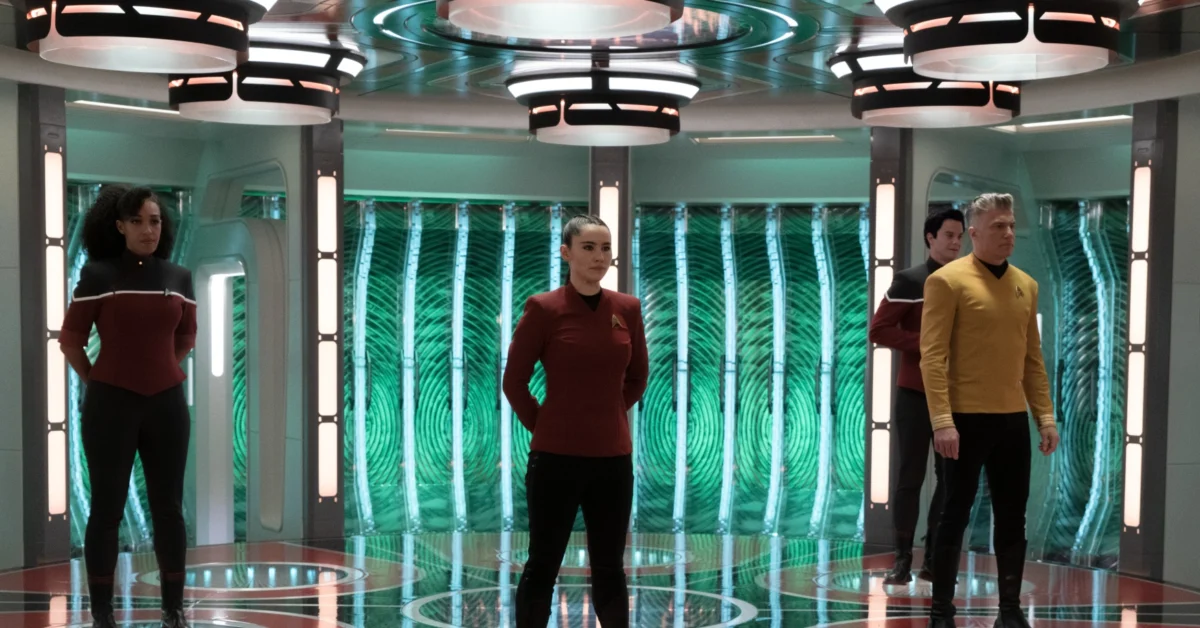
For over half a century, the Star Trek franchise has served as the North Star for speculative fiction, shaping our collective vision of the future. From the political intricacies of a galactic federation to the aesthetic architecture of starships that defy conventional aerodynamics, Gene Roddenberry’s vision has provided the blueprint for generations of storytellers. Yet, no singular invention has captured the human imagination—or permeated the genre—quite like the Transporter.
The concept is deceptively simple: dematerialize a living being, convert their physical form into raw data, and transmit that information across vast distances to be perfectly reconstructed elsewhere. It is a technological marvel that has appeared in everything from the satirical depths of Spaceballs to the time-bending adventures of Doctor Who and the animated whimsy of Phineas and Ferb. But as we move further into the 21st century, a pressing question remains: can the bridge between science fiction and physical reality ever be crossed?
According to the inaugural episode of Does It Fly?—a collaborative podcast venture between Den of Geek, the Nacelle Company, and Roddenberry Entertainment—the answer is a resounding, albeit scientifically grounded, "no." Hosted by Tamara Krinsky and astrophysicist Dr. Hakeem Oluseyi, the series peels back the layers of pop culture technology to see if they hold up to the rigors of modern physics.
The Core Problem: The Physics of "You"
To understand why the Transporter remains a dream, one must first understand what it would actually require to function. Dr. Oluseyi points out that the Transporter is not merely a transport device; it is, at its heart, an insurmountable data storage and processing nightmare.
“Here is the problem: doing a Transporter is many things altogether, and the first thing is a measurement and a data storage problem,” Oluseyi explains.
To dematerialize a human being, a system would need to account for every subatomic particle that constitutes a person. This is not just a matter of location; it involves the mass, charge, spin, and velocity of trillions upon trillions of particles. Every molecule, every chemical bond, and every synaptic firing—the sum total of what makes "you" a sentient being—must be captured with absolute, pixel-perfect fidelity.
The technical hurdles are compounded by the nature of quantum mechanics. According to the Heisenberg Uncertainty Principle, there is a fundamental limit to the precision with which certain pairs of physical properties—such as position and momentum—can be known simultaneously. Attempting to scan a human being at that level of granularity would likely require energy levels and computational power that defy our current understanding of the universe.
Chronology of a Dream: From 1966 to the Quantum Age
The Transporter was introduced in the original 1966 Star Trek pilot, "The Cage," and solidified its place in television history throughout the original series. At the time, it was a clever narrative solution for a low-budget production; filming expensive ship-to-planet shuttle landings for every episode was financially prohibitive. By "beaming" characters down, the production saved precious time and money.
However, as the franchise evolved, so did the "science" of the Transporter. By the time Star Trek: The Next Generation launched in the late 1980s, the Transporter had become a complex piece of lore, complete with "Heisenberg Compensators"—a fictional technology intended to bypass the very uncertainty principles that Dr. Oluseyi cites as the primary obstacle today.
In the real world, the timeline of quantum research has been slower, yet arguably more miraculous.
- 1993: Physicists first proposed the theoretical possibility of quantum teleportation.
- 1997: The first experimental verification of quantum teleportation was achieved, involving the transfer of quantum states between photons.
- 2017: A team of Chinese researchers successfully teleported a photon from the ground to an orbiting satellite, marking a milestone in long-distance quantum communication.
Despite these leaps, there is a yawning chasm between teleporting a photon—a massless particle—and teleporting a human being composed of roughly 7 octillion atoms. We have moved from the "science fiction" of the 60s to the "quantum reality" of the 2020s, but we are effectively still in the infancy of understanding how information can exist in two places at once.
The Data Storage and Temporal Paradoxes
Even if we were to overcome the physics of scanning a human body, we are left with the crushing reality of information theory. The amount of data required to store the state of a single human body is astronomical—far exceeding the total storage capacity of all the digital infrastructure currently existing on Earth.
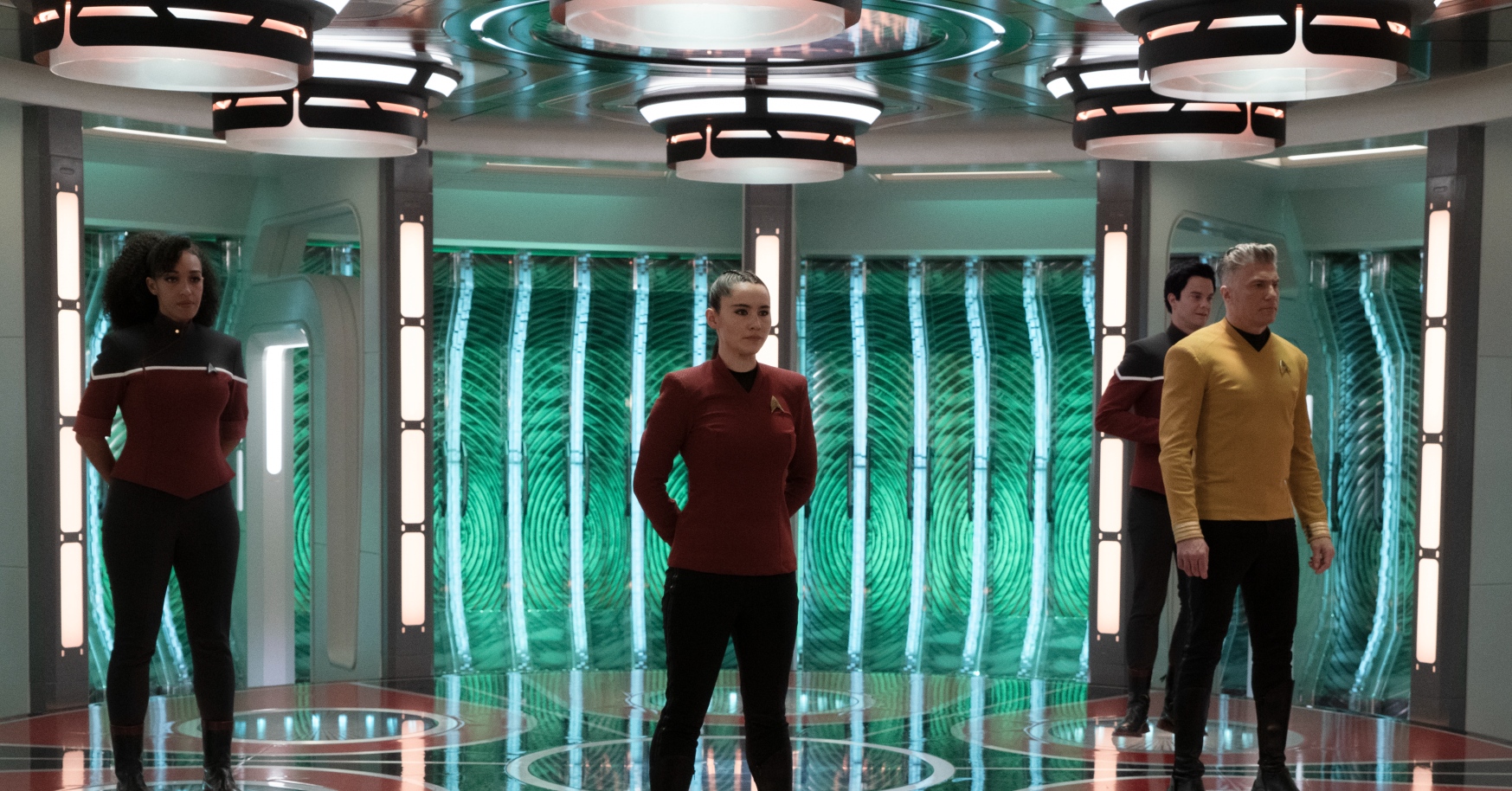
Dr. Oluseyi highlights a secondary, more visceral issue: the temporal disparity. “So, suppose the scanning of you takes like 10 seconds. One part of you is going to be 10 seconds older than the other part of you.”
In a biological sense, if a scan is not instantaneous, the subject is essentially being "smeared" through time. If the feet are scanned before the brain, the resulting reconstruction would be a biological mess. Furthermore, the act of scanning requires a complete cessation of biological activity. If the information is being "read," the person being read is effectively being disassembled.
This leads to the most haunting philosophical implication: is the person who arrives at the destination the same individual who started the journey, or is it a copy? If the original is destroyed during the scan, we are not talking about transportation—we are talking about suicide and reconstruction.
“You can never remember actually transporting,” Oluseyi notes, “because you need to get the data before you initiate the transportation, so whatever state you are in, that is also the state of your memory.”
Official Perspectives: The Scientific Consensus
The scientific community remains largely unified in its skepticism. While the Star Trek franchise has always been excellent at "technobabble"—the practice of using pseudo-scientific jargon to solve plot holes—actual physicists are careful to distinguish between quantum teleportation and human teleportation.
Quantum teleportation is a process by which the quantum state of a particle is transferred to another distant particle. The original state is destroyed, and the distant particle adopts that state. It is a vital tool for the future of quantum computing and ultra-secure communication. However, it does not involve the physical movement of matter. To "beam" a person would require a fundamental rewrite of the laws of thermodynamics and entropy.
NASA and other space exploration agencies currently focus on propulsion technologies—ion drives, solar sails, and nuclear thermal rockets—because these are physical realities we can engineer. Teleportation, meanwhile, is treated as a foundational element of quantum physics research, not as a logistical solution for future Mars missions.
Implications for Future Storytelling
Why does the Transporter remain so persistent in our culture if it is scientifically impossible? The answer lies in the human desire to transcend our physical limitations. The Transporter represents the ultimate expression of human freedom: the ability to exist anywhere in the universe at a moment’s notice. It is the democratization of space travel.
Even as we acknowledge that the Transporter will likely never exist, its legacy continues to fuel innovation. Science fiction has always acted as a "soft" form of research and development. It provides the "what if" that drives scientists to investigate the underlying principles of the universe.
The fact that we are currently discussing the limitations of the Transporter using the language of quantum mechanics proves that Star Trek has succeeded in its primary goal: inspiring a curiosity about the fundamental nature of reality. While we may never step into a glowing pad and emerge on the surface of an alien world, the pursuit of that technology has already led to breakthroughs in computing, data encryption, and material science that are changing our world in ways just as profound as a jump through space.
In the end, the Transporter is not a tool for travel; it is a lens through which we view our own limitations. As we look to the stars, we may have to settle for rockets and time-dilating travel, but as long as we have the curiosity that Star Trek ignited, the universe will continue to feel just a little bit closer.










