

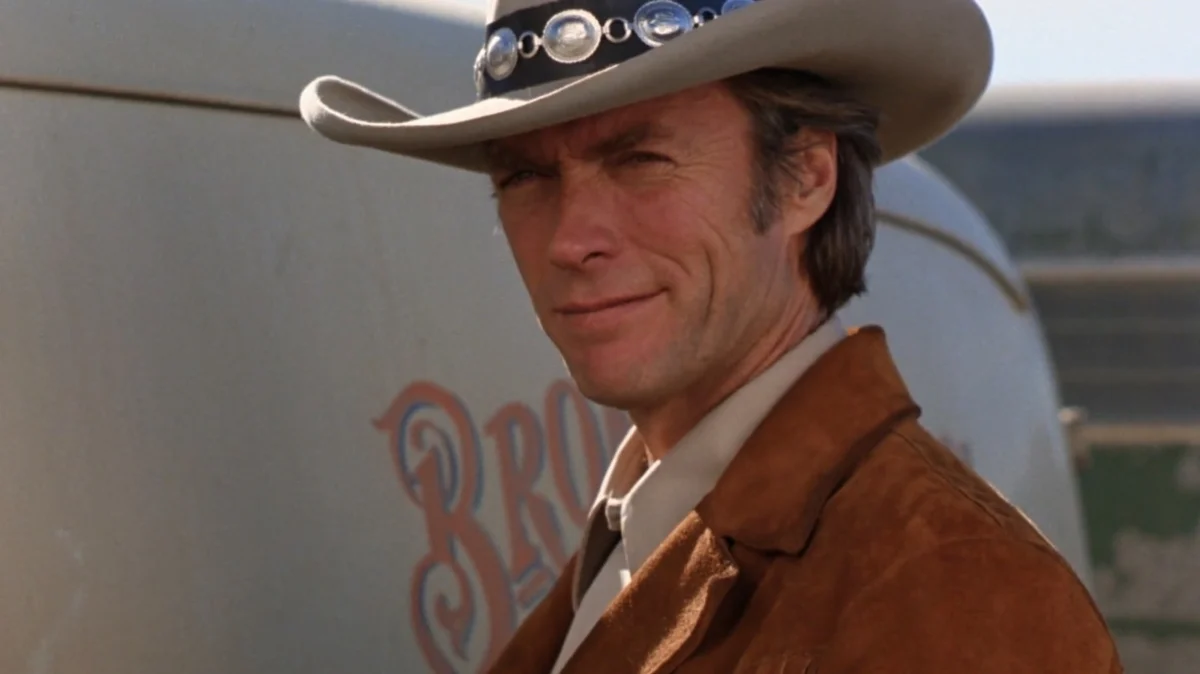
In the pantheon of Hollywood legends, few figures have navigated the treacherous waters of public expectation with as much audacity as Clint Eastwood. While most stars spend their careers meticulously curating an image to satisfy the box office, Eastwood has consistently treated his own persona as a malleable canvas—one he is frequently eager to splatter with unconventional paint. Among his vast filmography, which stretches from the grime of Spaghetti Westerns to the prestige of Oscar-winning dramas, one project remains a curious, sentimental outlier: the 1980 dramedy Bronco Billy.
Decades after its initial release, Bronco Billy stands not as a blockbuster, but as a testament to Eastwood’s refusal to be pigeonholed. While audiences of the era were clamoring for the relentless aggression of Dirty Harry or the slapstick antics of Every Which Way But Loose, Eastwood took a detour into the dusty, heartfelt world of a struggling Wild West show. It was a gamble that didn’t pay off in the way studio executives preferred, yet it remains a film the director holds in high regard.
A Career Defined by Defiance
To understand why Bronco Billy occupies such a unique space in Eastwood’s legacy, one must examine his trajectory leading up to 1980. By the late 70s, Eastwood was the undisputed king of the multiplex. He had mastered the art of the "revisionist Western" with The Outlaw Josey Wales—a film he considers a high-water mark of his career—and had tapped into the zeitgeist with high-octane action and crowd-pleasing comedies.
However, Eastwood’s early career was defined by a restless creative spirit. Long before he became the reliable A-list star, he used his clout to direct projects that confounded industry expectations. His 1971 directorial debut, Play Misty for Me, saw him playing a vulnerable disc jockey stalked by a fan—a jarring pivot from the hyper-masculine, morally ambiguous gunslinger he portrayed in Sergio Leone’s Dollars trilogy.
By the time he arrived at Bronco Billy, Eastwood had already proven that he didn’t "give a rip" about maintaining a monolithic screen identity. He was an artist interested in the craft of storytelling, not just the maintenance of a brand. This desire to experiment, however, often put him at odds with a public that preferred their Clint Eastwood to be stoic, vengeful, or occasionally accompanied by an orangutan.
The Genesis and Execution of Bronco Billy
Released in 1980, Bronco Billy follows a fictionalized traveling Wild West show. At its center is Billy McCoy, a modern-day sharpshooter clinging to the romantic ideals of the American frontier in an age that had largely moved on. Alongside his motley crew of misfits—played by an ensemble that included Sondra Locke and Scatman Crothers—Billy attempts to keep the spirit of the Old West alive through performance and sheer force of will.
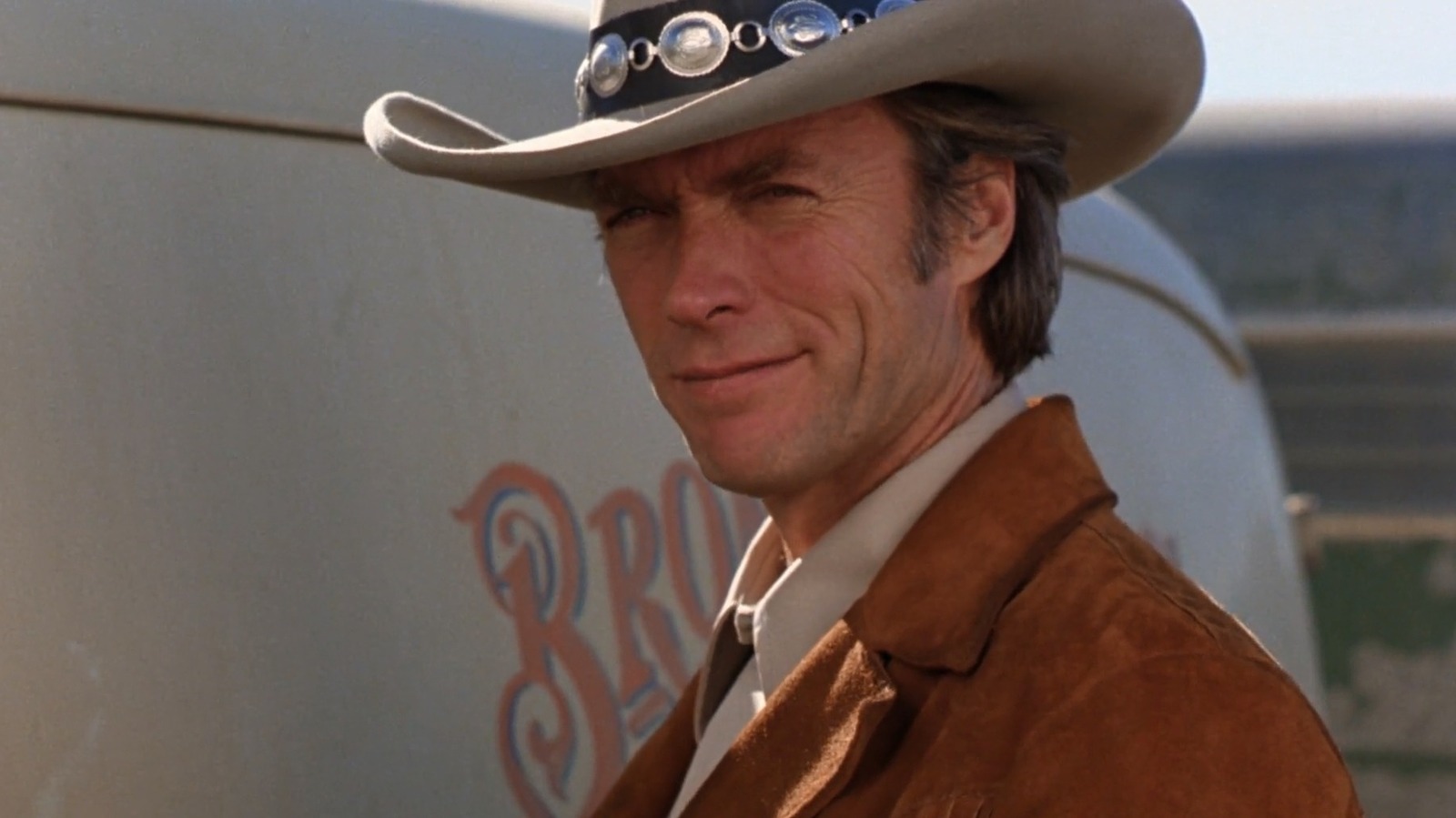
The film operates as a whimsical, often melancholy character study. It explores themes of reinvention, the burden of the past, and the struggle to find meaning in a society increasingly defined by cynicism and technological advancement. For Eastwood, the film was an opportunity to reach a family audience and engage in a bit of meta-commentary about his own career. As a man who had built his reputation on the myth of the West, directing a film about the decay of that myth was a poignant, albeit risky, artistic choice.
Box Office Reality vs. Artistic Intent
In the hard-nosed world of 1980s studio accounting, Bronco Billy was neither a disaster nor a smash. Produced on a budget of approximately $6.5 million, the film managed a gross of $24.3 million. By modern standards, this might be considered a modest success, but in the context of Eastwood’s career at the time, it was a "quiet single."
While critics offered generally favorable reviews, the audience reaction was tepid. Fans who had flocked to Any Which Way You Can—the sequel to his massive hit Every Which Way But Loose—found Bronco Billy too soft, too introspective, and perhaps too "old-fashioned." The public wanted the grit of Harry Callahan; they weren’t necessarily prepared for the tender, ensemble-driven storytelling of a man playing a failed cowboy in a dying circus.
Eastwood’s Reflection on the "Purity" of the Project
Clint Eastwood has never been one to dwell on the "what-ifs" of box office performance, but he has been candid about his personal affection for the film. In a rare behind-the-scenes interview conducted during the production of his 1982 thriller Firefox, Eastwood addressed the lukewarm reception of Bronco Billy with his characteristic pragmatism.
"It was a favorite project of mine. I liked the film," Eastwood remarked. "There was some purity, a certain fighting against the cynicism of our day. There was a certain element of it that I always enjoyed—the story. Maybe it was old-fashioned, maybe too old-fashioned, but it was a good film for me."
Eastwood’s comments reveal a director who was consciously attempting to provide an antidote to the prevailing cultural mood of the early 80s. As the decade leaned into sharper, more cynical tones, Eastwood looked backward to themes of integrity and second chances. He also acknowledged the necessity of professional evolution, noting, "You can’t do the same thing all the time. I’d still be in Italy doing Westerns like I started. There’s a time to move on and try something else."
Implications: A Legacy Reassessed
The legacy of Bronco Billy has shifted significantly over the past four decades. Once dismissed as a minor footnote, the film is increasingly viewed as a charming, low-key gem that allowed Eastwood to humanize his icon status. It avoids the trap of "cruel subversion"—where a star mocks their audience for liking them—and instead presents a sweet, sincere narrative about damaged people trying to find their place in the world.
The enduring nature of the story was further solidified in 2019, when Bronco Billy was adapted into a stage musical in Los Angeles. The success of the adaptation proved that the core themes of the film—the "let’s-put-on-a-show" spirit and the search for redemption—possess a timeless quality that transcends the specific expectations of 1980s moviegoers.
Conclusion: Why We Still Need Bronco Billy
When looking at the arc of Clint Eastwood’s career, it is easy to focus on the heavy hitters: the Oscar winners, the gritty police procedurals, and the monumental Westerns. Yet, films like Bronco Billy are essential to understanding the man behind the camera. They represent the moments where he chose to prioritize his own artistic curiosity over the demands of the box office.
Bronco Billy is not a perfect film, nor is it Eastwood’s most technically impressive work. However, it is arguably one of his most honest. It captures a moment in time where a Hollywood titan dared to be soft, to be sentimental, and to stand by a project simply because he believed in its soul. In a career defined by tough men and harder decisions, Bronco Billy remains the quiet, beating heart of Clint Eastwood’s filmography—a reminder that even the toughest gunslingers sometimes just want to tell a story about the beauty of holding on to one’s dreams.











No comments yet. Be the first to join the conversation!