

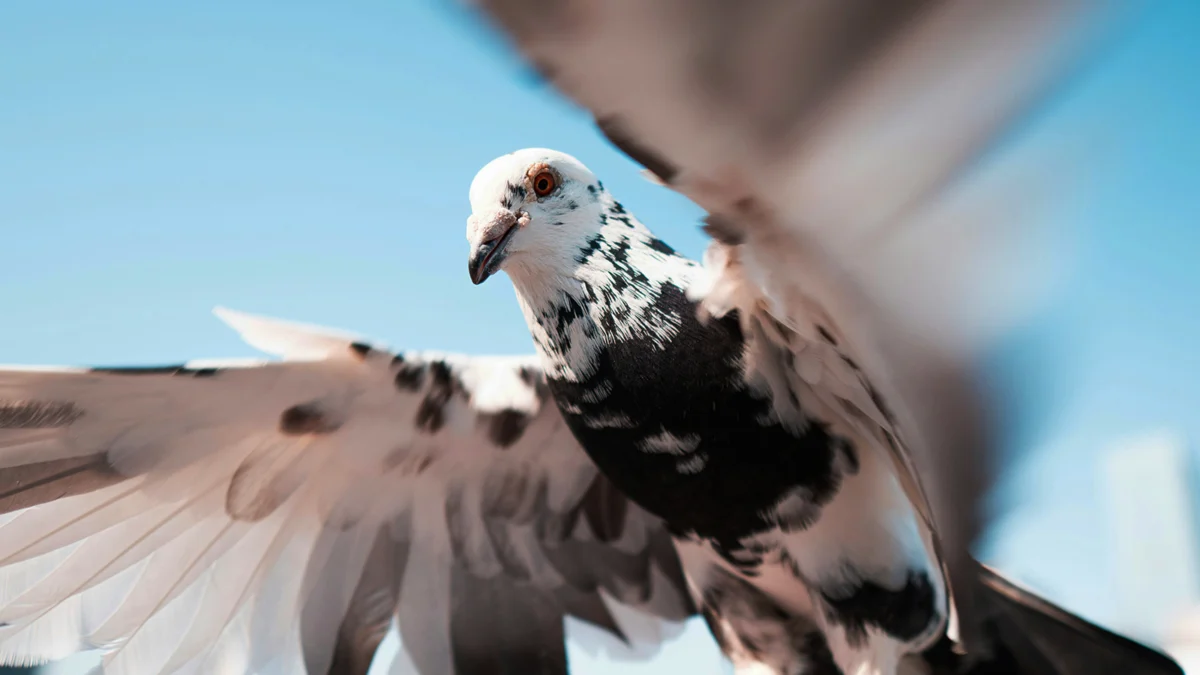
In the sprawling, concrete labyrinths of modern Europe, the local avian population is watching us far more closely than we ever realized. A groundbreaking study, recently published in the British Ecological Society’s journal People and Nature, has unveiled a startling phenomenon: urban birds appear to possess a distinct, systemic bias against women, consistently displaying higher levels of caution and fear when approached by female humans compared to their male counterparts.
The study, which spanned five European nations and analyzed 37 distinct species, challenges long-held scientific assumptions regarding the "neutrality" of human observers in ecological research. As researchers strive to understand the delicate interplay between wildlife and the humans who share their urban habitats, this discovery suggests that our feathered neighbors are not merely ignoring us—they are categorizing us.
The Science of "Flight Initiation Distance"
To measure how city-dwelling birds perceive human threats, researchers utilized a standard metric known as "flight initiation distance" (FID). FID is defined as the distance at which an animal perceives a potential predator or threat as too close for comfort, triggering an immediate flight response. By quantifying the exact number of feet a bird allows a human to approach before taking wing, the team could create a standardized "fear profile" for different human variables.
The research was conducted across a diverse range of urban green spaces, from the bustling parks of Berlin to the quiet squares of Madrid. Over the course of the study, the team observed 37 species, including common city staples like pigeons (Columba livia), house sparrows (Passer domesticus), great tits (Parus major), blackbirds (Turdus merula), and magpies (Pica pica).
Across all five countries—Czechia, France, Germany, Poland, and Spain—the results were remarkably consistent. On average, men were able to get approximately three feet closer to the birds than women before the animals took flight. This pattern held steady across every species studied, suggesting that this is not an isolated behavioral quirk of a single species, but perhaps a broader, more fundamental cognitive trait shared by urban birds.
Chronology of the Investigation
The investigation began as a routine assessment of how urban wildlife habituates to human presence. However, as the field data began to coalesce, the researchers noticed a persistent discrepancy in the numbers that could not be dismissed as statistical noise.
- Initial Phase: Researchers selected a wide array of urban parks and green spaces, aiming to minimize environmental variables. They began by documenting standard FID metrics for various species to establish a baseline.
- Variable Control: As the disparity between male and female approaches became apparent, the team shifted into a more controlled experimental design. To ensure the results weren’t skewed by superficial factors, they matched male and female observers for height, age, and clothing. They also standardized their gait and approach speed, ensuring the birds were not reacting to a "rushed" or "aggressive" walk.
- Verification: Following the initial findings, the researchers conducted a secondary validation phase across different countries to ensure the phenomenon wasn’t localized to a specific culture or type of human activity.
- Publication: After rigorous peer review, the data was finalized and published, sparking an immediate conversation within the global ecological community regarding the sensitivity of wildlife to human sexual dimorphism.
Why the Disparity? Decoding the Avian Mind
The most perplexing element of this study is the "why." If the researchers were wearing similar clothing and walking at the same pace, what signals are the birds picking up?
Scientists have proposed several hypotheses, though all remain speculative until further investigation is conducted. One possibility is olfactory—perhaps the scents associated with different genders, including soaps, perfumes, or natural pheromones, act as a deterrent or a trigger for the birds. Another possibility involves subtle differences in movement or body morphology. Even when researchers attempt to mask their height or attire, the inherent differences in shoulder-to-hip ratios or natural biomechanics of walking might be perceptible to the highly acute vision of a bird.
Furthermore, there is the question of history. Urban birds are evolutionary opportunists; they learn quickly who is a source of food and who is a potential threat. If, in a given urban environment, men are historically more likely to feed birds or if women are more likely to engage in behaviors that the birds perceive as "startling," it could create a learned association that persists across generations.
Official Responses and Expert Commentary
The academic community has received the study with a mixture of fascination and caution. Professor Daniel Blumstein of UCLA, a co-author of the study, has been instrumental in framing these results for the scientific public.

"I fully believe our results, that urban birds react differently based on the sex of the person approaching them, but I can’t explain them right now," Blumstein admitted. His candor highlights the frontier nature of this research; science is often about documenting what we see before we can explain the mechanism behind it.
Dr. Yanina Benedetti, another lead author, emphasized the philosophical shift this study demands from ecologists. "For decades, we have operated under the assumption that we are invisible observers in the field," she noted. "This study forces us to confront the fact that we are not neutral actors. To the subjects we study, we are individuals with distinct identities, and those identities may fundamentally alter the data we collect."
Broader Implications: The "Invisible" Human Influence
The implications of this research extend far beyond bird-watching etiquette. If birds can distinguish between male and female humans, what else are they capable of distinguishing? Are they recognizing individual faces? Are they reacting to our moods, our voices, or our historical interactions with them?
1. Reassessing Ecological Data
This study calls into question the integrity of past and future behavioral studies. If a researcher’s gender can impact the flight distance of a subject, then researchers must now account for observer sex as a standard variable in their methodology. This could lead to a re-evaluation of previous ecological findings that failed to consider the "observer effect."
2. Urban Wildlife Management
For city planners and wildlife conservationists, understanding these subtle triggers is essential. As cities become increasingly dense, our ability to coexist with urban wildlife depends on our ability to understand their stressors. If certain human behaviors or characteristics cause unnecessary flight responses in birds, it consumes energy that the animals need for foraging and reproduction.
3. The Cognitive Sophistication of Urban Life
Perhaps the most profound implication is the reminder of the sheer intelligence of urban fauna. Many people dismiss city birds—pigeons in particular—as "pests" or "rats with wings." However, the ability to categorize humans by sex, even under controlled conditions, suggests a level of cognitive processing and sensory acuity that is highly sophisticated. These animals are not just living in our cities; they are actively navigating the complexities of human society.
Moving Forward: The Next Phase of Research
The researchers behind the People and Nature study are already looking toward the next phase of inquiry. The immediate goal is to isolate the variables that the birds are using to categorize humans. This may involve using life-sized robotic models that allow researchers to control for variables one by one—adjusting for scent, then for silhouette, then for gait—in a way that human subjects cannot.
Additionally, there is interest in determining whether this bias is learned or innate. By studying birds in isolated rural areas compared to those in highly urbanized centers, scientists hope to determine if this "gender-bias" is an evolutionary adaptation developed to survive in human-centric environments.
As we continue to build and expand our urban footprints, our understanding of the animals that share our space must evolve. This study serves as a humbling reminder: we may think we are the ones doing the observing, but in the parks and streets of our cities, we are also being watched, categorized, and judged by the very creatures we often overlook. The birds, it seems, have been paying attention to us all along—and they have clearly decided that, when it comes to humans, not all approaches are equal.











No comments yet. Be the first to join the conversation!