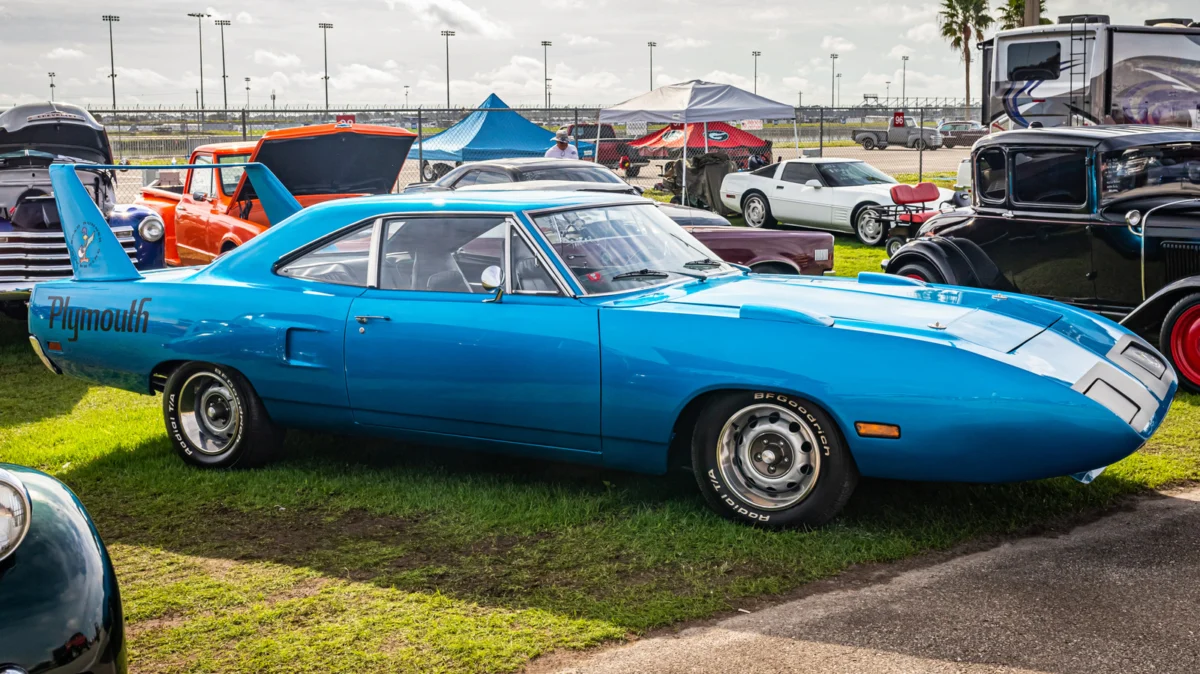
For the automotive enthusiast, few silhouettes are as instantly recognizable as the 1970 Plymouth Superbird. With its towering rear wing and aerodynamic nose cone, the car looks less like a product of the late 1960s and more like a fighter jet grounded on asphalt. Today, this machine represents the zenith of the muscle car era—a brief, glorious moment in history when engineering bravado and raw power collided on the high-banked ovals of NASCAR.
However, owning a piece of this history comes with a staggering price tag. For those looking to add a Superbird to their collection, the barrier to entry is rarely less than $200,000, with prime examples frequently soaring past the $500,000 mark. But why does a car that was once considered a sales failure now command the same market value as a modern supercar?
The Anatomy of an Icon: Main Facts and Market Reality
The Plymouth Superbird was a specialized, limited-production performance car based on the Plymouth Road Runner. It was designed with a single, uncompromising goal: to reclaim NASCAR dominance for Chrysler.
Current Market Valuations
The collector market for the Superbird is as volatile as it is exclusive. Because production numbers were so low, every sale is a major event in the auction world. Current data suggests:
- The Baseline: A "driver-quality" Superbird with non-original or modified components typically starts in the $200,000 to $250,000 range.
- The Mid-Tier: Pristine examples, often featuring the iconic 440ci V8 engine with an automatic transmission, regularly trade between $280,000 and $350,000.
- The Investment Grade: Rare configurations—such as those equipped with the legendary 426 Hemi engine or those with documented race history—can easily climb into the $600,000 to $800,000 bracket, with exceptional specimens pushing toward the $1 million threshold at premier auctions like Barrett-Jackson or Mecum.
These prices are driven by extreme scarcity. Plymouth only produced approximately 1,935 units for the 1970 model year (though estimates vary slightly based on source documentation). Because many of these cars were stripped for parts, crashed on tracks, or left to rust in barns during the 1980s, the number of surviving, road-worthy examples is significantly lower.
A Chronology of the Superbird’s Rise and Fall
To understand the Superbird, one must understand the "Aero Wars" of the late 1960s.
1969: The Predecessor
The 1969 Dodge Charger Daytona proved that aerodynamic "wing cars" were the future of stock car racing. Richard Petty, NASCAR’s biggest star at the time, had defected to Ford because he felt Plymouth’s standard Road Runner was aerodynamically inferior. Chrysler, desperate to bring "The King" back, greenlit the Superbird program.
1970: The Year of the Bird
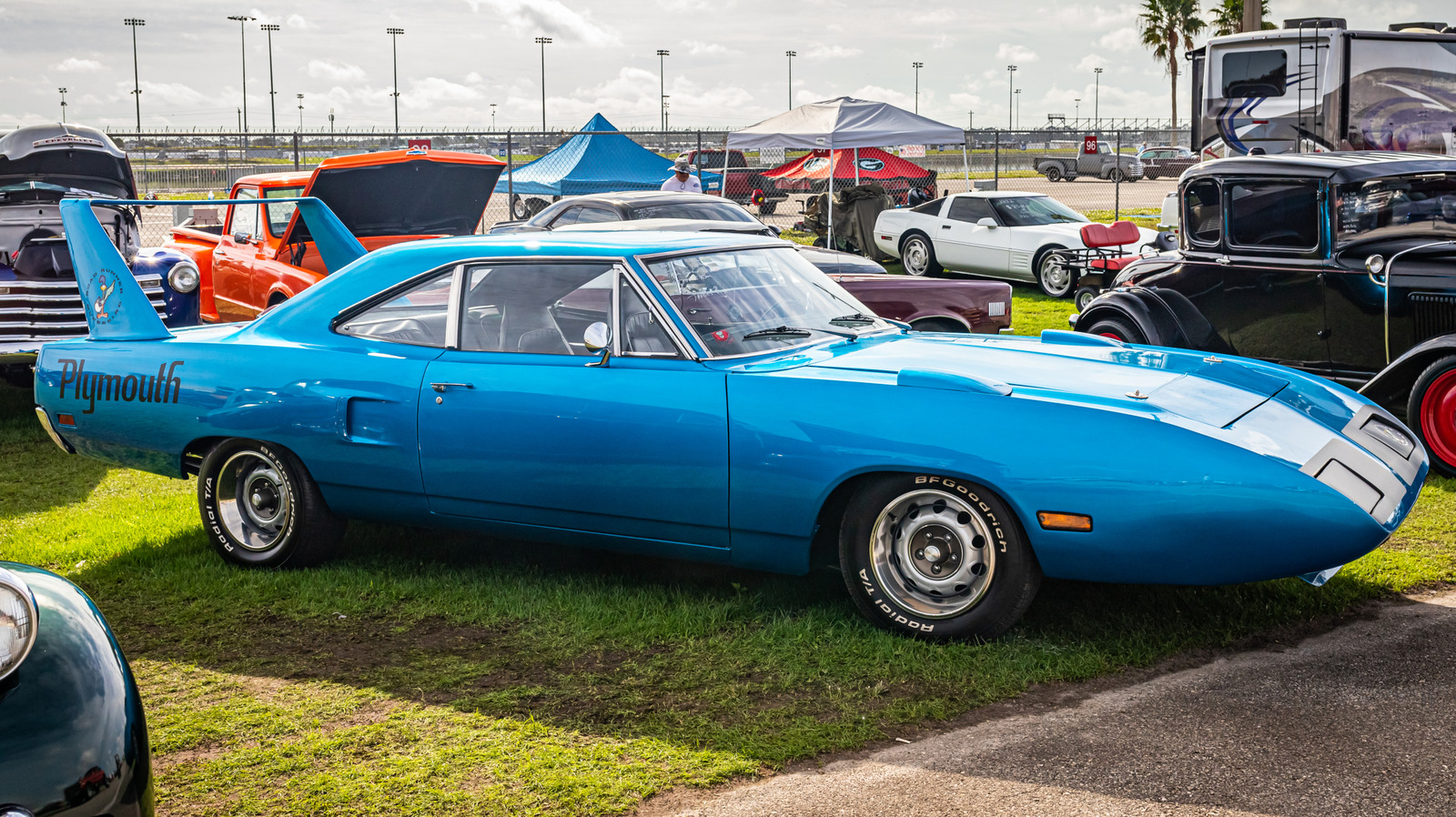
The Superbird debuted for the 1970 model year. It featured a 19-inch nose cone and a massive, high-mounted rear spoiler designed to provide downforce at speeds exceeding 150 mph. It was an engineering marvel, but a sales nightmare. Dealers struggled to move the cars because the radical styling was deemed "too much" for the average commuter. Many sat on dealership lots for years, eventually being converted into standard Road Runners just to get them off the showroom floor.
1971: The Ban and The Aftermath
By the end of the 1970 season, NASCAR had seen enough. Fearing that the rapid advancement of aerodynamic technology—and the resulting 200-mph speeds—was becoming too dangerous for the era’s safety technology, the sanctioning body effectively banned the wing cars. They implemented strict rules on engine displacement and aerodynamic modifications that rendered the Superbird uncompetitive. The program was canceled, and the wing car era vanished as quickly as it had arrived.
Supporting Data: Engineering for the Oval
The Superbird wasn’t just a styling exercise; it was a masterclass in wind-tunnel testing applied to a production chassis.
Aerodynamics vs. Muscle
During the 1960s, American muscle cars were essentially "bricks" with massive engines. They were fast in a straight line but struggled with lift and drag. The Superbird addressed this with:
- Nose Cone: The extended fiberglass nose reduced air pressure under the front of the car, preventing the front end from becoming "light" at high speeds.
- The Spoiler: The rear wing was calculated to sit in "clean air" above the roofline, providing the necessary downforce to keep the rear tires planted on the track during high-speed cornering.
- Engine Options: Buyers could choose from three versions of the 440ci V8 or the top-tier 426 Hemi. The 440 6-pack was the most popular choice for the street, offering a balance of reliability and performance.
Geographic Distribution of Sales
Today, the remaining fleet of Superbirds is scattered across the United States. Online listings frequently show a high concentration of cars in regions with strong car-collecting cultures, such as Texas, Florida, and the Midwest. The variation in price—such as the $214,900 Texas listing versus the $550,000 auction high—often comes down to the "Numbers Matching" status. A car with its original engine, transmission, and chassis components intact will always command a significant premium over a car that has undergone a restomod process.
Official Perspectives: The Legacy of "The King"
Richard Petty’s association with the Superbird is the primary reason the car has retained its cultural cachet. When asked about the car in later years, Petty often recounted how the vehicle felt fundamentally different from anything else he had driven.
"It was like driving a missile," Petty noted in interviews. While he was initially hesitant about the styling, the performance on the track silenced all critics. NASCAR’s decision to limit the engine size to 305 cubic inches for the 1971 season was, in essence, an admission that they could not keep up with the engineering genius of the Plymouth team.
From the perspective of automotive historians, the Superbird is considered a "bridge" vehicle. It marks the transition from the crude power of the 1960s to the more sophisticated, aero-focused designs that would define the late 20th century.
The Cultural Imprint: From the Track to the Silver Screen
While its racing career was short-lived, the Superbird’s cultural longevity has been bolstered by its appearances in popular media.
- Pixar’s "Cars": The character "The King," voiced by Richard Petty himself, is a direct tribute to his 1970 championship car. This introduced the Superbird to a new generation of enthusiasts, cementing its status as a heroic machine.
- Pop Culture Status: The car frequently appears in films and shows as a symbol of American excess and boldness. Whether it is being chased in a period-piece movie or restored on reality television, the wing-topped Plymouth has become shorthand for "cool."
Implications for Future Collectors
For the prospective buyer, the Superbird is more than a vehicle; it is a financial instrument. Because the supply is fixed and the demand continues to grow as the car enters the status of "automotive art," it is highly unlikely that prices will ever drop.
Factors to Consider Before Buying:
- Documentation: Never buy a Superbird without a verified VIN and a clear chain of ownership. Counterfeit "clones" (standard Road Runners converted to look like Superbirds) are common.
- Maintenance: These are not modern vehicles. Sourcing original body panels for the nose cone and the rear wing is an expensive, often specialized endeavor.
- Investment Horizon: If you are buying for appreciation, focus on original, low-mileage examples. If you are buying to drive, look for a well-maintained, high-quality restoration that won’t require a constant stream of rare, N.O.S. (New Old Stock) parts.
The Verdict
The 1970 Plymouth Superbird is a testament to a time when manufacturers were willing to take massive risks for the sake of victory. It was too fast for the track, too weird for the street, and too ahead of its time for its own good. Yet, in that failure, it found immortality. For those fortunate enough to hold the keys to one, the Superbird offers more than just horsepower—it offers a chance to own a pivotal chapter of American history, wing-tip first.