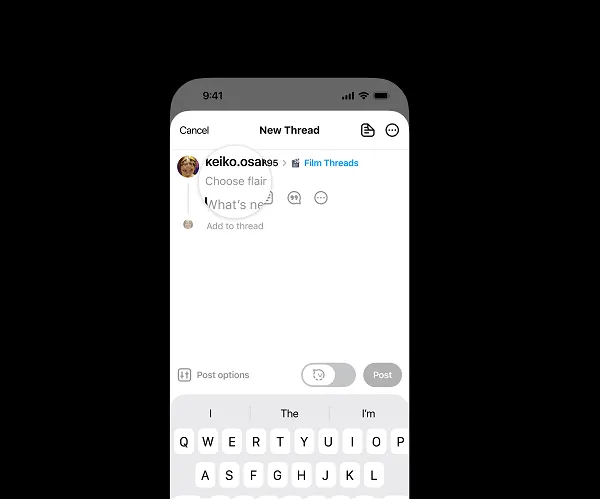
Threads, the Meta-owned social media platform, has officially expanded its “community flair” feature, allowing users to attach specific icons and emojis to their posts within dedicated discussion groups. This update, which follows a brief testing period initiated late last year, represents a significant evolution in how the platform facilitates niche communication and discovery. By allowing users to categorize their contributions with visual identifiers, Threads is signaling a move toward more granular, topic-focused interaction, further distancing itself from the broad, chaotic feed dynamics of its predecessor, X (formerly Twitter).
The Core Mechanics of Community Flair
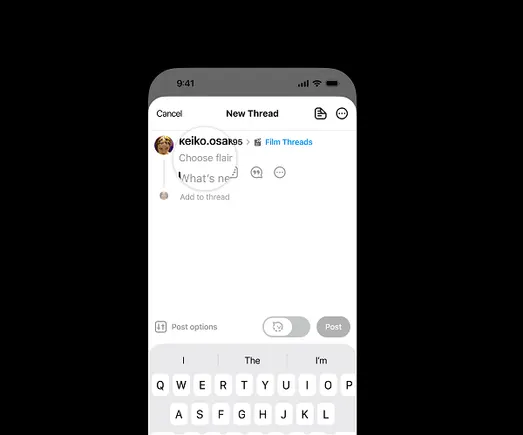
At its most fundamental level, "flair" on Threads functions as a visual metadata tag. When a user creates a post within a community—such as a book-focused group or a hobbyist circle—they can select from a curated list of icons that represent specific subtopics.
For instance, within a hypothetical "BookThreads" community, a user might append a rose icon to a post to signal a discussion centered on romance novels, or a pen-and-paper icon to indicate a request for writing advice. Once selected, this flair is displayed prominently beneath the user’s display name on the post. To streamline the user experience, once a flair is selected, it becomes the default for that user’s subsequent posts within the same community, though the platform maintains the flexibility for users to change or remove this tag at any time.
This feature is designed to reduce the "noise" inherent in large-scale social media communities. By providing a visual shorthand for the subject matter, Threads is enabling users to curate their own reading experience. If a user is only interested in specific subgenres or subtopics, they can quickly scan the feed for the corresponding flair, effectively filtering out content that does not align with their current interests.
Chronology: From Concept to Global Rollout
The trajectory of this feature reflects Meta’s methodical, iterative approach to product development on Threads.
- October 2024: Threads officially rolled out its community-based discussion groups to all users globally. This marked a major shift in the platform’s identity, moving from a monolithic feed to a collection of interest-based hubs.
- December 2024: Recognizing the need for better organization within these burgeoning communities, Threads launched an initial, limited test of the "community flair" feature. The test was designed to gauge user adoption and determine whether visual tags would successfully categorize discussions without cluttering the interface.
- February 2025 (Current): Following positive feedback from the testing cohort, Meta has officially expanded the flair option, making it a standard component of the community experience.
This phased approach has allowed the engineering team to monitor how users interact with the feature and ensure that it does not negatively impact site performance or user sentiment.
The Strategic Importance of Topical Communities
The expansion of flair is not merely a cosmetic update; it is a strategic maneuver to cement Threads’ position as the premier destination for long-form and interest-based conversation.
Since the October launch of community groups, the platform has seen an organic proliferation of subgenres. When a topic gains sufficient momentum, it is often granted its own community designation by the platform. This creates a "hub-and-spoke" model of engagement where the main Threads feed remains a general stream, while communities act as specialized ecosystems.
However, as these communities grow, the risk of fragmentation and information overload increases. Without tools like flair, a high-traffic community could easily become disorganized, with unrelated topics competing for attention. Flair provides the necessary infrastructure to manage this growth. By allowing communities to "branch off" into subgenres without requiring the creation of dozens of separate groups, Threads maintains a centralized audience while providing the depth of a forum-style experience.
Supporting Data and User Behavior Trends
While Meta has historically kept granular engagement data private, internal metrics suggest that interest-based communities are driving higher retention rates than general-feed engagement.
Data from the testing phase of the flair feature indicated that posts using flair received, on average, a higher click-through rate from community members than those without. This suggests that users are actively looking for signals of relevance. In a digital landscape characterized by content saturation, the ability to signal intent is a premium feature.
Furthermore, industry analysts have noted that "community-first" social platforms often exhibit stronger resilience to advertising volatility. Because users are self-selecting into these communities, the data provided to advertisers is more precise. If a user consistently engages with "writing" flair, the platform gains a high-confidence signal regarding that user’s interests, allowing for more relevant, and therefore more valuable, advertising placements.
Implications for the Social Media Landscape
The rollout of flair carries significant implications for the future of Threads and its competitive standing.
1. The Death of the "Town Square" Model
For years, the "town square" model—where everyone broadcasts to everyone else—was the standard for social media. Threads is increasingly opting for the "community garden" model. By investing in tools like flair, Threads is acknowledging that the future of social engagement lies in smaller, highly relevant clusters. This could make the platform significantly more attractive to niche interest groups who have felt alienated by the broad-brush approach of larger networks.
2. Moderation and Community Management
One of the hidden benefits of flair is its potential for moderation. Community moderators can use flair to quickly identify which posts are off-topic or violate community guidelines. If a flair is misused or if a particular subtopic attracts problematic content, moderators have a clear indicator of where the trouble lies. This makes community governance more efficient and less prone to human error.
3. The Future of Creator Monetization
While not yet integrated, it is not difficult to envision a future where specific flairs are tied to "Creator Tiers" or subscription content. If a user is a recognized expert in a community, their use of a specific "Verified Expert" flair could act as a trust signal, potentially opening doors for future monetization features like exclusive newsletters or premium-access community channels.
Official Stance and Community Feedback
Threads has been vocal about its commitment to listening to user feedback. The company has integrated a dedicated feedback loop into the application, encouraging users to report on the efficacy of new features.
"We are building Threads to be a place where people can find their people," a spokesperson for the platform noted in a recent update. "The expansion of community flair is a direct response to our users’ desire for more structure. As these communities grow, we want to provide the tools that make connection easier, not more difficult."
The feedback has been largely positive, though some power users have expressed concerns about "flair fatigue"—a scenario where communities become overly cluttered with too many options. To mitigate this, Meta has implemented a system where community moderators manage the flair options, ensuring that the tags remain relevant to the specific community’s purpose and are not abused by spam accounts.
Challenges Ahead
Despite the potential, the feature is not without its challenges. The primary risk is user confusion. If flair systems become too complex or differ significantly between communities, the cognitive load on the user may become too high. For a casual user who switches between ten different communities, navigating ten different sets of flair requirements could lead to frustration rather than engagement.
Additionally, the platform must guard against the use of flair for harassment. If a flair can be used to label a user in a disparaging way (e.g., "newbie" or "troll"), it could quickly lead to a toxic environment. Meta’s current approach, which relies on moderator-curated flair lists, is a strong defense against this, but as the platform scales, the need for automated moderation of flair usage will become paramount.
Conclusion
The expansion of community flair on Threads is a clear indicator of the platform’s maturing product strategy. By moving away from the simplistic "like and share" model and toward a sophisticated, interest-based architecture, Threads is positioning itself to be a long-term competitor in the social space.
For the average user, the change is subtle—a small icon under a username. But for the health of the platform, it is a foundational shift. As users continue to seek out spaces that feel more intimate and manageable, the ability to signal intent and categorize conversation will define the next generation of online community building. Whether these visual tags will successfully curb the chaos of the internet remains to be seen, but for now, Threads has provided its users with the tools they need to bring a little more order to their digital lives.