

In the rapidly evolving landscape of customer experience (CX), artificial intelligence has moved from a futuristic luxury to a baseline requirement. Major corporations—ranging from hospitality giant Airbnb to telecommunications leader Verizon—have aggressively integrated AI-powered chatbots into their customer support ecosystems. The promise is clear: 24/7 efficiency, reduced overhead, and personalized assistance. However, a significant disconnect is emerging between corporate investment and consumer behavior.
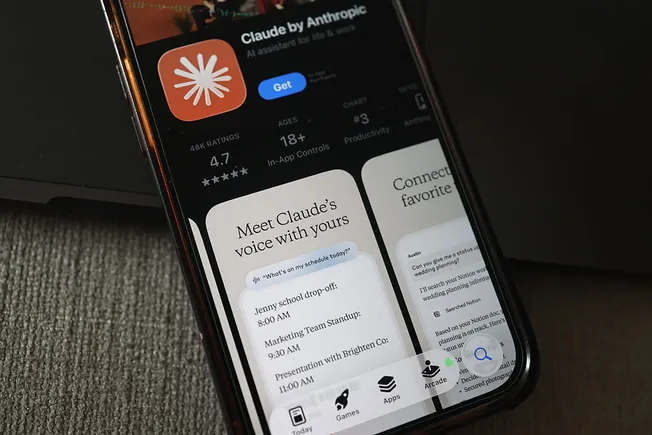
While businesses are pouring capital into proprietary chatbot interfaces, consumers are increasingly bypassing these brand-specific tools in favor of versatile, third-party generative AI platforms like ChatGPT, Claude, and Microsoft Copilot. This shift poses a critical question for leadership teams: Is the "chatbot in the corner" strategy obsolete, and how must brands pivot to remain relevant in an AI-first world?
The Core Conflict: Intentional Adoption vs. Passive Implementation
The primary challenge facing modern enterprises is not the technology itself, but the strategy behind its deployment. Industry experts, including those from research firms like Gartner, argue that simply retrofitting existing support portals with Large Language Models (LLMs) is a recipe for underwhelming return on investment (ROI).
"If customers are already using your chatbot and engaging with it, then enhancing that chatbot with AI and helping it resolve more issues is a value-add," explains Gartner analyst Keller. "However, if customers are not already engaging with your legacy chatbot, simply injecting AI into that interface is unlikely to drive new adoption. Brands need to move beyond ‘set it and forget it’ mentalities and focus on intentional adoption strategies that provide clear, unique value to the user."
The friction lies in the consumer’s daily habits. Data indicates that two-thirds of consumers now utilize generative AI tools in their professional or personal lives. Because these third-party platforms are central to their daily workflow, they have become the "default" for information retrieval and problem-solving. When a customer encounters a service issue with a brand, their instinct is to turn to the tool they trust—the one they already use—rather than navigating to a brand’s website to interact with a standalone, unfamiliar bot.
A Chronology of the Conversational Shift
To understand how we arrived at this critical juncture, one must look at the evolution of the digital customer interface:
- Phase 1: The Era of Static Navigation (2000–2015): Websites were structured as digital brochures or filing cabinets. Users relied on sitemaps, headers, and search bars to find information.
- Phase 2: The Rise of Rule-Based Chatbots (2016–2020): Brands introduced basic, decision-tree-driven chatbots. These were often frustrating, capable of handling only the simplest queries and frequently failing when confronted with nuance.
- Phase 3: The Generative AI Explosion (2022–Present): With the public release of advanced LLMs, consumer expectations shifted overnight. Users now expect human-like, context-aware, and highly capable interactions.
- Phase 4: The Current Disconnect: Brands are still deploying "Phase 2" interface designs (the small pop-up in the corner) while trying to force "Phase 3" technology into them, leading to a clash between user habits and design architecture.
Supporting Data: Where the Market Stands
The data suggests that while consumers are highly tech-literate, their loyalty to specific AI tools is driven by efficacy and integration.
- Broad Adoption: 66% of consumers report using generative AI in at least one area of their life.
- Task-Oriented Behavior: Users are not just asking questions; they are performing work. Gartner findings reveal that 58% of general consumers have used generative AI to complete a specific task.
- The B2B Edge: The desire for task completion is even higher in the B2B sector, where nearly 75% of users report leveraging AI to accomplish complex workflows.
These statistics highlight the "missing link" in brand strategy. While ChatGPT can summarize a document or write an email, it cannot—as of now—access a user’s private account data to process a refund, change a subscription, or update a shipping address. This is the "brand advantage" that companies are currently failing to leverage effectively.
Official Insights: The Failure of the "Pop-Up" Model
The consensus among digital transformation experts is that the "little chatbot in the bottom right-hand corner" is a relic of an earlier digital age. It creates a siloed experience where the customer has to leave their browsing journey to enter a separate, often limited, support environment.
"The presentation of a small pop-up chatbot is starting to feel outdated," says Keller. "It creates a ‘break’ in the customer experience. Progressive companies are moving toward a model where the entire digital experience becomes a single, intelligent front door. It is not a standalone chatbot; it is an AI-powered conversational interface that permeates the entire site."
Missed Opportunities in Transactional AI
A major failure point identified in current implementations is the reliance on "redirects." If a user asks a brand chatbot to perform an action—such as changing an order or updating a billing detail—the bot often provides a link to a separate page, forcing the user to navigate the site manually. This effectively renders the AI useless. To truly compete with third-party tools, brands must enable "action-taking" directly within the chat interface. If the AI can answer the question but cannot finalize the transaction, it is merely a more sophisticated FAQ, not a customer service solution.
Implications for the Future: From Navigation to Conversation
The future of digital CX will likely be defined by a shift from "navigational" interfaces to "conversational" ones. Leading organizations are beginning to replace traditional homepages—which are often cluttered with lists of headers, links, and banners—with a single, clean prompt: "What are you trying to do today?"
The "Intelligent Front Door"
This approach treats the entire website as an API for the AI. Instead of the user searching for the right menu, the AI interprets the user’s intent and delivers the specific solution or action they require. This reduces the cognitive load on the consumer and increases the likelihood that they will choose the brand’s site over a third-party AI tool.
Strategic Recommendations for Brands
- Prioritize Action Over Information: If an AI can answer a query but not execute the task, it is failing. Brands must invest in back-end integrations that allow chatbots to transact directly.
- Abandon the "Widget" Mentality: Move away from isolated chat windows. Integrate AI into the fabric of the digital experience, allowing it to guide users through the entire site, not just a small corner box.
- Acknowledge the Competition: Recognize that customers are using third-party AI for a reason. If your brand bot cannot compete with the convenience and intelligence of a tool like Claude or ChatGPT, users will continue to prefer the latter.
- Adopt a Conversational Homepage: Experiment with search-first, intent-based design rather than link-heavy navigation.
Conclusion
The gold rush to implement AI has led many brands to deploy technology without considering the user’s journey. The "chatbot in the corner" is a failed experiment if it merely acts as a glorified search engine. To survive the current AI revolution, brands must pivot toward a more integrated, action-oriented, and conversational digital experience. By becoming the "intelligent front door" for their customers, brands can regain the trust and engagement that is currently leaking toward third-party AI platforms. The technology is no longer the hurdle; the hurdle is the imagination required to rethink the digital storefront entirely.











