

Tokyo is a living, breathing palimpsest. To walk its streets is to navigate a dynamic, often jarring, but endlessly fascinating patchwork of history. Century-old wooden structures—relics of a pre-industrial era—stand in defiance of, or perhaps in conversation with, the city’s post-war concrete experiments and the soaring, glass-clad skyscrapers of the twenty-first century.
This year, from May 16 through May 24, 2026, the Tokyo Architecture Festival invites residents and visitors alike to pause and examine this layered environment. By granting rare public access to private properties, corporate headquarters, and historical institutions, the festival seeks to demystify the city’s modern identity. It is an exploration of the continuity between past design innovations and the current urban landscape—a celebration of how Tokyo constantly reinvents itself while safeguarding its structural soul.
The Festival: An Overview of Urban Curation
The Tokyo Architecture Festival 2026 acts as a bridge between the city’s hidden architectural treasures and the public. While high-demand guided tours and lottery-based registrations are already fully booked, the heart of this year’s program lies in its commitment to independent exploration.

A significant portion of the festival is designed specifically for the unguided visitor, with 12 featured properties opening their doors without the need for advanced registration. Most of these sites are free to enter, providing an unparalleled opportunity to witness the evolution of Japanese design without the usual logistical hurdles.
Chronology and Access
The festival officially runs for nine days, though the most significant public openings are concentrated on the final weekend: May 23 and May 24. Visitors are encouraged to plan their routes carefully, as some locations operate on specific days or within limited time slots. For those visiting popular spots like the Noa Building, organizers have implemented a digital "waiting list" system to ensure a smooth flow of visitors and prevent overcrowding.
Spotlight: 12 Architectural Marvels
The following properties represent the breadth of Tokyo’s architectural heritage, ranging from Meiji-era Western classical styles to contemporary masterpieces of sustainable adaptive reuse.

1. Nihombashi Mitsukoshi Main Store (Nihombashi)
A towering monument to Western classical style, the Nihombashi Mitsukoshi Main Store is more than just a retail space; it is an Important Cultural Property. Designed by the esteemed Yokogawa Komusho (now Yokogawa Architects & Engineers), the building serves as a masterclass in stewardship. Throughout the festival, a special exhibition in the rooftop elevator hall provides an intimate look at the store’s history, featuring original blueprints and archival photographs that document over a century of architectural maintenance and evolution.
2. Kyu-Iwasaki-tei Gardens (Yushima)
Nestled near Ueno Park, this ornate mansion was designed by Josiah Conder, the architect widely regarded as the "father of modern Japanese architecture." Once the residence of the Iwasaki family, the founders of the Mitsubishi conglomerate, the estate offers a rare glimpse into the opulent lifestyle of the Meiji elite. Beyond the architectural significance of the main house and its unique billiard room, visitors attending the festival receive an exclusive commemorative postcard upon request at the ticket counter.
3. Noa Building (Kamiyacho)
For those drawn to the bold and the avant-garde, the Noa Building is a must-see. A sculptural landmark at the Azabudai-Iikura intersection, this work by the philosophical architect Seiichi Shirai contrasts a rugged, earthy brick base with a striking oxidized oval tower. The interior is a sensory experience, characterized by sweeping arches, black granite reflections, and a celestial ceiling lighting scheme that feels decades ahead of its time. Note: This site requires same-day online registration.

4. Minato City Center for Traditional Culture (Mita)
Originally constructed in 1936 as the Shibaura Kyo-do Kaikan, this wooden structure serves as a reminder of the elegance of the early Showa era. Meticulously preserved and seismically retrofitted by Shigeru Aoki Architect & Associates, the building has earned both the Good Design Award and the Excellence in Seismic Retrofitting Award. Festival participants are granted rare access to backstage dressing rooms and back staircases—areas usually strictly off-limits to the public.
5. Keio University Old Library (Akabanebashi)
Completed in 1912 by Tatsuzo Sone and Seiichiro Chujo, this Gothic-revival brick masterpiece is a survivor. It has endured the Great Kanto Earthquake of 1923 and the devastating air raids of World War II. Now functioning as a historical exhibition pavilion, the site features elaborate stained-glass fixtures and intricate staircases, providing a serene environment for viewing historical architectural drawings and panels.
6. Meiji Seimei Kan (Hibiya/Nijubashimae)
The Meiji Seimei Kan stands as the definitive pinnacle of Showa-era classical revival architecture. With its majestic Corinthian colonnade overlooking the Imperial Palace, it commands a sense of authority and history. This year’s festival highlights the building’s history through a giant "photomontage" display, which recreates the appearance of the long-lost Mitsubishi Building No. 2, which occupied the plot before the current structure was completed in 1934.

7. "Gaudí: Windows on the Future" at 21_21 Design Sight (Roppongi)
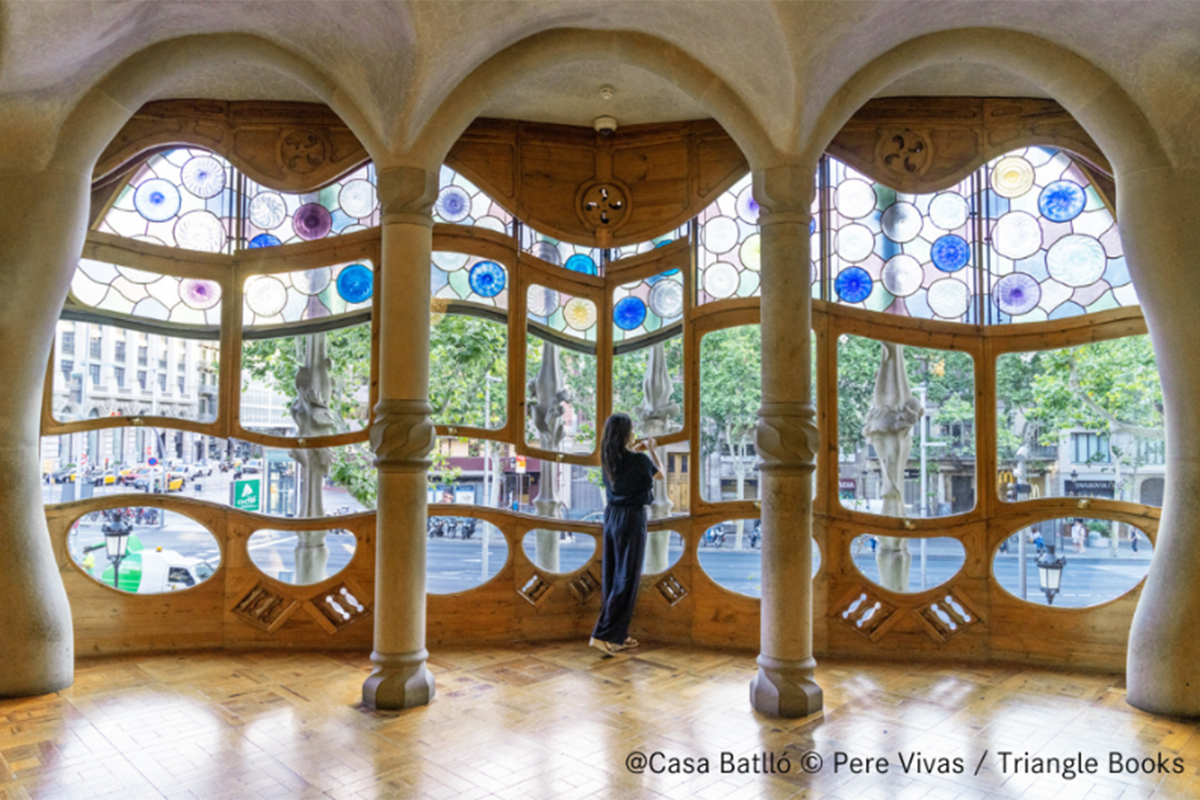
Commemorating the centenary of Antoni Gaudí’s passing, this satellite exhibition at the world-renowned 21_21 Design Sight focuses on the Catalan architect’s revolutionary approach to light and ventilation. Organized by YKK AP, the exhibition showcases architectural models and documentary footage, exploring how Gaudí’s window designs continue to influence modern architectural thought.
8. Shibaura House (Mita/Tamachi)
Designed by Pritzker Prize laureate Kazuyo Sejima and completed in 2011, Shibaura House is an exercise in contemporary transparency. The festival offers a unique evening opening for this structure, allowing visitors to see the interaction between its glass facade and the surrounding urban nightscape. It is an exploration of how modern materials can create a sense of community and openness in a dense urban environment.
9. Kajima KI Building (Akasaka)
The Kajima KI Building represents the cutting edge of corporate engineering and workspace wellness. Its light-filled indoor atrium serves as a central hub, blending interior and exterior environments seamlessly. Visitors can explore displays on space architecture, automated construction robotics, and even experience immersive 3D spatial audio demonstrations using Kajima’s proprietary OPSODIS technology.

10. Minato City Local History Museum (Shirokanedai)
Housed in the former Institute of Public Health (1938), this building is a premier example of "Uchida Gothic," designed by Yoshikazu Uchida. Known for its scratch-tile facade and symmetrical U-shaped layout, the museum is opening its hidden rear steel-framed grand roof area to festival-goers for the first time.
11. Hamacho Future Lab (Ningyocho/Suitengumae)
A pioneer in urban adaptive reuse, the Hamacho Future Lab shows how to breathe new life into aging structures. By combining a timber-frame building with a reinforced concrete structure, the project utilized "subtractive architecture"—carefully reducing floor area to meet modern compliance standards while preserving the building’s historical character.
12. Okada Building (Otemachi)
Built in 1969, the Okada Building serves as a case study in structural rejuvenation. Like the Hamacho project, the Okada Building utilized smart design to meet modern zoning laws while enhancing natural light and ventilation. It stands as a testament to the fact that preservation and modern compliance are not mutually exclusive.

Implications for Future Urban Planning
The Tokyo Architecture Festival is not merely an aesthetic exercise; it serves as a critical discourse on urban density, sustainability, and heritage preservation. As Tokyo continues to densify, the tension between "scrap and build" mentalities and the preservation of historical assets becomes increasingly palpable.
By highlighting projects like the Hamacho Future Lab and the Okada Building, the festival validates the practice of adaptive reuse. It demonstrates that older buildings, when intelligently retrofitted, can meet modern seismic and safety standards without sacrificing their cultural value. This approach is essential for a city that has been repeatedly leveled by natural disasters and war, and which now faces the challenges of a shrinking population and a need for more sustainable urban development.
Official Guidance and Logistics
For those planning their visit, the organizers have provided clear guidelines to ensure the event remains accessible and orderly:

- Admission: All festival-specific public openings and exhibitions are free. The exception is the Kyu-Iwasaki-tei Gardens, which requires a standard ¥400 admission fee.
- Queueing: For high-traffic venues like the Noa Building, visitors must use the online registration system on the morning of their intended visit. Entry is managed by specific time slots.
- Weather Policy: The festival operates rain or shine. In cases of severe weather, such as typhoons, closures will be announced on the official website two hours before opening.
- Etiquette: Visitors are reminded to respect the private nature of these spaces. Certain buildings, such as the Minato City Center for Traditional Culture and the 4th floor of Shibaura House, require visitors to remove their shoes.
As Tokyo looks toward the future, events like the 2026 Architecture Festival remind us that the city’s identity is not a static object. It is a work in progress—a collection of stories told in stone, brick, glass, and wood. By inviting the public inside, the festival ensures that these stories continue to be heard, appreciated, and learned from for generations to come.
For further details and the most up-to-date schedule, visit the official Tokyo Architecture Festival 2026 website.












No comments yet. Be the first to join the conversation!