Published Jul 17, 2026, 8:00 PM EDT
Christopher Nolan’s latest cinematic spectacle, The Odyssey, plunges audiences into the tumultuous world of ancient Greece, reimagining Homer’s epic tale with the director’s signature blend of intricate narrative, grand scale, and profound thematic depth. Amidst the mythological monsters and divine interventions, a more grounded yet equally ominous threat looms: the "Sea People," or "People from the Sea." This enigmatic force is repeatedly invoked throughout the film as a harbinger of danger for Ithaca and its surrounding Mediterranean neighbors, serving as both a narrative device and a subtle nod to one of history’s most enduring archaeological mysteries.
Nolan’s The Odyssey, starring Matt Damon as the cunning King Odysseus and Anne Hathaway as the steadfast Queen Penelope, deviates from the traditional heroic narrative by injecting a layer of historical ambiguity, particularly concerning the identity and impact of these maritime invaders. The film not only depicts the immediate perils faced by Odysseus on his arduous journey home but also explores the anxieties gripping Ithaca in his absence, primarily centered around the existential threat posed by these mysterious seafaring raiders. This exploration compels viewers to ponder the true nature of heroism, the cyclical patterns of violence, and the blurred lines between legendary figures and the forces that shape real historical change.
The Shadow of the Sea People in Nolan’s The Odyssey
A Looming Threat to Ithaca
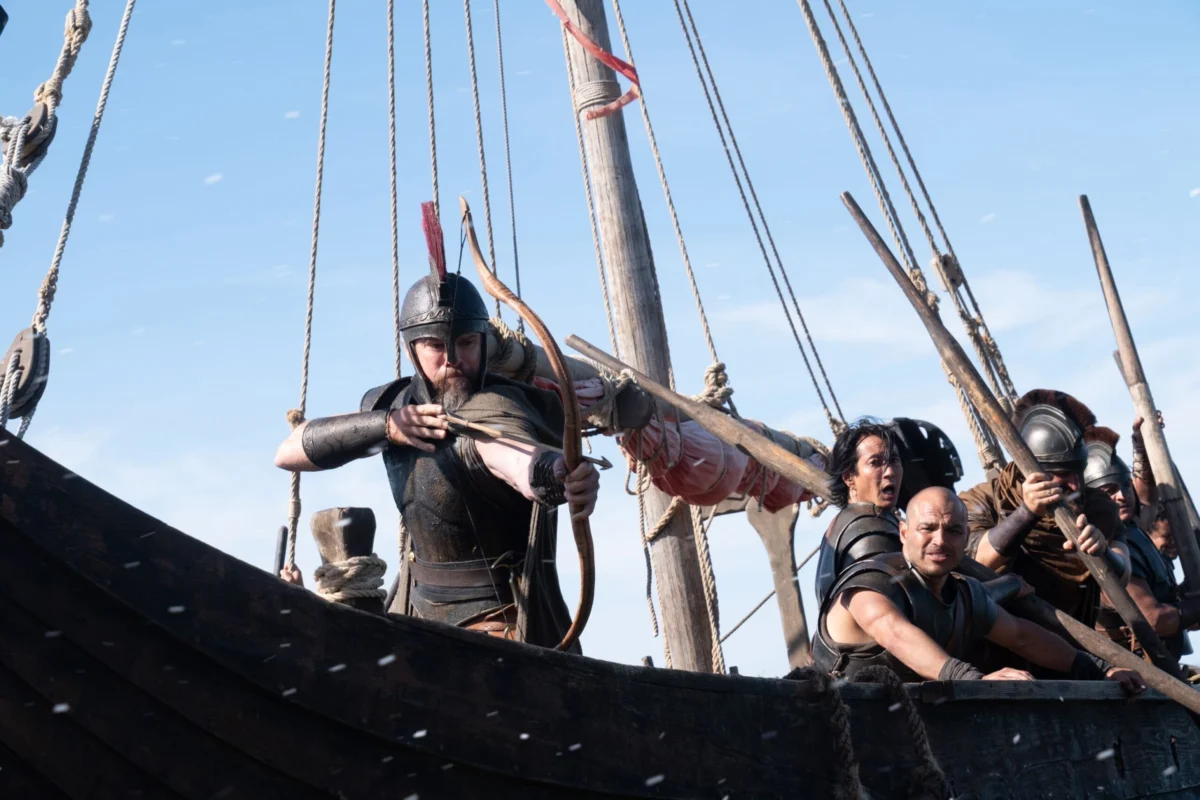
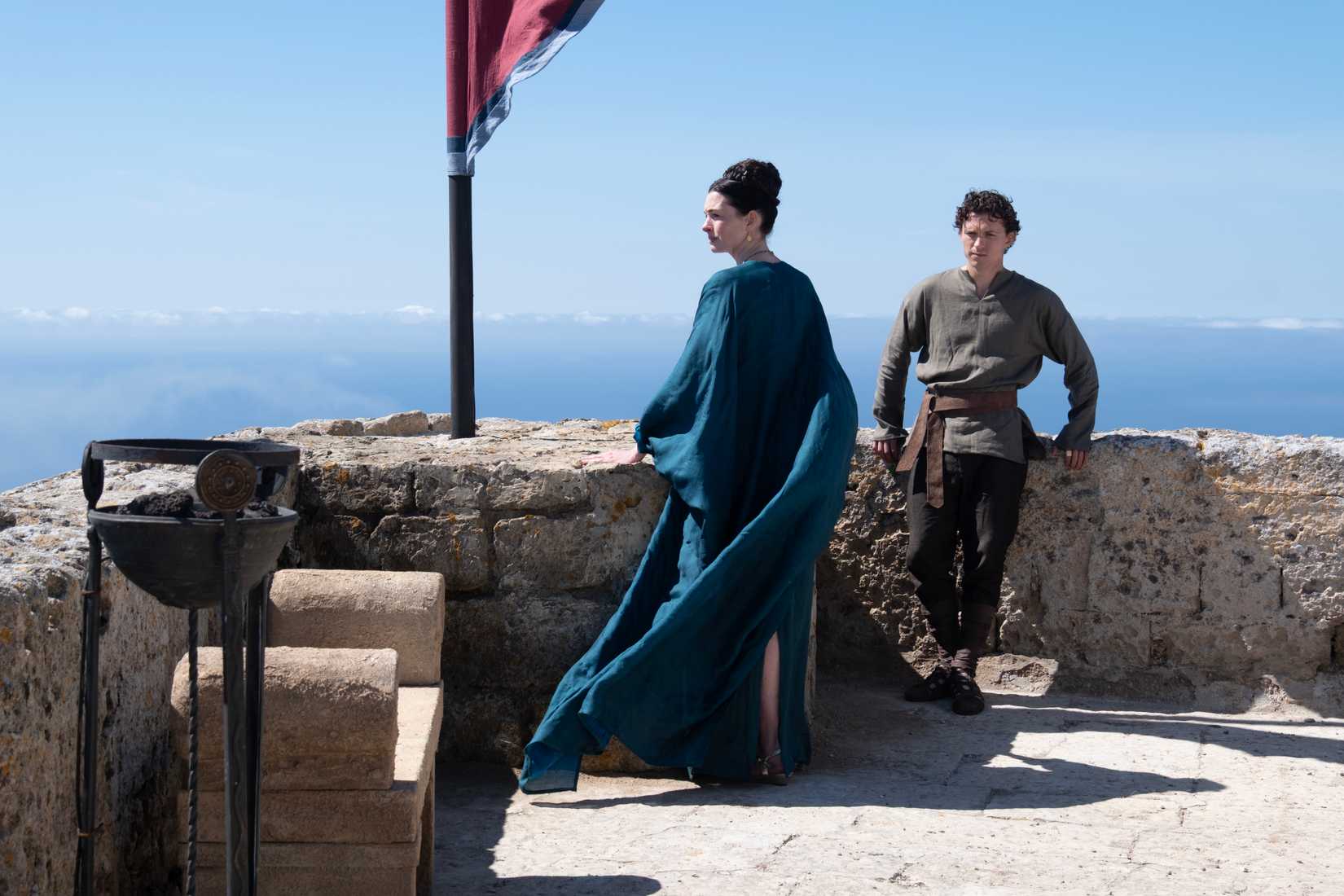
From the outset of Nolan’s The Odyssey, the "Sea People" are established as a significant, albeit largely unseen, danger. Queen Penelope, tirelessly fending off a horde of opportunistic suitors vying for her hand and Odysseus’s throne, frequently expresses her concern about these marauders. Her anxiety is palpable; she believes Ithaca desperately needs a king not just to rule, but to raise an army capable of defending its shores against these formidable invaders. The suitors, too, occasionally reference the threat, using it as leverage to pressure Penelope into remarriage, arguing that a strong male leader is essential for national security in such perilous times.
The film paints the Sea People as a storied force, their reputation preceding them across the Mediterranean. They are described as relentless attackers, capable of overwhelming various lands and leaving destruction in their wake. This portrayal effectively builds suspense and underscores the fragile state of the world post-Trojan War, where established orders are crumbling and new, terrifying threats emerge from the very waters that once facilitated trade and conquest. Their presence amplifies the stakes for Penelope and her son, Telemachus, transforming their domestic struggle into a broader conflict for the survival of their kingdom against an existential, faceless enemy.
Odysseus’s Startling Implication
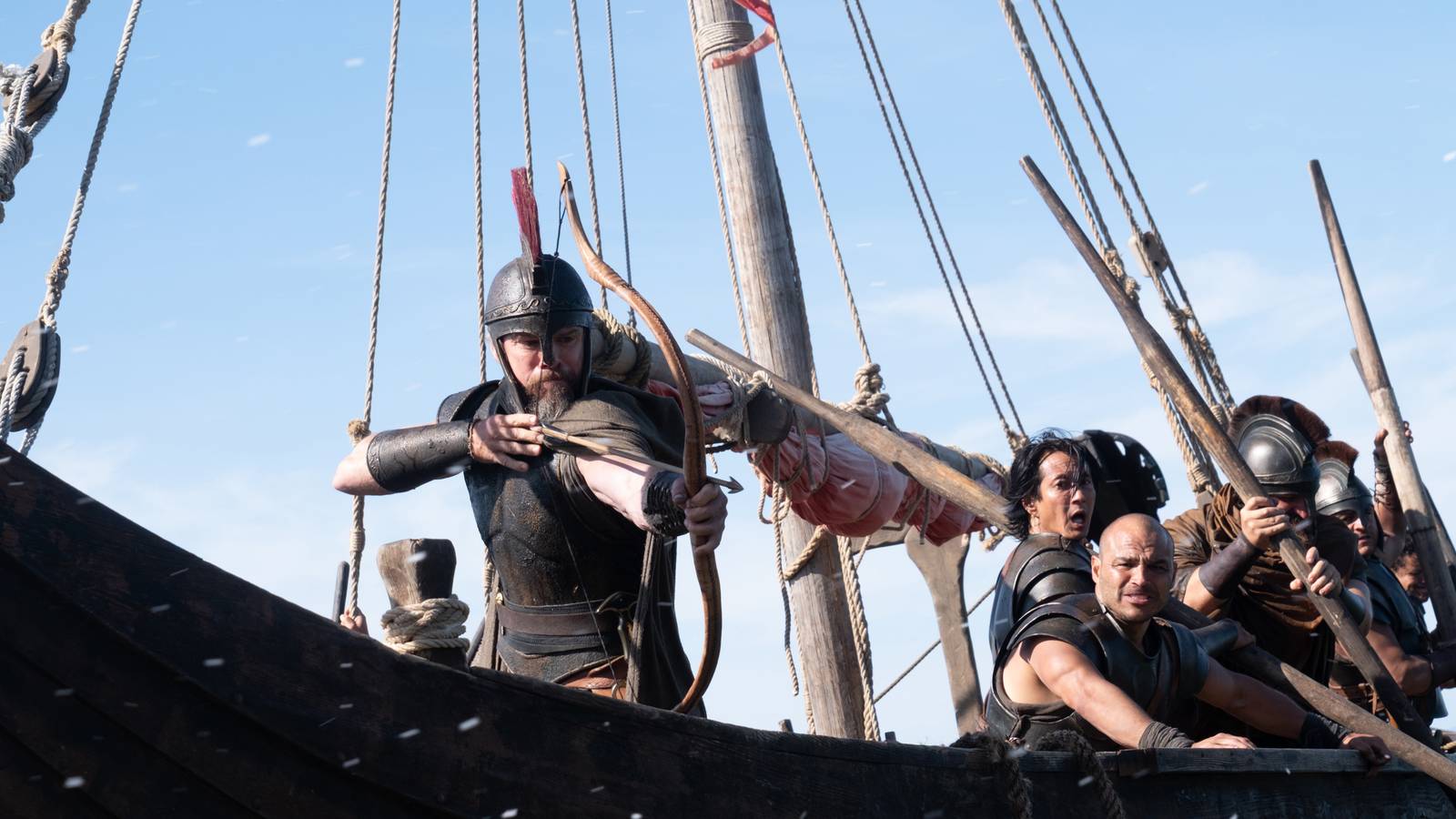
One of the most striking narrative choices in Nolan’s adaptation comes towards the film’s conclusion, where Odysseus himself subtly suggests a startling connection. In a moment of reflection, the war-weary king implies that his own army, having arrived from the sea to besiege Troy with the infamous wooden horse and subsequently laying waste to the city, might have inadvertently contributed to – or even become – the very legend of the "People from the Sea." He muses that their actions ushered in an age of lawlessness and instability, creating a vacuum that opportunistic groups now exploit, thus perpetuating the cycle of raiding and societal decline.
This implication is a masterstroke of thematic layering, characteristic of Nolan’s storytelling. It forces both characters and audience to confront the uncomfortable truth that heroes, in their pursuit of victory, can often sow the seeds of future conflict and chaos. Odysseus, the revered strategist and warrior, is thus implicated in the very phenomenon that threatens his home and family. This narrative twist challenges the simplistic hero-villain dichotomy, suggesting that perceived threats are often born from the actions of those who believe themselves righteous. It transforms the "Sea People" from a generic menace into a haunting reflection of Odysseus’s own legacy, blurring the lines between savior and destroyer, and questioning the true cost of war.
Bridging Myth and History: The Cretan Lie
A Scholarly Hypothesis within Homer’s Epic
The notion that Odysseus’s forces could be linked to the Sea Peoples is not merely a cinematic invention by Nolan; it draws inspiration from a long-standing and popular theory among scholars and historians regarding the original text of The Odyssey. This theory largely hinges on an episode known as the "Cretan Lie." When Odysseus finally returns to Ithaca, disguised as a humble beggar to assess the loyalty of his household and plan his retribution against the suitors, he tells his faithful swineherd Eumaeus a fabricated tale of his adventures. In this elaborate deception, Odysseus describes himself as a Cretan who led a raiding expedition to Egypt, only to suffer defeat and eventual enslavement before escaping.
While the story is presented as a complete fabrication within Homer’s narrative, its details resonate profoundly with the historical accounts of the Sea Peoples. The tale of a Greek-speaking raiding party attacking Egypt from the sea during the Late Bronze Age directly mirrors the historical records that describe such incursions. Scholars argue that even a "lie" in an epic poem can contain kernels of contemporary historical knowledge or anxieties. The "Cretan Lie" thus provides a contextual basis for the idea that Greek-speaking peoples, possibly including those like Odysseus’s Achaeans, might have been among the various groups collectively labeled as "Sea Peoples" by the Egyptians. This blend of legend and potential historical echo is precisely what Nolan leverages to such powerful effect in his film.
The Real-World Enigma: The Sea Peoples of the Bronze Age Collapse
A World in Flux: The Late Bronze Age
To fully appreciate the historical weight behind Nolan’s artistic choices, one must delve into the real-world historical context of the Late Bronze Age. Approximately around 1200 BCE, the Eastern Mediterranean was a vibrant, interconnected tapestry of powerful civilizations. The Mycenaeans dominated the Aegean, the Hittites controlled Anatolia, the New Kingdom of Egypt reigned supreme along the Nile, and flourishing kingdoms like Ugarit, Mitanni, Assyria, and Babylon engaged in complex diplomatic, trade, and military relations. This was an era of unprecedented prosperity, technological advancement, and cultural exchange, supported by sophisticated state-level bureaucracies and extensive maritime trade routes.
However, this golden age abruptly and mysteriously collapsed. Within a span of a few decades, nearly all these mighty civilizations either vanished, were severely crippled, or plunged into a centuries-long "Dark Age." Cities were sacked and burned, trade networks dissolved, literacy declined, and populations dwindled. This period, known as the Late Bronze Age Collapse, remains one of the most profound and puzzling turning points in human history. While scholars propose various contributing factors – including widespread drought, famine, earthquakes, internal rebellions, and systemic fragility – the "Sea Peoples" are consistently cited as a major external force that played a significant role in this cataclysmic downfall.
Egyptian Records: Our Primary Witnesses
Our most explicit and detailed information about the Sea Peoples comes from ancient Egyptian inscriptions. The most prominent source is the Mortuary Temple of Ramesses III at Medinet Habu, dating to around 1175 BCE. Its elaborate reliefs and accompanying hieroglyphic texts vividly depict massive naval and land battles against a confederation of invaders referred to as "foreign lands" or "peoples of the sea." The inscriptions boast of Ramesses III’s decisive victory over these invaders, describing them as having "made a conspiracy in their lands" and declaring, "No land could stand before their arms, from Hatti, Kode, Carchemish, Arzawa, and Alashiya on being cut off at one time." This dramatic account paints a picture of a sweeping destructive force that devastated much of the Eastern Mediterranean before being repelled by Egypt.
Other crucial Egyptian sources include the Great Karnak Inscription of Pharaoh Merneptah (circa 1208 BCE), which mentions a defeat of "the Peoples of the Sea" who had allied with Libyans against Egypt. Papyrus Harris I, a long document detailing the reign of Ramesses III, also recounts his struggles against these invaders, further solidifying their historical presence and impact. These inscriptions provide invaluable, albeit biased, snapshots of a tumultuous era, detailing the origins, tactics, and perceived threat of these mysterious maritime groups from the Egyptian perspective.

Who Were the Sea Peoples? Unraveling Their Identities
The Egyptian records list various distinct groups that comprised the "Sea Peoples," hinting at a diverse confederation rather than a single ethnic entity. Among the most frequently mentioned are:
- Peleset: Widely identified with the Philistines, who settled in Canaan after the collapse and became prominent in biblical narratives. Archaeological evidence supports a connection between Philistine culture and Aegean origins.
- Shekelesh: Often speculated to originate from Sicily, given the phonetic similarity and the island’s strategic location.
- Denyen: Possibly connected to the Danaans, a name used by Homer for some of the Greeks, or the people of Adana in Anatolia.
- Lukka: Identified with the Lycians from southwestern Anatolia, who were known for their seafaring activities.
- Sherden: Thought to be from Sardinia, known for their distinctive horned helmets often depicted in Egyptian reliefs.
- Tjeker, Weshesh, Ekwesh: These groups remain largely unidentified, with various theories linking them to different Aegean or Anatolian regions.
The lack of definitive archaeological or linguistic links for many of these groups has fueled centuries of scholarly debate. Were they displaced populations fleeing environmental catastrophes or internal conflicts? Were they opportunistic pirates capitalizing on regional instability? Or were they perhaps a combination of both, a "perfect storm" of migration, raiding, and conquest that overwhelmed a system already teetering on the brink? The prevailing view among historians is that the Sea Peoples were not a monolithic army but rather a loose confederation of diverse peoples, often including entire families and possessions, migrating by sea and land in search of new homes or resources, resorting to raiding and conquest when necessary.
The Nature of Their Incursions
The Egyptian reliefs at Medinet Habu offer a dramatic visual account of the Sea Peoples’ incursions. They depict not only warriors but also women and children traveling in ox-carts, suggesting mass migrations rather than purely military campaigns. Their naval battles show distinctive round shields and horned or feathered helmets, providing clues to their possible origins and armaments. These were not just hit-and-run raiders; they were groups seeking to displace populations and settle new lands, leaving a trail of destruction in their wake.
Their impact was devastating. The Hittite Empire, a dominant power for centuries, collapsed entirely, its capital Hattusa burned and abandoned. The vibrant city of Ugarit on the Syrian coast, a crucial trade hub, was also utterly destroyed, never to be fully rebuilt. Mycenaean palaces across Greece suffered similar fates. While the Sea Peoples were undoubtedly a significant factor in these destructions, modern scholarship tends to view them as a symptom rather than the sole cause of the Late Bronze Age Collapse. They likely exploited existing weaknesses, exacerbated by climate change, famine, internal revolts, and the fragility of highly centralized, interconnected systems. Their arrival was the final blow to an already decaying edifice.
Historians’ Interpretations and Nolan’s Artistic License
The Enduring Mystery and its Appeal
The enduring mystery surrounding the Sea Peoples is precisely what makes them such a captivating subject for historians and storytellers alike. The fragmentary nature of the primary sources, coupled with the dramatic scale of the collapse they are associated with, leaves ample room for interpretation and speculation. This historical ambiguity allows for creative exploration, enabling filmmakers like Christopher Nolan to weave their narrative threads into the gaps of our knowledge, giving flesh to shadowy figures of the past.
Nolan’s The Odyssey capitalizes on this ambiguity to profound effect. By suggesting that Odysseus and his forces might have been among those who inadvertently contributed to the legend of the Sea People, the film elevates the epic from a simple tale of homecoming to a complex examination of historical causation and moral culpability. It forces viewers to question the nature of "barbarians" and "invaders," suggesting that yesterday’s heroes can become tomorrow’s terrifying myths from the perspective of their victims.
Nolan’s Thematic Resonance
Nolan’s interpretation of the Sea People aligns perfectly with his characteristic exploration of complex themes: identity, memory, perception versus reality, and the profound consequences of human actions. By making Odysseus’s journey not just a personal struggle but also a potential catalyst for a historical catastrophe, the film adds layers of tragedy and moral introspection to the classic epic. The notion that the "hero" who sacked Troy could be seen as a destructive "Sea Person" by others challenges the traditional glorification of warfare and conquest.
This thematic choice also resonates with the historical debate surrounding the Late Bronze Age Collapse. Just as scholars argue whether the Sea Peoples caused the collapse or were merely a symptom of a broader systemic failure, Nolan’s film suggests that Odysseus’s actions, while heroic in one context, might have contributed to a wider societal breakdown. It’s a powerful statement on the cyclical nature of conflict and the instability that often follows major wars, echoing anxieties relevant to any era.
Conclusion: A Cautionary Tale Across Millennia
Christopher Nolan’s The Odyssey masterfully intertwines the mythological grandeur of Homer’s epic with the tantalizing historical mystery of the Sea Peoples. By subtly implying that Odysseus’s own forces could be linked to these enigmatic invaders, the film offers a fresh, thought-provoking perspective on a foundational narrative. It challenges our perceptions of heroism and villainy, reminding us that history is often written by the victors, but the shadows of the vanquished—or perhaps, the unintended consequences of "heroic" actions—can linger for millennia.
While the film’s specific alignment of Odysseus with the Sea People is an artistic interpretation, it is one deeply rooted in genuine historical debate and scholarly inquiry. It underscores the enduring fascination with the Late Bronze Age Collapse and the enigmatic figures who played a role in reshaping the ancient world. Ultimately, The Odyssey serves as a powerful reminder that the destructive power of unbridled conflict can create lasting instability, and that the long shadow cast by mysterious historical forces continues to provoke questions about our past and present. As for facing any such ambiguous threats, one might do well to heed a timeless warning: if you’ve got Sea Peoples at your door, it’s probably wise to think twice before accepting any large, suspiciously crafted wooden gifts from them.
The Odyssey is in theaters now.